How to Choose Right Pond Dam Liner?
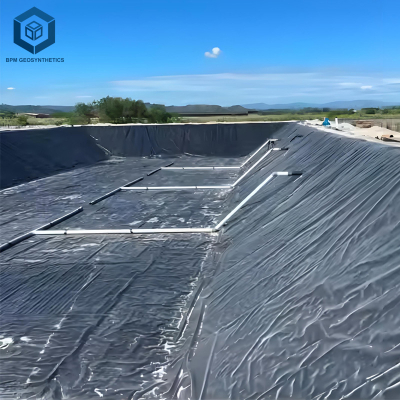
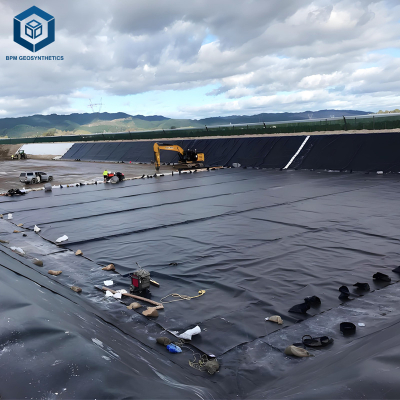
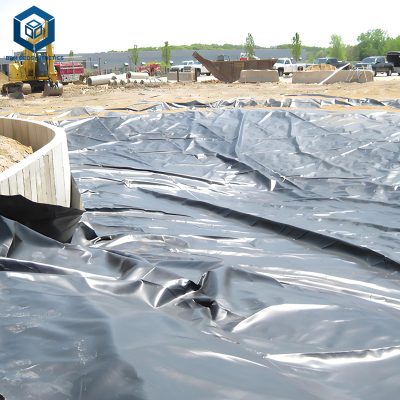
A pond dam liner is an impermeable geomembrane used to prevent water seepage in reservoirs, dams, and ponds. Selecting the right liner involves evaluating material type, thickness, durability, and compatibility with environmental and engineering conditions.
Technical Parameters and Specifications
| Parameter | Typical Range | Unit | Notes |
|---|---|---|---|
| Thickness | 0.75–2.5 | mm | Depends on project scale |
| Tensile Strength | 10–35 | MPa | Material dependent |
| Elongation at Break | 300–800% | % | Higher for flexible liners |
| Puncture Resistance | 100–450 | N | Critical for subgrade conditions |
| UV Resistance | High | — | Outdoor durability |
| Service Life | 10–25 | years | Based on material and exposure |
Structure and Material Composition
HDPE Liner: High-density polyethylene with carbon black for UV stability.
LLDPE Liner: Linear low-density polyethylene with enhanced flexibility.
EPDM Liner: Synthetic rubber with excellent elasticity.
PVC Liner: Flexible plasticized polymer for waterproofing.
Additives: Antioxidants, stabilizers, UV inhibitors.
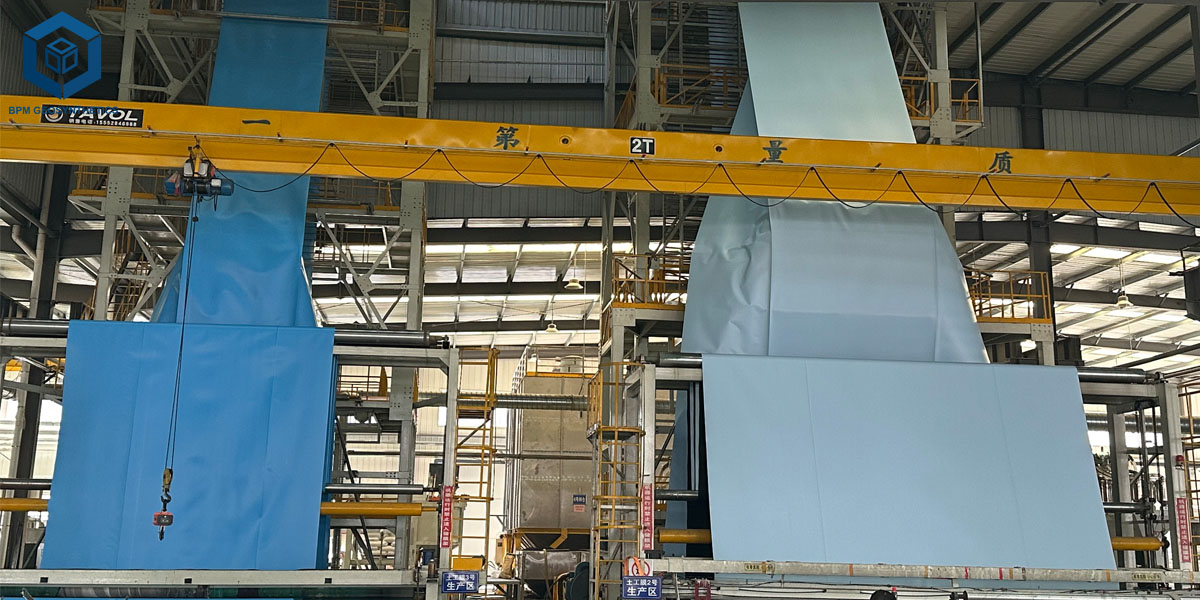
Manufacturing Process
Raw material selection and compounding.
Extrusion (HDPE/LLDPE) or calendering (PVC/EPDM).
Thickness calibration and surface finishing.
Cooling and dimensional stabilization.
Cutting and rolling into standard sizes.
Quality inspection: tensile, puncture, elongation testing.
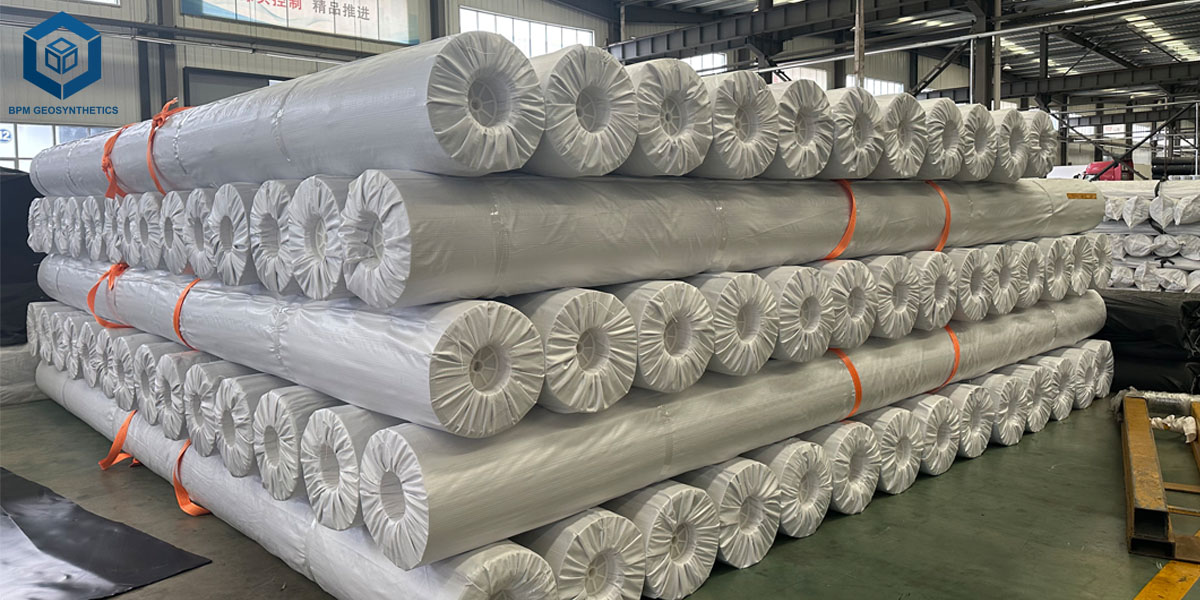
Packaging for transport and export.
Industry Comparison
| Material | Strength | Flexibility | Chemical Resistance | Best Use |
|---|---|---|---|---|
| HDPE | High | Moderate | Excellent | Large dams, industrial ponds |
| LLDPE | Medium | High | Good | Uneven terrain ponds |
| EPDM | Moderate | Very High | Moderate | Decorative ponds |
| PVC | Medium | High | Moderate | Small-scale water storage |
Application Scenarios
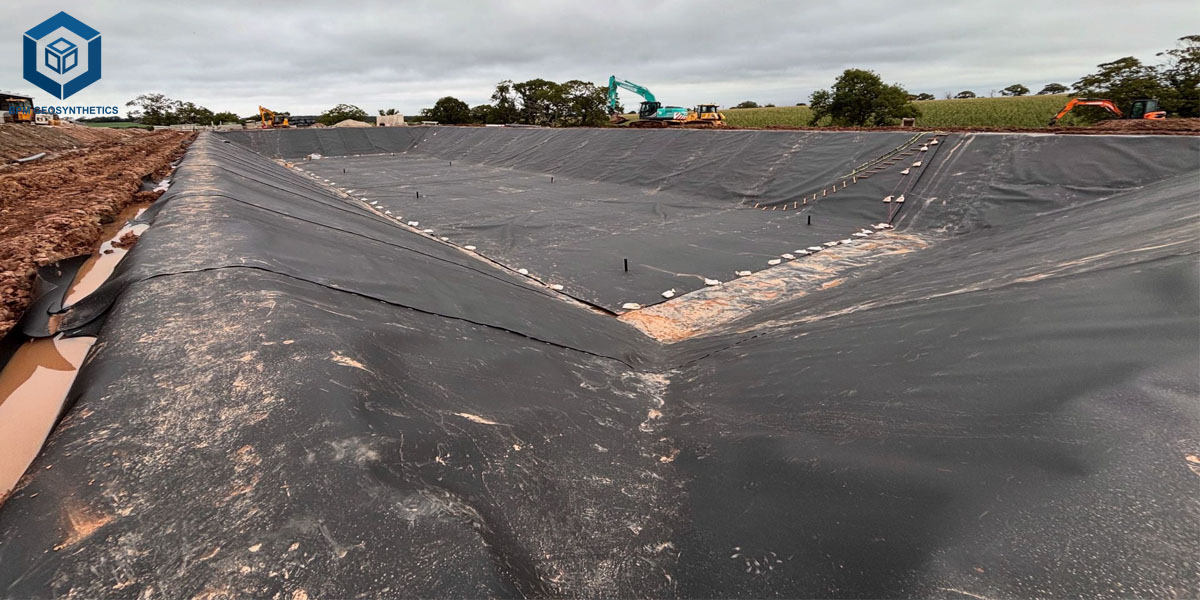
Water reservoirs and agricultural irrigation dams
Fish farming and aquaculture ponds
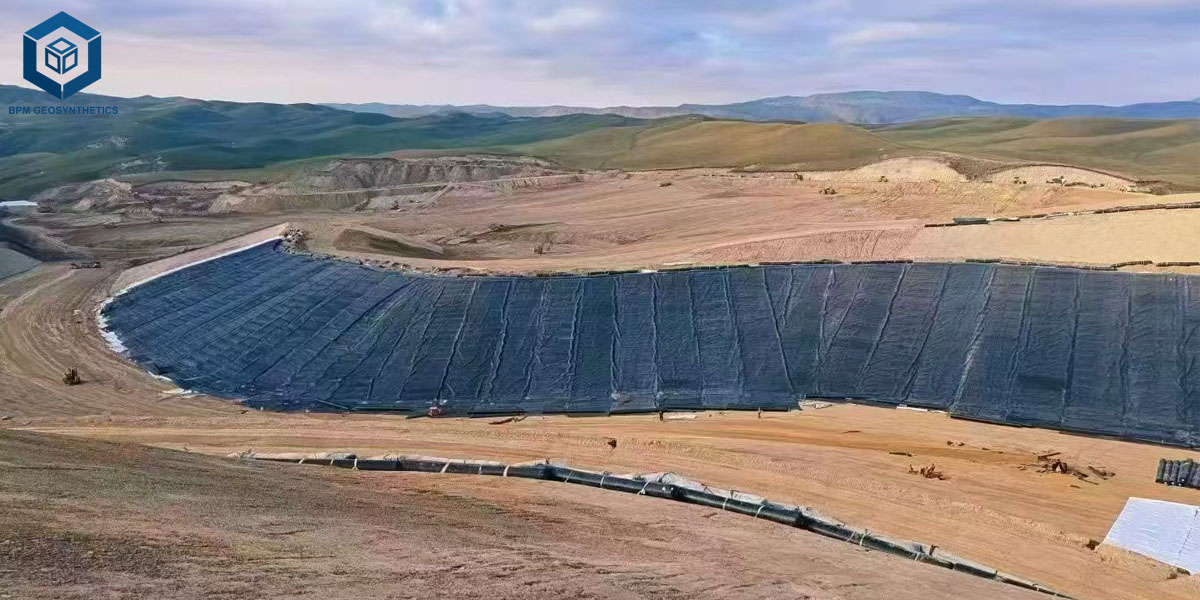
Mining and industrial wastewater ponds
Landscape and decorative ponds
Projects handled by EPC contractors, distributors, and developers
Core Pain Points and Solutions
1. Selecting the Wrong Material
Solution: Match liner type with application—HDPE for durability, EPDM for flexibility.
2. Subgrade Damage Risks
Solution: Use geotextile underlayment and select higher puncture resistance liners.
3. Installation Challenges
Solution: Choose materials compatible with available installation equipment and skills.
4. Long-Term Performance Uncertainty
Solution: Verify UV resistance and aging performance through certified testing reports.
Risk Warnings and Mitigation
Improper thickness selection may lead to leakage or failure.
Poor subgrade preparation increases puncture risk.
Incorrect welding or sealing compromises liner integrity.
Exposure to incompatible chemicals may degrade material.
Procurement and Selection Guide
Define project type and environmental conditions.
Select appropriate material (HDPE, LLDPE, EPDM, PVC).
Determine required thickness based on load and risk level.
Verify supplier certifications and technical datasheets.
Evaluate installation method and available equipment.
Request samples for testing before bulk procurement.
Confirm logistics, packaging, and delivery schedule.
Engineering Case Example
An agricultural irrigation dam project required 20,000 m² of liner. Due to uneven terrain, 1.0 mm LLDPE liner was selected for flexibility. Geotextile underlayment reduced puncture risk, while optimized roll sizes minimized seams. The project achieved efficient installation and long-term water retention performance.
FAQ – Frequently Asked Questions
1. What is the best pond dam liner material?
Depends on application—HDPE for strength, EPDM for flexibility.
2. How thick should a pond liner be?
Typically 0.75–2.5 mm depending on project size and conditions.
3. Is HDPE suitable for fish ponds?
Yes, if properly installed and certified for environmental safety.
4. Which liner is easiest to install?
EPDM and PVC are easier than HDPE.
5. How long do pond liners last?
10–25 years depending on material and exposure.
6. Can liners be customized?
Yes, roll size and thickness can be tailored to project needs.
7. What is the main failure risk?
Puncture damage due to poor subgrade preparation.
8. Are liners UV resistant?
Yes, especially HDPE and LLDPE with carbon black.
9. Do I need professional installation?
Recommended for HDPE; optional for smaller EPDM projects.
10. How to reduce installation cost?
Optimize roll size and minimize seams.
Request Technical Documentation or Samples
For project-specific liner selection, technical datasheets, and sample materials, procurement teams and contractors are encouraged to submit detailed requirements. Engineering consultation and quotations are available upon request.
Author Expertise (E-E-A-T)
This guide is developed by geosynthetics engineers with over 10 years of experience in pond dam liner manufacturing, export supply, and engineering project implementation, ensuring practical and technically accurate recommendations.