The 6 Best Geocomposite Clay Liner Review
Introduction
In the world of environmental protection and civil engineering, containment is everything. Whether you’re managing a landfill, constructing a reservoir, or securing an industrial site, the integrity of your barrier system is non-negotiable. This is where geocomposite clay liner come into play. Combining the low hydraulic conductivity of bentonite clay with the mechanical strength of geotextiles, GCL have revolutionized containment solutions.
In this comprehensive review, we’ll explore the six best geocomposite clay liners on the market, examining their unique properties, ideal applications, and why they might be the perfect choice for your next project. As a leader in advanced geosynthetic solutions, we are committed to providing the insights you need to make an informed decision.
1. Reinforced Needle-Punched Geocomposite Clay Liner
1.1 The Industry Standard for Robust Performance
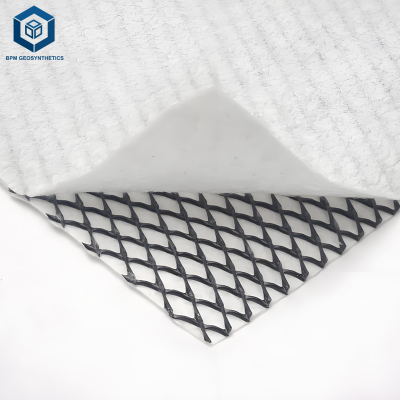
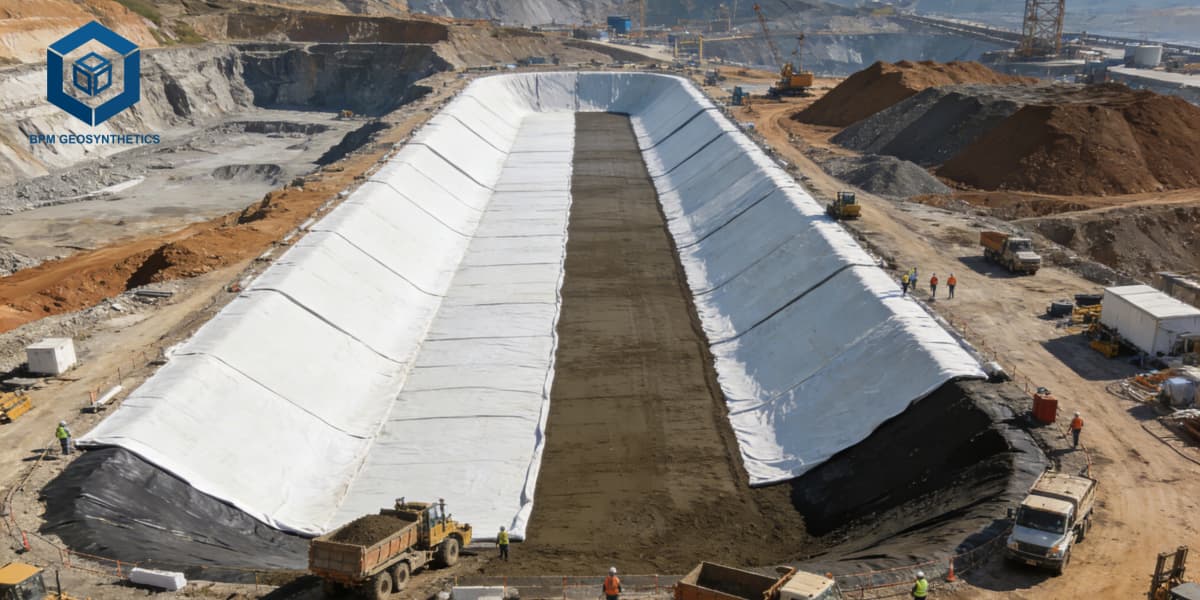
Reinforced needle-punched GCLs are the workhorses of the industry. This design involves sandwiching a layer of high-swelling sodium bentonite between two geotextiles (one woven, one non-woven), which are then mechanically bonded through a robust needle-punching process. This reinforcement creates exceptional internal shear strength.
1.2 Key Advantages:
- Superior Shear Strength: The needle-punching fibers interlock the geotextiles through the bentonite core, providing outstanding resistance to internal and interface shear stresses. This makes it ideal for slopes and applications with significant stress.
- Self-Sealing Properties: The bentonite layer hydrates upon contact with water, swelling to fill any small punctures or gaps, ensuring a continuous barrier.
- Proven Long-Term Stability: With decades of field performance data, this type of GCL offers reliable, long-term containment.
- Best For: Landfill caps and base liners, pond and reservoir liners, slope applications, and projects requiring high shear strength.
2. Stitch-Bonded Geocomposite Clay Liner
2.1 The Choice for Uniformity and High Bentonite Retention
Stitch-bonded GCLs use a polymer thread stitching pattern to hold the geotextiles and bentonite core together. This method creates a consistent, uniform product with minimal bentonite migration during installation.
2.2 Key Advantages:
- Excellent Bentonite Lock-In: The stitching pattern effectively minimizes the loss of bentonite powder during handling, transportation, and installation, ensuring consistent hydraulic performance.
- High Tensile Strength: The stitching yarns provide good tensile strength in the machine direction, facilitating smooth installation.
- Reduced Thickness Variability: Offers a very consistent thickness profile, which can be beneficial for certain design specifications.
- Best For: Applications on flat terrain or gentle slopes, projects where minimal bentonite dust is a concern, and as a component in composite liner systems.
3. Adhesive-Bonded Geocomposite Clay Liner
3.1 The Flexible and Conformable Solution
Adhesive-bonded GCLs utilize a food-grade adhesive to bind the bentonite to a single carrier geotextile (typically woven) or between two geotextiles. This results in a highly flexible and conformable product.
3.2 Key Advantages:
- Exceptional Conformability: The adhesive bond allows the GCL to drape and conform closely to uneven subgrades or complex details, improving intimate contact.
- High Peel Strength: The adhesive creates a strong bond that resists separation of layers during installation.
- Lightweight and Easy to Handle: Often lighter than reinforced counterparts, making for easier and faster installation.
- Best For: Complex geometries, channels, tunnels, landfill daily covers, and projects with uneven substrates where intimate contact is critical.
4. Polymer-Enhanced Bentonite Geocomposite Clay Liner
4.1 Engineered for Aggressive Environments
This advanced GCL type incorporates bentonite that has been treated with polymers. This chemical enhancement significantly improves the clay's performance in the presence of challenging fluids like aggressive leachates, high-pH solutions, or saline water.
4.2 Key Advantages:
- Enhanced Chemical Resistance: The polymer treatment helps the bentonite maintain its low hydraulic conductivity when exposed to contaminants that would degrade traditional sodium bentonite.
- Reduced Hydration Time: Some polymer-enhanced bentonites hydrate more quickly, speeding up the self-sealing process.
- Improved Swell Capacity: Can provide a higher swell pressure under certain conditions, enhancing the seal.
- Best For: Industrial waste containment, mining applications (heap leach pads, tailings), landfill primary liners in aggressive environments, and projects with known challenging pore fluids.
5. Woven Carrier Geotextile Geocomposite Clay Liner
5.1 Optimized for Interface Friction and Drainage
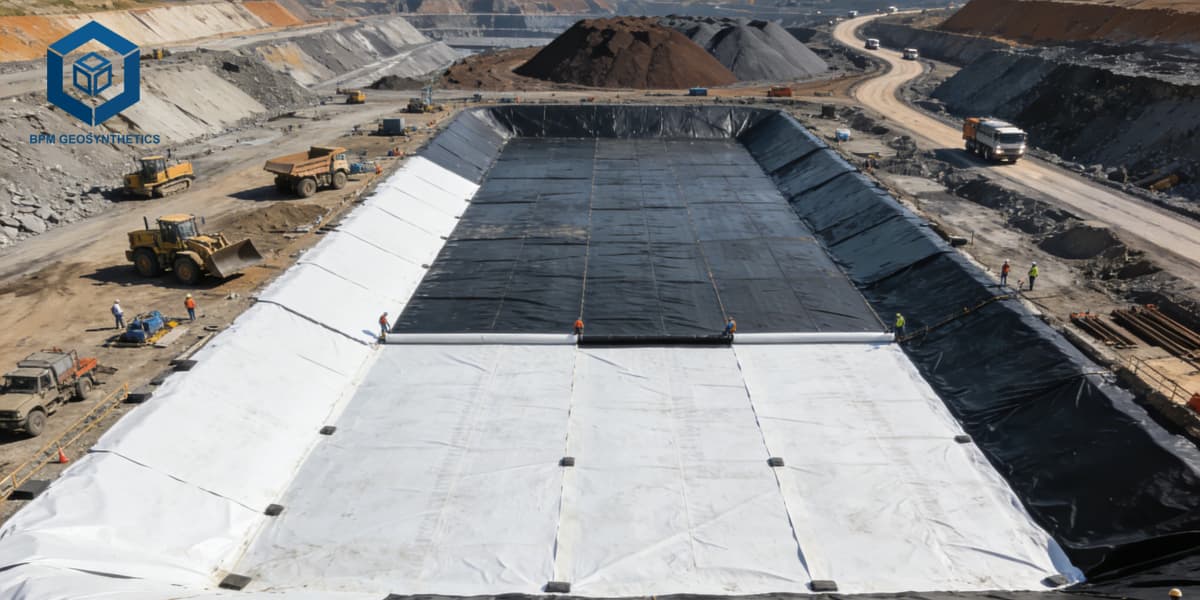
This category focuses on the specific use of a woven polypropylene geotextile as the carrier layer. The woven fabric provides a textured, high-friction surface and can also act as a drainage plane in certain configurations.
5.2 Key Advantages:
- High Interface Shear Strength: The textured surface of the woven geotextile provides excellent friction against geomembranes or soils, crucial for slope stability.
- In-Plane Drainage Capability: The woven structure can facilitate lateral gas or liquid movement, preventing pressure buildup (especially important in landfill caps).
- Durable Support Layer: Provides a tough, puncture-resistant working surface during installation.
- Best For: Composite liner systems (paired with a geomembrane), landfill caps with gas venting requirements, and applications where high interface friction is a primary design criterion.
6. Non-Woven Cover Geotextile Geocomposite Clay Liner
6.1 Designed for Protection and Filtration
This design emphasizes the use of a thick, non-woven polypropylene geotextile as the cover layer. This layer acts as a cushion, a robust protective barrier, and a filtration medium.
6.2 Key Advantages:
- Superior Puncture and Protection: The thick non-woven layer protects the bentonite core from damage during installation and from sharp aggregates in overlying or underlying soils.
- Enhanced Hydration and Filtration: The non-woven fabric allows water to pass through freely for bentonite hydration while preventing soil particles from migrating into the bentonite core (anti-clogging).
- Excellent Cushioning: Protects delicate geomembranes in composite liner systems from puncture.
- Best For: Applications with coarse or sharp soils, beneath geomembranes in double-liner systems, and in any scenario where mechanical protection is a top priority.
7. Key Selection Criteria: How to Choose the Right Geocomposite Clay Liner?
Selecting the right geocomposite clay liner requires a comprehensive technical evaluation. Beyond simply choosing a product type, engineers must assess performance characteristics that directly impact containment reliability, slope stability, and long-term durability.
7.1 Hydraulic Conductivity Performance
Hydraulic conductivity is the primary function of any geocomposite clay liner. The product should meet or exceed the required permeability standard, typically less than 5 × 10⁻¹¹ m/s. For projects involving aggressive leachates or industrial fluids, additional verification testing may be necessary to confirm long-term sealing performance.
7.2 Shear Strength Parameters
Both internal shear strength and interface shear strength must be evaluated, particularly for slope applications such as landfills or embankments. Proper shear performance ensures stability under load and prevents liner displacement under operational stresses.
7.3 Fluid Compatibility Testing
If the GCL will be exposed to non-standard chemicals, contaminated leachates, or industrial by-products, compatibility testing is essential. Certain fluids can affect bentonite swelling capacity and reduce long-term sealing effectiveness, making laboratory validation critical.
7.4 Swelling Index and Free Swell Capacity
The swelling index and free swell values indicate the quality and reactivity of the sodium bentonite core. High swelling capacity ensures superior self-sealing properties and improves resistance to minor punctures or localized damage.
7.5 Grab Tensile Strength and Elongation
Grab tensile strength measures the robustness of the geotextile layers during installation and handling. Adequate elongation capacity allows the liner to accommodate subgrade movement without tearing or structural failure.
7.6 Peel Strength Between Layers
Peel strength testing confirms the bonding integrity between geotextile layers and the bentonite core. Strong bonding prevents internal delamination during transportation, deployment, and long-term service.
7.7 Certifications and Quality Control
Reliable products should comply with recognized standards such as GB/T specifications and undergo rigorous quality assurance testing. Independent certifications and consistent manufacturing control help ensure performance reliability in critical containment projects.
8. Why Partner With Us for Your Geocomposite Clay Liner Needs?
At The Best Project Material Co., Ltd, we go beyond simply supplying geosynthetics—we deliver engineered containment solutions designed to meet complex project demands. Our technical depth and supply capabilities provide measurable advantages for contractors, engineers, and project owners worldwide.
8.1 Unbiased Technical Guidance
We provide a comprehensive portfolio of geocomposite clay liner types and brands. This allows us to recommend the most technically suitable solution based on soil conditions, stress loads, and chemical exposure—rather than limiting options to in-stock materials.
8.2 Full-System Engineering Expertise
A GCL functions as part of an integrated containment system. We supply complementary geosynthetics such as geomembrane, geonet, and geogrid to ensure compatibility, structural integrity, and long-term performance across the entire system.
8.3 Global Supply Chain Reliability
We collaborate with ISO-certified manufacturing partners to guarantee consistent product quality and dependable delivery schedules. Our global logistics network enables efficient supply to infrastructure, environmental, and mining projects worldwide.
8.4 End-to-End Project Support
From initial design consultation and technical specification to installation best practices, our team provides continuous project support. This integrated approach minimizes risk, improves installation efficiency, and enhances overall containment system performance.
Conclusion
Selecting the right geocomposite clay liner is a critical engineering decision that impacts the safety, longevity, and environmental compliance of your project. From the robust shear strength of a Reinforced Needle-Punched GCL to the chemical resilience of a Polymer-Enhanced GCL, the optimal choice depends on a careful analysis of site conditions and performance requirements.
By understanding the strengths of these six best-in-class GCL products, you are equipped to specify a containment solution that delivers lasting performance. For expert assistance in selecting, specifying, and sourcing the ideal geocomposite clay liner for your upcoming project, contact the specialists at The Best Project Material Co.,Ltd today. Let The Best Project Material Co., Ltd.(BPM Geosynthetics)help you build a safer, more secure foundation for your environmental and engineering challenges.