What is the Difference Between PVC and HDPE Pond Liners?
Selecting the right containment barrier is the single most critical decision in any water retention or civil engineering project, as liner failure often leads to costly remediation and environmental liabilities. While both Polyvinyl Chloride (PVC) and High-Density Polyethylene (HDPE) are widely used across aquaculture, decorative water features, and industrial reservoirs, they offer fundamentally different mechanical properties, chemical resistance, and service lifespans. Understanding how PVC's superior flexibility and ease of installation compare against HDPE's unmatched UV stability, puncture resistance, and multi-decade durability is essential for mitigating long-term operational risks and optimizing total lifecycle costs.
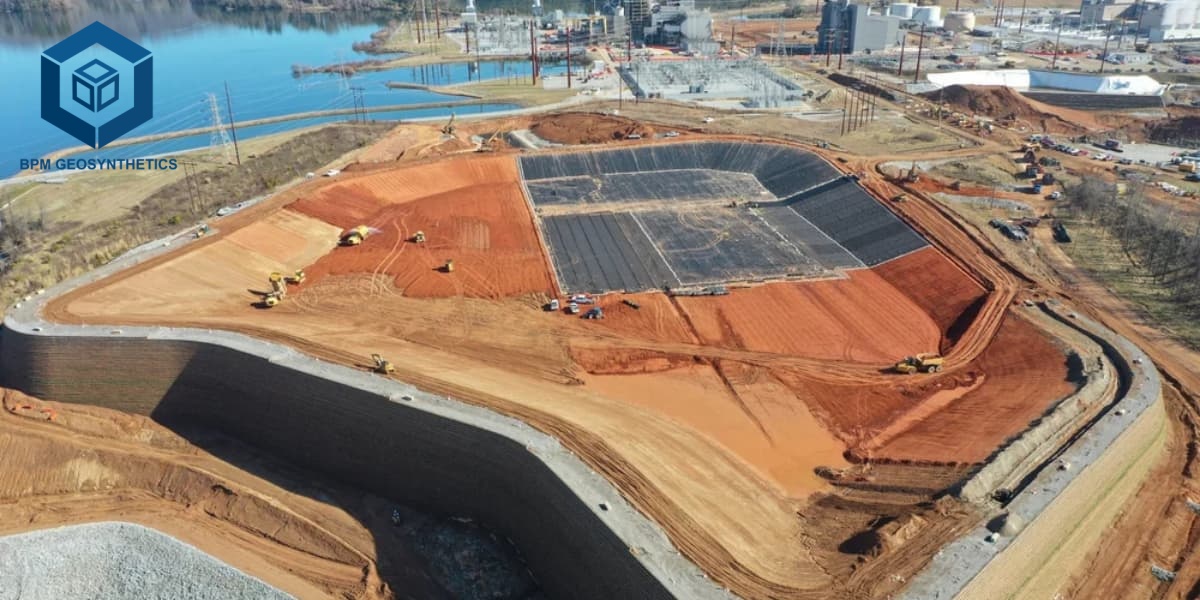
1. PVC and HDPE Pond Liners: What's the Difference?
The core difference between PVC and HDPE pond liners comes down to flexibility versus rigidity, installation method, and expected service environment. Selecting the wrong material often leads to premature liner cracking, seam failure, or excessive installation labor—making a clear technical comparison essential before procurement.
1.1 PVC Pond Liners: High Flexibility for Complex Contours
PVC (Polyvinyl Chloride) liners are soft, highly pliable PVC geomembranes compounded with liquid plasticizers—and typically carbon black for UV stabilization—to achieve superior elongation and conformability.
1.1.1 Key Advantages:
Because PVC easily drapes over intricate shelves, tight corners, and irregular rock formations without creasing or bridging, it is the preferred choice for decorative garden ponds, koi ponds, water features, and small-to-medium aquaculture tanks.
1.1.2 Installation & Limitations:
Panels can be rapidly joined on-site using chemical solvent welding or low-temperature thermal adhesives without heavy machinery. However, because plasticizers can gradually migrate out when exposed to direct sunlight and extreme temperature swings, PVC liners generally require a protective soil, gravel, or geotextile cover to prevent embrittlement and maximize their 10-to-20-year service life.
1.2 HDPE Pond Liners:
Rigid Durability for Heavy-Duty Containment
HDPE (High-Density Polyethylene) liners are semi-rigid, high-crystallinity thermoplastics formulated without volatile plasticizers, relying instead on 2%–3% carbon black and specialized antioxidant packages for long-term environmental resistance.
1.2.1 Key Advantages:
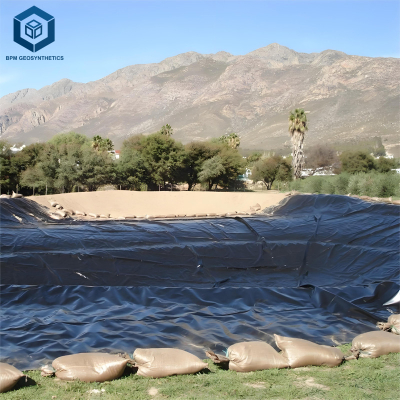
HDPE delivers unmatched UV stability, chemical inertness, and resistance to puncture and root penetration, making it the industry standard for large-scale commercial aquaculture, agricultural irrigation reservoirs, mining tailings ponds, and exposed containment basins where a 30-to-50+ year service life is non-negotiable.
1.2.2 Installation & Limitations:
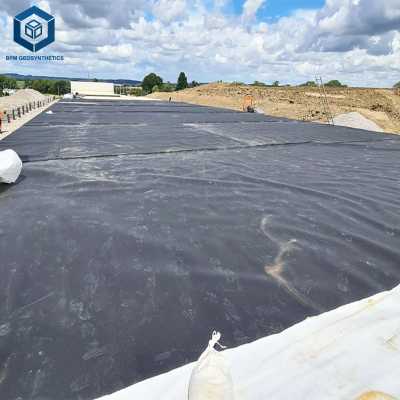
Its higher stiffness makes HDPE less forgiving on tight, multi-tiered contours and requires specialized hot-wedge fusion welders, extrusion welders, and certified technicians for field seaming—resulting in higher upfront mobilization costs that pay off over decades of maintenance-free operation.
1.3 Methodology and Technical Scope
To provide pond owners, landscape contractors, and aquaculture managers with a practical, data-backed framework, this guide evaluates black PVC and HDPE liners against established industry benchmarks—including ASTM D7176 (standard specification for non-reinforced PVC geomembranes) and GRI-GM13 (standard specification for smooth and textured HDPE geomembranes). By comparing verified mechanical property ranges, thermal expansion behavior, and real-world field performance records, the following sections break down exactly how to match each material to your project's operational risks and lifecycle budget.
2. Understanding Black PVC Pond Liners
Black PVC pond liners are flexible polyvinyl chloride geomembranes formulated with carbon black or UV stabilizers for enhanced resistance to sunlight. They are widely used for decorative garden ponds, koi ponds, aquaculture facilities, irrigation reservoirs, and small-to-medium water-storage structures. The black coloration improves UV stability, while the inherent flexibility of PVC allows excellent conformability to irregular subgrades.
Quantifiable performance metrics define quality black PVC liner. Under ASTM D7176 (and related PGI specifications), typical values for common thicknesses include:
- Specific gravity: ≥1.20
- Tensile strength at break from approximately 48 lb/in (20 mil) to 97 lb/in (40 mil) or higher
- Elongation at break of 250–450 percent
- Tear strength of 6–15 lb
- Low-temperature impact resistance down to −20 °F (−29 °C) or lower
Thicknesses of 20–40 mil (0.5–1.0 mm) dominate decorative and light aquaculture applications, while 40–60 mil is preferred for higher hydraulic heads or more demanding sites. Hydraulic conductivity is typically very low, supporting seepage reduction of 95 percent or greater compared with unlined earthen ponds. Service lives of 15–30+ years under cover—and shorter when fully exposed without specialized UV packages—are commonly reported. Material costs generally range from $0.50 to $2.50 per square meter depending on thickness, formulation, and volume.
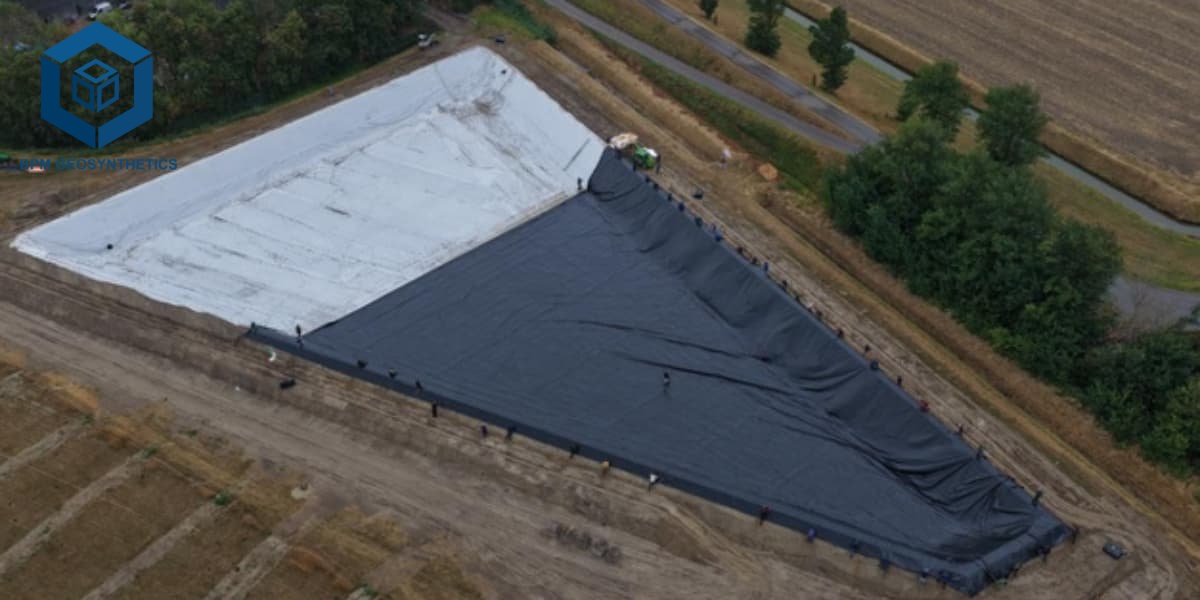
3. What are HDPE Pond Liners?
HDPE (High-Density Polyethylene) pond liners are heavy-duty, semi-crystalline thermoplastic geomembranes engineered for high-strength, long-term liquid containment. Manufactured from virgin polyethylene resin with a specific gravity of approximately 0.94 g/cm³ or higher (typically conforming to GRI-GM13 standards), HDPE derives its mechanical toughness from its dense molecular structure rather than liquid plasticizers.
3.1 Material Composition and Manufacturing
Unlike PVC, HDPE formulations contain zero volatile plasticizers, eliminating the risk of plasticizer migration, shrinkage, or premature embrittlement over time. Instead, the resin is compounded with 2%–3% finely dispersed carbon black and specialized antioxidant packages (such as HALS and hindered phenols) to block ultraviolet radiation and prevent thermo-oxidative degradation. Because HDPE geomembrane liner is relatively stiff and heavy, individual panels cannot be glued; they must be joined on-site using specialized thermal fusion equipment—specifically double-track hot-wedge welders for long flat seams and extrusion welders for pipe penetrations, patches, and corner detailing—to form a continuous, monolithic barrier.
3.2 Key Performance Advantages
3.2.1 Multi-Decade Service Life & UV Stability:
Properly installed high density polyethylene pond liner routinely achieve a service life of 20–25+ years in fully exposed environments (and over 50 years when covered), maintaining tensile strength even under intense solar radiation.
3.2.2 Superior Chemical & Biological Inertness:
HDPE offers exceptional resistance to a broad spectrum of aggressive chemicals, including acids, alkalis, salts, and hydrocarbons—making it the benchmark material for industrial wastewater lagoons, mining leach pads, and landfill cells. Because it contains no leachable additives, it is completely non-toxic and safe for potable water reservoirs and high-density commercial aquaculture.
3.2.3 High Puncture & Tear Resistance:
Its high crystallinity provides outstanding resistance to mechanical punctures, hydrostatic pressure, and root penetration without requiring thick protective overlays in standard applications.
3.3 Operational Limitations and Installation Considerations
3.3.1 Low Conformability on Complex Geometries:
HDPE’s inherent rigidity makes it difficult to fold, drape, or conform around tight radii, steep rock ledges, and intricate decorative pond contours without creating bridging stresses or wrinkles.
3.3.2 High Thermal Expansion and Contraction:
HDPE exhibits a high coefficient of linear thermal expansion, meaning the sheet expands significantly during peak afternoon heat and contracts sharply as temperatures drop at night. Installation crews must carefully time field seaming, manage slack (thermal compensation), and schedule backfilling during moderate temperature windows to prevent seam tension or stress cracking.
3.3.3 Specialized Field Labor Requirements:
Field installation requires certified welding technicians, calibrated fusion machinery, and rigorous non-destructive seam testing (such as air-pressure channel testing and vacuum-box testing), resulting in higher mobilization costs for smaller projects.
4. Key Differences in Characteristics - PVC and HDPE Pond Liners
4.1 Durability and Lifespan:
HDPE geo membrane is the clear winner. While quality black PVC liners can achieve 15–30+ years under soil cover, that lifespan drops sharply if the liner is fully exposed to sunlight. HDPE consistently delivers 20–25+ years even when exposed, thanks to its UV-resistant formulation.
4.2 Flexibility and Installation:
PVC's high elongation (250–450 percent) allows the geo membranes liner to conform tightly to irregular subgrades, around pipe penetrations, and in complex pond shapes with minimal wrinkling. It can be installed using solvent adhesives, heat welding, or factory-fabricated panels—reducing field labor compared with stiffer materials. HDPE is stiff and heavy, requiring professional thermal welding and careful handling; it is not a practical DIY material.
4.3 UV and Plasticizer Stability:
Black PVC liners use carbon black or equivalent UV stabilizers to improve resistance to sunlight degradation compared with non-black alternatives. Plasticizer retention matters for long-term flexibility; low volatile loss and water extraction values help ensure surface durability. HDPE is inherently more UV-stable and does not rely on plasticizers, so it does not suffer from plasticizer migration.
4.4 Safety and Chemical Resistance:
HDPE is inert and safe for fish and drinking water. PVC formulations vary—fish-safe grades exist, and formulations free of harmful plasticizers are available, with NSF/ANSI 61 certification relevant where potable contact is involved. Overall, HDPE offers broader chemical resistance.
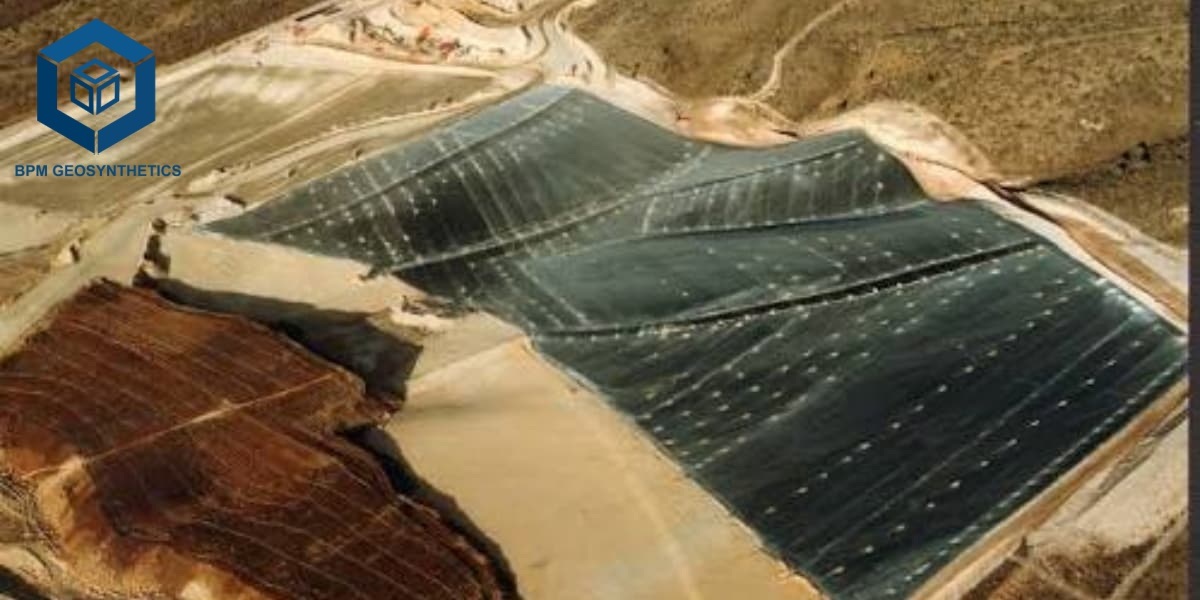
5. Application Scope - PVC and HDPE Pond Liners
5.1 Black PVC liners are best suited for:
Residential decorative ponds and koi ponds, especially with complex, irregular shapes
Small aquaculture operations
Irrigation storage where flexibility and moderate UV resistance are priorities
Partially exposed ponds using specialty UV-stabilized grades
Situations where the liner will be buried under soil or rock cover
5.2 HDPE liners are the standard for:
Large-scale agricultural and aquaculture ponds
Municipal and industrial water storage
Landfills and hazardous waste containment
Fully exposed ponds requiring decades of UV resistance
Any project where long-term structural integrity is critical
6. PVC and HDPE Pond Liners Price Comparison
Black PVC pond liners are generally cheaper upfront, with material costs ranging from $0.50 to $2.50 per square meter depending on thickness, formulation, and volume; leading brands fall in the $0.70–$2.50/m² range. HDPE geomembranes typically start higher per square meter. However, total cost of ownership must account for lifespan: a polyvinyl chloride liner that lasts 15 years under cover may need replacement while a single HDPE liner remains in service. Installation costs also differ—PVC's ease of installation and factory-fabricated panel options reduce field labor for small projects, while HDPE's professional welding adds upfront expense but delivers superior long-term value on large projects.
Summary
The choice between PVC and HDPE is fundamentally a choice between flexibility and convenience versus rigidity and longevity.
Choose black PVC for small, decorative garden ponds and koi ponds with complex shapes, limited budgets, and moderate service-life expectations—especially when the liner will be buried under soil cover. PVC's high elongation, ease of installation, and black UV-stabilized formulations make it particularly suitable for complex shapes and moderate-duty applications, while ASTM D7176 compliance ensures standardized minimum properties. Fish-safe formulations and NSF/ANSI 61 options are available where water contact safety is a concern.
Choose HDPE for any pond where longevity, structural integrity, and chemical resistance are priorities—large aquaculture operations, exposed water surfaces, industrial containment, and municipal storage. The higher upfront cost and professional installation requirements are justified by decades of reliable service and peace of mind regarding water safety.
For either material, success depends on matching the specification to the site: pond size, subgrade conditions, hydraulic head, climate, and expected service life. Request current technical data sheets confirming ASTM D7176 compliance (for PVC) or equivalent HDPE standards, fish-safe formulations where relevant, and documented project references. Selecting liners on the basis of measured performance metrics ensures effective water retention, ease of installation, and favorable lifecycle economics.
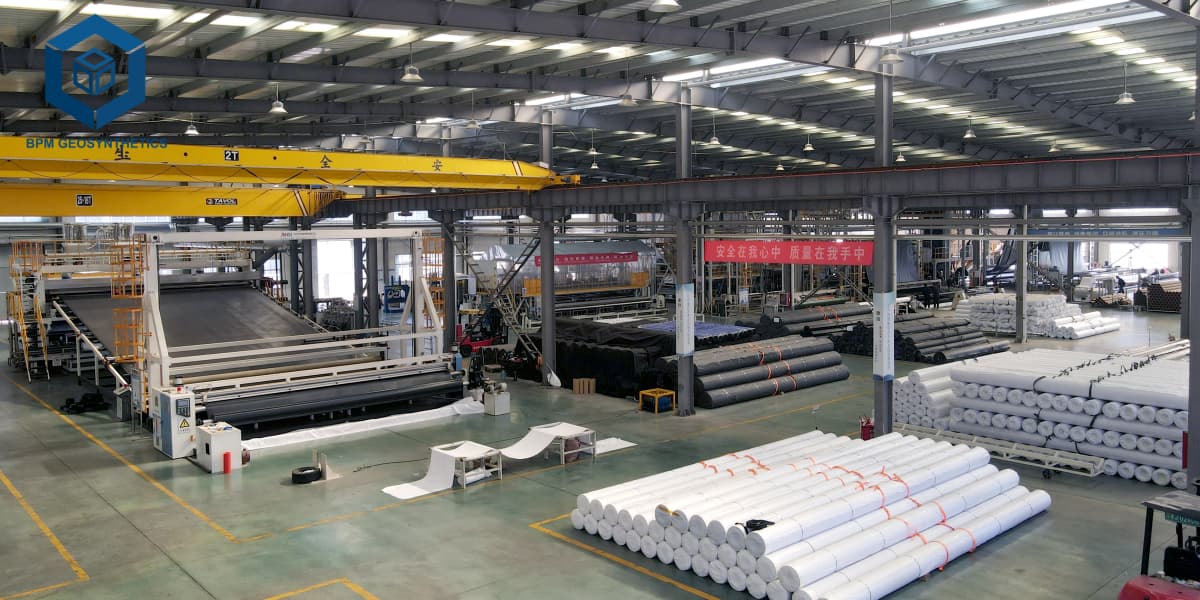
For projects requiring certified, high-performance geomembranes backed by strict international quality standards, The Best Project Material Co., Ltd. (BPM Geosynthetics) manufactures and supplies a complete range of both HDPE (GRI-GM13 compliant) and PVC (ASTM D7176 compliant) pond liners tailored to your exact project specifications. Whether you are building an intricate decorative water feature or a large-scale commercial aquaculture or industrial containment reservoir, BPM’s technical engineering team provides customized thickness options, pre-fabricated panel sizing, and comprehensive installation guidance to ensure long-term containment reliability and optimal lifecycle value. Contact BPM Geosynthetics today to request technical data sheets, material samples, or a tailored project quote.