How to Choose Geomembrane Underlayment?
Geomembrane underlayment is a critical yet often overlooked component in containment systems. While the geomembrane itself serves as the primary barrier against fluid migration, the underlayment beneath it determines whether that barrier survives installation stresses, operational loads, and long-term environmental exposure. Choosing the wrong underlayment can lead to punctures, excessive strains, and premature liner failure—consequences that are costly to remediate.
1. What is Geomembrane Underlayment?
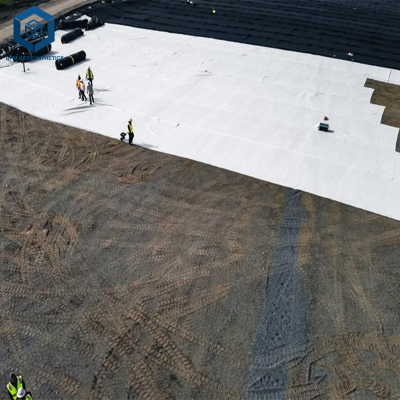
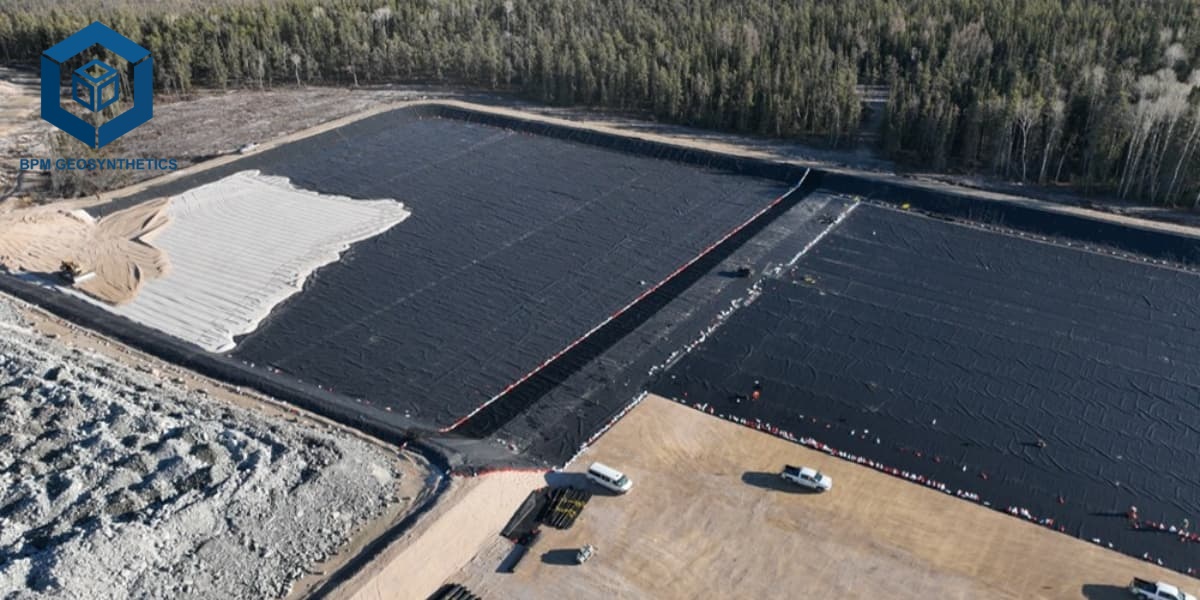
Geomembrane underlayment refers to the protective layer placed directly beneath a geomembrane liner. It is typically a nonwoven needle-punched geotextile, though in some specifications it may consist of prepared sand layers, compacted fine-grained soil, or specialized cushioning materials. The term “underlayment” distinguishes this layer from the cover soil or drainage geocomposite placed above the geomembrane.
The fundamental concept is layered protection. A geo membrane system commonly consists of superposed layers, each performing a distinct function. The underlayer acts as a protection layer, providing strength and improving stress distribution underneath, which allows the entire system to perform more efficiently. Without adequate underlayment, even a high-quality geomembrane liner remains vulnerable to the subgrade beneath it.
2. Geomembrane Underlayment Primary Functions and Purposes
The underlayment serves several interconnected purposes, all aimed at preserving the integrity of the geo membranes.
2.1 Puncture Protection.
Subgrades prepared from native soil or compacted fill inevitably contain irregularities—small stones, roots, or compacted clods. When the high density polyethylene geomembrane is placed under load, these protrusions concentrate stress at discrete points. An underlayment redistributes that stress, preventing localized punctures. Research on heap leach applications has shown that underliner characteristics significantly affect short-term puncturing and the development of geomembrane strains.
2.2 Cushioning and Stress Distribution.
Beyond preventing sharp objects from penetrating the liner, underlayment provides a compliant cushion that accommodates the HDPE membrane’s deformation under load. This is particularly important in applications where the overlying material is heavy or where equipment will traverse the liner surface. The more deformable the foundation, the larger the indentations and strains induced in the geomembrane by a given overliner.
2.3 Stabilization and Separation.
The underlayment stabilizes the base, preventing the liner from moving or sinking into the soil. It also acts as a separation layer between the HDPE geomembrana and subsoil, preventing fine particles from migrating upward and potentially compromising the system.
3. Geomembrane Underlayment Key Characteristics to Evaluate
When selecting an underlayment, several performance characteristics warrant careful evaluation.
3.1 Mass per Unit Area.
This is the most commonly specified property, expressed in grams per square meter (g/m²) or ounces per square yard. Research has established minimum thresholds for various applications. For a 1.5 mm HDPE geomembrane beneath AASHTO #8 stone (12 mm maximum diameter), a minimum of 270 g/m² nonwoven needle-punched geotextile is recommended. For coarser AASHTO #57 stone (38 mm maximum diameter), the recommendation rises to at least 405 g/m².
3.2 Puncture Resistance.
This property directly correlates with the underlayment’s ability to protect the HDPE geo membrane. It is typically evaluated through standardized tests that simulate protrusion or drop-cone impact. Higher puncture resistance allows the use of thinner underlayment or provides greater safety factor against subgrade irregularities.
3.3 Permeability.
Some underlayment materials are designed to move moisture away from the HDPE geomembrane liner, helping to maintain a stable water table and prevent hydrostatic pressure buildup. Depending on project requirements, the designer must choose the right balance between protection and drainage.
3.4 Tensile Strength and Elongation.
The underlayment must withstand installation stresses without tearing or excessive deformation. These properties also influence how well the material conforms to subgrade contours.
4. Geomembrane Underlayment Selection Criteria and Practical Guidance
Choosing the appropriate underlayment requires a systematic assessment of project conditions.
4.1 The first step is evaluating the subgrade.
The designer should determine the maximum particle size present, the angularity of any gravel inclusions, and the presence of roots or other organic obstructions. Surface preparation requirements typically specify that the subgrade be free from sharp, angular stones and oversized particles that could damage the liner. When subgrade materials are aggressive, a preparation layer using natural or additional material may be required.
4.2 The second consideration is the overlying load.
This includes the weight of cover soil, operational loads from equipment, and any stored materials. The minimum soil cover thickness over a impermeable geomembrane varies with equipment ground pressure—for pressures below 70 kPa, 0.30 m of cover is recommended; for pressures exceeding 140 kPa, 0.90 m may be necessary. The underlayment must be adequate for these loading conditions.
4.3 Third, the designer must consider the geomembrane material and thickness.
HDPE geomembranes offer high chemical resistance but are relatively stiff and prone to stress cracking if not properly supported. LLDPE offers greater flexibility. Research has shown no apparent improvement in performance for LLDPE versus HDPE under similar conditions, suggesting that underlayment quality matters more than liner flexibility in many applications.
4.4 Finally, installation practicalities should be weighed.
Underlayment materials are typically easy to lay down and cut to the required shape, simplifying installation. However, no vehicular traffic should be allowed on top of an installed HDPE geomembrane sheet, and workers with sharp shoe soles should not traverse directly on it—precautions that also protect the underlayment beneath.
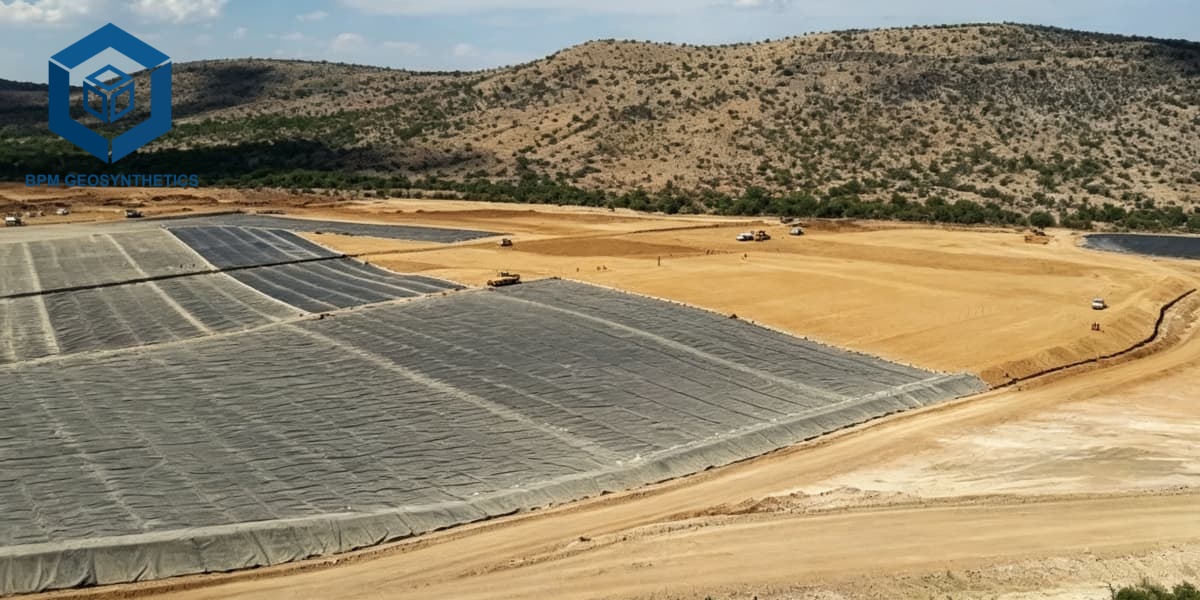
5. BPM Geosynthetics: Geomembrane Underlayment Solutions
The Best Project Material Co., Ltd. (BPM Geosynthetics) has established itself as a significant supplier of geomembrane systems and associated geosynthetics, with products exported to over 100 countries. The company’s approach to underlayment reflects a systems perspective rather than a component-focused one.
BPM Geosynthetics offers geocomposite liners that combine drainage and containment functions in a single product. These configurations are particularly useful when a separate drainage layer is not feasible or when space constraints require integrated solutions. The company can customize geocomposite liners according to specific project needs, with options ranging from geotextile weights of 100 g/m² to 800 g/m².
For projects requiring conventional underlayment, BPM Geosynthetics’s geomembrane systems are designed to work with appropriate protective layers. All BPM Geosynthetics brand HDPE geomembranes have passed certifications including ISO9001, ISO14001, and tests by SGS and Intertek. The company provides installation services and technical support, ensuring that the underlayment and geomembrane function as an integrated system rather than as separate components.
BPM Geosynthetics’s product range includes smooth and textured geomembrane surfaces. Textured surfaces increase friction resistance and provide more stability on slopes and embankments, which can influence underlayment requirements by reducing shear stresses that might otherwise demand additional protection.
6. Geomembrane Underlayment Price Considerations
Geomembrane underlayment pricing depends on material type, mass per unit area, and project scale. Nonwoven needle-punched geotextiles, the most common underlayment material, are typically priced per square meter or per roll.
For reference, geomembrane pricing provides a baseline. In the Chinese market, 0.5 mm HDPE geomembrane has an ex-factory price of approximately 5.8 to 6.5 RMB per square meter, while 1.0 mm new material membrane ranges from 10.2 to 12.4 RMB per square meter. Underlayment costs add to this but represent a relatively small fraction of total system cost. For a 5000 square meter landscape pond project, the difference between 0.75 mm and 1.0 mm membrane was approximately 14,000 RMB—a reminder that underlayment specification should be evaluated against the total project cost and the potential cost of liner failure.
It is worth emphasizing that underlayment should not be selected solely on price. A marginally cheaper underlayment that fails to prevent punctures will lead to far greater expense in remediation and lost containment.
Conclusion
Geomembrane underlayment is not a commodity add-on but a performance-critical layer that determines the durability of the entire containment system. Selection should begin with a thorough assessment of subgrade conditions, overlying loads, and the specific vulnerabilities of the chosen geomembrane. Mass per unit area, puncture resistance, and permeability are the key properties to specify, guided by established research thresholds and project-specific requirements.
The Best Project Material Co., Ltd. (BPM Geosynthetics) offers an integrated approach, combining geomembranes, geocomposites, and technical support that treats underlayment as part of a complete system. For project designers and specifiers, the guiding principle is straightforward: the cost of adequate underlayment is always less than the cost of a failed liner.