What thickness HDPE geomembrane for fish pond lining
HDPE geomembrane for fish pond lining is a high-density polyethylene impermeable liner designed to prevent water seepage, protect soil structure, and maintain stable aquaculture conditions. Thickness selection directly affects durability, puncture resistance, and service life.
Technical Parameters & Specifications
When evaluating what thickness HDPE geomembrane for fish pond lining, buyers must consider mechanical strength, environmental exposure, and subgrade condition. Below are industry-standard technical ranges commonly adopted in aquaculture projects.
Thickness Range: 0.5 mm – 2.0 mm
Density: ≥ 0.94 g/cm³
Tensile Strength (Yield): ≥ 15 kN/m (1.0 mm reference)
Elongation at Break: ≥ 700%
Puncture Resistance: ≥ 250 N (1.0 mm reference)
Carbon Black Content: 2.0% – 3.0%
UV Resistance: ≥ 90% retained strength after 1600h UV exposure
Standard Width: 5 m – 8 m rolls
Recommended Thickness by Pond Type:
| Pond Type | Recommended Thickness | Service Life | Remarks |
|---|---|---|---|
| Small ornamental ponds | 0.5–0.75 mm | 5–8 years | Low hydraulic pressure |
| Standard aquaculture ponds | 0.75–1.0 mm | 8–12 years | Most common selection |
| Commercial intensive farming | 1.0–1.5 mm | 10–15 years | Better puncture resistance |
| Large reservoir-type fish ponds | 1.5–2.0 mm | 15+ years | High stability requirement |
Structure & Material Composition
Understanding material composition helps determine what thickness HDPE geomembrane for fish pond lining is technically appropriate.
Virgin HDPE Resin – Provides impermeability and chemical resistance
Carbon Black – UV stabilization
Antioxidants – Thermal aging resistance
Optional Textured Surface – Improves slope friction
Typical structure:
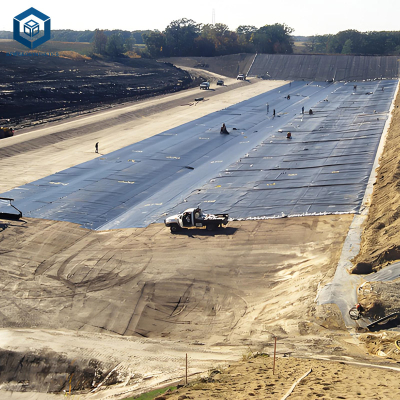
Compacted subgrade soil
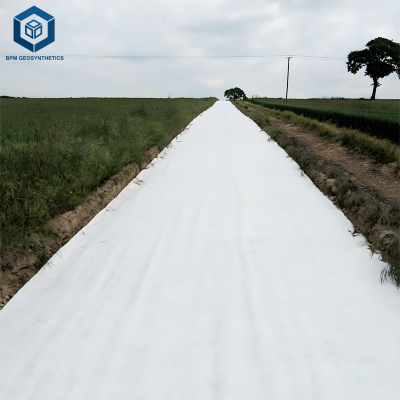
Geotextile cushioning layer (optional)
Anchor trench fixation
Manufacturing Process
1. Raw Material Preparation
High-purity HDPE resin is blended with carbon black and additives using gravimetric feeders.
2. Extrusion & Calendering
Flat die extrusion produces sheets with controlled thickness tolerance (±5%). Automated thickness monitoring ensures consistency.
3. Cooling & Surface Treatment
Cooling rollers stabilize sheet dimensions. Optional texturing rollers create rough surfaces for slope applications.
4. Quality Inspection
Each roll undergoes tensile testing, thickness verification, and spark testing before packaging.
Process control directly affects long-term performance, especially when determining what thickness HDPE geomembrane for fish pond lining is needed for specific engineering conditions.
Industry Comparison
| Material | Thickness Range | Durability | UV Resistance | Cost Level |
|---|---|---|---|---|
| HDPE Geomembrane | 0.5–2.0 mm | High | Excellent | Medium |
| LDPE Film | 0.3–1.0 mm | Medium | Moderate | Low |
| PVC Liner | 0.5–1.5 mm | Medium | Moderate | Medium-High |
| Concrete Lining | N/A | High | Excellent | High |
Application Scenarios
Distributors: Bulk procurement for regional aquaculture markets
EPC Contractors: Integrated fish farm construction projects
Developers: Commercial shrimp and tilapia farms
Government Projects: Water conservation ponds
In commercial aquaculture, answering what thickness HDPE geomembrane for fish pond lining requires evaluating soil condition, pond depth, and expected load.
Core Pain Points & Solutions
1. Puncture by Stones or Roots
Solution: Use 1.0 mm or thicker liner with geotextile cushioning.
2. UV Degradation
Solution: Ensure carbon black content 2–3% and consider shading structures.
3. Seam Leakage
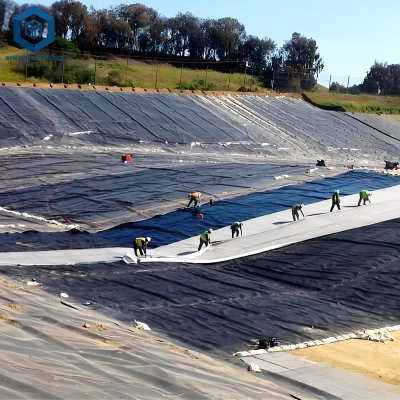
Solution: Apply double-track hot wedge welding and air pressure testing.
4. Slope Slippage
Solution: Use textured HDPE geomembrane and anchor trench design.
Risk Warnings & Avoidance
Avoid recycled materials for long-term aquaculture use.
Do not under-specify thickness for deep ponds (>3 m).
Prevent installation during heavy rain or extreme heat.
Ensure professional welding teams for seams.
Procurement & Selection Guide
Define pond dimensions and depth.
Evaluate subgrade condition (stone content, root risk).
Determine expected service life.
Select appropriate thickness (0.75 mm–1.5 mm typical).
Request full technical data sheet.
Verify third-party testing certificates.
Confirm welding and installation support.
Correctly determining what thickness HDPE geomembrane for fish pond lining reduces long-term operational risk.
Engineering Case Study
Project: 5-hectare commercial tilapia farm
Location: Southeast Asia
Pond Depth: 2.5 m
Selected Thickness: 1.0 mm HDPE geomembrane
Installation Method: Hot wedge welding + anchor trench
Result: Zero leakage after 3 years of operation; water retention efficiency improved by 35% compared to soil pond.
FAQ
1. What thickness HDPE geomembrane for fish pond lining is most common?
0.75 mm to 1.0 mm for standard aquaculture.
2. Is 0.5 mm sufficient?
Only for small, low-pressure ponds.
3. How long does 1.0 mm last?
Typically 10–12 years with proper installation.
4. Does thickness affect welding?
Yes, thicker sheets require higher welding temperature.
5. Should I use textured liner?
Recommended for slopes >1:2.
6. Is geotextile mandatory?
Advised when soil contains sharp particles.
7. Can HDPE be repaired?
Yes, using extrusion welding patches.
8. What width reduces seams?
7–8 m rolls minimize welding joints.
9. Is thicker always better?
Not necessarily; cost and flexibility must be balanced.
10. How to verify quality?
Request laboratory test reports and on-site inspection.
Request Technical Support & Quotation
For project-specific recommendations regarding what thickness HDPE geomembrane for fish pond lining, contact our technical team. We provide detailed data sheets, engineering calculations, welding guidance, and sample materials for evaluation.
Author & Technical Authority
This article was prepared by a geomembrane engineering consultant with over 15 years of experience in aquaculture lining systems, supporting EPC contractors and international distributors in large-scale pond construction projects. All technical data reflects commonly accepted industry standards.