How to choose HDPE geomembrane thickness for landfill project
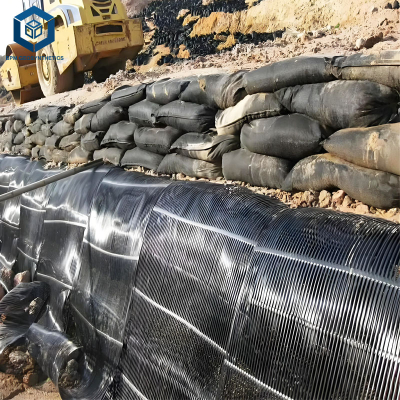
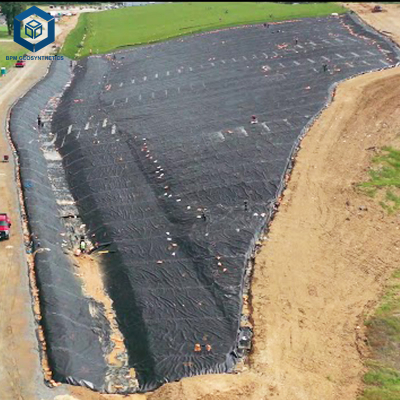
HDPE geomembrane for landfill projects is a high-density polyethylene impermeable liner used in base lining and capping systems to prevent leachate migration and groundwater contamination. Thickness selection directly impacts puncture resistance, stress performance, and long-term environmental safety.
Technical Parameters & Specifications
Understanding how to choose HDPE geomembrane thickness for landfill project requires reference to internationally accepted engineering standards and site-specific load conditions.
Thickness Range (Landfill Grade): 1.0 mm – 2.5 mm
Common Regulatory Minimum (Base Liner): 1.5 mm or 2.0 mm
Density: ≥ 0.94 g/cm³
Tensile Strength at Yield: ≥ 22 kN/m (1.5 mm reference)
Elongation at Break: ≥ 700%
Puncture Resistance: ≥ 480 N (1.5 mm reference)
Stress Crack Resistance (NCTL): ≥ 500 hours
Carbon Black Content: 2%–3%
Roll Width: 5 m – 8 m
| Application Layer | Recommended Thickness | Purpose |
|---|---|---|
| Primary Bottom Liner | 1.5–2.0 mm | Leachate containment |
| Secondary Liner | 1.0–1.5 mm | Leak detection layer |
| Final Cover System | 1.0–1.5 mm | Gas and water barrier |
| Hazardous Waste Landfill | 2.0–2.5 mm | High safety requirement |
Thickness selection must consider waste load, subgrade condition, chemical exposure, and regulatory compliance when determining how to choose HDPE geomembrane thickness for landfill project.
Structure & Material Composition
Virgin HDPE Resin – Provides chemical resistance and impermeability
Carbon Black – UV stabilization for exposed phases
Antioxidants – Thermal aging protection
Optional Textured Surface – Enhances interface friction
Typical landfill lining structure (bottom system):
Compacted clay or GCL layer
HDPE geomembrane (primary liner)
Geotextile protection layer
Drainage layer (HDPE drainage net or gravel)
Leachate collection pipe system
Manufacturing Process
1. Resin Batching & Mixing
Gravimetric systems control resin and additive ratios to ensure uniform performance.
2. Flat Die Extrusion
Large-scale extrusion lines produce sheets with thickness tolerance within ±5%. Automatic thickness gauges monitor uniformity.
3. Surface Texturing (Optional)
Nitrogen or mechanical texturing systems create rough surfaces for slope stability.
4. Laboratory Testing
Each batch undergoes tensile, puncture, tear, OIT, and stress crack resistance testing before shipment.
Quality consistency plays a critical role in deciding how to choose HDPE geomembrane thickness for landfill project, especially for long-term containment exceeding 20 years.
Industry Comparison
| Material | Thickness | Chemical Resistance | Durability | Cost Level |
|---|---|---|---|---|
| HDPE Geomembrane | 1.0–2.5 mm | Excellent | High | Medium |
| LLDPE Geomembrane | 1.0–2.0 mm | Very Good | High Flexibility | Medium |
| PVC Liner | 1.0–2.0 mm | Moderate | Lower Aging Resistance | Medium-High |
| Clay Liner Only | N/A | Low | Dependent on compaction | Low |
Application Scenarios
EPC Contractors: Municipal solid waste landfill construction
Engineering Consultants: Environmental containment design
Government Agencies: Public waste infrastructure projects
Distributors: Supplying geomembrane rolls to regional contractors
For large municipal projects, determining how to choose HDPE geomembrane thickness for landfill project is typically part of a comprehensive geotechnical design review.
Core Pain Points & Solutions
1. Puncture from Waste Load
Solution: Use ≥1.5 mm thickness and add cushioning geotextile layer.
2. Stress Cracking Over Time
Solution: Specify high NCTL resistance materials.
3. Seam Failure
Solution: Implement double-track welding with air channel testing.
4. Chemical Degradation
Solution: Confirm compatibility testing with expected leachate composition.
Risk Warnings & Avoidance
Avoid under-specifying thickness for cost reduction.
Do not use recycled resin for critical containment layers.
Ensure certified welding technicians perform installation.
Conduct destructive and non-destructive seam testing.
Procurement & Selection Guide
Review regulatory requirements (local environmental code).
Assess waste type (municipal vs hazardous).
Conduct geotechnical investigation.
Define design life (20–30 years typical).
Select thickness based on load calculations.
Request full technical data sheet and certificates.
Evaluate manufacturer production capacity and quality control.
Plan installation supervision and QA/QC testing.
Structured evaluation ensures accurate decisions regarding how to choose HDPE geomembrane thickness for landfill project.
Engineering Case Study
Project: 120,000 m² Municipal Solid Waste Landfill
Design Life: 25 years
Base Liner: 2.0 mm HDPE geomembrane
Secondary Liner: 1.5 mm HDPE geomembrane
Installation Method: Dual-track hot wedge welding + vacuum testing
Result: Passed third-party leak detection and regulatory inspection; no seepage detected after 5 years of operation.
FAQ
1. What is the minimum thickness for landfill base liner?
Typically 1.5 mm; 2.0 mm common in municipal projects.
2. Is 1.0 mm sufficient?
Usually only for secondary or cover systems.
3. Why is 2.0 mm preferred?
Higher puncture and stress crack resistance.
4. Does thickness affect cost significantly?
Yes, material cost increases proportionally with thickness.
5. Can thinner liners reduce weight?
Yes, but may compromise durability.
6. How long does landfill HDPE last?
20–30 years under proper design conditions.
7. What about textured liners?
Used on slopes to prevent sliding.
8. Are international standards required?
Yes, compliance with recognized technical standards is essential.
9. Is double liner system mandatory?
Often required for hazardous waste landfills.
10. How to verify authenticity?
Request production batch testing reports and third-party certification.
Request Technical Documentation & Quotation
For project-specific consultation on how to choose HDPE geomembrane thickness for landfill project, contact our engineering team for thickness calculation support, technical data sheets, welding specifications, and sample materials.
Author & Technical Authority
This article is prepared by an environmental containment engineering specialist with over 15 years of landfill lining system design experience, supporting EPC contractors, government infrastructure projects, and international material distributors.