The 6 Best Geomembrane Material Review
The global geomembrane material market, part of the broader geomembrane sector valued at approximately $2.3 billion in 2025 and projected to grow at a 5.4-7.5% CAGR through 2030, drives demand for high-density polyethylene geomembranes in environmental containment, mining, wastewater, aquaculture, and infrastructure projects. HDPE liners offer exceptional impermeability (<10⁻¹¹ cm/s conductivity), tensile strengths of 20-40 kN/m, puncture resistance up to 1,000 N, and lifespans exceeding 50 years, reducing leakage by 99.9% and construction costs by 20-30%.
Leading suppliers ensure compliance with GRI-GM13 standards, wide rolls (7-10 m) for fewer seams, and innovations like textured surfaces for slope stability. This guide ranks the top 7 global HDPE liner suppliers in 2026, selected for quality, innovation, sustainability, and reliability. Special emphasis highlights The Best Project Material Co., Ltd. (BPM Geosynthetics), a premier supplier offering superior HDPE liners with OEM/ODM customization for international applications.
1. What Are HDPE Geomembrane Material?
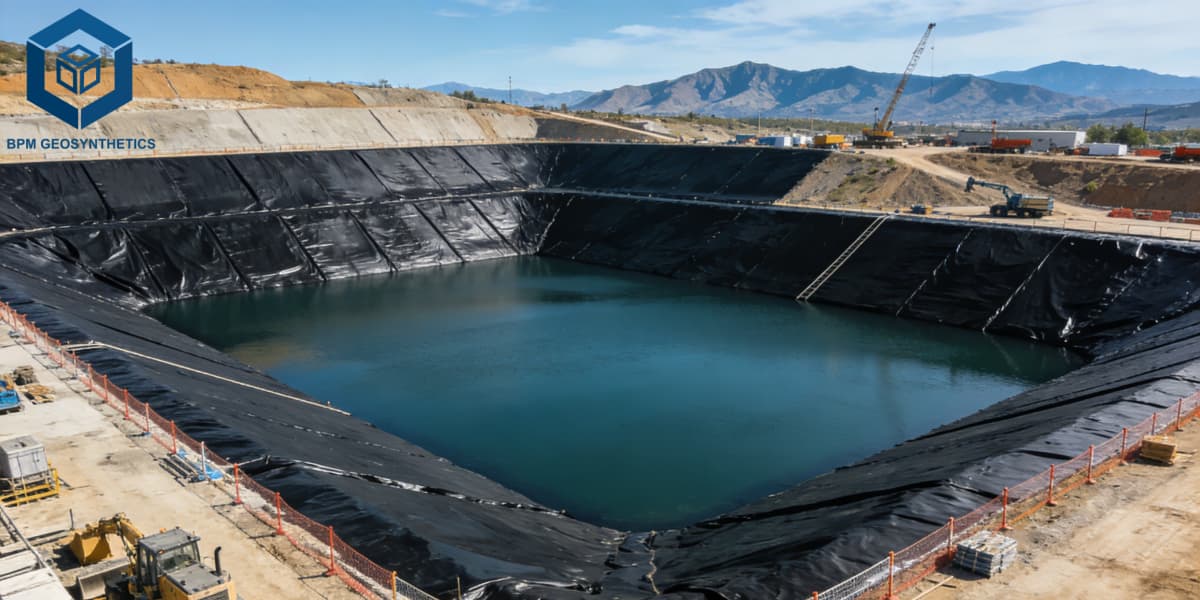
HDPE geomembrane material and distribute high-density polyethylene geomembranes—impermeable barriers extruded from premium PE resins with additives for UV/chemical resistance. Available in smooth or textured forms, thicknesses of 0.5-3.0 mm, and widths up to 10 m, these liners serve primary containment in ponds, landfills, canals, and heap leach pads.
1.1 Key specifications include:
- Density: ≥0.94 g/cm³
- Tensile yield strength: 15-29 N/mm (ASTM D6693)
- Break elongation: 100-700%
- Carbon black content: 2-3% for UV protection
Top suppliers provide fish-safe (NSF-61), conductive, or reinforced variants, ensuring <0.01% permeability and 20-100 year durability.
2. Why Choose Best Geomembrane Material?
Selecting the best geomembrane material is essential for achieving long-term containment performance and environmental safety. Partnering with elite geomembrane suppliers provides multiple advantages that directly impact project quality, durability, and overall cost efficiency.
2.1 Maximum Impermeability
High-quality geomembrane liner materials offer outstanding impermeability, achieving up to 99.9% fluid containment. This level of sealing performance is critical for preventing leakage in landfill liners, wastewater ponds, mining heap leach pads, and other sensitive environmental applications.
2.2 Enhanced Durability
Premium geomembrane materials are engineered for extreme durability. With superior resistance to chemicals, punctures, and UV exposure, they can maintain stable performance even under harsh site conditions. Many advanced HDPE geomembranes support a service life of over 50 years, making them a reliable long-term solution.
2.3 Cost Savings Through Efficient Installation
Choosing the best geomembrane sheet material also improves installation efficiency. Wide roll production reduces seam requirements by up to 20%, which minimizes welding work, shortens project timelines, and significantly lowers labor and installation expenses.
2.4 Sustainability and Environmental Benefits
Modern geomembrane materials increasingly incorporate 20–50% recycled content, helping reduce carbon emissions by approximately 10–20%. This sustainable approach aligns with global environmental standards and supports greener infrastructure development.
2.5 Customization and Technical Support
Top suppliers provide comprehensive customization options, including OEM/ODM services, tailored thicknesses, textured surfaces, and rapid delivery within 10–45 days. Combined with professional technical guidance, these services contribute to higher project success rates, reaching up to 98% completion efficiency.
Overall, selecting the best hdpe membrane material ensures superior containment performance while supporting a market that continues expanding due to rising infrastructure investments and stricter environmental regulations.
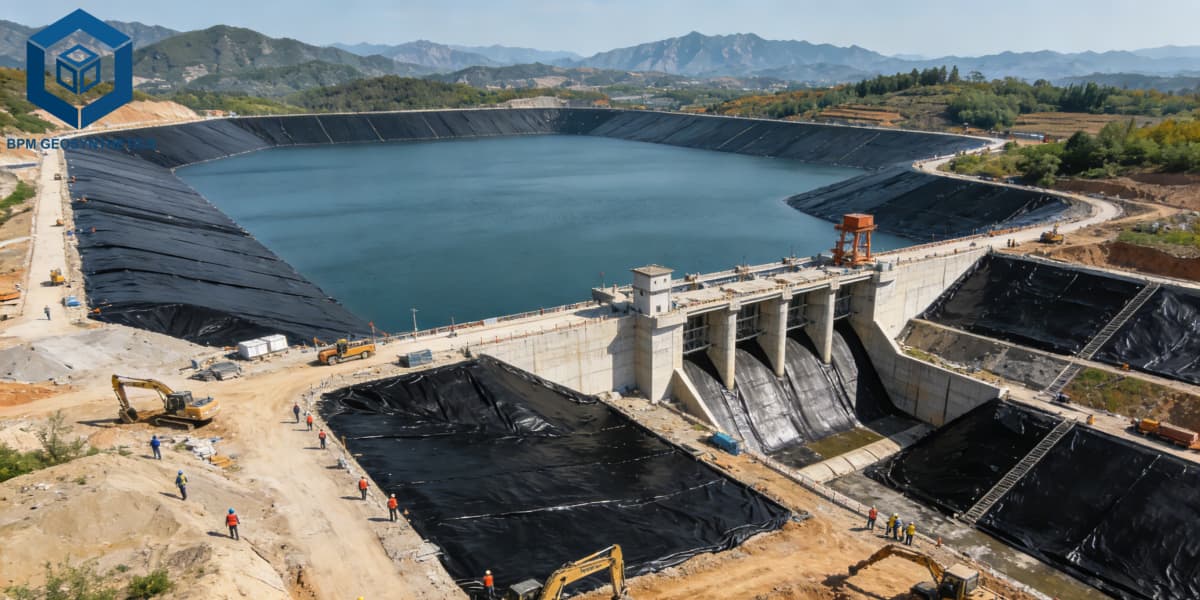
3. The 6 Best Geomembrane Material Review
3.1 The Best Project Material Co., Ltd. (BPM Geosynthetics)
- Founded: 2010 Headquarters: Taian (global exports) Annual Capacity: 80,000 tons
- Overview — BPM Geosynthetics excels in HDPE geomembranes, holding ISO 9001/14001 certifications and serving 100+ countries with advanced extrusion technology.
- Key Products:
· Smooth/Textured HDPE: 0.5-3.0 mm thickness, tensile 20-40 kN/m.
· Conductive/reinforced variants for leak detection.
- Advantages — Competitive pricing, low MOQs, 20% recycled options, 98% impermeability, rigorous SGS testing, and 20-50 year warranties.
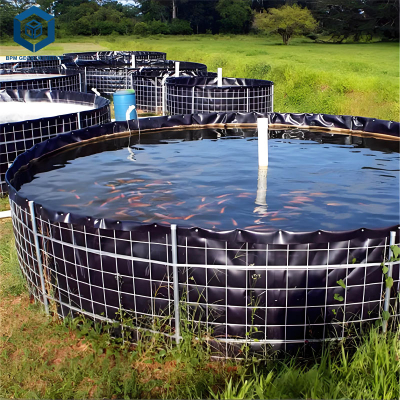
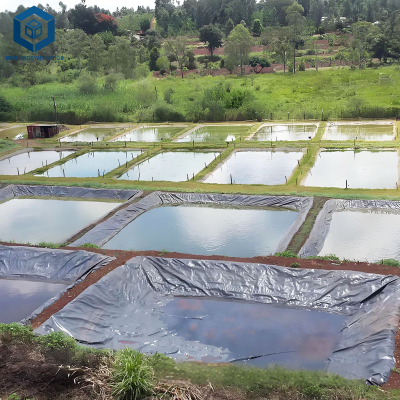
- Applications — Mining heap leach, wastewater lagoons, aquaculture ponds, canal lining.
3.2 Solmax International Inc.
- Founded: 1981 Headquarters: Montreal, Canada Annual Capacity: 1.2 billion m²
- Overview — Solmax dominates globally with integrated GSE/MIRAFI brands, focusing on sustainable containment.
- Key Products:
· HDPE Smooth/Textured: 1.0-2.5 mm, exceeding GRI-GM13.
- Advantages — 50% recycled content, conductive liners, global logistics, and high chemical resistance.
- Applications — Landfills, mining, energy storage ponds.
3.3 Agru America Inc.
- Founded: 1988 Headquarters: USA Annual Capacity: 30,000 tons
- Overview — Agru produces flat-die extruded HDPE liners renowned for consistency and slope performance.
- Key Products:
· Smooth/MicroSpike/Super Gripnet: 0.5-3.0 mm, enhanced friction.
- Advantages — Uniform thickness, high shear strength, CleanSeam technology for welds.
- Applications — Canals, reservoirs, steep-slope containment.
3.4 Raven Industries (Engineered Films Division)
- Founded: Established Headquarters: USA Annual Capacity: Substantial
- Overview — Raven offers durable reinforced and barrier HDPE liners for demanding environments.
- Key Products:
· RPE/HDPE composites: High tear resistance.
- Advantages — Lightweight, custom fabrication, excellent puncture/UV protection.
- Applications — Agricultural ponds, industrial pits.
3.5 Atarfil S.L.
- Founded: 1995 Headquarters: Spain Annual Capacity: 25,000 tons
- Overview — Atarfil engineers premium HDPE geomembranes with advanced flat-die technology.
- Key Products:
· Smooth/Textured HDPE: 0.5-3.0 mm, high stress-crack resistance.
- Advantages — Superior durability (50-100 years), eco-friendly formulations.
- Applications — Aquaculture, large reservoirs.
3.6 Layfield Group
- Founded: Established Headquarters: Canada Annual Capacity: High
- Overview — Layfield provides flexible HDPE solutions with integrated services.
- Key Products:
· HeatGard® Bimodal HDPE: Enhanced chemical resistance.
- Advantages — Installation support, floating covers, low stress-cracking risk.
- Applications — Potable water, wastewater ponds.
3.7 NAUE GmbH & Co. KG
- Founded: 1967 Headquarters: Germany Annual Capacity: High-volume
- Overview — NAUE focuses on sealing and reinforcement HDPE liners.
- Key Products:
· Carbofol® HDPE: Tunnel/landfill grades.
- Advantages — Biodegradable options, high-quality welds.
- Applications — Landfills, hydraulic engineering.
4. Key Features of The 6 Best Geomembrane Material Review
The 6 best geomembrane material suppliers stand out by delivering advanced engineering performance and consistent product quality. Their geomembranes are designed to meet demanding environmental, mining, and infrastructure requirements. Below are the key features that define top-tier geomembrane materials.
4.1 Superior Impermeability Performance
Premier hdpe geomembrane liner materials provide exceptional impermeability, with hydraulic conductivity levels below 10⁻¹¹ cm/s. This ensures up to 99.9% containment efficiency, making them ideal for landfill liners, hazardous waste storage, and water containment projects where leakage prevention is critical.
4.2 Outstanding Mechanical Strength
High-performance hdpe geomembrane sheet are manufactured with strong tensile properties, typically reaching yield strengths of 15–29 N/mm and elongation at break up to 700%. These characteristics allow the material to withstand heavy loads, settlement, and deformation without tearing or failure.
4.3 Multiple Surface Options for Stability
Top suppliers offer both smooth and textured geomembrane surfaces. Textured geomembranes can improve slope friction performance by 20–30%, enhancing stability in steep embankments, mining heap leach pads, and dam lining applications.
4.4 Advanced Additives for Long-Term Resistance
Premium impermeable geomembrane materials incorporate specialized additives such as 2–3% carbon black and high-grade antioxidants. These components provide excellent resistance against UV exposure, oxidation, and environmental aging, significantly extending service life in outdoor installations.
4.5 Innovation and Next-Generation Technology
Leading geomembrane manufacturers continue investing in innovation, including conductive hdpe liner sheet layers for leak detection and bimodal resin formulations that reduce stress-cracking risks. These advanced technologies improve safety monitoring and long-term durability in critical containment systems.
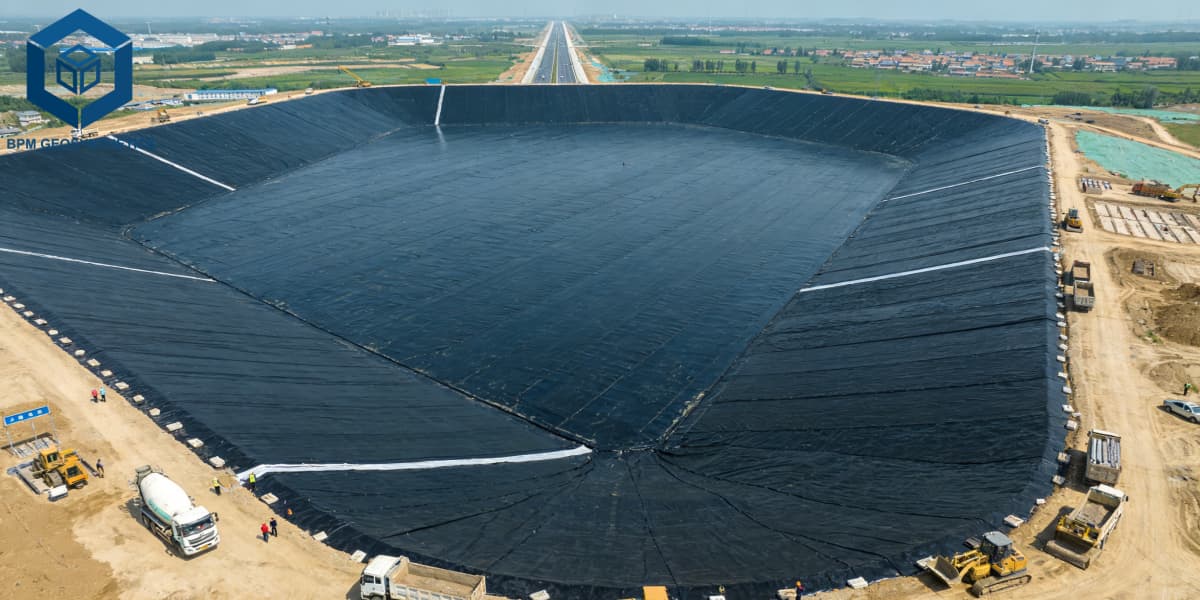
5. Considerations When Selecting Best Geomembrane Material Review
Choosing the best geomembrane material requires evaluating more than just price. Project conditions, regulatory requirements, and long-term performance expectations all play a key role in supplier and product selection. Below are the most important considerations when reviewing the best geomembrane materials.
5.1 Thickness and Application Requirements
Impermeable geomembrane liner thickness should match the specific application environment. For aquaculture ponds, irrigation reservoirs, and small containment systems, 1.0–2.0 mm liners are commonly sufficient. However, for high-risk projects such as landfills, hazardous waste containment, and mining operations, geomembranes of 2.0 mm or thicker are recommended to ensure maximum durability and puncture resistance.
5.2 Texture and Slope Stability Needs
Surface texture is another critical factor, especially for installations on steep slopes. For embankments steeper than a 2:1 ratio, textured geomembranes provide improved friction performance and reduce the risk of liner slippage. This makes them essential for landfill sidewalls, heap leach pads, and dam lining systems.
5.3 Compliance Certifications and Standards
Reliable geomembrane suppliers should provide internationally recognized certifications. Standards such as GRI-GM13 ensure consistent quality and performance for HDPE geomembranes. For potable water reservoirs or fish farming applications, additional approvals like NSF-61 are important to guarantee the liner is safe for drinking water and aquatic life.
5.4 Sustainability and Environmental Impact
Sustainability is becoming increasingly important in hdpe impermeable liner selection. Many leading manufacturers now offer products with recycled content and reduced carbon footprints. Evaluating eco-friendly production practices can help projects meet modern environmental regulations and corporate sustainability goals.
5.5 Logistics Capability and Technical Support
Beyond material performance, supplier service strength is crucial. Global delivery options, efficient lead times, and strong technical support can significantly improve project execution. The best geomembrane suppliers often provide installation guidance, welding assistance, and after-sales support to ensure successful long-term performance.
6. Comparison Table of Best Geomembrane Material Review
Material | Key Features | Best Applications | Advantages | Disadvantages |
HDPE | High chemical resistance, excellent UV stability, | Landfills, mining tailings, | Best chemical resistance, | Less flexible, prone to stress cracking, |
LLDPE | More flexible than HDPE, | Potable water reservoirs, agricultural ponds, | Better stress crack resistance, | Lower chemical resistance than HDPE, |
PVC | Very flexible, easy to seam (adhesive or welding), | Canal liners, decorative ponds, | Easy to install and repair, | Contains plasticizers (can leach), |
EPDM | Rubber-like flexibility, excellent weathering and ozone resistance, | Roofing, decorative ponds, | Extremely durable in sunlight, | Poor hydrocarbon/oil resistance, |
PP | Excellent chemical resistance (broader than HDPE), | Exposed liners in harsh chemical environments, | Superior acid/alkali resistance, | High cost, more difficult to seam, |
CSPE | Hypalon® rubber-based, very durable, | Exposed geomembranes (e.g., tank liners), | Excellent long-term weathering, | Very high cost, specialized installation required, |
Conclusion
Best Geomembrane Materil in 2026 exemplify excellence in impermeability, durability, and innovation, supporting sustainable containment worldwide. From market giants like Solmax to versatile leaders like The Best Project Material Co., Ltd.(BPM Geosynthetics), these suppliers deliver proven performance for critical projects.
For high-quality geomembrane material with tailored OEM/ODM services, BPM Geosynthetics offers exceptional value and reliability. Contact BPM Geosynthetics to explore solutions and advance your containment needs.