Hdpe geomembrane gml standard
HDPE geomembrane GML standard refers to a high-density polyethylene geomembrane manufactured and tested in accordance with internationally recognized GML technical specifications, designed for long-term impermeability, chemical resistance, and structural integrity in containment, lining, and environmental engineering applications.
Technical Parameters & Specifications
The HDPE geomembrane GML standard defines minimum performance thresholds to ensure predictable engineering behavior under mechanical, thermal, and chemical stress.
| Parameter | Typical Range | Test Reference |
|---|---|---|
| Thickness | 0.5 mm – 3.0 mm | ISO / ASTM methods |
| Density | ≥ 0.94 g/cm³ | ASTM D1505 |
| Tensile Strength at Yield | ≥ 15 MPa | ASTM D6693 |
| Elongation at Break | ≥ 700% | ASTM D6693 |
| Carbon Black Content | 2.0% – 3.0% | ASTM D1603 |
| Oxidative Induction Time (OIT) | ≥ 100 min | ASTM D3895 |
Structure & Material Composition
An HDPE geomembrane compliant with GML standard is engineered as a single-layer or co-extruded polymer barrier with controlled formulation.
Primary Polymer: Virgin HDPE resin with narrow molecular weight distribution
Stabilizer System: Antioxidants for thermal and UV resistance
Carbon Black: Uniform dispersion for UV protection
Optional Surface: Smooth or textured (single/double-sided)
Manufacturing Process
The HDPE geomembrane GML standard requires a tightly controlled manufacturing workflow to ensure consistency.
Raw Material Selection: Certified HDPE resin and additives
Gravimetric Dosing: Precise blending of polymer and stabilizers
Extrusion: Flat-die or blown-film extrusion lines
Surface Texturing (if required): Inline embossing or spray-on texturing
Cooling & Calibration: Thickness tolerance control
Inline Inspection: Spark testing, thickness scanning
Roll Winding & Labeling: Traceable batch identification
Industry Comparison
Comparison of HDPE geomembrane GML standard with alternative liner materials.
| Material | Durability | Chemical Resistance | Cost Level | Typical Use |
|---|---|---|---|---|
| HDPE (GML Standard) | Very High | Excellent | Medium | Landfill, mining, water containment |
| LLDPE Geomembrane | High | Good | Medium | Irregular subgrades |
| PVC Liner | Medium | Moderate | Low | Temporary containment |
| Bituminous Liner | Low | Low | Low | Short-term projects |
Application Scenarios
HDPE geomembrane GML standard products are widely specified by engineering stakeholders:
EPC Contractors: Waste containment, tailings dams, leach pads
Distributors: Stocking standard rolls for regional projects
Engineering Firms: Environmental remediation and water management
Developers: Industrial ponds and infrastructure protection
Core Engineering Pain Points & Solutions
Leakage Risk: Solved by controlled thickness and weldability
UV Degradation: Mitigated by carbon black and antioxidant systems
Chemical Attack: HDPE polymer backbone ensures resistance
Installation Failure: GML-compliant sheets ensure welding consistency
Risk Warnings & Mitigation Recommendations
Improper application of HDPE geomembrane GML standard materials may introduce long-term risks.
Avoid non-certified recycled resin for critical containment
Verify OIT values for high-temperature environments
Ensure subgrade preparation meets design assumptions
Use qualified welding technicians and tested equipment
Procurement & Selection Guide
Define project design life and chemical exposure
Select thickness per hydraulic and mechanical load
Confirm compliance with GML standard test items
Review factory QA/QC documentation
Assess roll dimensions and logistics constraints
Specify on-site testing and acceptance criteria
Align installation method with geomembrane type
Engineering Case Application
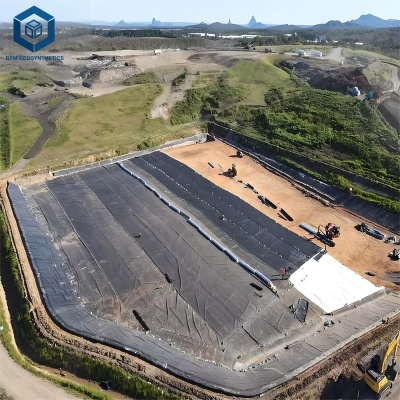
In a mining tailings containment project, a 2.0 mm HDPE geomembrane GML standard liner was installed over compacted clay subgrade. Double-track fusion welding with air-channel testing achieved a leak-free system meeting regulatory requirements over a projected 30-year service life.
FAQ
Is GML a material or a test standard? A technical specification framework.
What thickness is most common? 1.5 mm and 2.0 mm.
Can recycled HDPE meet GML? Generally not for critical containment.
Does GML cover welding? Indirectly via material consistency.
Is textured HDPE allowed? Yes, if tested to the same criteria.
How long is service life? Typically 20–50 years depending on exposure.
Is UV protection mandatory? Yes for exposed installations.
Can it be used underwater? Yes, with proper anchoring.
Are third-party tests required? Strongly recommended.
Does GML replace ASTM? No, it complements ASTM/ISO tests.
CTA – Commercial & Technical Request
For project-specific HDPE geomembrane GML standard specifications, pricing, or engineering samples, procurement teams are encouraged to request detailed technical datasheets, QA/QC reports, and batch traceability documentation prior to contract award.
E-E-A-T Author Credentials
This article is authored by an engineering technical team with over 15 years of experience in geomembrane manufacturing, environmental containment design, and international EPC project support, with direct involvement in landfill, mining, and water infrastructure projects.