Ultimate Guide Choosing To HDPE Geomembrana
HDPE Geomembrana is synthetic liners widely used in environmental, hydraulic, and industrial applications for containment, barrier protection, and fluid control. Due to their excellent chemical resistance, durability, and cost-effectiveness, HDPE geomembranas are a preferred choice for landfills, mining operations, water reservoirs, and agricultural projects.
Selecting the right HDPE geomembrana requires understanding material properties, manufacturing processes, installation techniques, and application-specific requirements. This comprehensive guide will help you make an informed decision when choosing an HDPE geomembrana for your project.
1. What is HDPE Geomembrana?
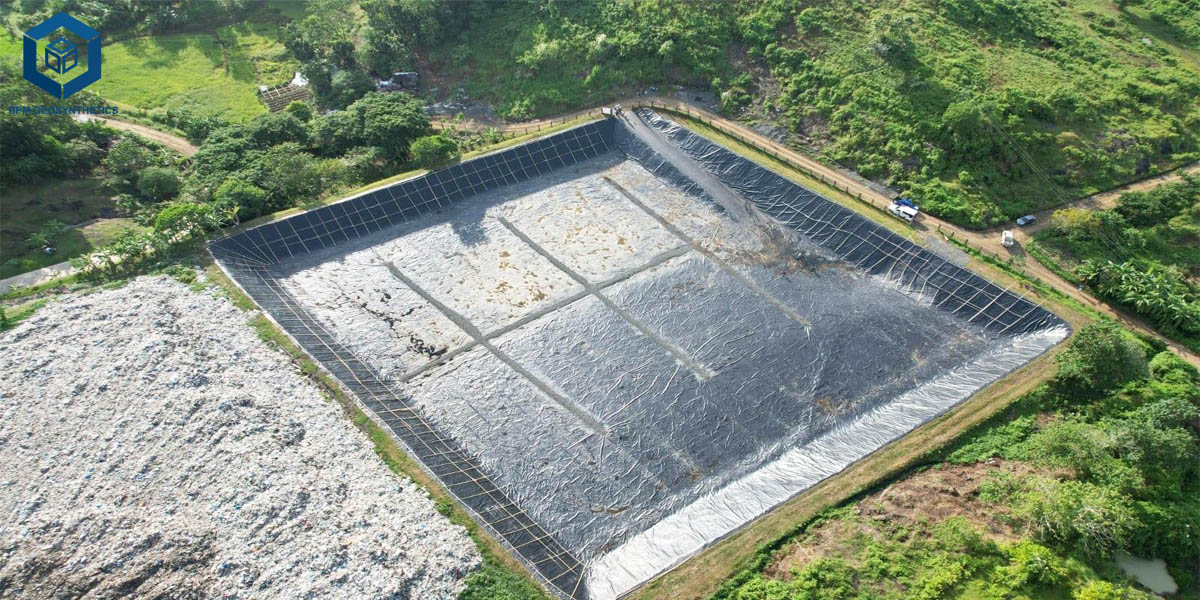
HDPE geomembrana is a flexible, impermeable plastic sheet made from high-density polyethylene resin. It is manufactured through an extrusion or calendering process, resulting in a durable, UV-resistant, and chemically stable liner.
1.1 Key Properties of HDPE Geomembrana
- High Chemical Resistance – Resists acids, alkalis, and hydrocarbons.
HDPE geomembrana maintains its stability when exposed to a wide range of industrial chemicals.This makes it suitable for landfills, mining sites, and wastewater projects where harsh substances are present.
- Excellent Tensile Strength – Withstands stress and deformation.
Geo membranes are strong molecular structure allows it to endure significant stretching without tearing.This ensures durability during installation and under long-term soil pressure or settlement.
- Low Permeability – Prevents fluid leakage.
The material forms an impermeable barrier that effectively stops water, gas, and other fluids from passing through.This property is essential for applications like ponds, reservoirs, and containment facilities.
- UV and Weather Resistance – Long-term performance in outdoor conditions.
HDPE geomembrana resists degradation caused by sunlight, temperature fluctuations, and harsh weather.It remains stable even in high UV environments, making it suitable for exposed installations.
- Long Service Life – Typically lasts 20–50 years depending on environmental exposure.
With proper installation and maintenance, HDPE liners deliver decades of reliable performance.Their high durability reduces replacement frequency and lowers long-term project costs.
2. Applications of HDPE Geomembrana
HDPE geomembranes are widely used across environmental, industrial, and agricultural sectors due to their outstanding impermeability, strength, and chemical resistance. Below is an expanded overview of key application areas:
2.1 Environmental Protection
2.1.1 Landfill Liners – Prevent leachate contamination of soil and groundwater.
HDPE liners create a protective barrier that stops hazardous liquids from seeping into the environment. They are commonly used in both bottom liners and capping systems to meet strict environmental regulations.
2.1.2 Wastewater Treatment Ponds – Contain industrial and municipal effluents.
The geomembrane resists harsh chemicals found in wastewater, ensuring secure containment. It helps maintain pond integrity, preventing leakage during long-term operation.
2.1.3 Hazardous Waste Containment – Secure toxic materials from leaching.
HDPE geomembranes provide reliable isolation for hazardous liquids and solids. Their chemical resistance makes them suitable for industrial chemical storage areas and remediation sites.
2.2 Water Management
2.2.1 Reservoirs & Canals – Prevent water seepage.
HDPE geomembrane maintain high water retention by reducing losses caused by soil absorption. HDPE liner also enhance structural stability in canals and embankments.
2.2.2 Potable Water Storage – Safe lining for drinking water.
HDPE is approved for contact with potable water and does not release harmful substances.It ensures clean, uncontaminated storage for municipal and rural water systems.
2.2.3 Aquaculture Ponds – Maintain water levels in fish and shrimp farms.
The smooth surface discourages algae buildup and improves water quality management.Geomembrane sheet is durability supports long-term operation even under constant water pressure.
2.3 Mining Industry
2.3.1 Heap Leach Pads – Contain chemical solutions used in metal extraction.
HDPE liners prevent cyanide or acid-based leach solutions from penetrating the soil.Their strength and chemical resistance enable safe, efficient mineral processing.
2.3.2 Tailings Storage – Prevent toxic mine waste leakage.
HDPE membrane act as a secure barrier between tailings and the environment.They provide long-term stability, even under heavy loads and harsh chemical exposure.
2.4 Agriculture
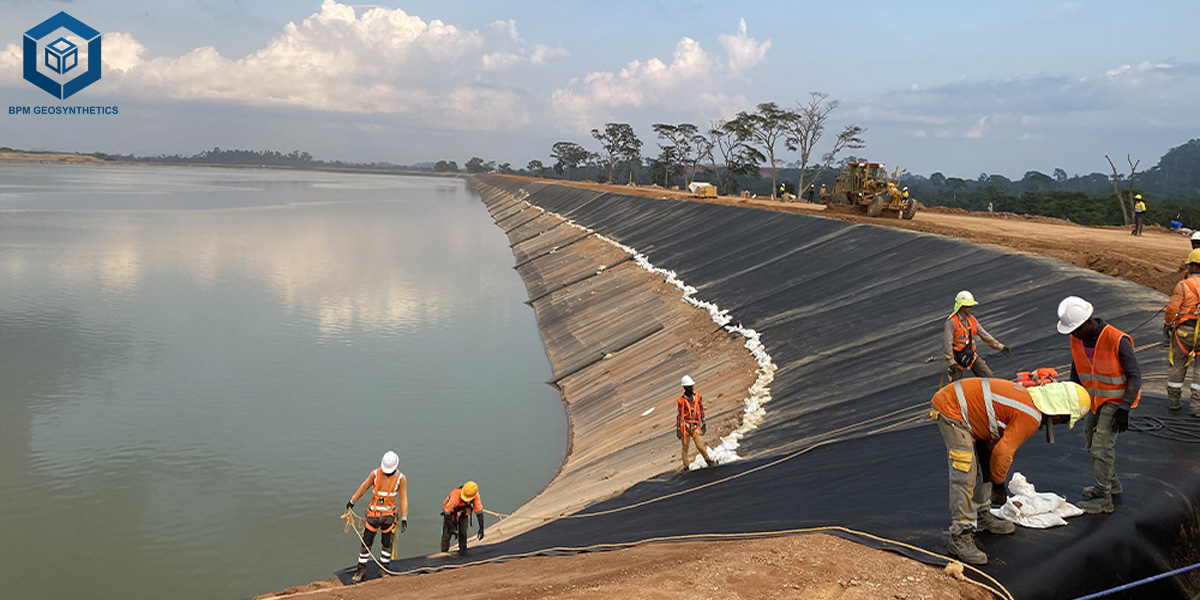
2.4.1 Irrigation Ponds – Reduce water loss through seepage.
High density polyethylene geomembrane help farmers maximize water availability by preventing groundwater infiltration.They are essential for regions with limited water resources or high soil permeability.
2.4.2 Manure Storage – Prevent nutrient runoff into water bodies.
Geo membrane sheet protect surrounding land and waterways from organic waste contamination.They support responsible livestock management and compliance with agricultural regulations.
2.5 Construction & Civil Engineering
2.5.1 Tunnel Waterproofing – Prevent moisture infiltration.
Geomembrana in hdpe create a continuous waterproof layer that protects tunnels from groundwater intrusion.This enhances structural safety and extends the lifespan of the construction.
2.5.2 Roofing Underlays – Secondary waterproofing layer.
HDPE geo membrane act as an additional barrier under roofing materials to prevent leaks.They provide long-term resistance to weathering, UV exposure, and mechanical stress.
3. Factors to Consider When Choosing HDPE Geomembrana
Selecting the right HDPE geomembrane involves evaluating several factors:
3.1. Thickness (Gauge)
HDPE geomembranes typically range from 0.5 mm (20 mil) to 3.0 mm (120 mil). Thicker membranes offer:
(1)Higher puncture resistance (important for landfills and mining).
(2)Better stress crack resistance.
(3)Longer lifespan in harsh environments.
Recommendation:
(1)Landfills & Mining: 1.5 mm – 2.5 mm
(2)Water Ponds & Agriculture: 0.75 mm – 1.5 mm
3.2 Density & Material Quality
(1)Standard HDPE (0.940-0.950 g/cm³) – Good balance of strength and flexibility.
(2)High-Performance HDPE (≥ 0.950 g/cm³) – Enhanced chemical and stress resistance.
Tip: Ensure the geomembrane meets GRI-GM13 or ASTM D6392 standards.
3.3 UV Resistance & Carbon Black Content
(1)UV-stabilized HDPE contains 2-3% carbon black to prevent degradation from sunlight.
(2)Without carbon black, HDPE degrades faster when exposed to UV rays.
Recommendation: Always choose UV-stabilized HDPE for outdoor applications.
3.4. Chemical Resistance
HDPE resists most chemicals, but compatibility should be checked for:
(1)Strong oxidizers (e.g., chlorine, hydrogen peroxide).
(2)Aromatic hydrocarbons (e.g., benzene, toluene).
Tip: Consult chemical resistance charts before selection.
3.5. Tensile Strength & Elongation
(1)Tensile Strength (ASTM D6693): Minimum 20 MPa.
(2)Elongation at Break: Minimum 700% (ensures flexibility).
Critical for: High-stress applications like landfill caps and floating covers.
3.6. Seaming & Installation Method
HDPE geomembranes are joined using:
(1)Extrusion Welding – For thick seams in critical areas.
(2)Hot Wedge Welding – Most common for long seams.
(3)Chemical Bonding – Rare, used for repairs.
Tip: Ensure certified installers perform seaming to prevent leaks.
3.7. Permeability Coefficient
(1)HDPE has very low permeability (< 1×10⁻¹³ cm/s).
(2)Important for hazardous waste containment where leakage must be minimized.
3.8. Temperature Resistance
(1)Operating Range: -60°C to +80°C.
(2)Thermal Expansion: HDPE expands/contracts with temperature changes—allow for slack during installation.
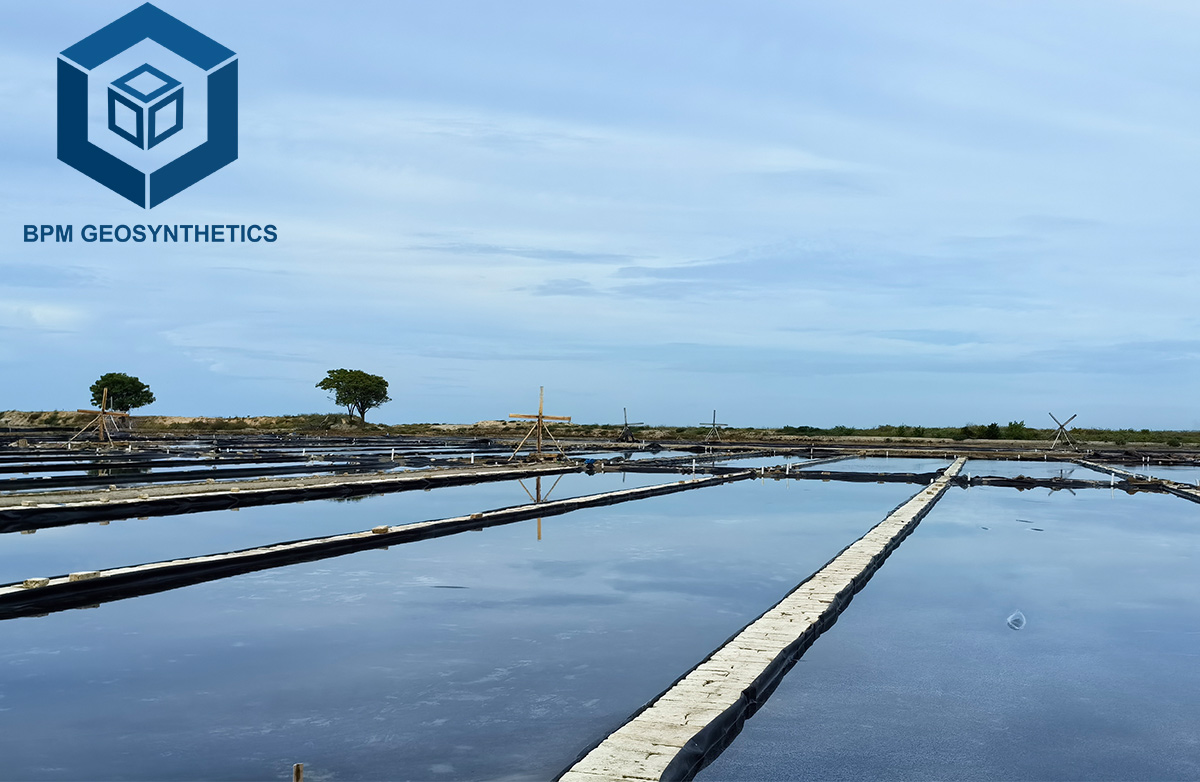
HDPE Pond liner is widely used in both decorative fish ponds and fish ponds. Fish ponds usually choose 0.5mm to 0.75mm. In the Southeast Asian aquaculture market, some customers will consider pond liners with a thickness of 0.3mm due to cost considerations.
The main advantages of fish pond liner:
Avoid soil contact and minimize water contamination.
Prevents waste buildup in the soil and prevents harmful chemicals from leaching into the pond
Promotes fish growth while reducing the risk of disease.
Reduces erosion and facilitates waste removal from the pond
Provides a smooth harvesting surface
Provides long-term UV protection in tropical facilities.
4. HDPE Geomembrana Manufacturing Process
Understanding the manufacturing process helps evaluate the quality, performance, and reliability of geomembrane liner. Below is an expanded explanation of each stage.
4.1 Raw Material Selection
4.1.1 Virgin HDPE Resin – Preferred for durability.
Virgin resin offers superior mechanical strength, chemical resistance, and long-term performance.HDPE geomembrane liner is the ideal choice for high-standard applications such as landfills, mining, drinking water projects, and environmental protection systems.
4.1.2 Recycled HDPE – Lower cost but reduced performance.
Recycled materials provide cost savings but may show inconsistencies in strength and durability.HDPE geomembrane sheet is generally used in non-critical applications where high chemical or UV performance is not required.
4.2 Production Methods
4.2.1 Extrusion – Produces smooth/textured sheets.
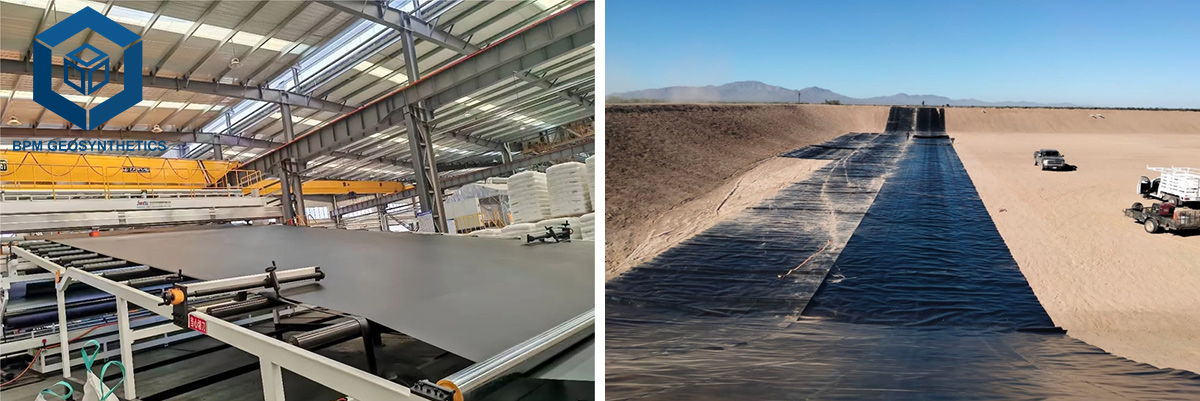
In extrusion, molten HDPE is forced through a die to create uniform geomembrane sheets.This method allows for precise control of thickness and enables production of both smooth and textured surfaces for better friction performance.
4.2.2 Calendering – Used for thicker liners (e.g., 2.0 mm+).
The calendering process uses rollers to compress the molten resin into thicker, denser sheets.Impermeable geomembrane is suitable for heavy-duty geomembranes that require higher tensile strength, improved rigidity, and enhanced dimensional stability.
4.3 Quality Control Tests
4.3.1 Melt Flow Index (MFI) – Ensures consistency.
MFI testing measures how easily the resin flows during processing, indicating material uniformity.Consistent MFI ensures that the HDPE liner sheet has predictable mechanical properties and stable performance during extrusion.
4.3.2 Density Testing – Confirms material grade.
Density determines polymer crystallinity and helps verify compliance with product specifications.Higher-density HDPE typically provides better chemical resistance and structural integrity.
4.3.3 Puncture Resistance (ASTM D4833) – Measures durability.
This test evaluates the membrane’s ability to withstand sharp objects and mechanical stress.High puncture resistance is essential for installations involving rocky subgrades, waste loads, or construction equipment.
5. HDPE vs. Other Geomembrana Materials
Feature | HDPE | LDPE | PVC | EPDM |
Chemical Resistance | Excellent | Good | Moderate | Good |
UV Resistance | Excellent | Good | Poor | Excellent |
Flexibility | Moderate | High | High | Very High |
Lifespan | 20-50 years | 15-30 years | 10-20 years | 20-30 years |
Cost | Low-Medium | Medium | Medium | High |
Best Choice:
HDPE for landfills, mining, and harsh chemical environments.
LLDPE for flexible, conformable liners (e.g., ponds).
PVC for short-term projects requiring high flexibility.
6. Common Mistakes to Avoid
Choosing the Wrong Thickness – Leads to premature failure.
Poor Seaming – Causes leaks (always hire certified welders).
Ignoring UV Protection – Reduces lifespan in exposed applications.
Inadequate Subgrade Prep – Increases puncture risk.
Summary
HDPE pond liner is an ideal and cost-effective geosynthetic material for fish ponds. Choosing the right HDPE pond liner thickness depends on several factors, including the size of the pond, soil type, the intended use of the pond, the possibility of sharp objects, and environmental factors, which all affect the choice of HDPE liner thickness.
High-density polyethylene pond liner is the geomembrane liner of choice for most applications due to its unique properties such as chemical resistance, puncture resistance, flexibility, etc. If you have a fish pond project under construction or planned to be built, and you don't know how to choose the material, thickness, etc. of the pond liner, you can contact us. Our engineers are online 24 hours a day to serve you. BPM Geomembrane is a leading HDPE pond liner manufacturer and supplier with more than 20 years of industry experience. If you have any questions about HDPE liner specifications, please contact us. BPM Geosynthetics can provide you with free sample support!