Geomembrane vs clay liner comparison
Geomembrane vs clay liner comparison refers to the technical evaluation between synthetic geomembrane liners (typically HDPE, LDPE, or LLDPE) and compacted clay liners used in environmental containment systems. Both materials function as low-permeability barriers designed to prevent fluid migration in landfills, reservoirs, mining ponds, and wastewater lagoons.
Technical Parameters and Specifications
A proper geomembrane vs clay liner comparison requires evaluation of permeability, structural stability, thickness requirements, and long-term durability under environmental exposure.
| Parameter | Geomembrane Liner | Clay Liner |
|---|---|---|
| Permeability Coefficient | 10⁻¹³ – 10⁻¹⁴ m/s | 10⁻⁷ – 10⁻⁹ m/s |
| Typical Thickness | 0.75 – 2.5 mm | 300 – 1000 mm |
| Tensile Strength | 20 – 35 MPa | Not applicable |
| Installation Area Efficiency | High (prefabricated rolls) | Low (requires large volume compaction) |
| UV Resistance | High with carbon black stabilization | Not applicable |
| Service Life | 30–80 years depending on exposure | Dependent on soil stability and moisture |
Structure and Material Composition
Understanding material composition is essential for an accurate geomembrane vs clay liner comparison.
Geomembrane Liner Composition
Polyethylene Resin – HDPE or LLDPE polymer base
Carbon Black (2–3%) – UV protection
Antioxidants – Prevent long-term thermal degradation
Processing Stabilizers – Maintain polymer performance
Clay Liner Composition
Natural Clay Soil – Typically bentonite or compacted clay
Moisture Content Control – Required for compaction efficiency
Granular Soil Blends – Sometimes added to improve compaction
Manufacturing or Construction Process
Geomembrane Production Process
Raw polyethylene resin inspection and blending
Extrusion using flat die or blown film equipment
Sheet formation and cooling
Automated thickness monitoring
Mechanical testing and roll packaging
Clay Liner Construction Process
Site excavation and subgrade preparation
Clay soil sourcing and transportation
Layer placement (150–300 mm lifts)
Moisture conditioning
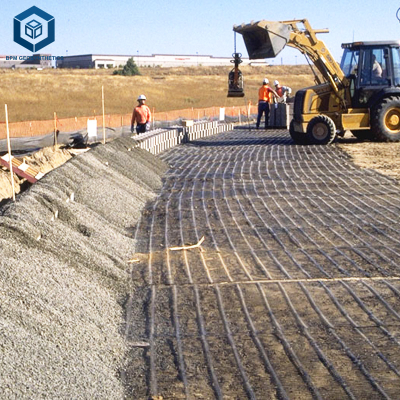
Compaction using rollers
Field permeability testing
Industry Comparison
The following table summarizes the key engineering differences identified in a geomembrane vs clay liner comparison.
| Liner Type | Permeability Performance | Installation Speed | Typical Applications |
|---|---|---|---|
| Geomembrane Liner | Very low permeability | Fast installation | Landfills, mining ponds, reservoirs |
| Compacted Clay Liner | Moderate permeability | Slow installation | Small containment ponds |
| Composite Liner (Geomembrane + Clay) | Extremely low permeability | Moderate installation | Hazardous waste containment |
Application Scenarios
Projects typically requiring a geomembrane vs clay liner comparison include:
Municipal solid waste landfills
Mining tailings ponds
Industrial wastewater lagoons
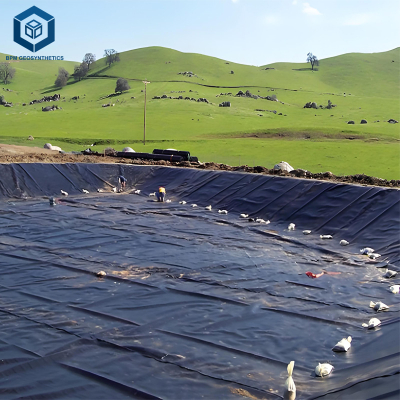
Agricultural irrigation reservoirs
Stormwater retention ponds
Environmental containment facilities
Large infrastructure projects often favor geomembranes due to superior impermeability and installation efficiency.
Core Pain Points and Solutions
1. High Permeability Risk
Solution: Geomembranes provide significantly lower permeability than clay liners.
2. Construction Time Delays
Solution: Geomembrane liners reduce installation time due to prefabricated rolls.
3. Material Availability
Solution: Synthetic liners eliminate dependence on local clay deposits.
4. Long-Term Settlement Problems
Solution: Geomembranes maintain barrier integrity under settlement conditions.
Risk Warnings and Mitigation
Poor clay compaction may increase permeability
Geomembrane installation errors may cause leakage
Subgrade irregularities may damage synthetic liners
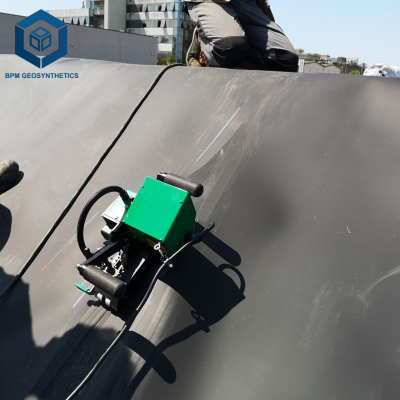
Improper welding procedures may compromise seams
Environmental exposure may degrade poorly stabilized polymers
Procurement and Selection Guidelines
Define containment requirements and permeability limits
Conduct a project-specific geomembrane vs clay liner comparison
Evaluate site soil conditions and availability of clay material
Assess installation timeline and labor availability
Review engineering design standards and regulatory requirements
Evaluate supplier manufacturing quality control systems
Request laboratory testing reports and engineering samples
Engineering Case Study
A landfill containment project covering 150,000 m² required evaluation of barrier systems during design planning. Engineers performed a detailed geomembrane vs clay liner comparison considering permeability, installation cost, and construction schedule. The project adopted a composite liner system consisting of a 1.5 mm HDPE geomembrane over a compacted clay layer. This configuration significantly reduced leakage risk while improving long-term environmental protection.
FAQ – Geomembrane vs Clay Liner Comparison
1. Which liner provides better impermeability?
Geomembranes provide significantly lower permeability than clay liners.
2. Are clay liners still used today?
Yes, often in combination with geomembranes as composite liner systems.
3. What thickness is typical for geomembranes?
Typical thickness ranges from 0.75 mm to 2.5 mm.
4. How thick must clay liners be?
Clay liners generally require 300–1000 mm thickness.
5. Which system installs faster?
Geomembrane liners install significantly faster.
6. Are geomembranes resistant to chemicals?
Yes, polyethylene geomembranes have excellent chemical resistance.
7. Do clay liners crack over time?
Yes, drying or settlement can cause cracking.
8. What is a composite liner?
A system combining geomembrane and compacted clay for enhanced containment.
9. Which liner is more space-efficient?
Geomembranes require far less thickness.
10. Are geomembranes suitable for large reservoirs?
Yes, they are widely used in water storage and environmental containment projects.
Request Quotation or Technical Documentation
Procurement teams evaluating containment systems based on a geomembrane vs clay liner comparison may request:
Geomembrane technical datasheets
Third-party laboratory test reports
Engineering design specifications
Installation and welding manuals
Material samples for project verification
Author Expertise and Industry Authority
This article was prepared by professionals experienced in geomembrane manufacturing, environmental containment engineering, and infrastructure procurement. The information reflects engineering practices commonly used by EPC contractors, environmental consultants, and infrastructure developers involved in landfill, mining, and water containment projects.