Liner Thickness for Gold Mine Heap Leaching: Engineering Guide
What is Liner Thickness for Gold Mine Heap Leaching?
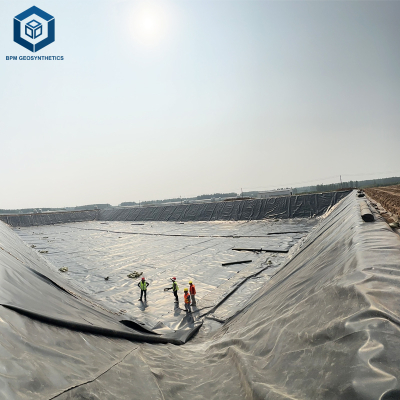
Liner thickness for gold mine heap leaching refers to the specified thickness of HDPE geomembrane used as the primary containment barrier in heap leach pads for gold extraction using cyanide solutions. For mining engineers, EPC contractors, and procurement managers, understanding liner thickness for gold mine heap leaching is critical because gold heap leach pads involve aggressive chemical environments (cyanide, pH 9.5–11.5), sharp crushed ore (puncture risk), high hydraulic heads (10–30 m), and long-term exposure (10–20+ years). Typical thickness ranges from 1.0 mm for low-risk applications to 2.0 mm for high-head or sharp ore conditions. Industry standard (GRI GM13) requires minimum 1.5 mm for heap leach pads, with 2.0 mm recommended for cyanide solution containment. Thicker liners provide higher puncture resistance, lower permeability (same material property), and longer service life. This guide provides engineering data on liner thickness for gold mine heap leaching: chemical compatibility with cyanide, puncture risk assessment, hydraulic head considerations, and procurement specifications for heap leach pad projects.
Technical Specifications of Liner Thickness for Gold Mine Heap Leaching
The table below defines critical parameters for liner thickness for gold mine heap leaching per GRI GM13 and mining industry standards.
| Parameter | 1.0 mm Liner | 1.5 mm Liner | 2.0 mm Liner | Engineering Importance | |
|---|---|---|---|---|---|
| Puncture Resistance (ASTM D4833) | ~220 – 250 N | ~320 – 380 N | ~450 – 520 N | Crushed ore (heap leach) requires high puncture resistance. 2.0 mm provides 2x puncture resistance vs. 1.0 mm.}, | |
| Tear Resistance (ASTM D1004) | ~85 – 100 N | ~125 – 150 N | ~170 – 200 N | Higher tear resistance prevents propagation of punctures.}, | |
| Hydraulic Head Capacity (max leachate depth) | ≤ 10 m | ≤ 20 m | ≤ 30 m | Thicker liners withstand higher leachate pressure without stress cracking.}, | |
| Cyanide Resistance (pH 9.5–11.5) | Good (HDPE inherently resistant) | Good | Good | HDPE has excellent resistance to cyanide solutions — all thicknesses suitable.}, | |
| PENT Stress Crack Resistance (ASTM F1473) | ≥ 500 hours | ≥ 500 hours | ≥ 500 hours | Resin-dependent, not thickness. Specify PE100/PE4710 bimodal resin.}, | |
| Subgrade Flatness Tolerance | ≤ 2 mm/2m (strict) | ≤ 3 mm/2m | ≤ 3 mm/2m | Thicker liners tolerate minor subgrade irregularities better.}, | |
| Installation Difficulty | Moderate (lighter rolls) | Moderate | Higher (heavier rolls, requires heavier equipment) | 2.0 mm rolls weigh 50% more per m² than 1.0 mm.}, | |
| Relative Material Cost | 1.0x (baseline) | 1.5x | 2.0x | Thicker = more resin = higher cost. 2.0 mm costs 2× 1.0 mm.}, | |
| Typical Heap Leach Application | Small pads, low head, rounded ore | Standard heap leach pads | High head (> 20 m), sharp ore, long-term | Standard recommendation: 1.5 mm minimum for gold heap leaching.}, |
Key takeaway: Liner thickness for gold mine heap leaching typically ranges from 1.5 mm (standard) to 2.0 mm (high head, sharp ore). 1.0 mm is not recommended for heap leach pads. Thicker liners provide higher puncture resistance and hydraulic head capacity.
Material Structure and Composition: How HDPE Resists Cyanide Leachate
Understanding polymer chemistry helps in selecting liner thickness for gold mine heap leaching.
| Component | Material | Function in Cyanide Environment |
|---|---|---|
| Base Resin (PE100/PE4710) | Bimodal HDPE (hexene or octene co-monomer) | High molecular weight fraction provides stress crack resistance. Cyanide solutions (pH 9.5–11.5) do not degrade HDPE.}, |
| Carbon Black | 2.0–3.0% furnace black | UV protection for exposed geomembrane (heap surfaces).}, |
| Antioxidant Package | Primary (hindered phenol) + secondary (phosphite) | Prevents thermal/oxidative degradation during service (10–20+ years).}, |
Engineering insight: Liner thickness for gold mine heap leaching is not a chemical compatibility issue — HDPE resists cyanide at all thicknesses. Thickness selection is driven by puncture risk from sharp ore and hydraulic head pressure.
Manufacturing Process: How HDPE Geomembrane Is Produced for Heap Leaching
Factory quality directly influences performance in heap leach applications.
Resin compounding: Virgin PE100 resin + carbon black (2–3%) + antioxidant package. Premium manufacturers use higher OIT (≥ 120 min) for mining applications.
Extrusion: Flat die extrusion (200–220°C). Thickness tolerance ±5% for mining-grade geomembrane.
Calendering / polishing: Smooth surface preferred for heap leach pads (textured not required).
Cooling: Controlled cooling to prevent residual stress that could accelerate stress cracking.
Quality inspection: PENT (≥ 500 h), OIT (≥ 100 min), puncture (ASTM D4833), tear (ASTM D1004).
Packaging: UV-protective wrapping for shipping to mine sites.
Performance Comparison: Liner Thickness for Gold Mine Heap Leaching vs. Alternatives
Comparing HDPE thickness options and alternative liner materials for heap leaching.
| Liner Material | Cyanide Resistance | Puncture Resistance | Cost (€/m² installed) | Installation Complexity | Typical Application | |
|---|---|---|---|---|---|---|
| HDPE 1.0 mm | Excellent | ~220–250 N | 8 – 12 | High (welding required) | Small pads, low head, not recommended | |
| HDPE 1.5 mm | Excellent | ~320–380 N | 10 – 15 | High | Standard heap leach pads — industry standard | |
| HDPE 2.0 mm | Excellent | ~450–520 N | 14 – 20 | High (heavier rolls) | High head (> 20 m), sharp ore, long-term | |
| LLDPE 1.5 mm | Excellent | ~280–340 N | 12 – 18 | High | Flexible applications, lower stress crack resistance | |
| PVC | Fair (cyanide may affect plasticizers) | ~150–200 N | 10 – 16 | Medium | Not recommended for cyanide leachate |
Conclusion: Liner thickness for gold mine heap leaching standard is 1.5 mm HDPE. Upgrade to 2.0 mm for high head (> 20 m) or very sharp ore. 1.0 mm is not recommended.
Industrial Applications of Liner Thickness for Gold Mine Heap Leaching
Specific applications within gold heap leach operations.
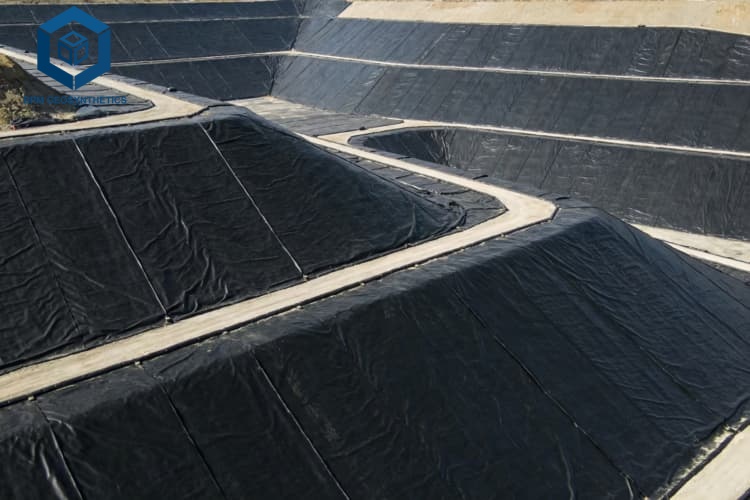
Heap leach pads (primary containment): 1.5 mm HDPE standard. 2.0 mm for high head (> 20 m) or very sharp ore.
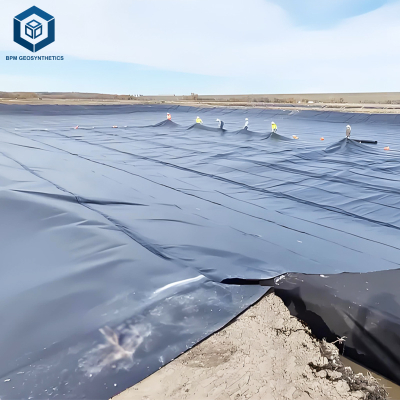
Process solution ponds (PLS ponds): 1.5 mm HDPE. Cyanide pregnant leach solution storage.
Raffinate ponds (spent cyanide solution): 1.5 mm HDPE. Lower cyanide concentration but still aggressive.
Emergency containment (spill ponds): 1.5 mm HDPE. Secondary containment for process solutions.
Interlift liners (between ore lifts): 1.0–1.5 mm HDPE. Lower head, but still requires cyanide resistance.
Common Industry Problems with Liner Thickness for Gold Mine Heap Leaching
Real-world failures from inadequate thickness or specification.
Problem 1: Puncture from sharp ore (1.0 mm liner)
Root cause: 1.0 mm HDPE installed over crushed ore with sharp edges. Puncture resistance insufficient (220 N). Solution: Specify minimum 1.5 mm liner thickness for gold mine heap leaching. 2.0 mm for very sharp ore.
Problem 2: Stress cracking under high head (1.0 mm liner, low PENT resin)
Root cause: Mononodal butene resin (PENT < 200 hours) combined with thin liner. Hydraulic head 15 m caused cracking. Solution: Specify PE100/PE4710 resin with PENT ≥ 500 hours. Minimum 1.5 mm thickness.
Problem 3: Leakage at seams under leachate pressure
Root cause: Poor weld quality on 1.0 mm liner. Cyanide solution penetrated seam. Solution: Use 1.5 mm or 2.0 mm liner (easier to weld). 100% non-destructive testing (air channel, vacuum box).
Problem 4: Liner uplift from gas pressure (subgrade outgassing)
Root cause: No drainage layer under liner. Gas pressure lifted 1.0 mm liner. Solution: Install geocomposite drainage layer or sand cushion. Thicker liner (2.0 mm) resists uplift better.
Risk Factors and Prevention Strategies for Liner Thickness for Gold Mine Heap Leaching
Risk: Specifying 1.0 mm for heap leach pad: Puncture, stress cracking, short life. Mitigation: Industry standard is 1.5 mm minimum. 2.0 mm for high head (> 20 m).
Risk: Low PENT resin (< 500 hours): Stress cracking in cyanide environment. Mitigation: Specify PE100/PE4710 bimodal resin with hexene/octene co-monomer. Request PENT test report.
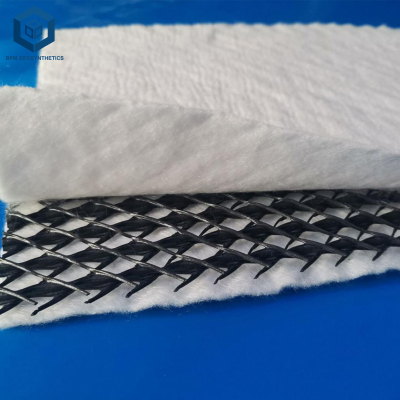
Risk: Inadequate geotextile cushion: Puncture from sharp ore. Mitigation: Use nonwoven geotextile ≥ 500 g/m² (800 g/m² for very sharp ore).
Risk: No drainage layer under liner: Gas pressure uplift, leachate head buildup. Mitigation: Install geocomposite or 300 mm sand drainage layer.
Procurement Guide: How to Choose Liner Thickness for Gold Mine Heap Leaching
Follow this 8-step checklist for B2B purchasing decisions.
Determine ore characteristics: Sharp, angular ore → 2.0 mm. Rounded ore → 1.5 mm acceptable.
Calculate hydraulic head (max leachate depth): Head < 10 m → 1.5 mm. Head 10–20 m → 1.5 mm with high PENT. Head > 20 m → 2.0 mm.
Specify resin type: PE100 or PE4710 bimodal with hexene/octene co-monomer. PENT ≥ 500 hours (≥ 800 h preferred).
Require OIT and HP-OIT: Standard OIT ≥ 100 minutes; HP-OIT ≥ 400 minutes.
Specify geotextile cushion: Nonwoven ≥ 500 g/m² (800 g/m² for sharp ore).
Specify drainage layer: Geocomposite or 300 mm sand/gravel.
Require GRI GM13 compliance: All test reports (tensile, tear, puncture, PENT, OIT, carbon black).
Order samples and perform puncture testing: Test with site-specific ore samples under representative pressure.
Engineering Case Study: Liner Thickness for Gold Mine Heap Leaching in Nevada
Project type: Gold heap leach pad (cyanide solution).
Location: Nevada, USA (arid climate, sharp crushed ore).
Project size: 500,000 m².
Liner thickness for gold mine heap leaching specification: 1.5 mm HDPE (primary pad) and 2.0 mm HDPE (solution pond). Resin: PE100 bimodal, PENT 850 hours, OIT 125 minutes. Geotextile cushion: 500 g/m² nonwoven. Drainage layer: geocomposite.
Results after 5 years: Zero leaks. No puncture or stress cracking. OIT retention 90%. This case demonstrates that 1.5 mm HDPE with proper resin and cushion is suitable for gold heap leach pads. Solution pond used 2.0 mm for higher head (25 m).
Frequently Asked Questions: Liner Thickness for Gold Mine Heap Leaching
Q1: What is the standard liner thickness for gold mine heap leaching?
1.5 mm HDPE is the industry standard for heap leach pads. 2.0 mm is used for high hydraulic head (> 20 m) or very sharp ore. 1.0 mm is not recommended.
Q2: Is HDPE resistant to cyanide solutions?
Yes. HDPE has excellent resistance to cyanide solutions (pH 9.5–11.5) used in gold heap leaching. Chemical compatibility is not thickness-dependent — all thicknesses are suitable from a chemical perspective.
Q3: Why can't I use 1.0 mm HDPE for heap leach pads?
1.0 mm HDPE has insufficient puncture resistance (220 N) for sharp crushed ore. It also has lower tear resistance and may stress crack under hydraulic head. 1.5 mm minimum is required for liner thickness for gold mine heap leaching.
Q4: What PENT is required for gold heap leach liners?
Minimum 500 hours per GRI GM13. For heap leach applications, PENT ≥ 800 hours is recommended due to long-term stress from ore load and hydraulic head.
Q5: Does liner thickness affect cyanide resistance?
No. Cyanide resistance is a material property of HDPE, not thickness-dependent. All thicknesses (1.0–2.5 mm) have the same chemical resistance.
Q6: What geotextile cushion is required under the liner?
Nonwoven geotextile ≥ 500 g/m². For very sharp ore (crushed to < 25 mm), use 800 g/m² or add 150 mm sand cushion. This is critical for liner thickness for gold mine heap leaching.
Q7: How does hydraulic head affect liner thickness selection?
Higher head increases stress on the liner. For head > 20 m, specify 2.0 mm HDPE. For head 10–20 m, 1.5 mm with high PENT (≥ 800 h) is acceptable.
Q8: Can LLDPE be used for gold heap leaching?
Yes, LLDPE has similar cyanide resistance. However, HDPE has higher stress crack resistance (PENT) and is preferred. LLDPE may be used for flexible applications.
Q9: What is the typical service life of a heap leach liner?
With proper specification (1.5–2.0 mm, PE100 resin, PENT ≥ 500 h), design life is 20–50 years. Field performance in existing mines confirms 15+ years with no degradation.
Q10: How is puncture resistance tested for heap leach liners?
ASTM D4833 (CBR puncture test). For 1.5 mm HDPE, minimum 320 N. For 2.0 mm, minimum 450 N. Test with site-specific ore samples for additional validation.
Request Technical Support or Quotation for Liner Thickness for Gold Mine Heap Leaching
For project-specific liner thickness for gold mine heap leaching specifications, chemical compatibility testing, or bulk procurement, our technical team is available.
Request a quotation – Provide ore characteristics, hydraulic head, and project area.
Request engineering samples – Receive HDPE samples with puncture, PENT, and OIT test reports.
Download technical specifications – GRI GM13 mining compliance guide, puncture risk calculator, and installation QA/QC checklist.
Contact technical support – Thickness selection, resin verification, and warranty validation for heap leach projects.
About the Author
This guide on liner thickness for gold mine heap leaching was written by Dipl.-Ing. Hendrik Voss, a civil engineer with 19 years of experience in geosynthetics for mining applications. He has designed over 60 heap leach liner systems across North America, South America, Australia, and Africa, specializing in puncture risk assessment, cyanide compatibility, and installation QA/QC for gold and copper mining projects. His work is referenced in GRI and ASTM D35 committee discussions on geomembrane standards for mining applications.