The 7 Best Geonet Manufacturers Reviewed
In modern geotechnical, civil, and environmental engineering, efficient subsurface fluid management and structural protection are critical to project longevity. HDPE Geonets and composite drainage nets have largely superseded traditional gravel layers by providing high compressive strength, exceptional chemical resistance, and unyielding in-plane transmissivity under extreme mechanical loads. From landfill leachate collection and mining tailings ponds to complex slope drainage and retaining walls, selecting the right geonet manufacturer directly impacts system performance, long-term compliance, and overall project cost.
To help engineers, contractors, and procurement teams source high-grade materials tailored to their specific project requirements, this comprehensive guide evaluates the 7 Best Geonet Manufacturers across the globe, assessing their technical strengths, product specialization, and core market advantages.
1. What is Geonet?
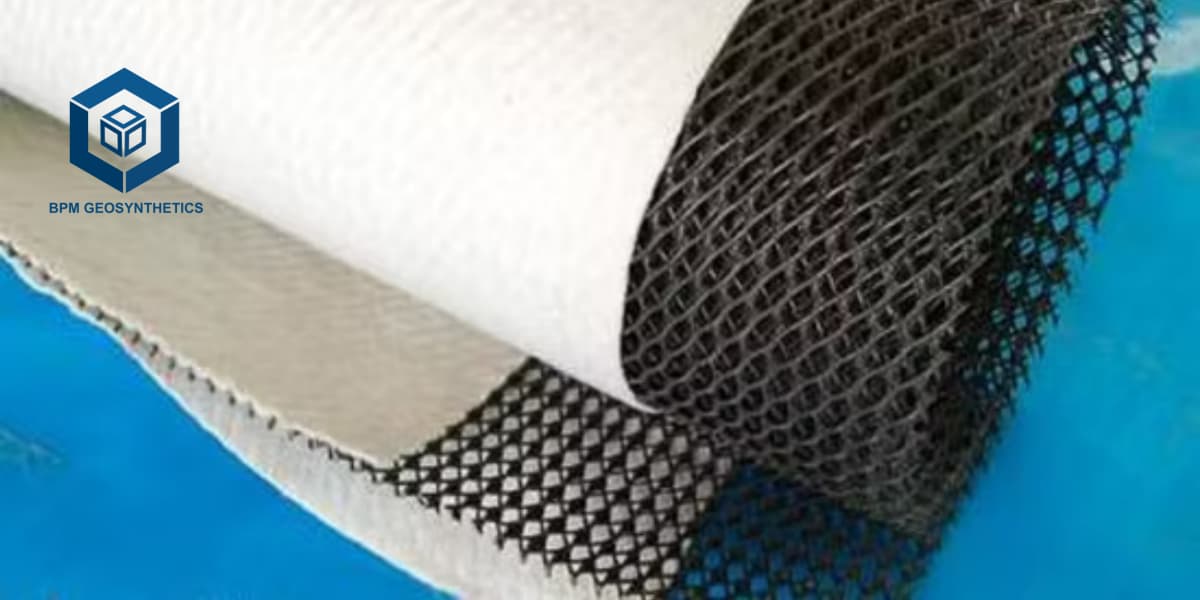
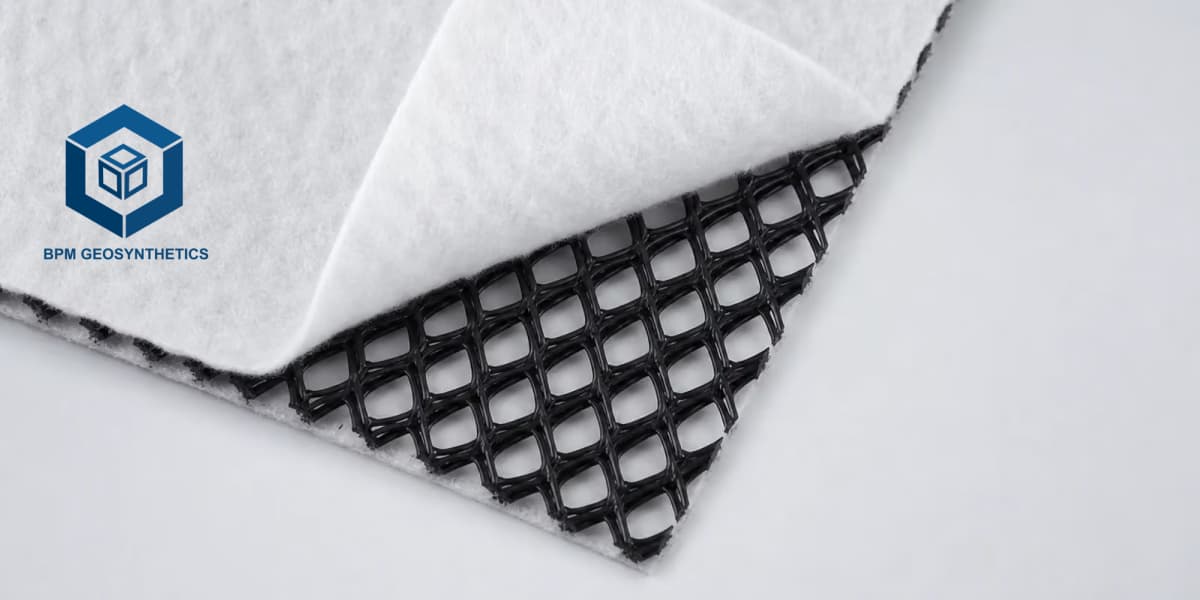
HDPE Geonet, commonly known as plastic geonet, is a synthetic planar product manufactured from High-Density Polyethylene (HDPE) resin integrated with anti-UV stabilizers and antioxidants. Produced through a continuous extrusion molding process, it features a rigid, open-grid mesh structure with overlapping ribs designed to maintain high compressive strength and dimensional stability under severe mechanical loads. To prevent fine soil particles from clogging the drainage channels, the geonet can be thermally bonded on one or both sides with a nonwoven geotextile. This combination creates a composite material (geocomposite) that provides continuous, high-capacity in-plane liquid or gas flow while simultaneously delivering effective filtration, soil separation, and reinforcement in civil, geotechnical, and environmental engineering projects.
2. What are the Main Types of Geonet?
Geonets are categorized by structural rib design, composite integration, and standardized classification under international engineering frameworks.
2.1 Classification by Rib Structure & Geometry
2.1.1 Bi-Planar (Two-Rib) Geonets:
Composed of two intersecting sets of polymer ribs that form a rhomboid or diamond mesh. The diagonal channel layout provides consistent, multi-directional flow capability across the plane. These are ideal for moderate overburden pressures, such as sub-base road drainage or shallow slope seepage control.
2.1.2 Tri-Planar (Three-Rib) Geonets:
Feature a thick, rigid central rib aligned parallel to the flow direction, bounded by smaller top and bottom cross-ribs. This structure drastically increases vertical crush resistance and prevents the adjacent geotextile layer from encroaching into the drainage channels under heavy overburden loads (e.g., deep landfills or high embankments).
2.2 Composite Integration (Composite Drainage Nets)
2.2.1 Single-Sided Geocomposites:
A geonet core thermally lamianted with a polypropylene (PP) staple-fiber or continuous filament nonwoven geotextile on one face. It acts as a single-sided filter membrane to prevent fine soil particles from clogging the channel.
2.2.2 Double-Sided Geocomposites:
Feature geotextiles bonded to both top and bottom surfaces. This configuration provides dual-sided filtration, high tensile load distribution, and physical barrier protection to shield sensitive geomembranes against puncture from jagged rocks or subgrade irregularities.
2.3 National Standard Classification (GB/T 19470-2004)
Under the Chinese national standard GB/T 19470-2004, plastic geonets are divided into three standard designations based on their primary structural role:
Code | Type Designation | Primary Hydraulic & Mechanical Function |
CE | Civil Engineering | Rigid grid layout engineered for soil reinforcement, slope containment, and load redistribution. |
DN | Drainage Net | Specialized open-grid mesh optimized for planar liquid and gas transmission in environmental containment systems. |
HF | High Flow | Deep-profile, heavy-duty channel structure designed for ultra-high discharge capacity under extreme vertical loading. |
3. Geonet Function & Key Performance Characteristics
HDPE geonets act as high-capacity hydraulic pathways and structural protective buffers in modern geosynthetic containment systems. Their primary functions are categorized into four main operational mechanisms:
3.1 In-Plane Liquid Drainage
The core structural ribs form unobstructed parallel channels that provide high planar hydraulic conductivity (transmissivity). This open-grid architecture allows fluids—such as landfill leachate, groundwater seepage, or surface runoff—to flow freely under significant soil overburden and mechanical pressure, preventing hydrostatic pressure buildup behind retaining walls or beneath lining systems.
3.2 Gas Venting & Dissipation
In environmental containment systems, decomposing organic waste or underlying organic subgrades continuously produce gases (such as methane, carbon dioxide, or hydrogen sulfide). Geonets serve as a dedicated gas collection and relief layer beneath primary liners, safely channeling trapped gases to perimeter vents to prevent gas uplift pressures from ballooning or damaging the geomembrane.
3.3 Mechanical Geomembrane Protection & Stress Attenuation
When integrated into composite lining systems, the geonet cushions the impermeable geomembrane against point-load concentrations, mechanical abrasion, and sharp subgrade aggregates. By absorbing vertical normal stresses and distributing shear forces across its rigid grid, it prevents puncturing and stress-cracking failures during installation and compaction.
3.4 Soil Filtration & Clogging Prevention (Geocomposite Integration)
When combined with nonwoven needle-punched or thermal-bonded geotextiles, the geotextile component acts as a selective filter layer. It permits fluid influx into the geonet core while blocking fine soil particles, preventing internal clogging and preserving long-term hydraulic transmissivity throughout the project's design life.
4. Geonet Applications
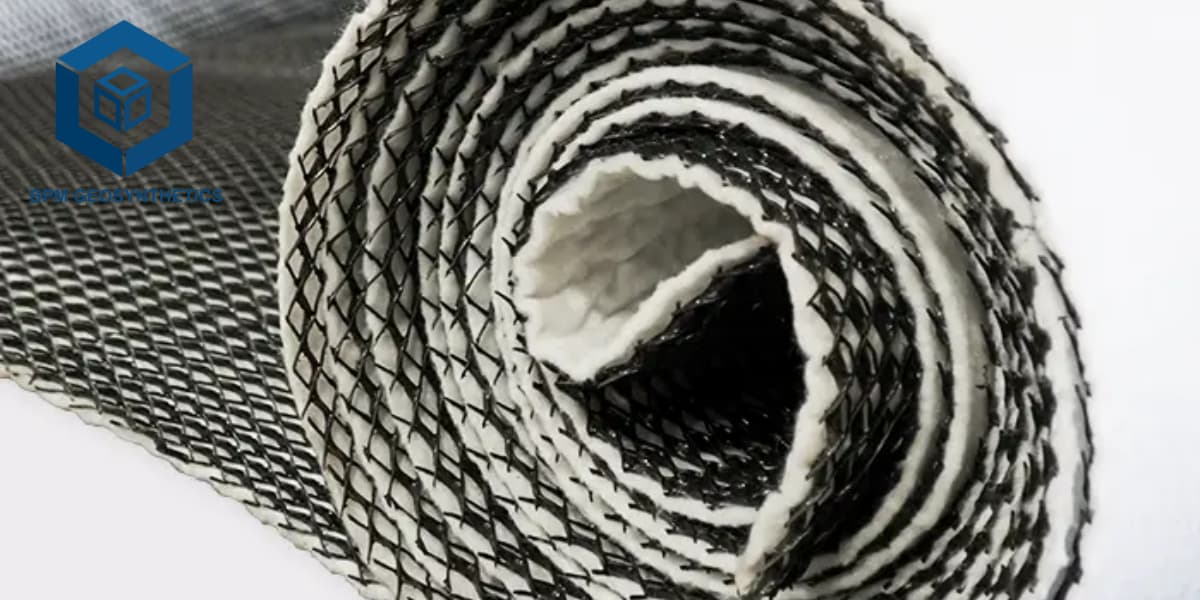
Due to its high chemical resistance, excellent compressive strength, and efficient planar flow capacity, HDPE geonet is widely utilized across critical geotechnical, civil, and environmental engineering sectors.
4.1 Landfill Containment Systems (Lining & Capping)
4.1.1 Leachate Collection & Removal (LCR):
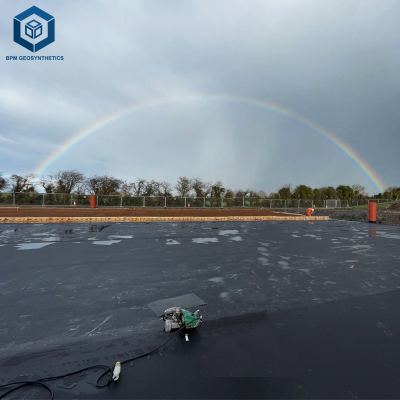
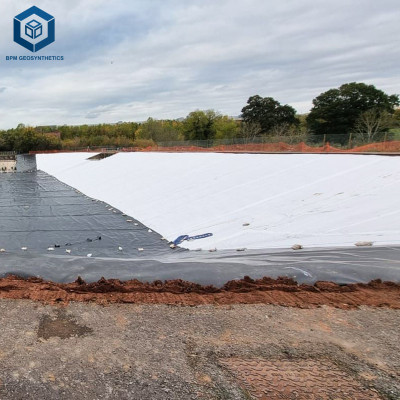
Installed directly above primary geomembranes at landfill bases, geonets rapidly drain hazardous chemical leachate to sumps while bearing high waste overburden loads.
4.1.2 Leak Detection Systems (LDS):
Positioned between primary and secondary liners, geonets act as monitoring layers to instantly detect, capture, and channel any fluids leaking through the upper membrane.
4.1.3 Final Cover & Capping Systems:
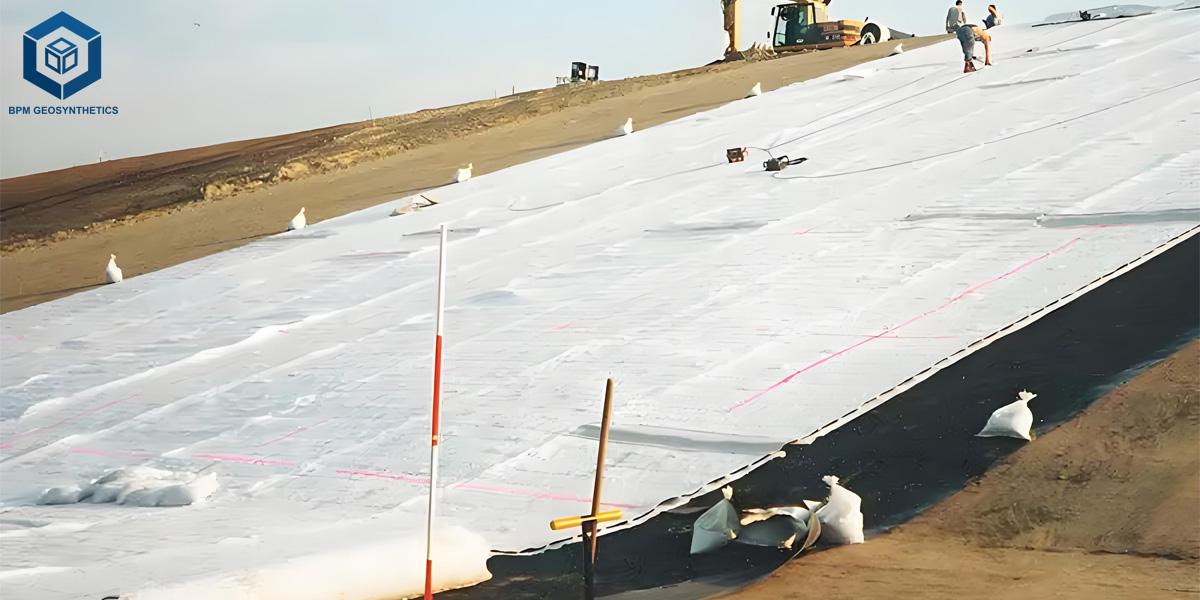
Placed in final landfill covers to drain infiltrating rainwater, reducing hydrostatic pressure on the capping membrane and preventing slope sliding.
4.2 Mining & Industrial Containment
4.2.1 Tailings Ponds & Heap Leach Pads:
Resists highly acidic or alkaline chemical solutions used in mineral extraction while maintaining continuous liquid extraction under intense heap pile pressures.
4.2.2 Secondary Containment Facilities:
Functions as a underlying drainage and leak-detection barrier in petro-chemical tanks, chemical storage yards, and industrial processing ponds.
4.3 Transportation & Infrastructure Drainage
4.3.1 Roadway Sub-Base & Railway Ballast:
Accelerates subgrade groundwater discharge to mitigate frost heave, softening, and pumping phenomena under heavy cyclic traffic loads.
4.3.2 Bridge Abutments & Retaining Walls:
Placed directly behind earth-retaining structures to dissipate lateral hydrostatic pressure and prevent wall tipping or structural cracking.
4.4 Tunnels & Underground Engineering
4.4.1 Tunnel Lining Systems:
Installed between outer concrete primary supports and inner waterproofing membranes to collect incoming rock groundwater seepage, channeling it safely into perimeter drainage gutters.
4.4.2 Basement & Foundation Drainage:
Acts as a vertical drainage layer along foundation walls to prevent groundwater infiltration into subterranean structures.
4.5 Slope Drainage & Erosion Control
4.5.1 Slope Seepage Management:
Installed on cut slopes, embankments, and reservoir banks to intercept groundwater seepage, preventing slope instability and surface soil erosion.
5. Geonet Technical Data
According to GB/T 19470-2004, the key technical parameters for plastic geonets and composite drainage nets are as follows:
5.1 Plastic Geonet (DN type)
Thickness, tensile strength, and transmissivity vary by specification. For DN1, typical values include: thickness ≥5.0 mm, tensile strength ≥13.0 kN/m, and transmissivity ≥1.2×10⁻³ m²/s. Different thickness grades (e.g., 5.0–8.0 mm) correspond to different tensile strength and flow capacity ratings.
5.2 Composite Drainage Net
Key evaluation metrics include: thickness(≥6.0–10.0 mm depending on grade), tensile strength (≥16.0 kN/m), peel strength (≥0.3 kN/m between geonet core and nonwoven geotextile), and transmissivity (≥1.2×10⁻⁴ m²/s).
According to GB/T 19470-2004, the following table presents a comparison of key technical parameters for plastic geonets (DN type) across different thickness grades. Transmissivity values are measured under a normal load of 500 kPa and a hydraulic gradient of 0.1 .
Note: Transmissivity values are tested under a normal load of 500 kPa and a hydraulic gradient of 0.1. The standard indicates that different thickness grades correspond to varying tensile strength and transmissivity ratings, but specific parameter tables are partially unavailable in the search results. For the most accurate and complete data, please refer directly to the official standard document.
6. The 7 Best Geonet Manufacturers Reviewed
6.1 Sika-geonet manufacturer
A global leader in construction chemicals and geosynthetics.
- Strengths: Extensive R&D resources, global distribution network, and strong technical support capabilities.
- Weaknesses: Premium pricing may not suit budget-constrained projects; product lines are broad rather than geonet-specialized.
6.2 Solmax-geonet manufacturer
A major player in geosynthetic solutions with a strong global presence.
- Strengths: Comprehensive product portfolio, rigorous quality control systems, and proven track record in large-scale landfill projects.
- Weaknesses: Somewhat limited customization options for smaller projects; longer lead times for non-standard specifications.
6.3 NAUE-geonet manufacturer
A German manufacturer renowned for precision engineering and high-quality geosynthetics.
- Strengths: German craftsmanship ensures precision and reliability; strict quality control from raw material selection to final inspection; innovative materials and additives for enhanced UV resistance and reduced biodegradation sensitivity; excellent technical service and support throughout project lifecycles.
- Weaknesses: Higher cost position; primarily focused on European markets.
6.4 Ten Cate Geosynthetics-geonet manufacturer
A well-established global supplier with strong brand recognition.
- Strengths: Extensive international experience, rigorous performance testing protocols, and proven product durability.
- Weaknesses: Corporate restructuring may affect consistency; premium pricing structure.
6.5 AGRU America-geonet manufacturer
A leading manufacturer of geosynthetic products for environmental applications.
- Strengths: Specialized expertise in landfill and mining applications; strong technical support; high-quality American manufacturing standards.
- Weaknesses: Limited product customization flexibility; higher price point.
6.6 Maccaferri-geonet manufacturer
An Italian company with a long history in geosynthetics and civil engineering solutions.
- Strengths: Strong engineering heritage, comprehensive project support, and proven applications in challenging terrains.
- Weakness: Less focused specifically on geonet products compared to core erosion control lines.
6.7 BPM Geosynthetics - China Geonet Manufacturer
BPM Geosynthetics, established in 2010 in Taian City, Shandong, China, has emerged as a professional manufacturer and exporter of geosynthetic materials.
6.7.1 Product Excellence:
BPM Geosynthetics offers a comprehensive range of HDPE geonets with core thicknesses from 5mm to 10mm, tensile strength ≥8 kN/m, and excellent flow rates (≥3.0 L/m·s under gradient 1.0).
- Quality Assurance: Products comply with ASTM and international standards, ensuring reliable performance in landfill liners, retaining walls, and tunnel drainage systems.
- Versatility: Provides bi-planar and tri-planar structures, composite geonets with one or two layers of non-woven geotextile, and customizable specifications to meet specific project needs.
- Chemical & UV Resistance: HDPE material ensures long-term stability under aging, weathering, and aggressive chemical conditions.
- Cost-Effective: Lightweight design reduces transportation and installation costs compared to traditional gravel drainage systems.
- Global Reach: Products are exported to international markets with responsive after-sales technical support.
6.7.2 Weakness:
Being a Chinese manufacturer, some international clients may require additional trust-building and certification verification, though BPM Geosynthetics has established a solid track record since 2010.
For inquiries, pricing, or technical specifications on The Best Project Material Co., Ltd. (BPM Geosynthetics) geonet, please feel free to reach out to our sales team. We welcome the opportunity to discuss how our products can meet your project requirements. Contact us today for a competitive quote!