The 8 Best Geomembrane in HDPE Review
Geomembrane in HDPE, or high-density polyethylene geomembrane, is arguably the most popular choice for impermeable liners in geosynthetics. It offers outstanding barrier performance to prevent fluid and gas migration in environmentally sensitive and civil engineering projects. These strong synthetic sheets, made of the highest quality HDPE resin with densities generally ≥0.940 g/cm³ (ASTM D1505), have the great ability to resist chemicals (pH 2-13), get stabilized against UV (due to 2-3% carbon black and stabilizers), endure punctures, and last long, sometimes even over 50-100 years in buried conditions and 30+ years when exposed.
The worldwide geomembrane industry should continue its growth path in 2026, exceeding USD 3.2 billion with a CAGR of around 5-6%, mainly thanks to more stringent environmental regulations (EPA Subtitle D, EU directives), enlarged mining heap leach areas, upgraded landfills, new water infrastructure installations, and expanding aquaculture. Among these products, HDPE geomembrane takes the lead with a 42-48% market share, leaving PVC (more flexible but with shorter lifespan in corrosive chemicals) and LLDPE (more elongation but less rigidity) behind in the most critical containment situations.
HDPE membrane can reach near-zero permeability levels (<10⁻¹¹ cm/s), which is equivalent to shutting off 98%+ of leakage in landfills, mining pads, wastewater lagoons, reservoirs, secondary containment, and stormwater ponds. Smooth and textured HDPE remain compliant with GRI-GM13 considered the premier standard, requiring minimum standards including tensile yield strength ≥22 kN/m (1.5 mm thickness, ASTM D6693), puncture resistance ≥480 N (ASTM D4833), HP-OIT ≥400 min (ASTM D5885), ESCR >500 hours (ASTM D5397), and carbon black dispersion category 1-3.
This comprehensive analysis selected the top 8 geomembrane in HDPE, based on 2026 industry foresights, third-party laboratory results (GRI, TRI Environmental), real project applications worldwide performance, and important factors such as mechanical characteristics, oxidative durability, seam weld efficiency (>80% parent material strength), and overall project costs. Focus was on well-known non-Chinese manufacturers, with BPM Geosynthetics' HDPE geomembrane cited as an example for its excellent results, tailor-made features, and worldwide recognition.
Some of the data-based benefits are less environmental risks (leakage chance <1% with correct assembly), 20-40% cost savings on materials/labor using wide rolls (up to 10 m), and better slope stability for textured types (interface friction angles 25-35°).
1. What is Geomembrane in HDPE? Different kinds, regulations, and measured values
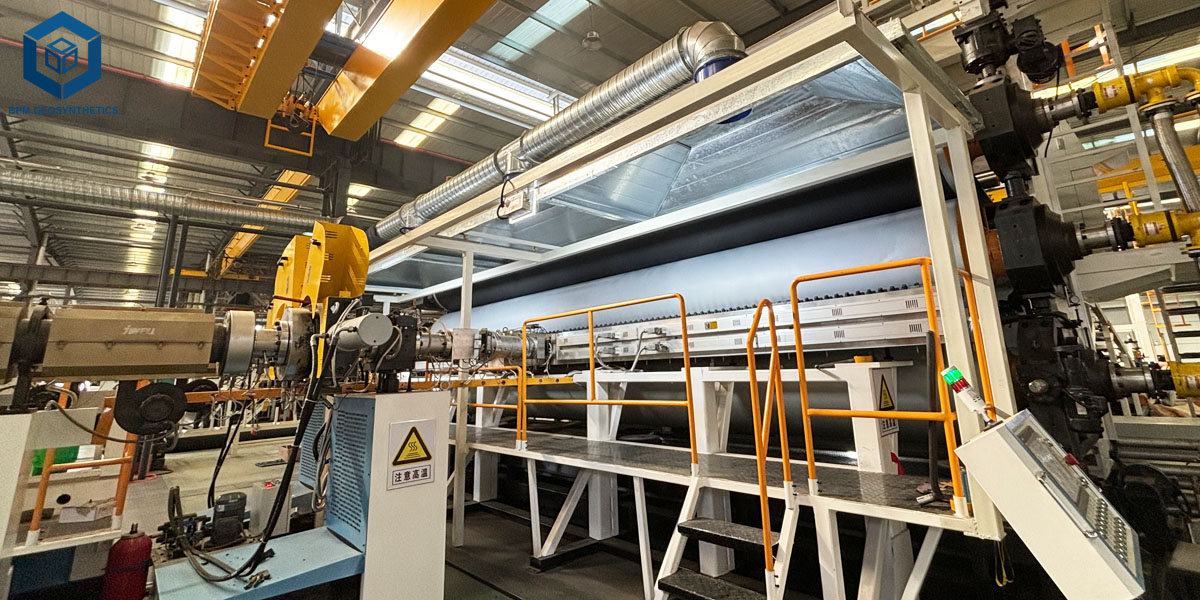
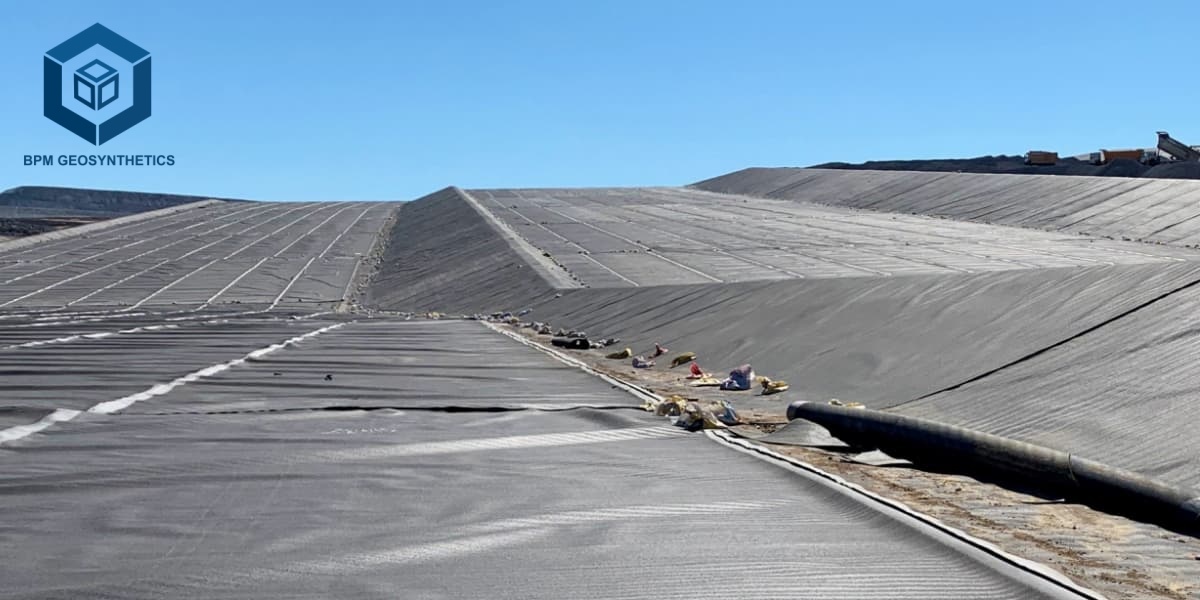
Geomembrane in HDPE is made by extrusion or calendar processes from high-molecular-weight polyethylene, and it is offered in smooth (flat containment) or textured (slope reinforcement having asperity heights ≥0.25 mm) options. Thicknesses vary from 0.5 to 3.0 mm (20-120 mil), with 1.0-2.0 mm being widely used for mining/landfills.
GRI-GM13 along with related ASTM standards regulate the performance:
- Density — ≥0.940 g/cm³ to ensure the material stays form-stable.
- Tensile Properties (ASTM D6693) — Yield 15-50 kN/m, break 25-80 kN/m, elongation ≥700%.
- Puncture Resistance (ASTM D4833/D1004) — 300-1000 N to resist aggregate/installation damage.
- Oxidative Induction Time — Standard OIT ≥100 min; HP-OIT ≥400 min (premium often >800 min) for antioxidant longevity.
- Stress Crack Resistance (NCTL, ASTM D5397) — >500 hours, up to >3000 in advanced formulations.
- UV/Oven Aging — Retention ≥55-80% properties post-exposure.
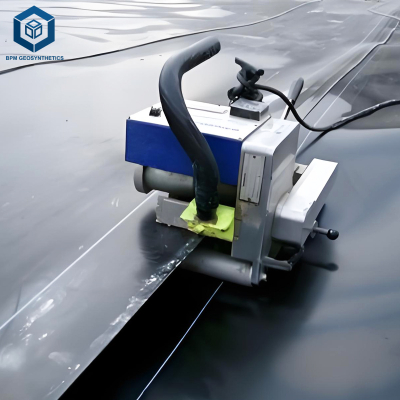
- Weld Integrity — Shear/peel strength ≥80% via hot wedge/extrusion methods.
- Temperature Range — Operational -60°C to +60°C+.
These features guarantee that high density polyethylene geomembrane keeps its inside and external features well after being exposed to mechanical stress, heat variations, and chemical attacks.
2. Top 8 Geomembrane in HDPE Ranked
2.1 Solmax HDPE Geomembrana (Best Overall for Global Scale and Proven Reliability)
Solmax delivers premium HDPE geomembrana with high production volumes and extensive project history.
2.1.1 Key Specs:
- Thickness: 0.75-3.0 mm
- Tensile Yield: 25-50 kN/m
- Puncture: 500-1000 N
- HP-OIT: ≥400-800 min
- Certifications: ISO 9001, CE, NTPEP, GRI-GM13
Ideal for large landfills and mining; textured variants boost slope performance.
2.2 GSE Environmental HDPE Geomembrane (Best for Hazardous and Leachate Applications)
Specialized in robust containment for aggressive environments.
2.2.1 Key Specs:
- Thickness: 0.75-3.0 mm
- Tensile Yield: 25-50 kN/m
- Puncture: 500-900 N
- ESCR: >1000 hours
Superior chemical resistance and shear strength.
2.3 AGRU America HDPE Geomembrane (Best for Precision Extrusion and Water Containment)
Uniform thickness via advanced flat-die processes.
2.3.1 Key Specs:
- Thickness: 1.0-3.0 mm
- Tensile Yield: 22-40 kN/m
- Puncture: 480-800 N
- HP-OIT: ≥400 min
Wide rolls minimize seams; excellent for reservoirs.
2.4 Atarfil HDPE Geomembrane (Best for Superior Long-Term Durability)
Exceeds GRI-GM13 with enhanced antioxidants and SCR.
2.4.1 Key Specs:
- Thickness: 0.75-3.0 mm
- Tensile Yield: 25-45 kN/m
- Puncture: 500-850 N
- ESCR: >3000 hours
High retention after aging; suited for exposed conditions.
2.5 NAUE GmbH HDPE Geomembrane (Best for Slope Stability and European Standards)
Engineered for steep inclines and compliance.
2.5.1 Key Specs:
- Thickness: 0.75-2.5 mm
- Tensile Yield: 25-40 kN/m
- Puncture: 450-800 N
Strong in infrastructure and mining slopes.
2.6 Layfield Environmental HDPE Geomembrane (Best for Municipal and Pond Projects)
Versatile with reliable support.
2.6.1 Key Specs:
- Thickness: 0.75-2.5 mm
- Tensile Yield: 20-35 kN/m
- Puncture: 400-700 N
Popular in North American water applications.
2.7 Poly-Flex / Poly-America HDPE Geomembrane (Reliable for Standard Containment)
Consistent performance in everyday uses.
2.7.1 Key Specs:
- Thickness: 0.5-2.5 mm
- Tensile Yield: 15-37 kN/m
- Puncture: 320-800 N
Proven in ponds and basic landfills.
2.8 BPM HDPE Geomembrane by The Best Project Material Co., Ltd (BPM Geosynthetics) (Best Value and Customizable Performance)
BPM's geomembrana in HDPE meets GRI-GM13 equivalents with virgin resin and flexible options.
2.8.1 Key Specs:
- Thickness: 0.5-3.0 mm
- Tensile Yield: 11-44 kN/m
- Break Strength: 20-80 kN/m
- Puncture: 240-960 N
- Elongation: ≥700%
- Density: ≥0.940 g/cm³
- HP-OIT: ≥400 min
- Permeability: ≤10⁻¹¹ cm/s
- Roll Width: Up to 10 m
Delivers 50-100 year designs with strong weldability.
3. Geomembrane in HDPE Comparison Tables
Table 1: Core Technical Parameters Comparison (Typical 1.5 mm Thickness, GRI-GM13 Aligned)
Rank | Manufacturer/Geomembrana | Thickness Range (mm) | Tensile Yield (kN/m) | Puncture Resistance (N) | HP-OIT (min) | ESCR (hours) | Permeability (cm/s) | Best Application |
1 | Solmax HDPE | 0.75-3.0 | 25-50 | 500-1000 | ≥400-800 | >500 | ≤10⁻¹¹ | Landfills, Mining |
2 | GSE HDPE | 0.75-3.0 | 25-50 | 500-900 | ≥400 | >1000 | ≤10⁻¹¹ | Hazardous Waste |
3 | AGRU HDPE | 1.0-3.0 | 22-40 | 480-800 | ≥400 | 300-500 | ≤10⁻¹¹ | Reservoirs, Wastewater |
4 | Atarfil HDPE | 0.75-3.0 | 25-45 | 500-850 | ≥400 (high) | >3000 | ≤10⁻¹¹ | Exposed/High-Stress |
5 | NAUE HDPE | 0.75-2.5 | 25-40 | 450-800 | ≥400 | >500 | ≤10⁻¹¹ | Slopes, Infrastructure |
6 | Layfield HDPE | 0.75-2.5 | 20-35 | 400-700 | ≥400 | 300+ | ≤10⁻¹¹ | Ponds, Municipal |
7 | Poly-Flex HDPE | 0.5-2.5 | 15-37 | 320-800 | ≥400 | 300+ | ≤10⁻¹¹ | Standard Containment |
8 | BPM HDPE Geomembrana | 0.5-3.0 | 11-44 | 240-960 | ≥400 | 300+ | ≤10⁻¹¹ | Versatile, Cost-Effective |
(Values represent typical minima/averages from manufacturer specs, GRI-GM13, and independent testing.)
Table 2: Market Position, Estimated Share, Major Clients, and Certifications
Manufacturer | Est. Global HDPE Share (Approx.) | Est. Production Focus | Major Clients/Sectors | Key Certifications |
Solmax | 15-20% | High (large-scale) | Mining conglomerates, Landfills | ISO 9001, CE, NTPEP, GRI-GM13 |
GSE Environmental | 10-15% | High | Hazardous waste, EPA projects | ISO 9001, Verifications |
AGRU America | 8-12% | Medium-High | Water utilities, Industrial | ISO 9001, CE |
Atarfil | 5-8% | Medium | Exposed projects, Europe/US | ISO 9001, CE |
NAUE GmbH | 5-10% | Medium | European infrastructure, Mining | ISO 9001, DIN, CE |
Layfield | 4-7% | Medium | North American ponds/containment | ISO 9001 |
Poly-Flex/Poly-America | 5-8% | Medium | Tanks, Ponds | GRI-compliant |
BPM Geosynthetics | Competitive global supplier | Value/export-focused | International contractors, Aquaculture | ISO 9001, CE, SGS, GRI equivalents |
(Estimates derived from industry reports, capacities, and market analyses.)
4. BPM Geosynthetics Geomembrane in HDPE Advantages
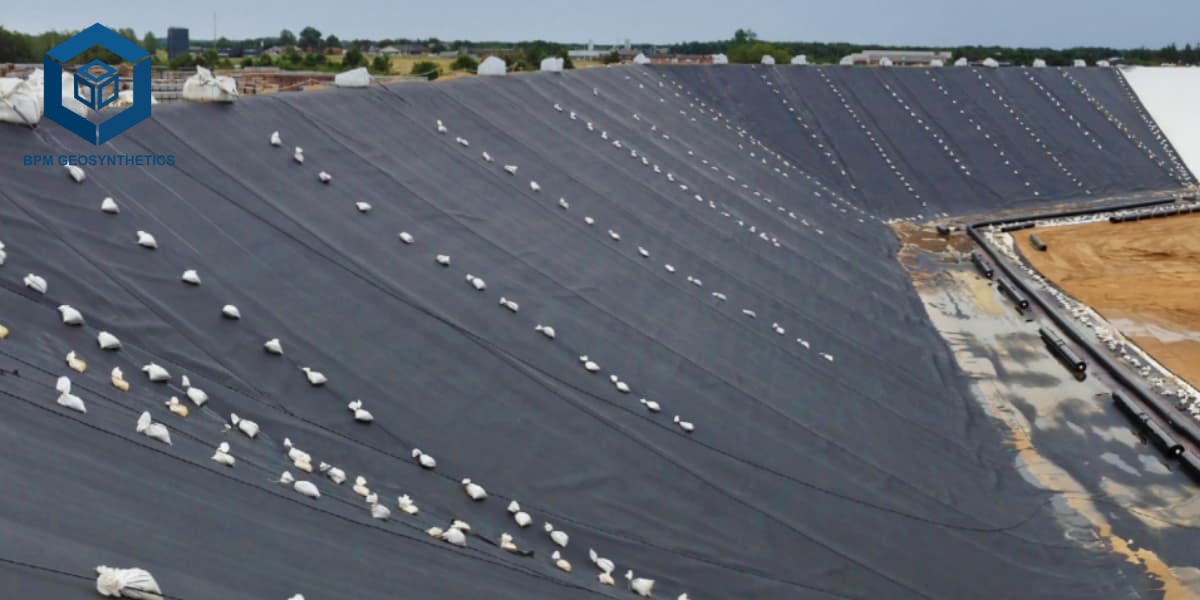
Using only virgin raw materials, BPM Geosynthetics HDPE geomembrane is a quality product that is strictly controlled in manufacturing and stretched for customization options (smooth or textured surfaces, inclusion of conductive layers, wide-width rolls). Complying with GRI-GM13 standards for performance (up to 44 kN/m for tensile strength, up to 960 N for puncture resistance, and HP-OIT ≥400 minutes), the product offers top-notch strength and comes at 15–30% less cost than many western brands.
4.1 Competitive Value
BPM geomembrane deliver excellent value for money, with prices mainly between $1.50 and $3.50 per square meter depending on thickness and other specs. Choosing large quantity purchase option can cut unit prices further, thus being very ideal for massive infrastructural, mining, and environmental projects. Notwithstanding low prices, BPM uses high-grade raw materials and executes production quality at a very high level, so customers will not be forced to compromise performance for saving. This mix hence drastically increases the final overall return on investment.
4.2 Proven Longevity
In addition to having elongation at break well above 700%, BPM HDPE geomembranes can absorb subgrade movement, differential settlement, as well as thermal expansion without the occurrence of cracking or failure. Given that they are properly installed and covered, materials will last for 50 to 100 years even under challenging conditions. In addition to this outstanding resistance to UV rays, oxygen, and chemicals, the geomembrane is also good for long-term use.
4.3 Application Versatility
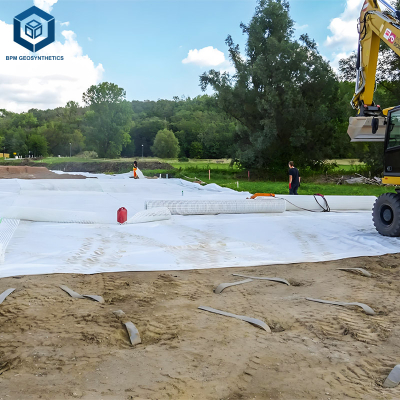
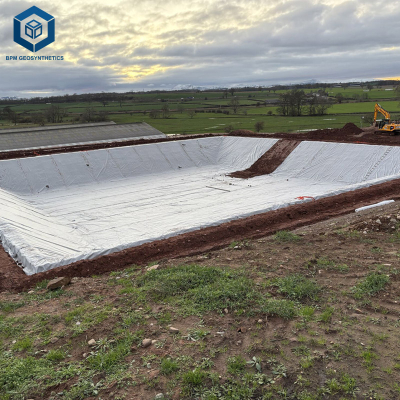
The polyethylene geomembrane from BPM are suitable for various uses such as old waste disposal sites lining, mining heap leach pads, tailings dams, water reservoirs, fish farming ponds, and secondary containment systems. Their wide-range chemical resistance feature makes them safe for the containment of acids, alkalis, and industrial waste liquids. The textured surfaces available improve friction performance on slopes, whereas the conductive geomembranes facilitate leak detection, thereby safety measures in different engineering scenarios being enhanced.
4.4 Installation and Support
BPM offers short manufacturing and delivery times (mostly 7–20 days) so that the project scheduling is not affected. They also give professional technical support in the form of installation manuals, welding instructions, and consulting on-site engineering when necessary. The materials used in their geomembranes facilitate ease in handling and welding, which results in better installation effectiveness and less worker's wage. Further, they can give you the product warranties for up to 10 years which will help to build the trust.
4.5 Quality Assurance
Strict quality control is implemented throughout the manufacturing process, from raw material selection to final product inspection. BPM geomembrana in hdpe have strong seams and good packing so that contamination leaks or breakages are mitigated. The use of GRI-GM13 allows for worldwide consistency and performance. Independent third-party inspections and certifications have ensured quality and safety of the product. BPM can be a very trustworthy option for high-stake environmental and civil engineering undertakings.
To summarize, BPM Geosynthetics is a smart choice for projects looking for cost-effective and high performance materials without sacrificing reliability over time.
Conclusion
Choosing the right geomembrane in HDPE fundamentally depends on the scope of the project and its requirements: Solmax or GSE for large-scale, high-reliability situations, Atarfil for extreme resilience, and The Best Project Material Co., Ltd.(BPM Geosynthetics) for a mix of cost efficiency and outstanding quality. Ensuring that GRI-GM13 standards are met, independent verification is performed, installation is done by qualified personnel, and testing is location-specific will provide leak-proof barriers, legal compliance, and sustainable results.