Geomembrane for TSF Double Liner System: Engineering Guide
What is Geomembrane for TSF Double Liner System?
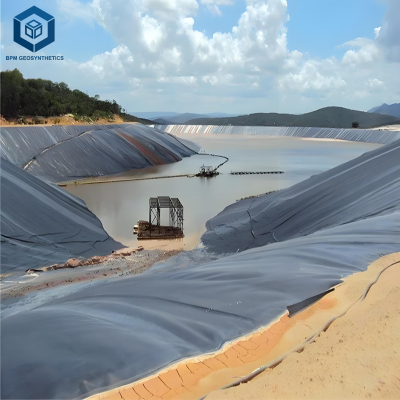
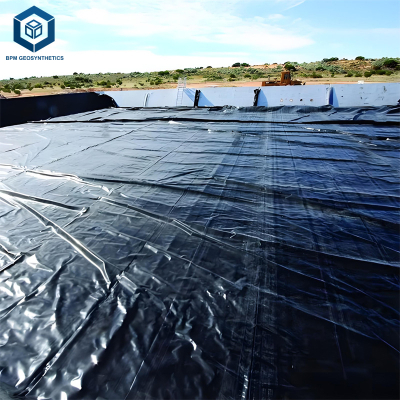
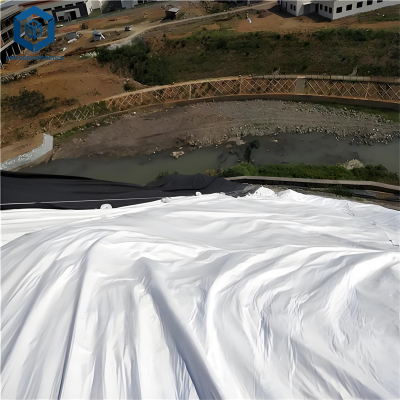
Geomembrane for TSF double liner system refers to the engineered multilayer containment barrier used in tailings storage facilities (TSFs) for mining operations, consisting of a primary (upper) geomembrane, a secondary (lower) geomembrane, and an intervening leak detection/collection layer. For mining engineers, EPC contractors, and procurement managers, understanding geomembrane for TSF double liner system is critical for regulatory compliance (e.g., US EPA Subtitle C, Chilean DS 86, Australian ANCOLD guidelines), groundwater protection, and long-term environmental stewardship. Typical double liner systems include: primary liner (1.5–2.0 mm HDPE), leak detection layer (geonet or sand/gravel with pipes), secondary liner (1.5 mm HDPE or GCL/GM composite), and foundation preparation. This guide provides engineering data on geomembrane for TSF double liner system: component specifications, leak detection design, thickness selection based on tailings chemistry and head, construction QA/QC, and procurement requirements for mining projects.
Technical Specifications of Geomembrane for TSF Double Liner System
The table below defines critical parameters for geomembrane for TSF double liner system per GRI, US EPA, and mining standards.
| Component | Typical Specification | Engineering Importance |
|---|---|---|
| Primary Geomembrane (upper) | 1.5 – 2.0 mm HDPE (smooth or textured) | Primary barrier against tailings and process solutions. Thicker for higher head or aggressive chemistry.}, |
| Secondary Geomembrane (lower) | 1.5 mm HDPE (smooth) or GCL (≥ 5 mm) | Secondary containment — must meet regulatory requirements for double liner systems.}, |
| Leak Detection Layer | Geonet (5–8 mm) or 300 mm sand/gravel + perforated pipes | Collects and removes any leakage from primary liner; allows monitoring. Critical for geomembrane for TSF double liner system.}, |
| Primary Liner Thickness | 1.5 mm standard; 2.0 mm for head > 10 m or aggressive tailings | Thicker liner provides higher puncture resistance and longer service life.}, |
| Secondary Liner Thickness | 1.5 mm minimum (HDPE) or 5 mm GCL | Must be equivalent or greater than primary? Typically equal or greater.}, |
| Geotextile Cushion (if required) | Nonwoven ≥ 300 g/m² (500 g/m² for sharp subgrade) | Protects secondary liner from subgrade puncture.}, |
| Leachate Head on Primary Liner | Design head ≤ 1 m (per EPA guidance for double liners) | Leak detection layer must keep head low to minimize leakage through primary liner.}, |
| Regulatory Standard | US EPA Subtitle C, Chilean DS 86, Australian ANCOLD, Canadian MS | Double liner required for hazardous tailings; single liner for non-hazardous.}, |
Key takeaway: Geomembrane for TSF double liner system requires primary liner (1.5–2.0 mm HDPE), secondary liner (1.5 mm HDPE or GCL), and leak detection layer. Regulatory compliance drives design.
Material Structure and Composition of Geomembrane for TSF Double Liner System
Understanding each layer's function is essential for geomembrane for TSF double liner system design.
| Layer | Material | Function | Interaction with Other Layers | |
|---|---|---|---|---|
| Foundation / Subgrade | Compacted soil or rock (≤ 2 mm/2m flatness) | Support for entire liner system | Must be smooth, remove stones > 12 mm.}, | |
| Geotextile Cushion (optional) | Nonwoven ≥ 300 g/m² | Protects secondary liner from subgrade puncture | Required if subgrade has sharp stones or angular material.}, | |
| Secondary Geomembrane | 1.5 mm HDPE or 5 mm GCL | Secondary containment — last line of defense | Must be welded (HDPE) or overlapped (GCL).}, | |
| Leak Detection Layer | Geonet (5–8 mm) or sand/gravel (300 mm) | Collects leakage from primary liner; conveys to sump | Must have transmissivity ≥ 3 × 10⁻⁵ m²/s per GRI GC8.}, | |
| Primary Geomembrane | 1.5 – 2.0 mm HDPE (smooth or textured) | Primary barrier against tailings | Must be compatible with tailings chemistry.}, |
Engineering insight: Geomembrane for TSF double liner system relies on the leak detection layer to intercept and remove any leakage before it reaches the secondary liner. This is the key difference from single liner systems.
Manufacturing Process: How Quality Affects TSF Double Liner Performance
Factory quality directly influences geomembrane for TSF double liner system performance.
Resin compounding: Virgin PE100 resin + carbon black (2–3%) + antioxidant package. Premium manufacturers use higher OIT (≥ 120 min).
Extrusion: Flat die extrusion (200–220°C). Thickness tolerance ±5% for mining-grade geomembrane.
Calendering / polishing: Smooth or textured surface as specified.
Cooling: Controlled cooling to prevent residual stress.
Quality inspection: PENT (≥ 500 h), OIT (≥ 100 min), puncture (ASTM D4833), tear (ASTM D1004).
Packaging: UV-protective wrapping for shipping to mine sites.
Performance Comparison: Double Liner vs. Single Liner for TSF
Comparing geomembrane for TSF double liner system with single liner alternatives.
| Liner System | Leak Detection | Regulatory Acceptance | Cost (€/m² installed) | Installation Complexity | Typical Applications |
|---|---|---|---|---|---|
| Double Liner (HDPE + HDPE) | Yes (geonet/sand + pipes) | High (hazardous tailings) | 25 – 40 | High | Cyanide leach, acid-generating tailings, hazardous waste |
| Double Liner (HDPE + GCL) | Yes | Medium-High | 22 – 35 | Medium-High | Non-hazardous tailings with regulatory requirement for double barrier |
| Single Liner (HDPE only) | No | Low (non-hazardous tailings only) | 12 – 20 | Medium | Non-acid-generating, non-cyanide tailings |
| Single Liner (GCL only) | No | Low (limited use) | 8 – 15 | Low | Temporary or low-risk applications |
Conclusion: Geomembrane for TSF double liner system is required for hazardous tailings (cyanide, acid-generating) and provides leak detection capability — essential for regulatory compliance.
Industrial Applications of Geomembrane for TSF Double Liner System
Specific applications within mining tailings management.
Gold/copper tailings (cyanide leach, acid-generating): Double liner required. Primary: 1.5–2.0 mm HDPE. Secondary: 1.5 mm HDPE. Leak detection: geonet.
Uranium tailings (radioactive, acidic): Double liner with secondary GCL. Thicker primary (2.0 mm).
Potash / brine tailings (saline): Double liner with secondary HDPE. Leak detection: sand layer.
Base metal tailings (zinc, lead, nickel): Acid-generating potential requires double liner.
Existing TSF expansion (new cell): Double liner for new cell even if older cells have single liner — regulatory trend.
Common Industry Problems with Geomembrane for TSF Double Liner System
Real-world failures from inadequate design or installation.
Problem 1: Leak detection layer clogging — no flow to sump
Root cause: Geonet (5 mm) crushed under tailings load (> 10 m), or sand layer fines migration. Solution: Use high-transmissivity geonet (≥ 3 × 10⁻⁵ m²/s at 100 kPa). Install geotextile filters on sand layer. This is critical for geomembrane for TSF double liner system functionality.
Problem 2: Primary liner puncture from sharp tailings
Root cause: 1.5 mm HDPE installed under sharp ore tailings without cushion. Solution: Use 2.0 mm HDPE or install geotextile cushion over primary liner? Actually cushion under primary. For double liner, protect primary from tailings with 300 mm sand layer.
Problem 3: Secondary liner seam failure undetected
Root cause: No leak detection between primary and secondary; secondary liner leaks go unnoticed. Solution: Leak detection layer must have monitoring wells/sumps. Test secondary liner after installation with vacuum box.
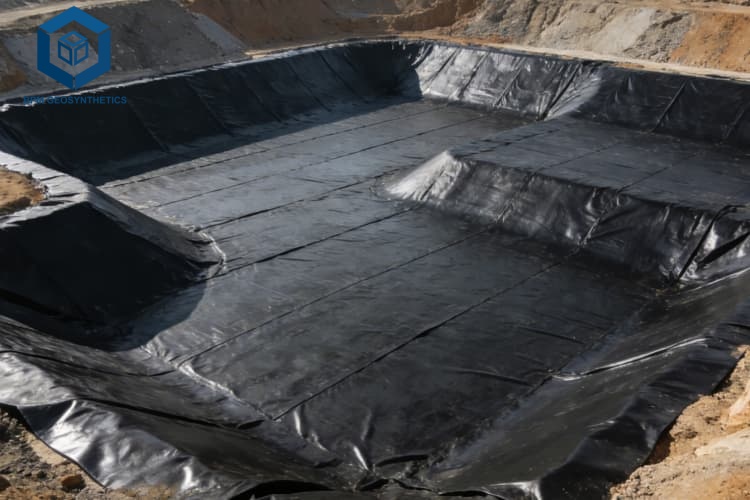
Problem 4: Inadequate slope stability of double liner system
Root cause: Slippage between layers (smooth HDPE on smooth HDPE). Solution: Use textured HDPE for primary liner on slopes, or geotextile friction layer between geomembranes.
Risk Factors and Prevention Strategies for Geomembrane for TSF Double Liner System
Risk: Leak detection system not installed (non-compliant): Regulatory violation, inability to detect leaks. Mitigation: Design must include leak detection layer with collection pipes and monitoring sumps.
Risk: Primary liner too thin for tailings head (> 10 m): Stress cracking or puncture. Mitigation: For head > 10 m, specify 2.0 mm HDPE. For head > 20 m, consider triple liner or increased thickness.
Risk: Secondary liner GCL desiccation before hydration: Cracks form, reduced hydraulic performance. Mitigation: Cover GCL secondary liner within 48 hours of installation. Use HDPE secondary where desiccation risk is high.
Risk: No post-installation leak testing: Undetected punctures or seam defects. Mitigation: Perform electrical leak location survey (ASTM D7002) on primary liner before tailings placement.
Procurement Guide: How to Specify Geomembrane for TSF Double Liner System
Follow this 8-step checklist for B2B purchasing decisions.
Determine tailings hazard classification: Hazardous (cyanide, acid-generating) → double liner required. Non-hazardous → single liner may be acceptable.
Calculate maximum hydraulic head: Head < 10 m → 1.5 mm primary. Head > 10 m → 2.0 mm primary.
Specify primary geomembrane: HDPE, 1.5–2.0 mm, textured on slopes (for friction). Request PENT ≥ 500 h, OIT ≥ 100 min.
Specify secondary geomembrane: HDPE 1.5 mm or GCL (≥ 5 mm). For HDPE, same resin requirements as primary.
Specify leak detection layer: Geonet (transmissivity ≥ 3 × 10⁻⁵ m²/s at 20 kPa and 100 kPa) or 300 mm sand/gravel with perforated pipes.
Require geotextile cushion if needed: Nonwoven ≥ 300 g/m² under secondary liner if subgrade has sharp stones.
Require regulatory compliance documentation: US EPA Subtitle C, Chilean DS 86, or applicable local standard.
Order pre-installation mockup: Install 100 m² test section including all layers. Test leak detection flow and seam integrity.
Engineering Case Study: Geomembrane for TSF Double Liner System in Gold Mine
Project type: Gold mine tailings storage facility (cyanide leach tailings).
Location: Nevada, USA (US EPA Subtitle C compliance required).
Project size: 500,000 m².
Double liner system specification:
- Subgrade: compacted clay, flatness ≤ 2 mm/2m.
- Secondary liner: 1.5 mm HDPE, smooth.
- Leak detection layer: 8 mm geonet (transmissivity 5 × 10⁻⁵ m²/s) with HDPE perforated pipes.
- Primary liner: 1.5 mm HDPE (slopes textured, base smooth).
- Tailings cover: 300 mm sand cushion.
Results after 3 years: Zero leakage detected (leak detection sumps dry). No seam failures. Passed EPA inspection. This case demonstrates that proper geomembrane for TSF double liner system design ensures environmental compliance and containment integrity.
Frequently Asked Questions: Geomembrane for TSF Double Liner System
Q1: What is a double liner system for TSF?
A double liner system consists of a primary (upper) geomembrane, a secondary (lower) geomembrane, and an intervening leak detection layer. It provides redundant containment and allows monitoring for leaks — required for hazardous tailings.
Q2: When is a double liner required for tailings storage?
Double liner is required for hazardous tailings: cyanide leach (gold/silver), acid-generating tailings (sulfide minerals), uranium tailings, and any tailings classified as hazardous by local regulations (US EPA Subtitle C, Chilean DS 86, etc.).
Q3: What thickness HDPE is used for primary liner in double liner systems?
1.5 mm typical; 2.0 mm for hydraulic head > 10 m, aggressive tailings chemistry, or higher puncture risk. Thicker liner provides longer service life.
Q4: What is the leak detection layer and how does it work?
The leak detection layer (geonet or sand/gravel with pipes) sits between primary and secondary liners. Any leakage through the primary liner flows to the leak detection layer and is collected in sumps, allowing monitoring and removal.
Q5: Can GCL be used as the secondary liner?
Yes, GCL (geosynthetic clay liner) can be used as the secondary liner in a double liner system, typically with HDPE as primary. However, GCL has higher permeability than HDPE and must be protected from desiccation.
Q6: What is the difference between a double liner and a composite liner?
A double liner has two separate geomembranes with a leak detection layer. A composite liner has a geomembrane in direct contact with a clay layer (GCL or compacted clay). Double liners provide redundant containment; composite liners rely on clay for additional barrier.
Q7: How is the leak detection layer tested?
After installation, the leak detection layer is tested for transmissivity (geomet) or permeability (sand). Collection pipes are flushed and flow-tested. The layer must drain freely to sumps.
Q8: What regulatory standards apply to double liner systems?
US EPA Subtitle C (hazardous waste), Chilean DS 86 (mining tailings), Australian ANCOLD guidelines, Canadian MS (Mining Safety) regulations. Always verify local requirements.
Q9: How are seams tested on primary and secondary liners?
Non-destructive: air channel test for dual-track welds (100–200 kPa, 2–5 min hold). Vacuum box for extrusion welds. Destructive: peel and shear per ASTM D6392 (1 sample per 500 m per liner). Secondary liner must be tested before primary liner installation.
Q10: What is the design life of a double liner system for TSF?
With proper specification (1.5–2.0 mm HDPE, PE100 resin, PENT ≥ 500 h, OIT ≥ 100 min), design life is 50–100+ years for primary liner. Secondary liner should have similar design life.
Request Technical Support or Quotation for Geomembrane for TSF Double Liner System
For project-specific geomembrane for TSF double liner system design, regulatory compliance assistance, or bulk procurement, our technical team is available.
Request a quotation – Provide tailings type, head, area, and regulatory jurisdiction.
Request engineering samples – Receive HDPE and GCL samples with leak detection layer test reports.
Download technical specifications – Double liner design guide, leak detection transmissivity calculator, and installation QA/QC checklist.
Contact technical support – Regulatory compliance consulting, thickness selection, and installation oversight for TSF double liner systems.
About the Author
This guide on geomembrane for TSF double liner system was written by Dipl.-Ing. Hendrik Voss, a civil engineer with 19 years of experience in geosynthetics for mining tailings management. He has designed over 40 double liner systems for gold, copper, uranium, and base metal tailings facilities across North America, South America, Australia, and Europe, specializing in regulatory compliance, leak detection design, and installation QA/QC. His work is referenced in GRI and ASTM D35 committee discussions on geomembrane standards for mining applications.