Geotextile vs geomembrane function difference
The geotextile vs geomembrane function difference refers to the distinct engineering roles of two widely used geosynthetic materials. Geotextiles are permeable fabrics used for filtration, separation, and reinforcement, while geomembranes are impermeable polymer sheets designed to prevent liquid or gas migration in containment systems.
Technical Parameters and Specifications
| Parameter | Geotextile | Geomembrane | Test Standard |
|---|---|---|---|
| Main Material | Polypropylene (PP) / Polyester (PET) | HDPE / LLDPE / PVC | Industry Standard |
| Typical Thickness | 0.8 – 6 mm | 0.5 – 3 mm | ASTM D5199 |
| Mass per Unit Area | 100 – 800 g/m² | 500 – 3000 g/m² | ASTM D5261 |
| Permeability | High permeability | Extremely low permeability | ASTM D4491 |
| Tensile Strength | 8 – 45 kN/m | 20 – 40 MPa | ASTM D4595 / ASTM D6693 |
| Elongation | 40 – 120% | 700 – 900% | ASTM Testing |
| Roll Width | 2 – 6 m | 5 – 8 m | Production Standard |
| Service Life | 20 – 50 years (buried) | 30 – 100 years (buried) | Engineering Estimate |
Structure and Material Composition
Understanding the geotextile vs geomembrane function difference requires examining their structural design and polymer composition.
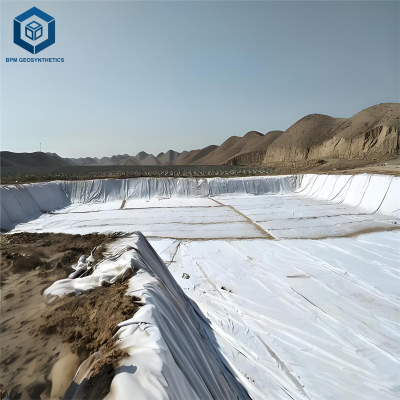
Geotextile fibers – Needle-punched or woven polymer fibers forming a permeable fabric.
Geomembrane sheet – Continuous polymer barrier layer designed to prevent fluid migration.
Polymer materials – Geotextiles use PP or PET fibers, while geomembranes commonly use HDPE or LLDPE.
UV stabilizers – Carbon black and additives protect geomembranes from degradation.
Porous vs impermeable structure – Geotextiles allow water flow while geomembranes block it.
Manufacturing Process
The production technologies used in the geotextile vs geomembrane function difference comparison are significantly different.
Geotextile Manufacturing Process
Polymer fiber extrusion from PP or PET resin.
Fiber web formation using carding machines.
Needle punching to interlock fibers.
Thermal bonding to enhance strength.
Quality testing and roll packaging.
Geomembrane Manufacturing Process
HDPE or LLDPE resin preparation with additives.
Extrusion through flat dies.
Sheet calibration and cooling.
Surface finishing (smooth or textured).
Quality testing for thickness and permeability.
Industry Comparison
| Material | Main Function | Permeability | Typical Applications |
|---|---|---|---|
| Geotextile | Filtration & separation | Permeable | Road construction, drainage systems |
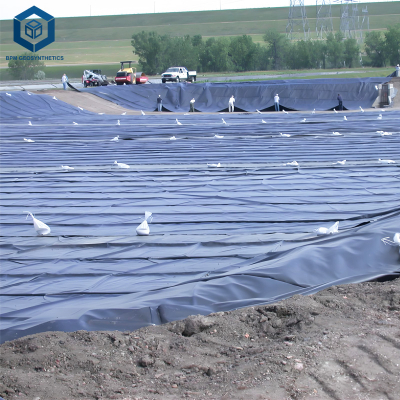
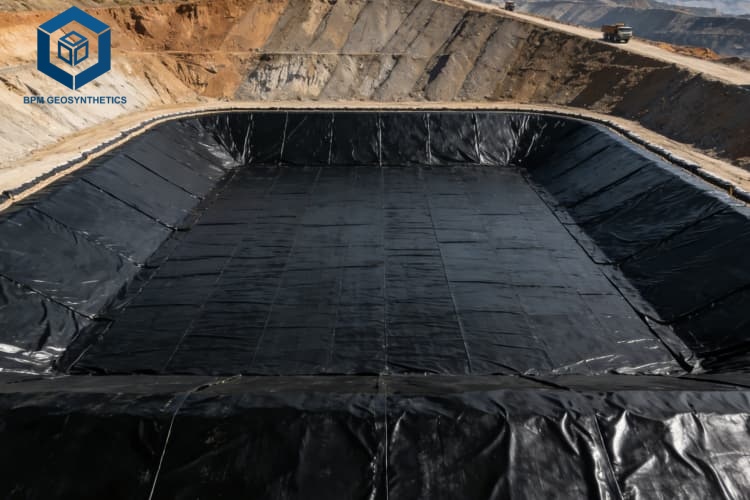
| Geomembrane | Containment barrier | Impermeable | Landfills, ponds, reservoirs |
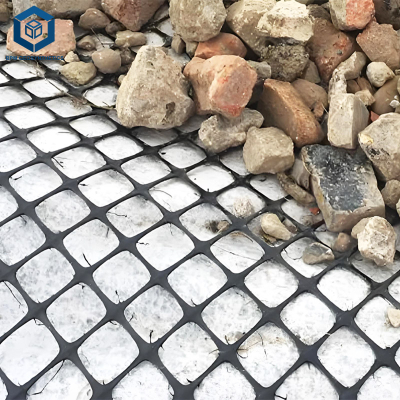
| Geogrid | Reinforcement | Open structure | Soil stabilization |
| Geonet | Drainage transmission | High drainage | Landfill drainage systems |
Application Scenarios
The engineering choice explained in the geotextile vs geomembrane function difference analysis depends on project requirements such as filtration, reinforcement, or containment.
Landfill liner systems
Mining tailings containment
Road and railway subgrade stabilization
Irrigation canals and water reservoirs
Wastewater treatment facilities
Environmental protection projects
Typical decision-makers include EPC contractors, infrastructure developers, environmental consultants, and international geosynthetics distributors.
Key Engineering Pain Points and Solutions
1. Soil Particle Migration
Solution: Geotextiles act as filtration layers that prevent soil loss while allowing water flow.
2. Leakage in Containment Systems
Solution: Geomembranes provide impermeable barriers that prevent fluid leakage.
3. Weak Soil Structure
Solution: Geotextiles distribute loads and improve subgrade stability.
4. Environmental Protection Compliance
Solution: Geomembranes are used in engineered containment systems to meet environmental regulations.
Risk Warnings and Prevention
Incorrect material selection may cause drainage failure or leakage.
Poor installation practices may damage geomembrane liners.
Improper geotextile filtration selection may cause clogging.
Insufficient subgrade preparation can puncture geomembranes.
Engineering design should include soil testing and hydraulic analysis before selecting materials.
Procurement and Selection Guide
Define the engineering function required (filtration, separation, containment).
Analyze soil characteristics and drainage conditions.
Select geotextile weight or geomembrane thickness.
Verify mechanical and hydraulic performance.
Review ASTM or ISO test reports.
Evaluate manufacturer quality control capabilities.
Confirm logistics, roll sizes, and installation requirements.
Engineering Case Example
In a municipal landfill construction project covering approximately 90,000 square meters, engineers combined a 2.0 mm HDPE geomembrane with a 400 g/m² nonwoven geotextile protection layer. The geomembrane provided the impermeable containment barrier, while the geotextile protected the liner from puncture and improved drainage performance within the landfill system.
FAQ – Frequently Asked Questions
1. What is the main geotextile vs geomembrane function difference?
Geotextiles are permeable filtration materials, while geomembranes are impermeable containment barriers.
2. Can geotextiles replace geomembranes?
No. Geotextiles cannot provide fluid containment because they are permeable.
3. Are both materials used together?
Yes. Many engineering systems combine geotextiles and geomembranes to achieve filtration and containment.
4. Which material is used in landfill liners?
Geomembranes form the primary liner, while geotextiles serve as protection or filtration layers.
5. What is the lifespan of these materials?
Properly installed systems can last several decades underground.
6. What polymers are commonly used?
Geotextiles typically use polypropylene or polyester, while geomembranes use HDPE or LLDPE.
7. Are geomembranes resistant to chemicals?
HDPE geomembranes have strong resistance to many industrial chemicals.
8. Do geotextiles provide reinforcement?
Yes, they improve soil stability in road and railway subgrades.
9. Which material controls water flow?
Geotextiles manage filtration and drainage, while geomembranes prevent flow.
10. Who typically specifies these materials?
Engineering consultants and environmental project designers determine material specifications.
Request Technical Documentation or Project Samples
Engineering contractors, distributors, and procurement managers can request detailed product specifications, laboratory testing reports, and engineering samples for project evaluation. Technical teams can provide project-specific recommendations and quotation support upon request.
Author Expertise (E-E-A-T)
This technical guide was prepared by professionals with more than 10 years of experience in geosynthetics manufacturing, including geomembranes, geotextiles, and drainage materials. The information reflects engineering practices widely used in environmental containment, infrastructure construction, and mining industry applications.