Textured vs smooth geomembrane difference
The textured vs smooth geomembrane difference refers to the structural and functional variation between two types of HDPE geomembranes used in containment systems. Smooth geomembranes provide impermeable barriers with uniform surfaces, while textured geomembranes feature rough surfaces that improve friction, slope stability, and interface shear strength in geotechnical engineering projects.
Technical Parameters and Specifications
| Parameter | Smooth Geomembrane | Textured Geomembrane | Test Standard |
|---|---|---|---|
| Material | HDPE / LLDPE | HDPE / LLDPE | Industry Standard |
| Thickness | 0.5 – 3.0 mm | 1.0 – 3.0 mm | ASTM D5199 |
| Surface Profile | Smooth | Single or double sided texture | Manufacturing Design |
| Tensile Strength | 20 – 40 MPa | 20 – 40 MPa | ASTM D6693 |
| Elongation at Break | 700 – 900% | 700 – 900% | ASTM D6693 |
| Friction Angle | 8° – 12° | 18° – 30° | ASTM D5321 |
| Permeability | ≤1 × 10⁻¹³ cm/s | ≤1 × 10⁻¹³ cm/s | ASTM D5887 |
| Roll Width | 5 – 8 m | 5 – 8 m | Production Standard |
| Roll Length | 50 – 200 m | 50 – 200 m | Production Standard |
Structure and Material Composition
Understanding the textured vs smooth geomembrane difference begins with analyzing their structural design and polymer composition.
HDPE polymer base – High-density polyethylene providing chemical resistance and impermeability.
Smooth geomembrane surface – Flat and uniform for easy welding and fluid containment.
Textured surface layer – Rough micro-projections increase friction between soil layers.
Carbon black additives – Enhance UV resistance and durability.
Antioxidants and stabilizers – Extend long-term environmental performance.
Manufacturing Process
Both materials in the textured vs smooth geomembrane difference comparison are produced using extrusion technology with specific surface modification techniques.
1. Polymer Preparation
HDPE resin pellets are mixed with carbon black, antioxidants, and stabilizing additives.
2. Extrusion Process
The polymer mixture is melted and extruded through a flat die using advanced geomembrane extrusion lines.
3. Surface Formation
Smooth geomembranes maintain a flat extruded surface.
Textured geomembranes undergo nitrogen gas injection or embossing to form rough textures.
4. Cooling and Calibration
Extruded sheets pass through cooling rollers to maintain dimensional stability.
5. Quality Inspection
Products are tested for tensile strength, thickness uniformity, and surface friction performance.
6. Rolling and Packaging
Finished geomembranes are rolled and packaged for transportation to engineering sites.
Industry Comparison
| Material | Main Function | Surface Type | Typical Application |
|---|---|---|---|
| Smooth Geomembrane | Fluid containment | Flat surface | Ponds, reservoirs, tanks |
| Textured Geomembrane | Slope stability & containment | Rough surface | Landfills and steep slopes |
| Geotextile | Filtration & separation | Fiber sheet | Road construction |
| Geosynthetic Clay Liner | Secondary barrier | Composite layer | Waste containment |
Application Scenarios
The engineering selection between materials in the textured vs smooth geomembrane difference comparison depends on slope conditions, containment requirements, and soil interaction.
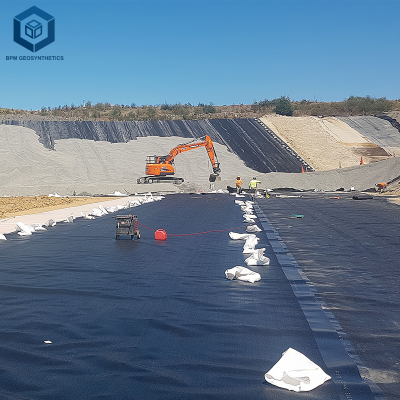
Municipal landfill liner systems
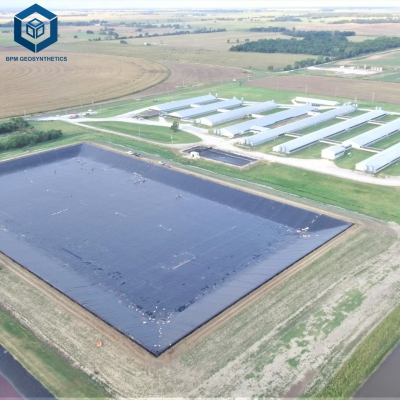
Mining tailings ponds
Agricultural water reservoirs
Industrial wastewater containment
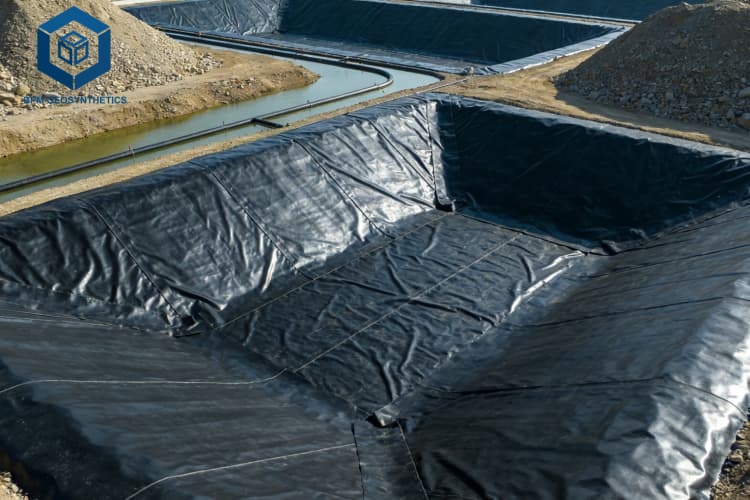
Canal and irrigation lining
Environmental protection projects
Project decision-makers typically include EPC contractors, infrastructure developers, environmental engineers, and international geosynthetics distributors.
Key Engineering Pain Points and Solutions
1. Slope Instability in Liner Systems
Solution: Textured geomembranes increase interface friction, preventing liner slippage on slopes.
2. Welding Difficulty on Rough Surfaces
Solution: Smooth geomembranes provide easier and faster thermal welding.
3. Drainage Layer Interaction Problems
Solution: Textured geomembranes improve bonding with geotextile drainage composites.
4. Material Selection Confusion
Solution: Engineering design should consider slope angle, soil friction angle, and load conditions.
Risk Warnings and Prevention
Incorrect geomembrane selection may lead to liner sliding failures.
Poor welding practices can compromise containment systems.
Improper subgrade preparation may puncture the membrane.
Extended UV exposure before installation can reduce material performance.
Engineering teams should conduct interface shear testing before final material selection.
Procurement and Selection Guide
Evaluate slope stability requirements for the containment system.
Determine whether friction performance is necessary.
Select appropriate geomembrane thickness.
Review interface shear test data.
Verify welding compatibility with installation equipment.
Confirm manufacturer production capacity and certifications.
Request laboratory quality reports and project references.
Engineering Case Example
In a municipal landfill project covering more than 120,000 square meters, engineers selected double-sided textured HDPE geomembrane for the slope sections to improve friction stability. Smooth geomembrane was used for the flat base areas to simplify welding operations. This hybrid design improved installation efficiency while maintaining long-term environmental containment performance.
FAQ – Frequently Asked Questions
1. What is the main difference between textured and smooth geomembrane?
The primary difference is surface friction. Textured geomembranes increase slope stability while smooth types focus on containment.
2. Which geomembrane is better for landfill slopes?
Textured geomembranes are generally preferred due to higher friction angles.
3. Are both materials waterproof?
Yes, both provide extremely low permeability barriers.
4. Is welding different for textured geomembranes?
Welding parameters may require adjustment due to the rough surface.
5. Can smooth geomembranes be used on slopes?
They can be used on gentle slopes but may require additional anchoring.
6. What thickness is commonly used?
Typical geomembrane thickness ranges from 1.0 mm to 2.5 mm depending on project design.
7. Do textured geomembranes increase cost?
They generally cost slightly more due to additional manufacturing processes.
8. Are these materials resistant to chemicals?
HDPE geomembranes have excellent chemical resistance for waste containment.
9. How long can geomembranes last?
Properly installed geomembranes can perform for several decades underground.
10. Who usually specifies geomembrane types?
Engineering consultants and project designers typically determine the appropriate geomembrane type.
Request Technical Data or Engineering Samples
Procurement managers, EPC contractors, and international distributors can request detailed technical specifications, project references, and engineering samples for evaluation. Contact the technical team for project-specific recommendations and quotation support.
Author Expertise (E-E-A-T)
This technical guide was prepared by professionals with more than 10 years of experience in geosynthetic engineering materials, including geomembranes, geotextiles, and landfill containment systems. The information reflects widely accepted engineering practices used in environmental protection, mining, and infrastructure development projects worldwide.