Top 8 Global HDPE Membrane Manufacturer
The worldwide High-Density Polyethylene (HDPE) membrane industry is undergoing a major shift, with growth being fuelled by tougher environmental rules, large-scale infrastructure projects, and the rising needs of the mining and water containment industries. Used as main components for landfills, mining activities, fish farming, and reservoirs, top-grade HDPE membranes might be the deciding factor whether a project will be successful or an environmental disaster.
The market experts' forecasts show that the worldwide HDPE geomembrane industry will be worth around USD 1.89 billion in 2026 and will increase to about USD 2.51 billion by 2030 with a compound annual growth rate (CAGR) of 7.4%. Wider studies that include HDPE and LLDPE geomembranes have estimated the market size to be USD 1.63 billion in 2025 and to grow up to USD 2.87 billion by 2034, the CAGR being 6.5%. All these numbers are the results of the ongoing investments in infrastructure, mining, and environmental conservation all over the globe.
For an engineer or anyone responsible for the purchasing or ownership of the project the choice of a HDPE membrane producer is a very important one. In fact, it goes beyond just a buying decision as it represents a factor that can greatly impact the lifetime of the project, its adherence to regulations, and ultimately the environment's safety. Top producers meet international standards such as GRI-GM13 and ASTM D7465 and can provide liners with hydraulic conductivity as low as ≤10⁻¹¹ cm/s along with service life estimates of more than 50 years if installed correctly.
The article with a thorough industry review covers the leading 8 global manufacturers of HDPE membranes that will continue to dominate the market in 2026 including highly growing The Best Project Material Co., Ltd.(BPM Geosynthetics). Besides the listing of producers, the paper will be equally focussed on technical part making it very useful for procurement purpose as well.
1. What Makes HDPE Membrane Quality Lead Project to Success?
HDPE membranes have become the standard for environmentally sensitive containment projects. Compared to the usual choices like compacted clay or concrete, high-end hdpe geo membrane have several features that make them the preferred ones for major infrastructure:
1.1 Very Low Permeability
Certified HDPE geomembranes have a permeability coefficient of less than 10⁻¹¹ cm/s which means they can contain 99.9 percent of fluids and thus are very effective in preventing contamination of groundwater and loss of water resources both.
1.2 Very High Resistance to Chemicals
HDPE is made to be stable at different pH levels ranging from 2 to 13 which means it is capable of resisting landfill leachate that is strong, solution of acid during heap leaching in mines, and also saline conditions often encountered in coastal areas.
1.3 Very Long Durability
Fiber grades that are mixed with 2.0 to 3.0 carbon black percent, and at the same time rich in antioxidant types, have shown great UV resistance and have estimated lifespan of 50 to 100 years under decent installation and covering conditions.
1.4 Very Strong Mechanically
Good hdpe waterproofing membrane usually have tensile strength at yield of more than 20 kN/m, elongation at break well over 700 percent together with puncture resistance that ensures them not only surviving very difficult installation conditions but performing well over time.
2. What is the Technical Part Behind HDPE Membrane - The GRI-GM13 Standard
Geosynthetic Research Institute's test method GM13, simply known as "Test Properties, Testing Frequency and Recommended Warranty for High Density Polyethylene (HDPE) Geomembranes" sets the property minimum levels that are required for the geomembranes produced from HDPE in both smooth and textured versions. The formulated membrana HDPE sheet density must be 0.941 g/ml or higher and thicknesses can range from 0.75 mm to 3.0 mm. The standard was initially adopted in June 1997 and it has been revised 16 times, the latest update in March 2021 dealing with Standard OIT test methodology. Below is the summary table of main property requirements:
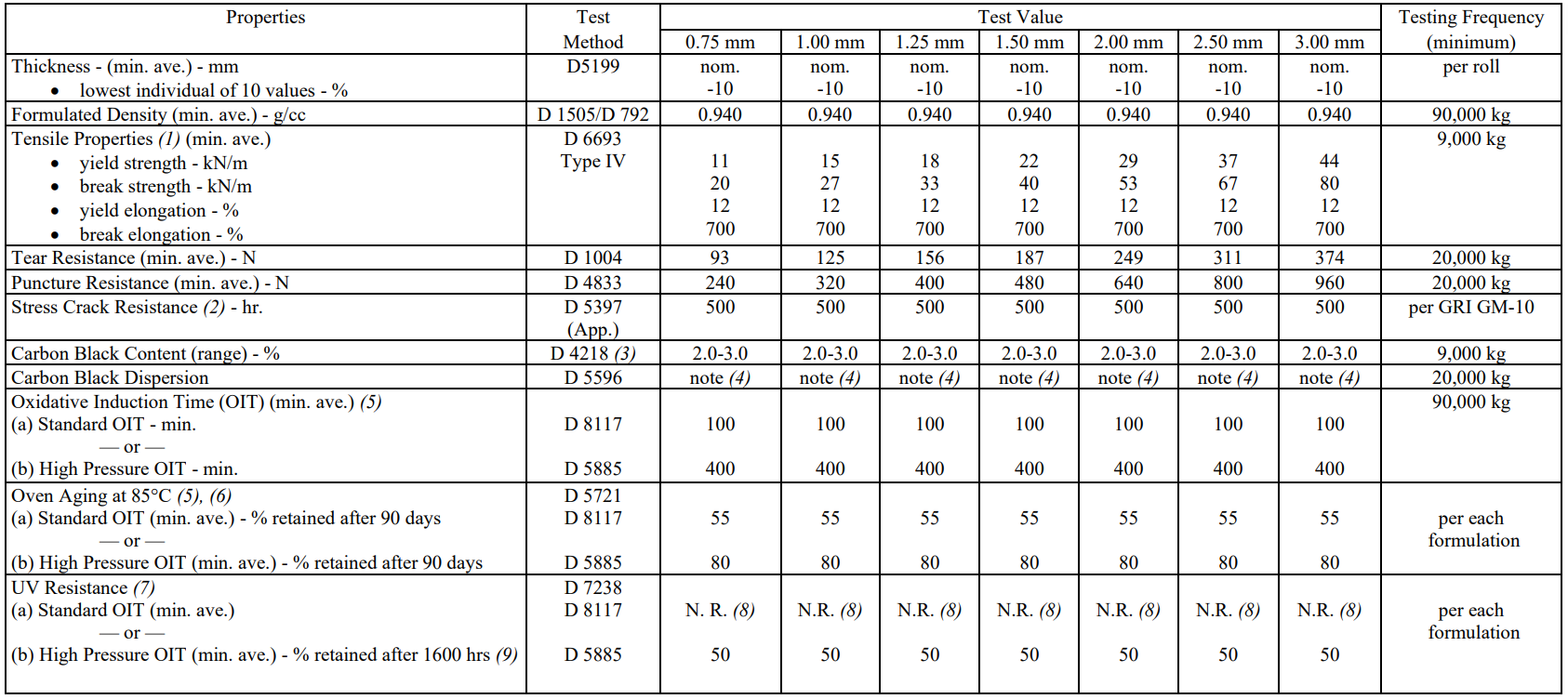
Material meeting these thresholds demonstrates 99.9 percent containment efficiency and, when properly installed and covered, service life estimates of 40 years or more . However, industry leaders recognize that merely meeting minimum specifications may not guarantee optimal field performance—particularly in demanding applications such as mining heap leach pads or exposed installations in extreme climates .
3. Selection Criteria for Top Global HDPE Membrane Manufacturer
Using quite strict criteria essential to the success of international projects, these top 8 HDPE membrane manufacturers that are presented in this guide were thoroughly evaluated.
3.1 Production Capability and Size
The ability to supply international projects of a very large scale consistently, with yearly production volume in terms of thousands of tons or millions of square meters.
3.2 Certified Standards
Conforming to international standards such as GRI-GM13, ASTM, ISO 9001, ISO 14001, and product-specific certifications like NSF/ANSI 61 for potable water contact.
3.3 Manufacturing Methods
Capabilities for production at a high level of technology including flat-die extrusion technology, very accurate thickness control, and large-width production to minimize field seaming.
3.4 Quality Control Systems
Testing methods applied thoroughly, lot-specific Mill Test Reports, and verification through third-party recognized laboratories such as SGS, BV, and Intertek.
3.5 Worldwide Supply Chain Ability
The networks of logistics ensuring the delivery and technical support on time, even remotely located areas.
3.6 Creativity and Environmentally-friendly Practices
Besides the production of advanced formulations, conductive geomembranes, and the use of recycled components without lowering performance, materials that promote creativity and environmental activities.
4. The 8 Most Important HDPE Membrane Producer worldwide in 2026
The following producers, in our opinion, are the leaders in the production of hdpe sheet waterproofing and have been a driving force in the market for 2026 according to the comprehensive analysis of competition, production, technological superiority, and worldwide projects experience.
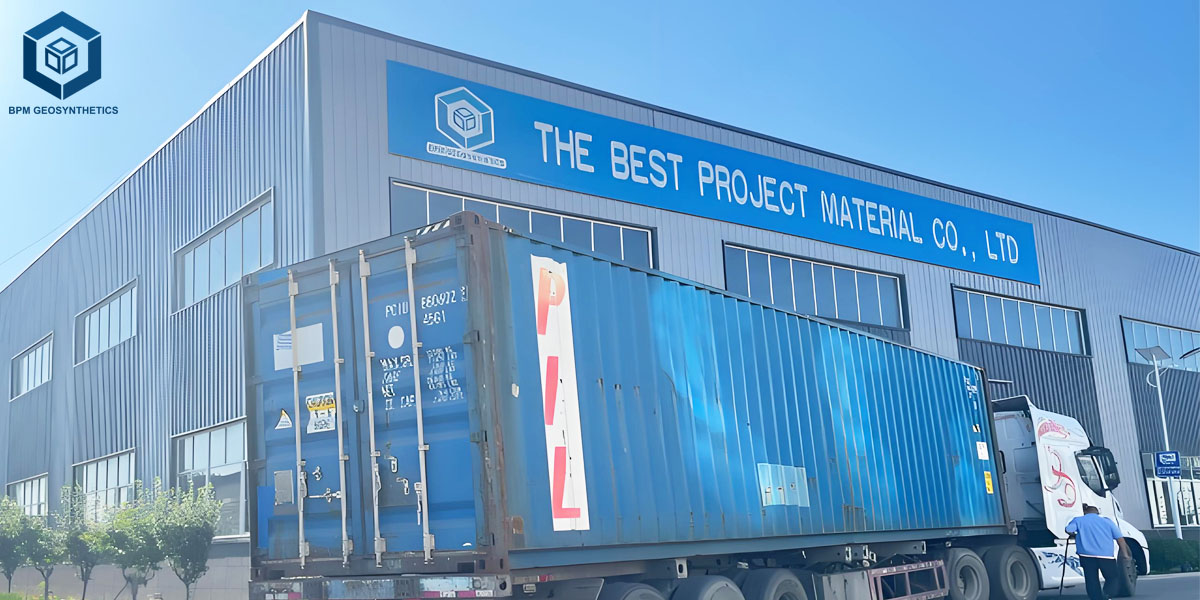
4.1 The Best Project Material Co., Ltd.(BPM Geosynthetics)
4.1.1 About the Company
It is located in Tai'an City, Shandong Province, China. The Best Project Material Co.,Ltd (BPM Geosynthetics) is among the leading HDPE geomembrane manufacturers in China since its establishment in 2007. BPM boasts a cutting-edge manufacturing facility of 16,000 sqm, and its commitment to the environment is demonstrated by the continuous investment in production lines and testing equipment.
4.1.2 Manufacturing Capacity
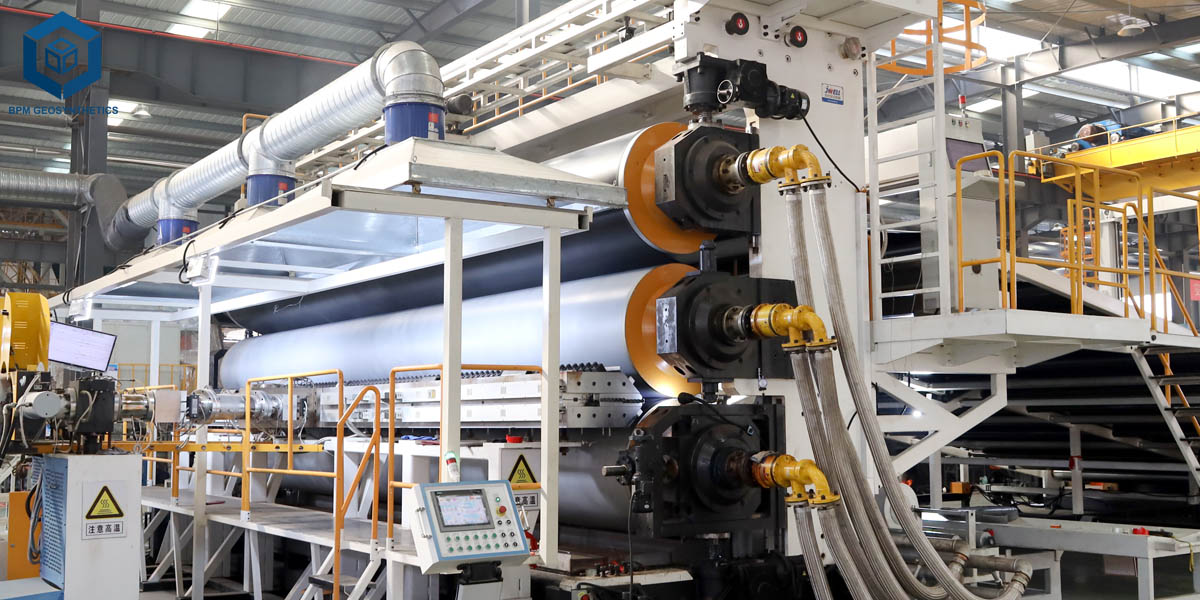
BPM Geosynthetics can produce 30,000 ton / year and its products are used in more than 100 countries worldwide. BPM Geosynthetics is capable of supplying smooth and textured HDPE geomembranes with thicknesses from 0.2 mm to 3.0 mm and a maximum width of 10 meters. This is a very important feature allowing them to reduce on-site seaming requirement by 20% when compared with the use of the standard products in the installation.
4.1.3 Quality and Certification
All BPM Geosynthetics products go through testing procedures at internationally recognized labs such as SGS, BV, Intertek, and CTI. BPM Geosynthetics is an ISO 9001, ISO 14001, and OHSAS 18001 certified company committed to quality and environmental management. Their products are fully compliant with ASTM and GRI-GM13.
4.1.4 Production Techniques
To manufacture the closest to perfection sheeting, BPM Geosynthetics operates co-extrusion technology with three layers & fully automatic geomembrane production lines that ensure accurate thickness control and uniform distribution of properties throughout the width of the sheet.
4.1.5 Strengths:
- Width Advantage: 10-meter width obtains the great advantage of reducing field seams and installation time
- Flexible Ordering: Minimum order quantity is low and production takes 2-20 days
- OEM/ODM Capabilities: Customized depending on special requirements
- Wide Assortment: Smooth, textured, and composite geomembranes catering to various applications
- Affordable: Competitive pricing at factory level without loss of quality
4.1.6 Main Areas of Use
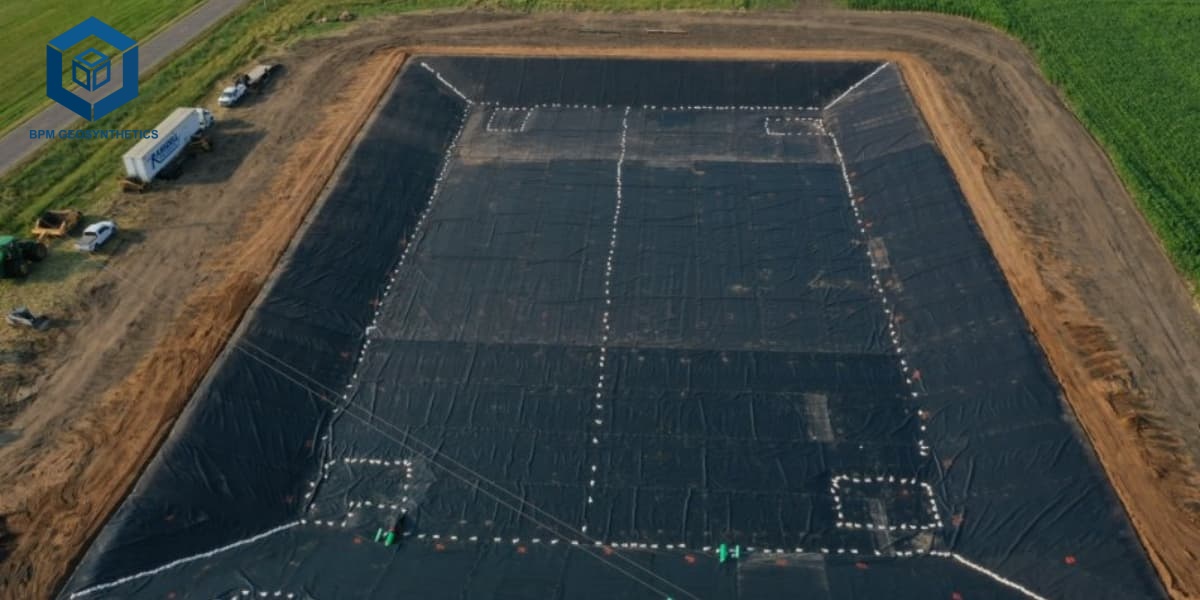
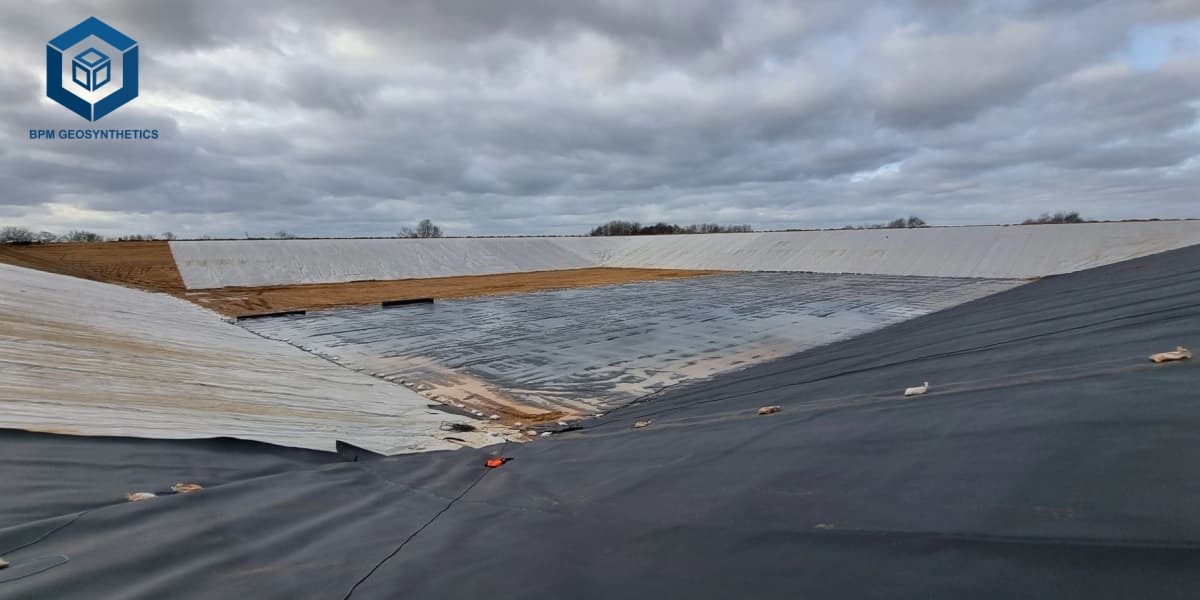
BPM hdpe membrane sheet is widely used for lining landfills, mining heap leach pads, wastewater treatment lagoons, aquaculture ponds, and water containment projects worldwide.
4.2 Solmax International
4.2.1 Company Overview
Headquartered in Canada with operations in North America, Europe, and Asia, Solmax is the world’s largest geosynthetics only manufacturer. The company strengthened its position through several acquisitions such as its purchase of GSE Environmental and large market share and manufacturing capacity consolidation.
4.2.2 Technical Advantages
The company is most recognized for its outstanding GSE HX geomembrane that is made not only to comply with but exceed GRI-GM13 requirements and is tested very strictly. It has become a staple in waste containment and mining applications where long-term exposure to harsh chemicals is a must. Solutions from Solmax have been shown to resist attack by aggressive brine and tailing even at elevated temperatures (up to 75°C) during the durability tests .
4.2.3 Key Strengths:
- World largest player in dedicated geosynthetics
- Unsurpassed R&D capabilities
- Technical support network at every level
- Diverse product line including specialty conductive liners
4.3 GSE Environmental (now part of Solmax)
4.3.1 Company Overview
A leading name in the geosynthetic manufacturing industry for over 40 years, GSE Environmental is widely acknowledged as a pioneer in the field. As part of Solmax, it still markets its own product line of high quality HDPE membranes .
4.3.2 Production Capabilities
GSE serves worldwide projects with regional supply through its manufacturing plants located in USA, Germany, Thailand, and Egypt.
4.3.3 Technical Advantages
GSE membranes due to their great flexibility and low thermal expansion characteristic are very suitable for the situations of varied settlement such as landfills of large size or complicated terrains.
4.4 Agru America Inc.
4.4.1 Company Overview
Headquartered in the United States with manufacturing facilities in Austria, Agru symbolizes precision geosynthetic manufacturing. Technology leader through the commitment of continuous implementation of advanced production processes.
4.4.2 Manufacturing Technology
Agru opted for flat-die extrusion technology leading to better thickness uniformity of the product.
4.4.3 Technical Advantages
Their textured surfaces allow for better friction angles on steep slopes—this tends to be quite important when considering the safety of dams, landfill side slopes, and reservoir applications where the stability of the interface is a top concern.
4.4.4 Key Strengths:
- Progressive flat-die extrusion technology
- Top-notch textured surface devises
- Exceptional engineering support
- Wide-ranging quality control procedures
4.5 NAUE GmbH & Co. KG
4.5.1 Company Overview
As a family-owned business in Germany running without interruption since 1967, NAUE is synonymous with the very best of German engineering in producing geosynthetics. Its main focus areas are hydraulic engineering, tunnel sealing, and highly demanding infrastructure applications.
4.5.2 Product Excellence
The company's compositions are thoroughly tested and designed to withstand a great deal of mechanical stress in infrastructure projects. NAUE stresses their production methods through the many years that their products could be functional with special emphasis on resistance to stress cracking and stability to oxidation.
4.5.3 Key Strengths:
- Engineering excellence of Germany
- Professional and Infrastructure specialization
- Systematized and integrated products
- Comprehensive technical documentation
4.6 Atarfil S.L.
4.6.1 Company Overview
The Spanish based company, Atarfil is a narrow focus manufacturer whose annual throughput is about 25,000 tons. The company have distinguished themselves by committed to performance beyond industry minimum standards and development of environmentally harmonious formulations.
4.6.2 Performance Philosophy
Atarfil explicitly rejects the industry trend toward formulations that barely meet minimum GRI-GM13 requirements. Their Atarfil HD geomembrane demonstrates oxidation induction times significantly higher than GM13's baseline, retains approximately 75 percent of antioxidants after UV aging (versus the 50 percent required), and achieves stress crack resistance exceeding 3,000 hours—approximately six times the GM13 criterion .
4.6.3 Manufacturing Technology
Atarfil employs flat-die extrusion with controlled cooling processes, yielding exceptionally flat, low-stress geomembranes. Their dual antioxidant package combines primary antioxidants for long-term thermal oxidation protection with UV stabilizers for extended weathering resistance.
4.6.4 Key Strengths:
- Performance far exceeding minimum standards
- Advanced antioxidant technology
- Superior stress crack resistance
- Flat-die manufacturing excellence
4.7 Layfield Group
4.7.1 Company Overview
A Canadian enterprise with vertically integrated operations, Layfield differentiates itself through comprehensive service offerings that include both material manufacturing and installation services. This integration ensures quality control extends from raw material selection through final deployment .
4.7.2 Product Portfolio
Their bimodal HDPE membranes offer enhanced chemical resistance for industrial wastewater applications, combined with reduced stress-cracking risk through advanced resin technology.
4.7.3 Key Strengths:
- Vertically integrated manufacturing and installation
- Bimodal resin technology
- Application-specific formulations
- Comprehensive project support
4.8 Carlisle Construction Materials (CCM)
4.8.1 Company Overview
While widely recognized for roofing systems, Carlisle Construction Materials has established significant presence in the containment market through comprehensive HDPE and reinforced polyethylene offerings. Their solutions address floating covers, potable water reservoirs, and industrial containment applications .
4.8.2 Fabrication Capabilities
CCM excels in large-scale custom panel fabrication, manufacturing assemblies that reduce field installation time by up to 50 percent for projects such as oil and gas evaporation ponds and municipal water storage.
4.8.3 Key Strengths:
- Large-scale custom panel fabrication
- Potable water certifications
- Diverse application expertise
- Strong North American distribution
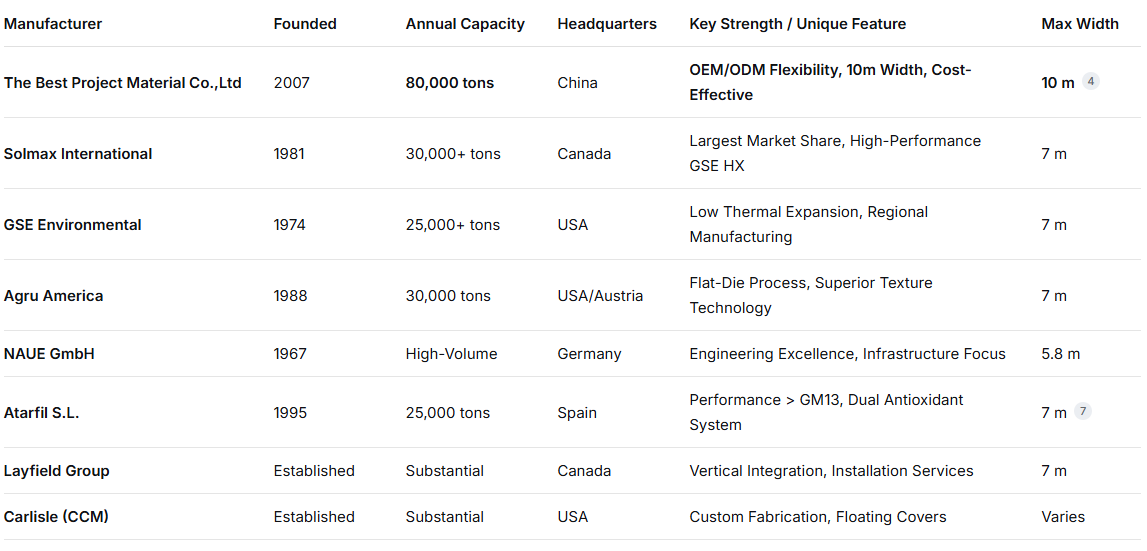
5. Comparative Analysis: Top 8 HDPE Membrane Manufacturer
The following table provides comprehensive comparison of these industry leaders to support informed procurement decisions:
6. Factors Influencing HDPE Membrane Pricing
6.1 Resin Selection and Quality
Virgin HDPE resin constitutes approximately 60 to 70 percent of raw material cost. Certified geo membrane sheet produced from virgin resin commands a 15 to 25 percent premium over blends containing recycled content. Stress crack resistance of virgin-based materials typically exceeds 500 hours, while recycled-content blends often fall below 300 hours .
6.2 Thickness Requirements
Thickness accounts for 20 to 25 percent of price variation. A 2.0 mm sheet requires twice the polymer mass of a 1.0 mm sheet, though production efficiencies partially offset this differential.
6.3 Certification and Testing
Materials carrying GRI-GM13 certification or meeting ASTM D7465 with supporting test data carry a 10 to 20 percent price premium over non-certified alternatives. Independent studies correlate this premium with a 95 percent reduction in field failure rates .
6.4 Order Volume
Orders exceeding 50,000 square meters typically qualify for volume discounts of 15 to 25 percent. Buyers should request tiered pricing for multi-phase projects and consider consolidating requirements into single procurement events .
6.5 Width Requirements
Wider sheets (such as BPM's 10-meter maximum) reduce field seaming requirements and installation labor costs, potentially offsetting any unit price premium through total installed cost savings
7. Application-Specific HDPE Membrane Selection
Different applications impose distinct performance requirements on hdpe impermeable membrane. Understanding these requirements ensures appropriate material selection
7.1 Landfill and Waste Containment Applications
Regulatory requirements in most developed jurisdictions mandate minimum 1.5 mm thickness for primary landfill liner. Textured surface finishes are required on slopes exceeding 10 percent to maintain interface friction with geotextile cushion layers and drainage materials.
Conductive HDPE membranes—incorporating a thin conductive layer co-extruded into the sheet—are increasingly specified for landfills. This feature enables post-installation electrical leak location surveys without spreading conductive materials over the liner surface, providing quality assurance benefits .
7.2 Mining Heap Leach and Tailings Applications
Mining applications subject HDPE liner to concentrated chemical solutions, elevated temperatures, and sustained tensile stress. Minimum specified thickness is typically 2.0 mm, with texturing required for slopes exceeding 3H:1V .
Stress crack resistance is the critical property for mining applications. The notched constant tensile load test per ASTM D5397 should demonstrate failure time exceeding 5,000 hours for demanding applications. Materials failing to meet this threshold are unsuitable for heap leach duty
7.3 Water Storage and Conveyance
Potable water reservoirs require high density polyethylene geomembrane certified to NSF/ANSI 61 for drinking water contact. Smooth sheet is typical, though textured products may be specified for lined canals with velocities exceeding 1.5 meters per second .
White or light-colored co-extruded top surfaces reduce maximum liner temperature by 10 to 15 degrees Celsius, decreasing thermal expansion movement and simplifying ballast design in exposed installations.
7.4 Aquaculture Ponds
Shrimp and fish farming operations typically specify 0.5 mm to 1.0 mm geomembrana in hdpe. Non-toxic formulations prevent bioaccumulation of heavy metals or plasticizers in harvested species. Producers report 20 percent average yield improvements following conversion from earthen ponds to lined systems.
8. Emerging Industry Trends Shaping the HDPE Membrane Market
8.1 Conductive Geomembranes for Leak Detection
The addition of a co-extruded conductive layer enables precise post-installation leak location without excavation. This technology is migrating from specialized applications to standard specifications in European and North American environmental projects, driven by regulatory requirements for verified containment integrity
8.2 Advanced Antioxidant Packages
Leading manufacturers recognize that long-term performance depends on oxidation resistance exceeding minimum standards. Atarfil's dual antioxidant approach—combining primary antioxidants for thermal stability with HALS stabilizers for UV resistance—represents an emerging best practice for demanding applications . Similarly, Solmax's GSE HX demonstrates exceptional antioxidant retention in aggressive chemical environments
8.3 Prefabricated Large Panel Assemblies
Factory fabrication of large panel assemblies reduces field seaming volume by 30 to 50 percent. Installation schedules accelerate, and quality control risk shifts from remote project sites to controlled manufacturing environments. This approach is particularly advantageous in regions with limited numbers of certified welding technicians .
8.4 Sustainable Manufacturing and Recycled Content
Several manufacturers have introduced geomembrane liner incorporating post-industrial recycled resin while maintaining GRI-GM13 compliance. The Best Project Material Co.,Ltd offers options supporting large-scale projects seeking to reduce environmental footprint without compromising critical performance properties.
8.5 Flat-Die Extrusion Advantages
Manufacturers employing flat-die extrusion (calendering) rather than blown film processes achieve superior thickness uniformity, flatter sheets, and reduced internal stresses. These characteristics translate to improved weldability, easier deployment, and enhanced long-term performance
9. Procurement Framework for Industrial Buyers
Successful HDPE membrane procurement requires systematic evaluation of suppliers and materials against project requirements .
Step 1: Specification Development
Issue a comprehensive Technical Data Sheet with every inquiry. Include thickness, surface finish, minimum physical properties, applicable standards (GRI-GM13, ASTM D7465), and any application-specific requirements such as NSF/ANSI 61 certification for potable water contact.
Step 2: Supplier Qualification
Request current GRI-GM13 or ASTM D7465 certification. Obtain sample Mill Test Reports from recent production. Verify that test equipment is calibrated and testing frequency meets standard requirements. For critical applications, consider suppliers with third-party certifications from recognized laboratories such as SGS, BV, or Intertek .
Step 3: Price Evaluation
Compare quoted pricing on a delivered basis, including all logistics charges. Request breakdown of material cost, certification cost, and freight to enable like-for-like comparison. Remember that lowest unit price may not represent lowest total installed cost—wider sheets that reduce field seams can deliver overall project savings .
Step 4: Inspection and Acceptance
For orders exceeding significant value thresholds, engage third-party inspection during production. Verify thickness, carbon black dispersion, and mechanical properties before shipment. Retain independent laboratory samples for reference .
Conclusion: Strategic Selection for Project Success
The global HDPE membrane market offers diverse options from manufacturers with varying strengths, specializations, and capabilities. The top 8 manufacturers presented in this guide represent the industry's best—each bringing distinct advantages to specific project requirements.
For projects seeking the optimal balance of international certification compliance, competitive pricing, rapid delivery, and custom fabrication capabilities, The Best Project Material Co., Ltd.(BPM Geosynthetics) stands out as a strategic partner. With 18 years of manufacturing experience, annual capacity of 80,000 tons, and maximum width of 10 meters, BPM delivers quality HDPE membranes that reduce installation costs while meeting rigorous ASTM and GRI-GM13 standards .
BPM Geosynthetics's commitment to quality is validated through ISO 9001, ISO 14001, and CE certifications, with products regularly tested by SGS, BV, and Intertek. Their 16,000 square meter manufacturing facility in Tai'an City, China, represents continuous investment in state-of-the-art production technology, ensuring consistent quality and reliable supply .
For detailed specifications, project references, or technical consultation, contact The Best Project Material Co., Ltd.(BPM Geosynthetics) to discover how their comprehensive HDPE membrane solutions can support your next project's success. With flexible ordering options, production times of just 2-20 days, and a commitment to quality that has earned them recognition as an SGS/BV audited supplier, BPM Geosynthetics stands ready to partner with you on projects of any scale.