How to Choose Geomembrana 60 Mils?
Geomembrana 60 mils (1.5 mm) represents one of the most versatile and widely specified thicknesses in the geosynthetics industry, striking an optimal balance between durability, flexibility, and cost-effectiveness. Whether you're designing a landfill liner, agricultural pond, or mining containment system, understanding how to select the right 60 mil geomembrana is crucial for project success. This comprehensive guide provides technical specifications, material comparisons, and expert recommendations to help you make informed decisions for your containment needs.
1. What is Geomembrana 60 Mils?
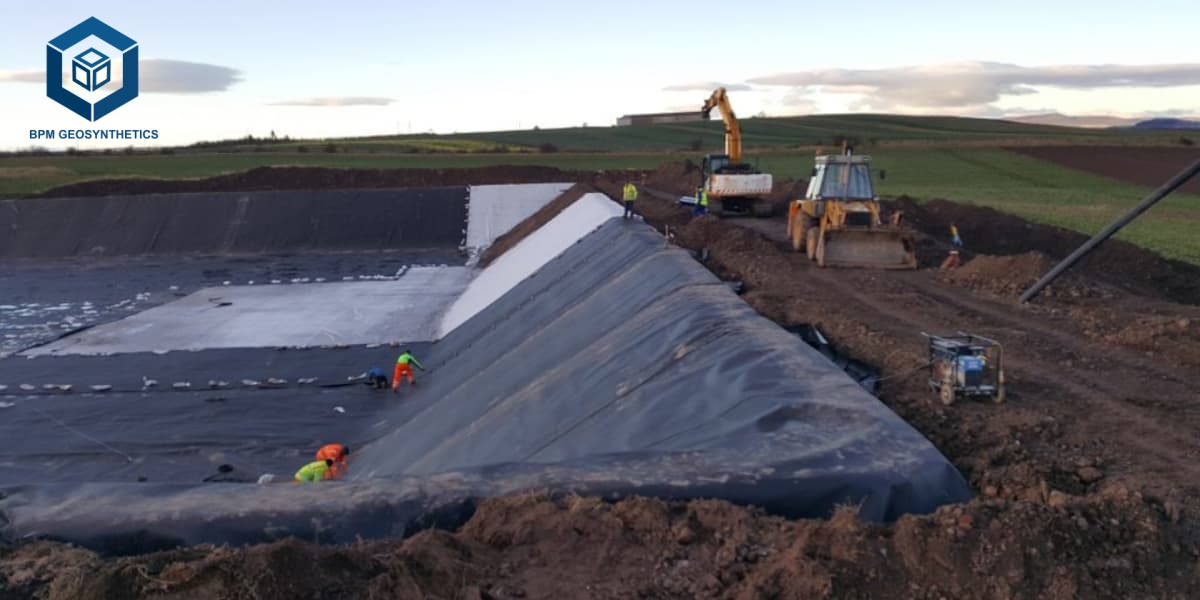
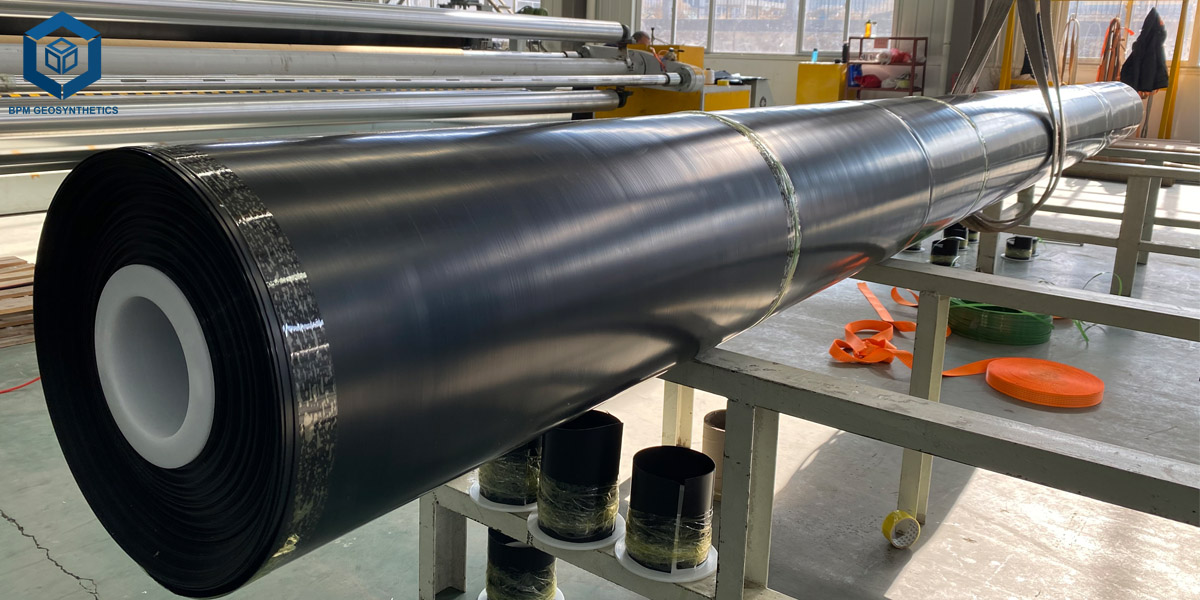
Geomembrana 60 mils refers to a high-density polyethylene (HDPE) or linear low-density polyethylene (LLDPE) liner with a thickness of 60 mils—equivalent to 0.06 inches or 1.5 millimeters—designed for robust chemical resistance, puncture resistance, and long-term durability in demanding containment applications such as landfills, ponds, and hazardous waste facilities.
1.1 Applications of Geomembrana 60 Mils
The 60 mil thickness is particularly suited for applications requiring robust mechanical properties without excessive material costs:
- Municipal and Industrial Landfills: Primary or secondary liners for municipal solid waste (MSW) and hazardous waste containment
- Mining Operations: Heap leach pads, tailings impoundments, and solution ponds requiring chemical resistance
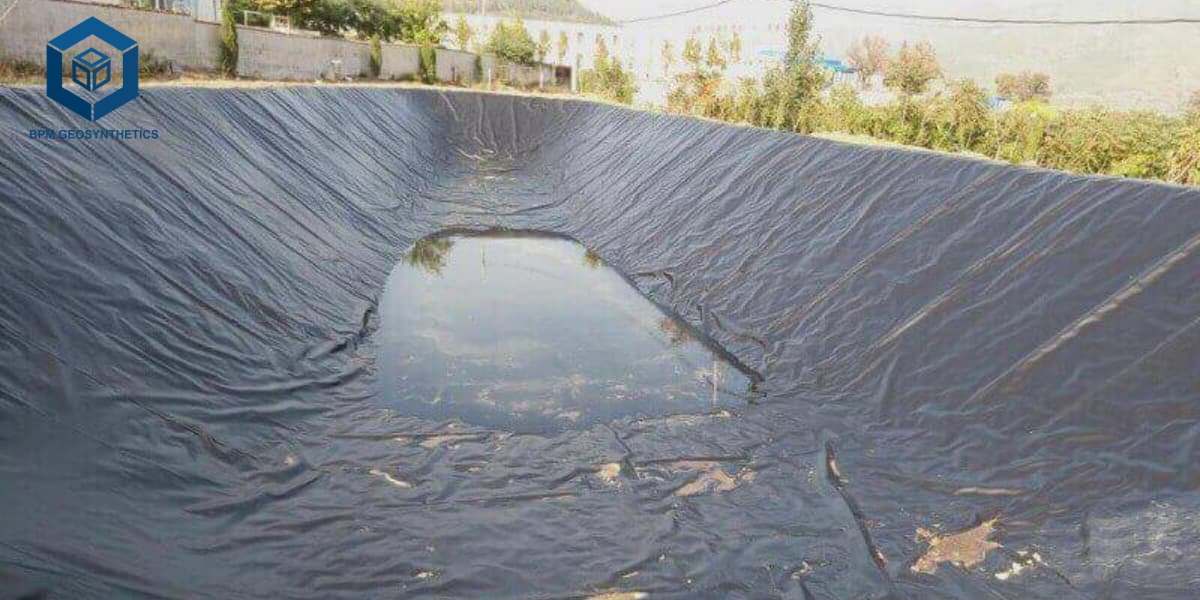
- Agricultural Containment: Irrigation reservoirs, manure storage lagoons, and aquaculture ponds
- Wastewater Treatment: Industrial effluent ponds and municipal wastewater lagoon liners
- Oil & Gas: Secondary containment berms and frac pit liners
- Water Conservation: Potable water reservoirs and canal lining systems
The global geomembrane market, valued at $2.3 billion in 2023, shows particular demand growth for 60-mil specifications in emerging markets where cost-performance optimization is critical.
2. Key Specifications of Geomembrana 60 Mils
When evaluating Geomembrana 60mil options, understanding the technical specifications ensures compliance with project requirements and industry standards. Below are the critical performance metrics for this thickness across different material types.
2.1 Physical Properties
Property | HDPE 60 mil | LLDPE 60 mil | PVC 60 mil | EPDM 60 mil |
Thickness | 1.5 mm (60 mils) | 1.5 mm (60 mils) | 1.5 mm (60 mils) | 1.5 mm (60 mils) |
Density | 0.940 g/cm³ | 0.92g/cm³ | 1.35 g/cm³ | 1.25 g/cm³ |
Tensile Strength | 40–60 kN/m | 30–45 kN/m | 15–25 kN/m | 10–20 kN/m |
Elongation at Break | 400–700% | 600–800% | 250–400% | 300–500% |
Puncture Resistance | 200–350 N | 150–280 N | 100–180 N | 80–150 N |
Tear Resistance | 40–80 N | 35–65 N | 25–50 N | 20–40 N |
2.2 Performance Characteristics
2.2.1 Impermeability
All 60-mil geomembranes provide exceptional impermeability, with HDPE variants achieving permeability coefficients as low as 1×10⁻¹⁷ cm/s.
2.2.2 Chemical Resistance
- HDPE geomembrana 60 mils: Resistant to over 80 chemical compounds including strong acids (pH 1-14), alkalis, and hydrocarbons
- LLDPE geomembrana 60 mils: Good resistance to moderate chemicals and excellent stress-crack resistance
- PVC geomembrana 60 mils: Resistant to oils, fuels, and many industrial chemicals, though susceptible to plasticizer migration over time
- EPDM geomembrana 60 mils: Excellent weather resistance but limited chemical resistance compared to polyethylene options
2.2.3 UV Stability
For exposed applications, HDPE and LLDPE 60-mil geomembrana in hdpe formulated with 2-3% carbon black content provide UV resistance exceeding 50 years. PVC requires additional UV stabilizers, while EPDM offers inherent weathering resistance.
3. Material Selection: Choosing the Right Type of Geomembrana 60 Mils
Selecting the appropriate material for your Geomembrana 60mil project requires careful consideration of environmental conditions, chemical exposure, and installation constraints.
3.1 HDPE Geomembrana 60 Mils (High-Density Polyethylene)
3.1.1 Key Properties:
Highest tensile strength and puncture resistance in the 60-mil category
Excellent chemical resistance for aggressive environments
Superior UV stability with carbon black formulation
Service life exceeding 50 years in buried applications
3.1.2 Best Applications:
Landfill primary liners and caps (meets GRI-GM13 standards)
Mining heap leach pads and tailings containment
Hazardous waste containment requiring maximum chemical resistance
Large-scale water reservoirs with long-term durability requirements
3.1.3 Considerations:
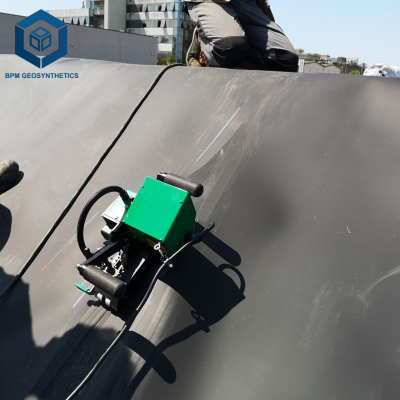
HDPE 60-mil geomembrane liner offer rigidity that provides dimensional stability but requires professional welding equipment (hot wedge or extrusion welding) for field seaming. Textured variants are available for slopes exceeding 3H:1V.
3.2 LLDPE Geomembrana 60 Mils (Linear Low-Density Polyethylene)
3.2.1 Key Properties:
Superior flexibility with elongation up to 800%
Excellent multi-axial stress distribution
Good puncture resistance with better conformability than HDPE
Prefabrication capabilities reduce field seaming
3.2.2 Best Applications:
Effluent ponds and wastewater lagoons
Aquaculture ponds requiring conformability to irregular subgrades
Landfill caps and closure systems
Applications with differential settlement concerns
3.2.3 Considerations:
LLDPE 60 mil liners offer easier installation over rough terrain and can be factory-fabricated into large panels, reducing installation time and potential seam failures.
3.3 PVC Geomembrana 60 Mils (Polyvinyl Chloride)
3.3.1 Key Properties:
High flexibility and conformability
Good chemical resistance to oils and fuels
Ease of installation with adhesive or heat welding
Cost-effective for smaller projects
3.3.2 Best Applications:
Decorative ponds and water features
Irrigation canal lining
Secondary containment systems
Temporary or short-term containment needs
3.3.3 Considerations:
PVC 60 mil hdpe liner is lightweight and easier to handle but may experience plasticizer migration over time, potentially reducing flexibility. UV stabilizers are essential for exposed applications.
3.4 EPDM Geomembrana 60 Mils (Ethylene Propylene Diene Monomer)
3.4.1 Key Properties:
Exceptional flexibility and elongation
Superior weathering and ozone resistance
Long service life in exposed conditions (30+ years)
Easy installation with adhesive bonding
3.4.2 Best Applications:
Decorative ponds and golf course water features
Roof gardens and green infrastructure
Exposed water containment where aesthetics matter
Cold climate applications (remains flexible to -40°C)
3.4.3 Considerations:
EPDM 60-mil geomembrane sheet command premium pricing and offer limited chemical resistance compared to polyethylene options, restricting use in industrial applications.
4. Critical Selection Criteria for Geomembrana 60 Mils
When specifying Geomembrana 60mil for your project, evaluate the following factors to ensure optimal performance and cost-effectiveness.
4.1 Environmental and Chemical Exposure
4.1.1 Chemical Compatibility
Conduct a thorough analysis of contained fluids:
- For acidic mining leachate (pH < 2) or strong alkalis: Specify HDPE 60 mil
- For petroleum products or oils: PVC 60 mil or HDPE 60 mil
- For potable water: NSF-certified HDPE or LLDPE 60 mil
- For biogas containment: HDPE 60 mil with gas collection systems
4.1.2 Temperature Extremes
- High temperatures (>60°C): HDPE maintains structural integrity better than PVC
- Low temperatures (<-30°C): EPDM and LLDPE retain flexibility; HDPE requires careful handling
- Thermal cycling: LLDPE accommodates expansion/contraction better than rigid HDPE
4.2 Site Conditions and Subgrade Preparation
4.2.1 Subgrade Quality
The 60-mil thickness provides substantial puncture resistance, but proper subgrade preparation remains essential:
- Smooth, prepared subgrade: All 60-mil materials perform adequately
- Rocky or rough terrain: HDPE 60 mil offers best puncture resistance; consider geotextile
4.2.2 Protection Layer
- Soft soils: LLDPE 60 mil accommodates settlement better than HDPE
Slope Stability
- Slopes < 3H:1V: Smooth 60-mil geomembranes acceptable
- Slopes 3H:1V to 2H:1V: Textured HDPE 60 mil recommended
- Slopes > 2H:1V: Geosynthetic clay liners (GCL) with 60-mil geomembrane composite systems
4.3 Installation Considerations
4.3.1 Seaming Requirements
- HDPE 60 mil: Requires certified welders; fusion welding creates seams stronger than parent material
- LLDPE 60 mil: Can be wedge-welded or extrusion-welded; prefabrication reduces field seams by 80%
- PVC 60 mil: Chemical or thermal welding; easier for complex geometries
- EPDM 60 mil: Adhesive seaming; suitable for irregular shapes
4.3.2 Panel Size and Logistics
Standard 60-mil geomembrane rolls typically measure:
- Width: 5.8–7.0 meters (19–23 feet)
- Length: 100–200 meters (330–660 feet) depending on material and thickness
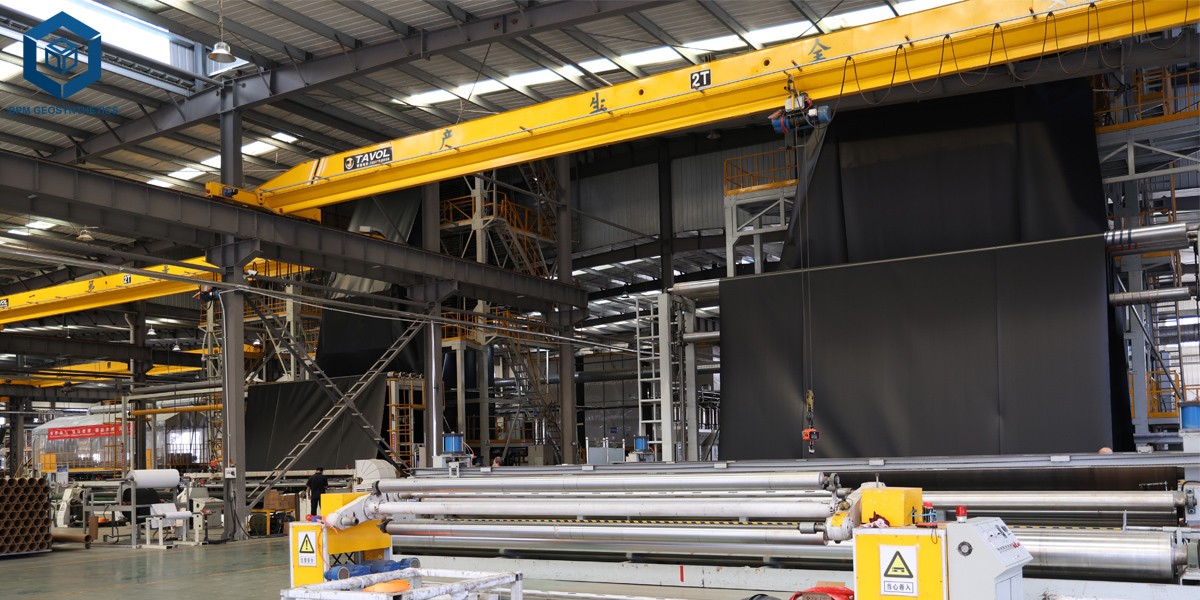
- Weight: HDPE 60 mil ≈ 1.4 kg/m²; PVC 60 mil ≈ 1.8 kg/m²
4.4 Regulatory Compliance and Standards
Ensure your Geomembrana 60mil specification meets relevant standards:
Material | Primary Standard | Key Requirements |
HDPE 60 mil | GRI-GM13 | Tensile ≥ 40 kN/m, puncture ≥ 320 N |
LLDPE 60 mil | GRI-GM17 | Tensile ≥ 30 kN/m, elongation ≥ 500% |
PVC 60 mil | ASTM D7176 | Tensile ≥ 13 kN/m, tear ≥ 30 N |
EPDM 60 mil | ASTM D6134 | ensile ≥ 9 kN/m, elongation ≥ 300% |
5. Geomembrana 60 Mils Cost Analysis and Value Engineering
Understanding the total cost of ownership helps optimize your Geomembrana 60mil selection beyond initial material pricing.
5.1 Material Cost Comparison (USD per m²)
Material | Material Cost | Installation Cost | Total Initial | 20-Year Cost |
HDPE 60 mil | $3.50–$5.00 | $2.00–$3.50 | $5.50–$8.50 | $6.50–$10.00 |
LLDPE 60 mil | $4.00–$5.50 | $1.50–$2.50 | $5.50–$8.00 | $7.00–$10.50 |
PVC 60 mil | $3.00–$4.50 | $1.00–$2.00 | $4.00–$6.50 | $7.00–$11.00 |
EPDM 60 mil | $5.00–$7.00 | $1.50–$2.50 | $6.50–$9.50 | $8.00–$12.00 |
Note: Costs vary by region, project size, and current resin pricing. Installation costs include labor, equipment, and quality assurance.
5.2 Value Engineering Considerations
5.2.1 When to Upgrade from 40 mil to 60 mil:
Subgrade contains angular stones or debris
Long-term service life (>20 years) required
High chemical exposure or aggressive environments
Regulatory minimums mandate 60 mil thickness
Puncture risk from installation traffic or wildlife
5.2.2 When 60 mil May Be Over-specified:
Temporary containment (<5 years)
Smooth, sand-bedded subgrades with excellent preparation
Low-risk water containment (non-hazardous)
Budget-constrained projects with acceptable maintenance intervals
5.2.3 When to Consider 80 mil Instead:
Extreme chemical environments (mining acids)
High loading from waste placement equipment
Subgrades with unavoidable roughness
Regulatory requirements exceeding 60 mil minimums
6. Geomembrana 60 Mils Quality Assurance and Testing
Proper quality control ensures your Geomembrana 60mil performs as specified throughout its service life.
6.1 Pre-Installation Testing
Material Certification Requirements:
- Mill certificates verifying resin type and additives
- Thickness verification (ASTM D5199)
- Tensile properties (ASTM D6693 for HDPE/LLDPE, ASTM D882 for PVC)
- Puncture resistance (ASTM D4833)
- Carbon black content and dispersion (ASTM D4218, ASTM D5596)
6.2 Installation Quality Control
Critical Testing for 60-mil Geomembranes:
- Seam testing: Air pressure testing (double-track seams) or vacuum box testing (single-track)
- Destructive testing: Peel and shear testing of weld samples (minimum 1 per 150 meters of seam)
- Thickness verification: Post-weld thickness measurement to ensure no degradation
- Holiday detection: Spark testing or water lance testing for pinholes
6.3 Post-Installation Protection
Protect your 60-mil investment:
- Install protective geotextile layers where heavy equipment operates
- Implement traffic management plans to minimize puncture risks
- Establish monitoring protocols for exposed applications
- Document as-built conditions for warranty purposes
7. Common Mistakes to Avoid When Choosing Geomembrana 60 Mils
7.1 Material Selection Errors
- Mistake: Choosing PVC 60 mil for high-temperature industrial applications
- Solution: Specify HDPE 60 mil for temperatures exceeding 60°C or where chemical resistance is critical
- Mistake: Using smooth HDPE 60 mil on steep slopes without anchoring
- Solution: Specify textured HDPE 60 mil or incorporate geosynthetic anchoring systems for slopes > 3H:1V
7.2 Installation Pitfalls
- Mistake: Inadequate subgrade preparation leading to punctures
- Solution: Require 150mm minimum compacted soil or sand bedding layer; use geotextile cushion for rocky conditions
- Mistake: Poor seam welding due to inadequate technician certification
- Solution: Require GCI (Geosynthetic Certification Institute) certified welders; implement 100% non-destructive testing
7.3 Specification Oversights
- Mistake: Ignoring thermal expansion in large panels
- Solution: Incorporate thermal expansion calculations; allow for panel relaxation before final anchoring
- Mistake: Inadequate overlap at panel seams
- Solution: Specify minimum 100mm overlap for welded seams; 150mm for adhesive systems
Final Recommendations
Geomembrana 60 mils represents a robust, versatile solution for the majority of containment applications. To optimize your selection:
- For maximum durability and chemical resistance: Specify HDPE Geomembrana 60mil meeting GRI-GM13 standards
- For flexibility and settlement accommodation: Choose LLDPE 60 mil with prefabrication options
- For cost-sensitive, short-term applications: Consider PVC 60 mil with UV stabilization
- For exposed decorative applications: Evaluate EPDM 60 mil for aesthetic and weathering performance
More details, please contact The Best Project Material Co., Ltd.(BPM Geosynthetics) team.