Geotextile Separation Layer Under Geomembrane Guide
Geotextile Separation Layer Under Geomembrane: How to Select Correctly
Product Definition
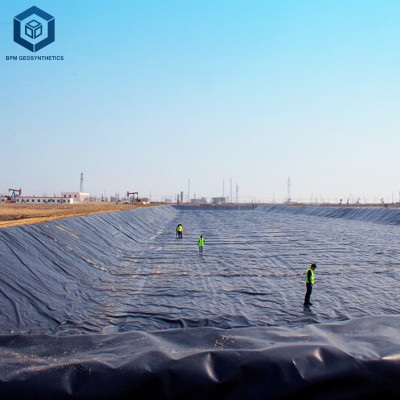
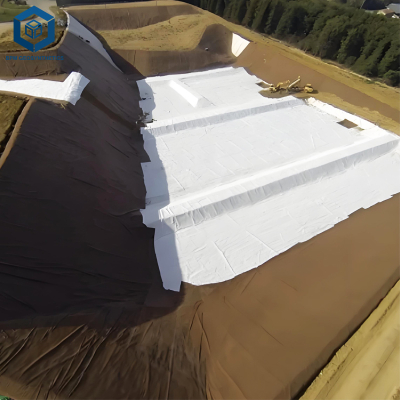
A geotextile separation layer under geomembrane is a nonwoven or woven synthetic fabric installed beneath a geomembrane liner to provide cushioning, puncture resistance, filtration, and stress distribution. Proper understanding of geotextile separation layer under geomembrane how to select is essential for long-term containment integrity.
Technical Parameters and Specifications
When evaluating geotextile separation layer under geomembrane how to select, engineers must consider mechanical protection, hydraulic performance, and compatibility with the overlying geomembrane thickness.
| Parameter | Typical Range | Test Standard |
|---|---|---|
| Mass per Unit Area | 300–1200 g/m² | ASTM D5261 |
| Tensile Strength | 8–25 kN/m | ASTM D4595 |
| CBR Puncture Strength | 1.5–6.0 kN | ASTM D6241 |
| Permittivity | ≥ 0.5 s⁻¹ | ASTM D4491 |
| Apparent Opening Size (AOS) | 0.07–0.30 mm | ASTM D4751 |
| Elongation | ≥ 50% (nonwoven) | ASTM D4595 |
For landfill and mining applications, 800–1000 g/m² nonwoven needle-punched geotextile is commonly specified beneath 1.5–2.0 mm HDPE geomembranes.
Structure and Material Composition
Polypropylene (PP) Fibers – High chemical resistance and durability
Polyester (PET) Fibers – Higher tensile strength, lower elongation
Needle-Punched Structure – Provides cushioning and energy absorption
Thermally Bonded Surface (optional) – Improves abrasion resistance
Understanding geotextile separation layer under geomembrane how to select requires evaluating fiber type based on chemical exposure and long-term creep performance.
Manufacturing Process
Raw polymer extrusion into staple fibers
Fiber opening and blending
Carding to form uniform web structure
Needle punching for mechanical bonding
Optional thermal bonding for surface stabilization
Quality testing and roll packaging
Manufacturing consistency directly influences puncture protection performance when selecting geotextile separation layer under geomembrane systems.
Industry Comparison
| Material | Cushioning Effect | Filtration Capacity | Suitability Under Geomembrane |
|---|---|---|---|
| Nonwoven Needle-Punched | High | Good | Preferred Standard |
| Woven Geotextile | Low | Moderate | Limited Cushioning Use |
| Sand Cushion Layer | Moderate | Low | Requires Large Thickness |
| Geocomposite Drainage Layer | Variable | High | Used for Drainage, Not Primary Cushion |
From an engineering perspective, nonwoven geotextiles are typically the optimal solution when addressing geotextile separation layer under geomembrane how to select decisions.
Application Scenarios
Municipal solid waste landfill liner systems
Hazardous waste containment facilities
Mining heap leach pads
Industrial wastewater lagoons
Agricultural and irrigation reservoirs
EPC contractors and consulting engineers prioritize proper geotextile separation layer under geomembrane how to select evaluations during design review phases to prevent liner damage.
Core Pain Points and Solutions
1. Subgrade Sharp Object Damage
Solution: Increase geotextile mass per unit area and ensure subgrade smoothing.
2. Differential Settlement Stress
Solution: Select high-elongation nonwoven fabric for stress distribution.
3. Chemical Exposure
Solution: Use PP fibers for enhanced chemical resistance.
4. Overdesign Leading to Cost Increase
Solution: Conduct puncture resistance calculations rather than defaulting to highest GSM.
Risk Warning and Mitigation
Insufficient GSM may lead to geomembrane puncture.
Improper overlap may create weak points.
Exposure to UV prior to covering reduces lifespan.
Improper storage can contaminate fabric surface.
Effective geotextile separation layer under geomembrane how to select analysis minimizes environmental and financial risks.
Procurement and Selection Guide
Define geomembrane thickness and load conditions.
Evaluate subgrade CBR value and angularity.
Calculate required puncture protection level.
Determine hydraulic filtration requirement.
Select PP or PET fiber type based on exposure.
Verify compliance with ASTM testing reports.
Confirm manufacturer production consistency.
Coordinate installation method with liner contractor.
Procurement teams should integrate engineering calculations into geotextile separation layer under geomembrane how to select decisions rather than relying solely on price comparison.
Engineering Case Example
A 65,000 m² landfill expansion project required liner system upgrade. Design conditions included:
Geomembrane thickness: 2.0 mm HDPE
Subgrade CBR: 4%
Maximum overburden load: 150 kPa
Engineering assessment specified 1000 g/m² nonwoven needle-punched geotextile as separation and cushioning layer. Field puncture simulation tests confirmed compliance with safety factors above 1.5.
FAQ
1. What GSM is recommended under 2.0 mm HDPE?
Typically 800–1000 g/m² depending on subgrade condition.
2. Can woven geotextile be used?
Not recommended for cushioning applications.
3. Is double-layer geotextile required?
Used in high-risk hazardous waste facilities.
4. Does geotextile affect drainage?
Yes, permeability supports filtration performance.
5. How is puncture resistance verified?
Through ASTM D6241 CBR puncture testing.
6. What fiber type is better?
Polypropylene offers superior chemical resistance.
7. Can sand replace geotextile?
Possible but increases thickness and cost.
8. Is thickness more important than strength?
Mass per unit area directly affects cushioning performance.
9. How long does service life last?
Typically matches geomembrane design life when properly covered.
10. Should it be textured?
Texturing applies to geomembrane, not geotextile.
Request Technical Support or Quotation
For professional guidance on geotextile separation layer under geomembrane how to select for your project, provide the following details:
Subgrade condition and CBR value
Geomembrane thickness and material type
Design load and slope information
Project area and environmental classification
Our engineering team can provide technical data sheets, laboratory reports, and project-specific recommendations upon request.
Author & Technical Authority (E-E-A-T)
This technical guide was prepared by a geosynthetics engineer with over 15 years of experience in landfill, mining, and environmental containment systems. The content reflects field-tested installation practices, international ASTM standards, and procurement evaluation frameworks used by EPC contractors and environmental consultants worldwide.