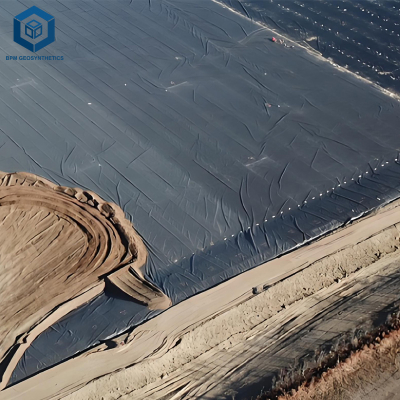
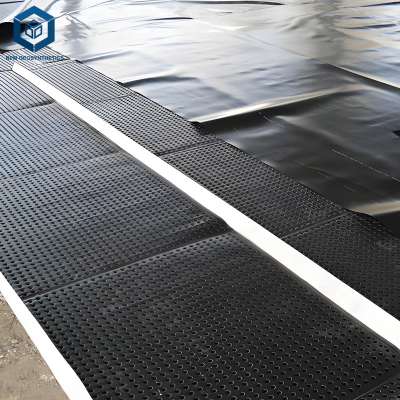
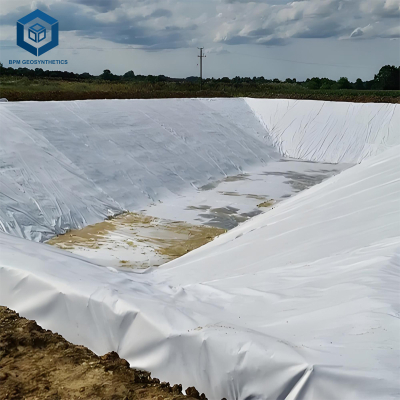
HDPE Geomembrane for High Temperature Desert Area
HDPE Geomembrane for High Temperature Desert Area: Engineering Selection Guide
Product Definition
HDPE geomembrane for high temperature desert area applications is a high-density polyethylene liner engineered to withstand extreme UV radiation, elevated surface temperatures exceeding 70°C, and thermal expansion stress while maintaining long-term containment performance in arid environmental conditions.
Technical Parameters and Specifications
When selecting HDPE geomembrane for high temperature desert area projects, thermal stability, oxidative resistance, and UV durability become critical performance indicators in addition to mechanical strength.
| Parameter | Typical Requirement | Reference Standard |
|---|---|---|
| Thickness | 1.5–3.0 mm (commonly 2.0 mm) | GRI-GM13 |
| Density | ≥ 0.940 g/cm³ | ASTM D1505 |
| Tensile Strength at Yield | ≥ 27 kN/m (2.0 mm) | ASTM D6693 |
| Oxidative Induction Time (Std OIT) | ≥ 100 min | ASTM D3895 |
| High Pressure OIT | ≥ 400 min | ASTM D5885 |
| Carbon Black Content | 2.0–3.0% | ASTM D4218 |
| UV Resistance | ≥ 80% retained strength after 1600 hrs | ASTM D7238 |
Surface temperatures in desert environments can exceed 70°C, therefore HDPE geomembrane for high temperature desert area containment must demonstrate strong antioxidant stability and UV protection performance.
Structure and Material Composition
High-Density Polyethylene Resin – Provides chemical resistance and low permeability
Carbon Black (2–3%) – Protects against UV degradation
Primary & Secondary Antioxidants – Ensure long-term thermal stability
Optional Textured Surface – Improves interface friction on slopes
The additive formulation is especially critical when designing HDPE geomembrane for high temperature desert area installations where prolonged UV exposure is unavoidable before covering.
Manufacturing Process
Virgin resin selection and additive blending
Flat die extrusion under controlled temperature
Automatic thickness calibration (±5% tolerance)
Optional nitrogen gas texturing
Controlled cooling to prevent internal stress
Batch quality testing including OIT verification
Manufacturing process control ensures HDPE geomembrane for high temperature desert area projects maintains consistent long-term durability under thermal cycling.
Industry Comparison
| Material | UV Resistance | High Temperature Stability | Suitability for Desert |
|---|---|---|---|
| HDPE Geomembrane | Excellent | High | Preferred Standard |
| LLDPE Geomembrane | Very Good | Moderate | Used in Flexible Areas |
| PVC Liner | Lower | Limited | Not Recommended |
| EPDM Rubber | Moderate | Good | Cost-Sensitive Projects |
For most environmental and mining applications, HDPE geomembrane for high temperature desert area remains the most reliable solution due to its oxidative resistance and structural strength.
Application Scenarios
Desert mining tailings ponds
Evaporation ponds in arid regions
Oil & gas wastewater containment
Solar salt production basins
Industrial wastewater lagoons in hot climates
EPC contractors and project consultants typically specify HDPE geomembrane for high temperature desert area containment where UV exposure and thermal stress are primary design factors.
Core Pain Points and Solutions
1. Thermal Expansion Stress
Solution: Allow adequate slack during installation and design proper anchor trench dimensions.
2. UV Degradation Risk
Solution: Specify verified carbon black content and high OIT values.
3. Rapid Oxidative Aging
Solution: Use enhanced antioxidant package and verify high-pressure OIT.
4. Welding Under High Ambient Temperature
Solution: Adjust welding temperature settings and conduct frequent seam testing.
Risk Warning and Mitigation
Excessive slack may cause wrinkling and stress concentration.
Insufficient antioxidant levels shorten service life.
Improper storage in direct sun before installation reduces performance.
Failure to consider thermal cycling may cause seam fatigue.
Proper engineering design is essential when deploying HDPE geomembrane for high temperature desert area projects to prevent premature degradation.
Procurement and Selection Guide
Assess maximum ambient and surface temperature data.
Determine exposure duration before covering.
Select minimum 2.0 mm thickness for critical containment.
Verify OIT laboratory test reports.
Evaluate UV retention performance data.
Confirm compliance with GRI-GM13 standards.
Review manufacturer quality control documentation.
Coordinate installation plan for thermal expansion control.
Procurement teams evaluating HDPE geomembrane for high temperature desert area systems should integrate environmental exposure data into material selection decisions.
Engineering Case Example
A Middle Eastern evaporation pond project covering 95,000 m² required liner installation in summer conditions where surface temperatures exceeded 75°C.
Selected material: 2.0 mm HDPE geomembrane
High Pressure OIT: 450 min
Carbon black content: 2.5%
Installation schedule adjusted for early morning welding
Thermal expansion allowances were incorporated into anchor trench design. Post-installation seam testing achieved 100% air channel compliance. The liner has remained stable under extreme seasonal temperature variation.
FAQ
1. Can HDPE withstand 70°C surface temperature?
Yes, with proper antioxidant stabilization.
2. Is thicker liner required in desert?
2.0 mm or greater is commonly recommended.
3. Does UV exposure reduce lifespan?
Extended exposure without cover may accelerate aging.
4. How is oxidative stability verified?
Through OIT laboratory testing per ASTM standards.
5. Is LLDPE suitable?
Used in flexible applications but less common for high-load containment.
6. Should liner be covered quickly?
Yes, to minimize UV exposure duration.
7. Does sand covering improve performance?
Yes, it reduces UV exposure and temperature fluctuation.
8. What welding adjustments are needed?
Lower ambient adjustments and frequent seam testing.
9. Can recycled resin be used?
Primary containment liners should use virgin resin.
10. Expected service life?
Typically 20–30 years depending on design and exposure.
Request Technical Consultation or Quotation
For project-specific recommendations on HDPE geomembrane for high temperature desert area installations, provide:
Maximum ambient temperature data
Exposure duration before covering
Project area and slope details
Design load requirements
Our engineering team can supply laboratory test reports, material samples, and detailed project quotations upon request.
Author & Technical Authority (E-E-A-T)
This article was prepared by a geosynthetics engineer with over 15 years of experience in mining, oil & gas, and desert environmental containment systems. The guidance reflects international testing standards, field installation experience, and performance evaluation methodologies applied in high-temperature regions worldwide.