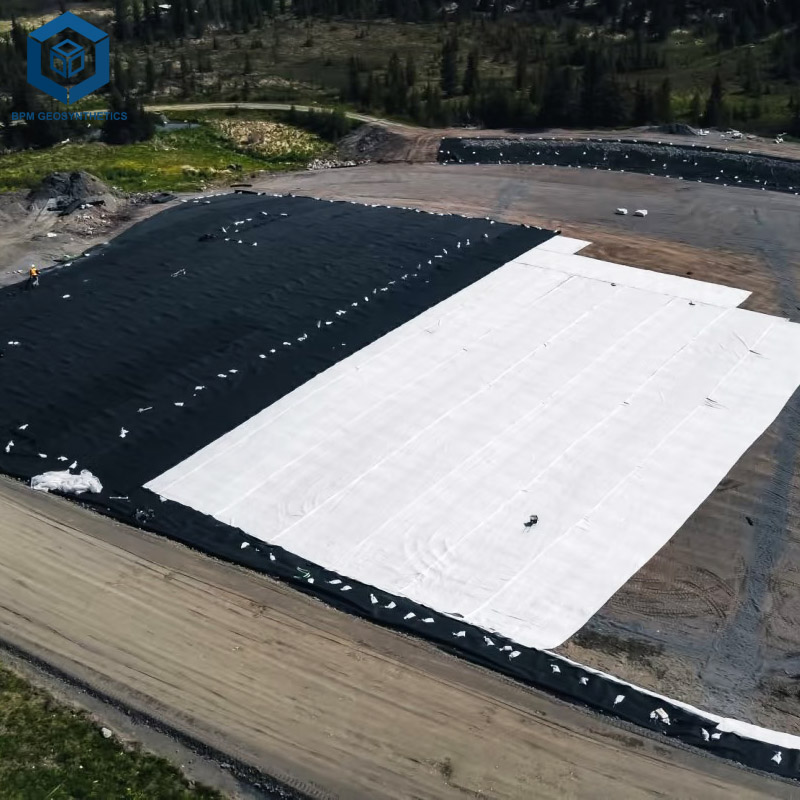
Geotextile Fabric for Soil Stabilization
Geotextile fabric for soil stabilization is a high-performance permeable material designed to improve ground strength, control erosion, and enhance load distribution in civil engineering and infrastructure projects. Made from durable polypropylene or polyester fibers, it effectively separates, reinforces, filters, and drains soil layers to extend the service life of roads, embankments, and foundations.
- High Tensile Strength – Reinforces weak subgrades and improves load-bearing capacity
- Excellent Permeability – Allows water flow while preventing soil particle migration
- Durable & UV Resistant – Long service life in harsh environmental conditions
- Easy Installation – Lightweight and flexible for efficient construction
Elopment, and ground reinforcement applications worldwide.
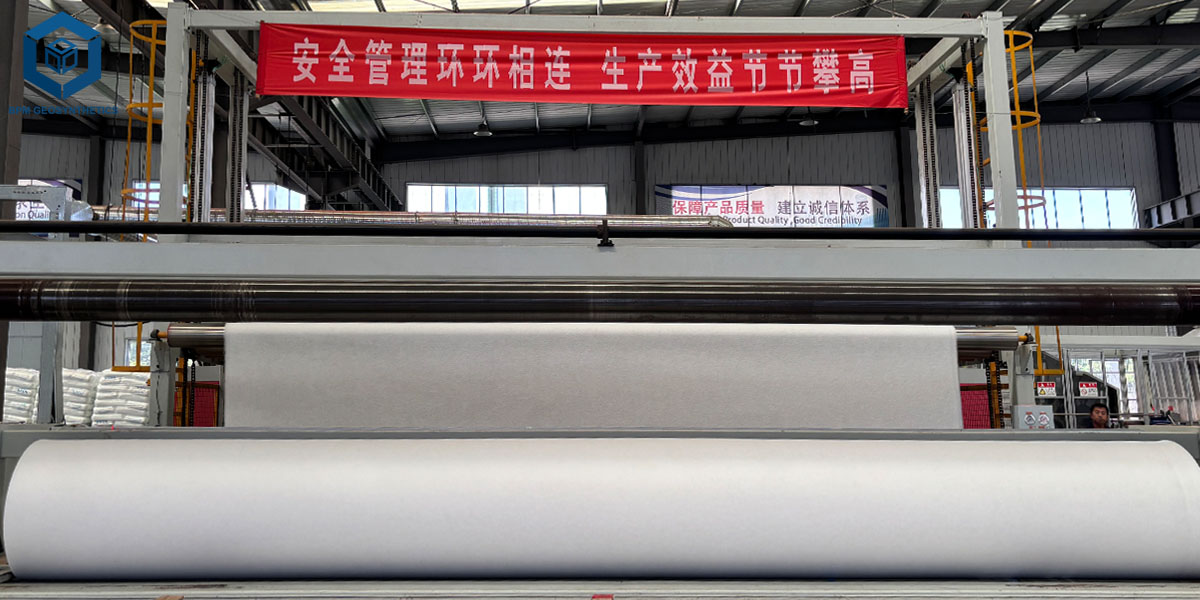
Geotextile fabric for soil stabilization is an advanced engineered, permeable textile designed to significantly improve soil performance in civil engineering, transportation, and infrastructure projects. Manufactured from high-quality polypropylene (PP) or polyester (PET) fibers through woven or nonwoven processes, it provides excellent mechanical strength, filtration capacity, and long-term durability.
When installed between subgrade soil and aggregate layers, the fabric acts as a stable separation and reinforcement barrier. It distributes loads more evenly, reduces rutting and settlement, and prevents the intermixing of fine soil particles with base materials. At the same time, its controlled permeability allows water to pass through while retaining soil, effectively improving drainage and minimizing erosion.
By enhancing bearing capacity and maintaining structural integrity, geotextile fabric extends the service life of roads, railways, embankments, and other load-bearing structures built on weak or unstable subgrades. It is a cost-effective and reliable solution for ground stabilization, infrastructure reinforcement, and long-term performance optimization.
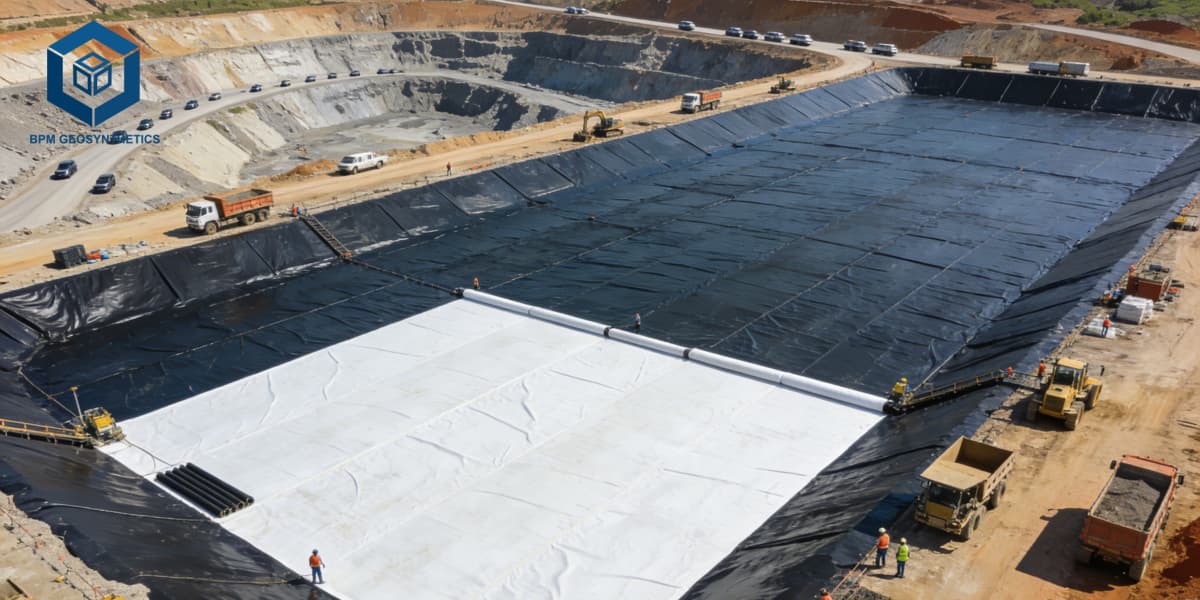
1. Geotextile Fabric for Soil Stabilization Core Functions
1.1 Separation
Non woven geotextile acts as a stable barrier between subgrade soil and overlying aggregate layers. By preventing the mixing of fine soil particles with coarse aggregates, it maintains the designed thickness and integrity of road bases, railway ballast, or other structural layers. This separation ensures long-term structural performance, reduces maintenance requirements, and prevents premature settlement or rutting caused by soil contamination.
1.2 Reinforcement
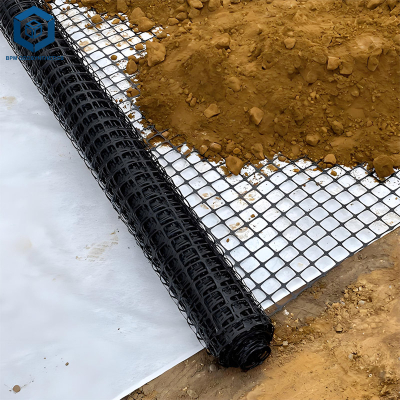
The high tensile strength of geo fabric distributes loads more evenly across weak or uneven subgrades. This reinforcement improves the overall bearing capacity of the soil, allowing it to support heavier traffic loads or construction materials without excessive deformation. Reinforcement also enhances slope stability and reduces the risk of soil failure in embankments, retaining walls, or foundation bases.
1.3 Filtration
Non woven geotextile fabric provides excellent filtration performance, allowing water to flow through while retaining fine soil particles. This prevents soil erosion and the loss of subgrade material under hydraulic forces or surface runoff. Effective filtration protects drainage channels, roadway subgrades, and embankments from clogging and structural degradation, ensuring that water management systems function efficiently.
1.4 Drainage
By facilitating lateral water movement, geotextile drainage fabric reduces hydrostatic pressure within soil layers. This drainage function prevents waterlogging, minimizes soil swelling, and enhances the stability of slopes, embankments, and roadbeds. Efficient drainage not only protects the integrity of the structure but also contributes to long-term performance by reducing frost heave, settlement, and other water-related soil issues.
2. Geotextile Fabric for Soil Stabilization Technical Advantages
2.1 High Tensile Strength & Elongation Control
Geotextile filter fabric is engineered with high tensile strength to withstand significant loads without tearing or stretching excessively. This feature allows it to reinforce weak subgrades, distribute pressure evenly across soil layers, and improve structural stability in roads, railways, embankments, and other infrastructure projects. Controlled elongation ensures the geotextile fabric under gravel adapts to minor ground movements without losing performance.
2.2 Excellent Permeability
The fabric’s porous structure allows water to pass through freely while retaining soil particles, maintaining natural water flow and preventing clogging. This permeability is essential for drainage, filtration, and erosion control, helping infrastructure remain stable under varying moisture conditions.
2.3 Durability & Chemical Resistance
Non woven filter fabric is resistant to biological degradation, chemical attack, and soil-borne microorganisms. It can withstand exposure to acids, alkalis, and other harsh environmental conditions, ensuring long-term reliability and minimal maintenance in construction and civil engineering applications.
2.4 UV Stability
Designed for outdoor applications, geotextile fabric contains UV stabilizers to resist degradation from prolonged sun exposure. This property allows temporary or permanent installation without significant loss of strength or performance, even in harsh climates.
2.5 Puncture & Tear Resistance
The non woven geotextile drainage fabric is highly resistant to punctures, tears, and mechanical damage during installation or under heavy loads. This makes it suitable for heavy-duty construction environments, including roadways, railway beds, landfill projects, and large-scale embankments, ensuring consistent protection and performance.
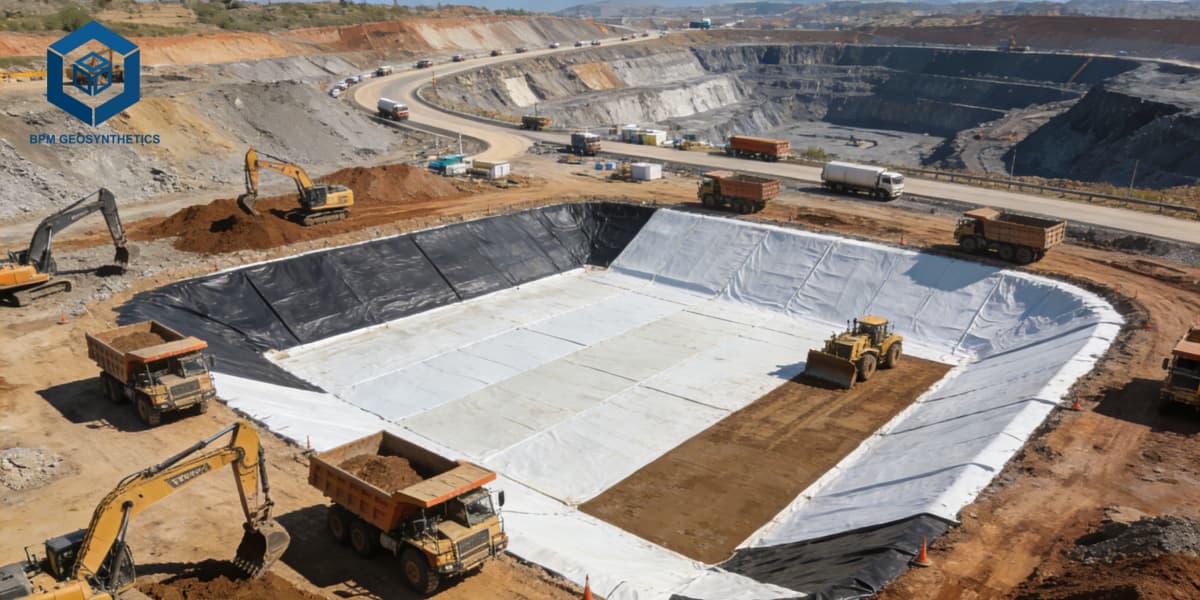
3. Geotextile Fabric for Soil Stabilization Material Specifications
3.1 Material Composition
Geo textile material is made from high-quality polypropylene (PP) or polyester (PET) fibers. These materials are chosen for their excellent tensile strength, chemical resistance, and durability. PP fabrics are lightweight and ideal for separation and drainage applications, while PET fabrics provide higher tensile strength and dimensional stability for heavy-duty reinforcement projects.
3.2 Weight Range
The non woven geotextile filter fabric is available in a weight range of 100gsm to 800gsm, allowing customization according to project requirements. Lower-weight fabrics are suitable for drainage and erosion control, while higher-weight fabrics provide superior reinforcement and puncture resistance for roads, railways, and embankments.
3.3 Width
Standard geotextile stabilization fabric can be manufactured in widths of up to 6 meters, minimizing seams during installation and reducing labor costs. Wider rolls are particularly advantageous for large-scale infrastructure projects such as highways, airports, and industrial sites.
3.4 Roll Length
Roll lengths are customizable to suit specific project needs, enabling efficient handling and minimizing on-site waste. Typical roll lengths range from 50 to 200 meters, depending on the fabric weight and application.
3.5 Quality Standards
All non woven needle punched geotextile is produced to meet international quality standards, including ASTM and ISO certifications. Compliance ensures consistent performance, mechanical properties, and long-term durability under various environmental and load conditions.
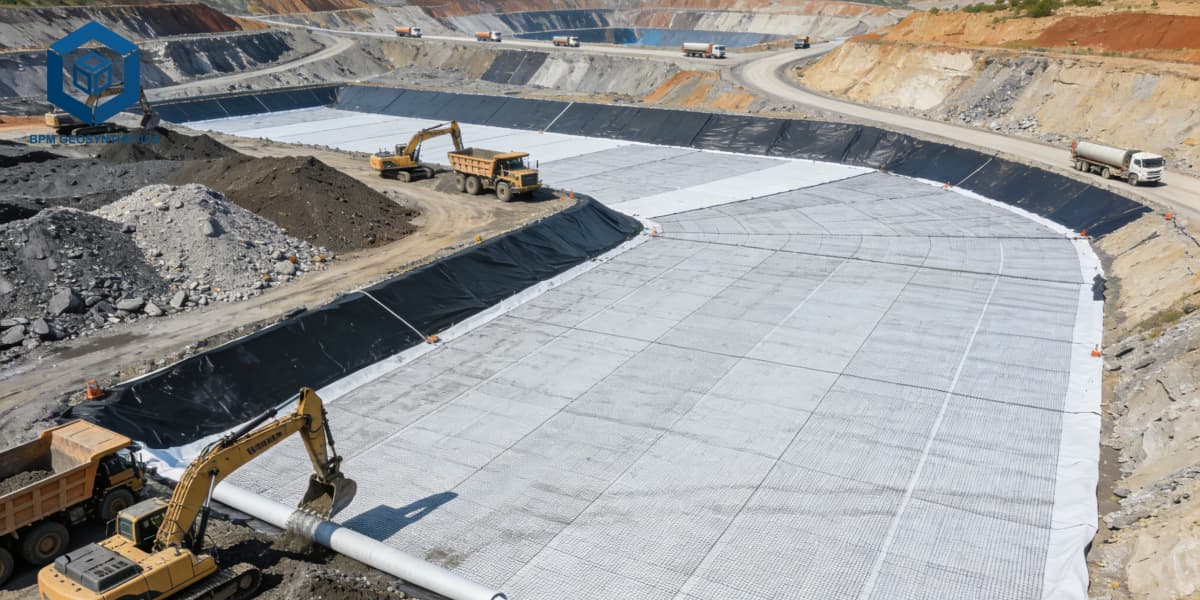
4. Geotextile Fabric for Soil Stabilization Application Areas
4.1 Road & Highway Construction
Best non woven geotextile fabric is widely used in road and highway projects to improve subgrade stability and extend the lifespan of pavement. By separating soil and aggregate layers, it prevents rutting, reduces settlement, and ensures even load distribution. Its drainage and filtration properties also help manage surface water, reducing the risk of pavement failure and maintenance costs.
4.2 Railway Infrastructure
In railway construction, geotextiles for erosion control reinforces ballast layers and prevents contamination by fine subgrade soil. This ensures proper drainage, reduces track settlement, and enhances overall track stability. Its high tensile strength allows it to withstand heavy loads from trains while maintaining long-term performance.
4.3 Embankments & Retaining Walls
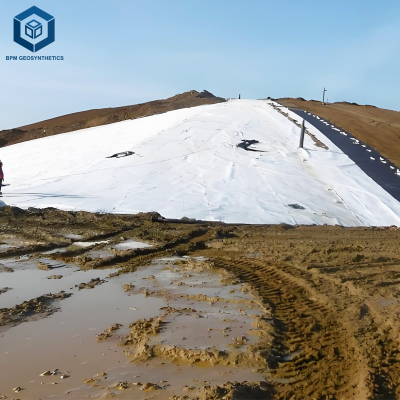
Geotextile soil stabilization enhances slope stability and soil retention in embankments, retaining walls, and other earth structures. By reinforcing soil layers and facilitating drainage, it minimizes erosion, reduces lateral soil pressure, and prevents structural failures in slopes, levees, or riverbanks.
4.4 Parking Lots & Driveways
Used beneath parking lots and driveways, geotextile fabric strengthens base layers and prevents mixing of subgrade and aggregate materials. This improves load-bearing capacity, reduces rutting and potholes, and ensures long-term durability for both residential and commercial projects.
4.5 Landfill & Drainage Systems
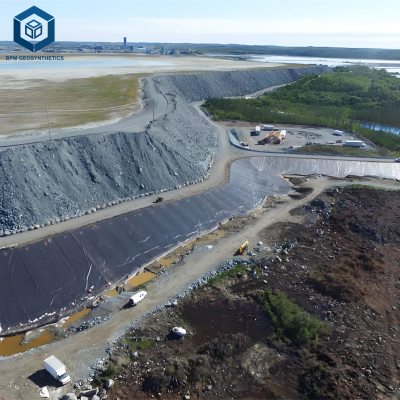
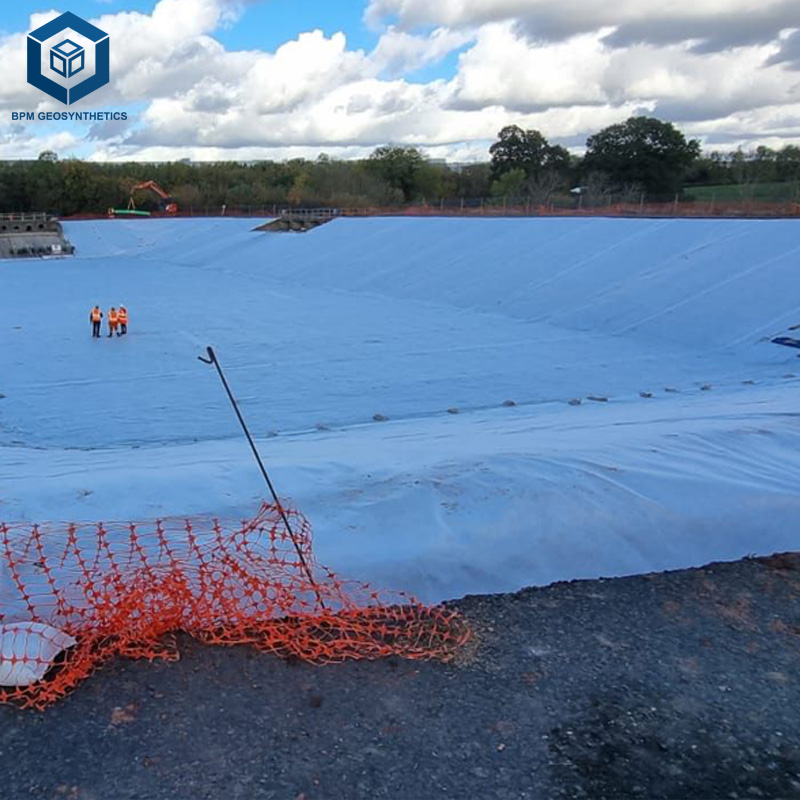
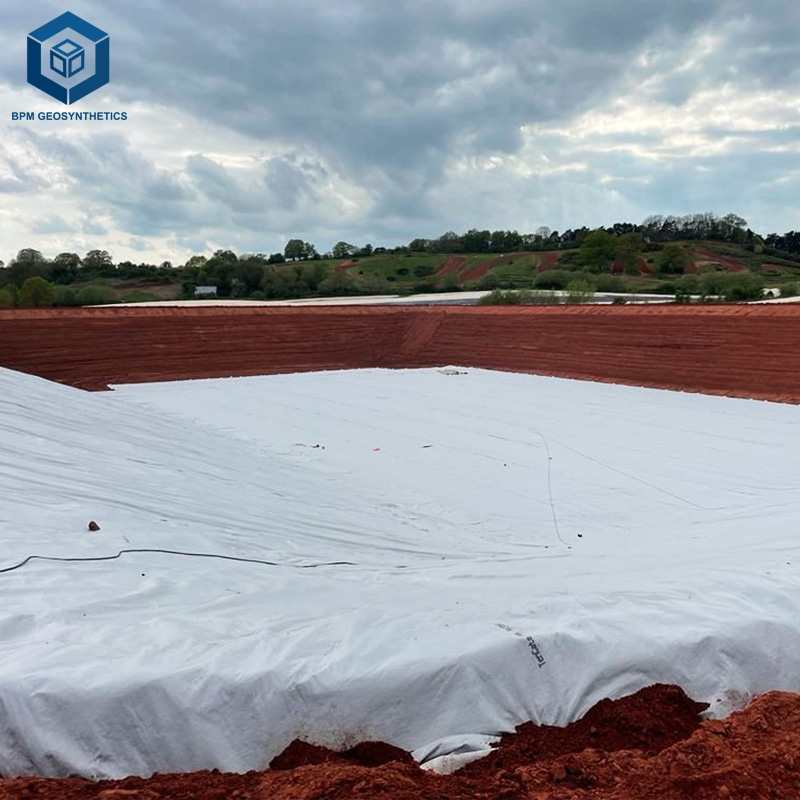
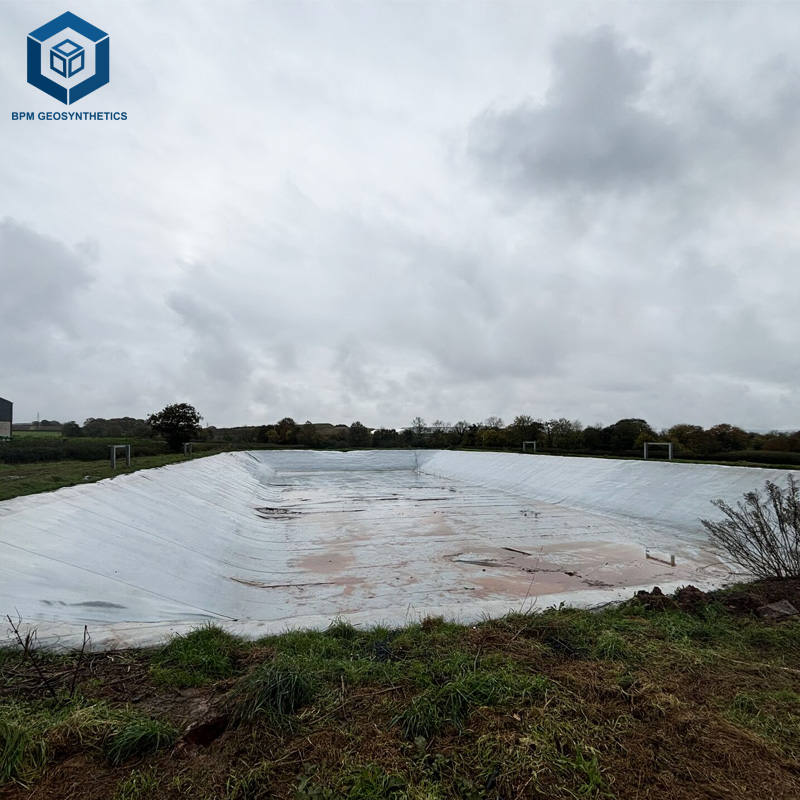
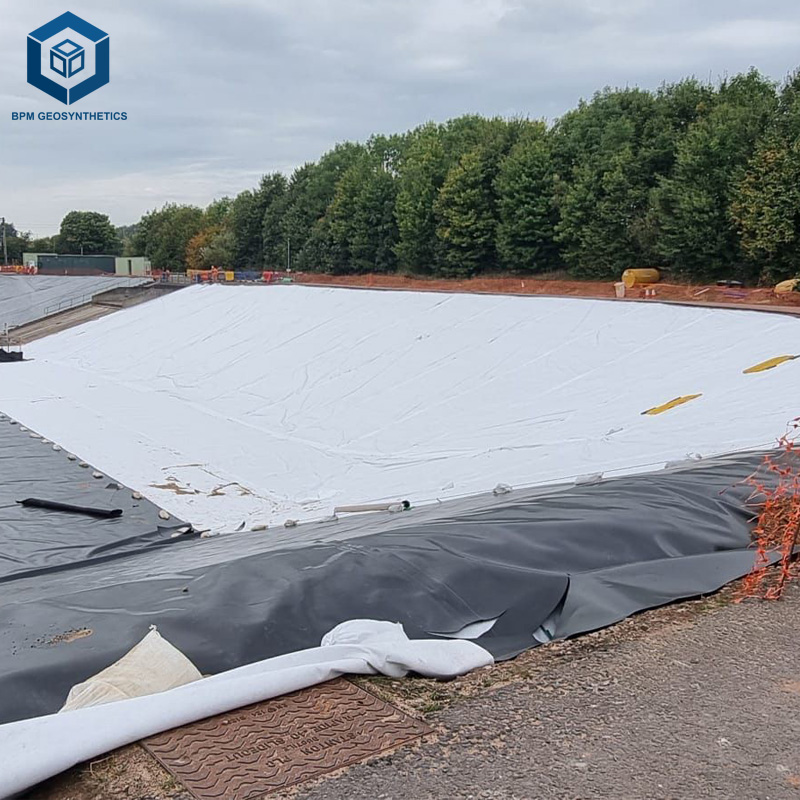
In environmental engineering, geotextile fabric under pavers acts as a filtration and separation layer in landfills, retention basins, and drainage systems. It prevents soil clogging, facilitates water flow, and protects liner systems, contributing to safer and more efficient waste containment and stormwater management.
5. Geotextile Fabric for Soil Stabilization Installation Benefits
5.1 Lightweight and Easy to Transport
Geo fabric under gravel is designed to be lightweight, making it easy to handle and transport to construction sites. Large rolls can be moved manually or with minimal equipment, reducing labor costs and simplifying logistics for both small and large-scale projects.
5.2 Simple Placement with Minimal Equipment
The non woven geo fabric can be quickly and efficiently installed with basic tools. Its flexibility allows it to conform to uneven surfaces and slopes, eliminating the need for complex machinery during placement. This feature accelerates project timelines and reduces installation errors.
5.3 Reduces Excavation Depth and Aggregate Requirements
By reinforcing the soil and improving load distribution, nonwoven drainage fabric allows for shallower excavation depths and less aggregate material without compromising structural stability. This saves on material costs and reduces environmental impact while maintaining performance standards.
5.4 Low Maintenance and Long Service Life
Once installed, geotextile fabric for erosion control requires minimal maintenance. Its durability, UV stability, and resistance to chemical or biological degradation ensure a long service life, reducing repair and replacement needs over time. This makes it a cost-effective and reliable solution for roadways, railways, embankments, and drainage systems.
Conclusion
In summary, geotextile fabric for soil stabilization is a durable, high-performance solution for reinforcing weak subgrades, controlling erosion, and improving drainage in a wide range of civil engineering and infrastructure projects. Engineered from premium polypropylene (PP) or polyester (PET) fibers, it delivers excellent tensile strength, puncture resistance, and long-term UV stability. Easy to transport and install, this fabric reduces construction costs, minimizes maintenance, and ensures reliable, long-lasting performance. For superior quality and trusted results, we recommend The Best Project Material Co., Ltd.(BPM Geosynthetics)geotextile fabric, a proven choice for roads, railways, embankments, and environmental engineering applications.