Mining pond liner cost per square meter calculation method
In mining projects, accurately estimating the mining pond liner cost per square meter calculation method is critical for budgeting, engineering design, and procurement decisions. Tailings ponds, leach pads, evaporation ponds, and wastewater containment systems all rely on durable geomembrane liners. However, the final cost per square meter is influenced by multiple engineering factors including material thickness, resin quality, welding labor, terrain conditions, and installation complexity.
This guide explains the practical mining pond liner cost per square meter calculation method used by EPC contractors, mining engineers, and procurement managers when evaluating containment liner systems for mining infrastructure.
Product Definition
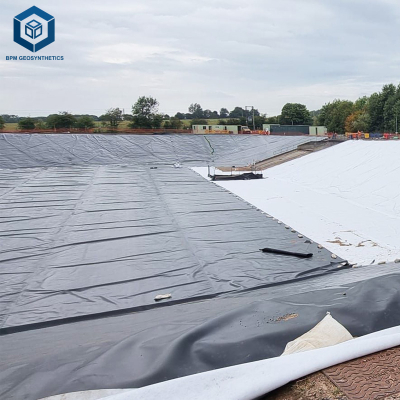
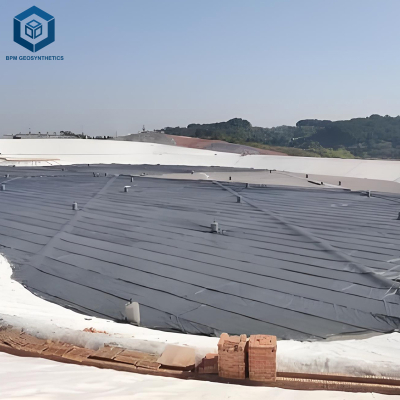
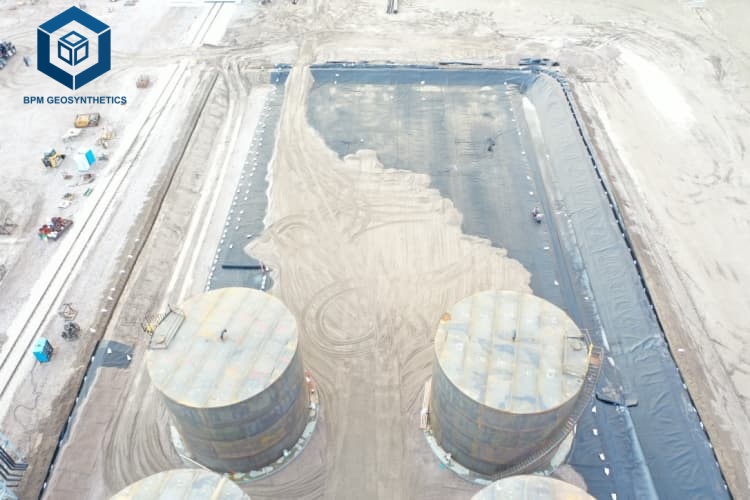
A mining pond liner is a high-performance geomembrane barrier system designed to prevent seepage of contaminated liquids from mining ponds into soil or groundwater. The liner system typically uses HDPE geomembrane sheets combined with protective geotextiles and welded seams to create a continuous impermeable containment structure.
Technical Parameters and Specifications
Typical engineering parameters used in mining pond liner systems include:
| Parameter | Typical Value | Engineering Notes |
|---|---|---|
| Material Type | HDPE Geomembrane | High chemical resistance |
| Thickness | 1.0 mm – 2.5 mm | Mining ponds commonly use 1.5–2.0 mm |
| Density | ≥ 0.94 g/cm³ | ASTM D1505 |
| Tensile Strength | ≥ 25 kN/m | ASTM D6693 |
| Elongation at Break | ≥ 700% | High flexibility for settlement |
| Puncture Resistance | ≥ 480 N | Protection against rocks |
| Carbon Black Content | 2–3% | UV protection |
Structure and Material Composition
A typical mining pond liner system consists of several engineered layers:
HDPE geomembrane layer – Primary impermeable barrier
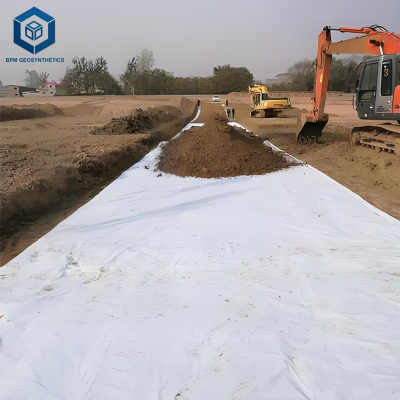
Nonwoven geotextile cushion layer – Prevents puncture from subgrade stones
Subgrade soil foundation – Compacted soil base
Protective cover layer – Sand or soil covering to prevent UV damage
Welded seam network – Thermal fusion seams forming a continuous barrier
This layered structure ensures long-term containment performance and environmental protection.
Manufacturing Process
The manufacturing of geomembrane liners follows controlled industrial procedures:
Raw Material Preparation
High-density polyethylene resin mixed with carbon black and antioxidants.Extrusion Process
Flat-die extrusion machines melt the polymer and form continuous geomembrane sheets.Thickness Calibration
Precision rollers ensure consistent sheet thickness across the width.Cooling and Surface Treatment
Controlled cooling stabilizes material structure.Quality Inspection
Each roll undergoes tensile testing, density testing, and thickness verification.Roll Packaging
Finished geomembrane rolls are packaged for transportation to mining sites.
Mining Pond Liner Cost per Square Meter Calculation Method
Understanding the mining pond liner cost per square meter calculation method requires evaluating several cost components beyond the raw material price.
Primary Cost Formula
Total Cost per m² = Material Cost + Installation Cost + Welding Cost + Transportation Cost + Protection Layer Cost
Typical Cost Breakdown
| Cost Component | Typical Range (USD/m²) | Description |
|---|---|---|
| HDPE Liner Material | $2.0 – $6.5 | Depends on thickness |
| Geotextile Protection | $1.0 – $3.0 | Optional cushion layer |
| Installation Labor | $1.5 – $4.0 | Terrain dependent |
| Welding and Testing | $0.8 – $2.0 | Hot wedge welding |
| Transportation | $0.5 – $1.5 | Distance dependent |
Therefore, typical mining projects estimate the mining pond liner cost per square meter calculation method within a range of $5.8 – $17 per m² depending on project complexity and liner thickness.
Industry Comparison
| Material | Cost per m² | Durability | Chemical Resistance |
|---|---|---|---|
| HDPE Geomembrane | Medium | 25–50 years | Excellent |
| PVC Liner | Low | 10–20 years | Moderate |
| Clay Liner | Low | Variable | Poor |
| Concrete Liner | Very High | 30+ years | Moderate |
Application Scenarios
Mining pond liner systems are commonly used in:
Gold and copper leach ponds
Tailings storage facilities
Mining wastewater containment ponds
Evaporation ponds
Chemical process ponds
Typical project stakeholders include EPC contractors, mining companies, environmental engineering firms, and liner distributors supplying large-scale mining infrastructure projects.
Core Pain Points and Solutions
High installation costs
Solution: Optimize panel width to reduce seam welding length.Liner puncture risk
Solution: Use geotextile cushioning layers and properly prepared subgrade.Chemical degradation
Solution: Select HDPE liners with high chemical resistance.Seam leakage risk
Solution: Apply double-track hot wedge welding and air channel testing.
Risk Warnings and Avoidance Recommendations
Avoid installing liners on uneven subgrade with sharp rocks.
Ensure certified welding technicians perform seam welding.
Conduct non-destructive seam testing for every weld.
Verify geomembrane resin quality and certification.
Ensure proper drainage and slope design to prevent liner stress.
Procurement Selection Guide
Define pond type (tailings, leach pad, evaporation).
Select appropriate liner thickness based on design loads.
Confirm chemical compatibility with stored liquids.
Evaluate supplier manufacturing certifications.
Calculate full installed cost using the mining pond liner cost per square meter calculation method.
Request material samples and welding trial reports.
Verify installation contractor experience.
Engineering Case Example
A copper mining project in South America required lining a 45,000 m² leach pond. Engineers selected a 2.0 mm HDPE geomembrane liner with nonwoven geotextile protection.
Material cost: $5.2/m²
Geotextile protection: $2.1/m²
Installation and welding: $4.3/m²
Transportation: $1.0/m²
Using the mining pond liner cost per square meter calculation method, the total installed liner system cost reached approximately $12.6 per m², ensuring long-term containment for the mining operation.
FAQ
1. What thickness liner is used in mining ponds?
Most mining ponds use 1.5 mm to 2.0 mm HDPE geomembranes.
2. How long do mining liners last?
HDPE geomembrane liners typically last 25–50 years depending on exposure conditions.
3. What is the largest cost factor?
Material thickness and installation complexity are the main cost drivers.
4. Can liners resist mining chemicals?
HDPE geomembranes provide strong resistance to acids, salts, and many chemicals.
5. How are seams welded?
Seams are welded using hot wedge or extrusion welding machines.
6. Is a protection layer necessary?
Yes, geotextile protection prevents puncture from subgrade stones.
7. How wide are liner rolls?
Common roll widths range from 5 m to 8 m.
8. How is seam integrity tested?
Air pressure testing and vacuum box testing are common methods.
9. What standards apply?
ASTM, GRI-GM13, and ISO standards are commonly used.
10. Can liners be repaired?
Yes, damaged sections can be patched using extrusion welding.
Request Engineering Support or Quotation
For mining infrastructure projects, accurate liner selection and cost estimation are essential. Engineering teams can request detailed technical data sheets, project design support, and material samples for evaluation.
Contact our technical team to obtain a project quotation, engineering consultation, or sample materials for mining pond liner systems.
Author Expertise (E-E-A-T)
This article was prepared by a geomembrane engineering specialist with more than 12 years of experience in mining containment systems, including tailings pond design, HDPE liner manufacturing, and large-scale mining EPC projects across Asia, Africa, and South America.
Technical references include ASTM geomembrane standards, mining environmental protection guidelines, and field installation practices used by international engineering contractors.