Geomembrane welding cost per meter installation breakdown
In containment infrastructure such as mining ponds, landfills, reservoirs, and wastewater lagoons, geomembrane welding quality directly determines the integrity of the liner system. For procurement teams and EPC contractors, understanding the geomembrane welding cost per meter installation breakdown is essential for project budgeting, contractor evaluation, and risk control.
Unlike raw geomembrane material pricing, welding costs include multiple engineering factors such as equipment operation, labor productivity, seam testing, site logistics, and environmental conditions. This guide explains the practical geomembrane welding cost per meter installation breakdown used by contractors and engineering consultants when estimating liner installation costs.
Product Definition
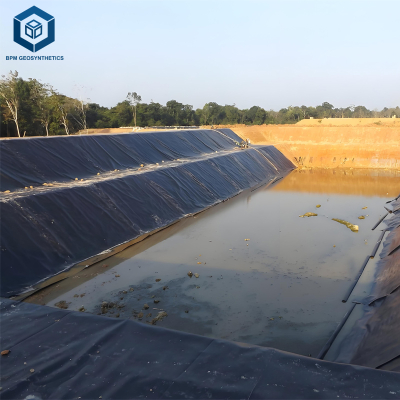
Geomembrane welding refers to the thermal fusion process used to join adjacent geomembrane sheets into a continuous impermeable barrier. Using specialized welding machines, operators create double-track seams that ensure leak-proof containment for environmental, mining, and water infrastructure projects.
Technical Parameters and Specifications
The following technical parameters influence welding quality and cost efficiency:
| Parameter | Typical Range | Engineering Impact |
|---|---|---|
| Geomembrane Thickness | 0.75 – 2.5 mm | Thicker sheets require slower welding speed |
| Welding Temperature | 300°C – 420°C | Depends on polymer type and weather conditions |
| Welding Speed | 2 – 4 m/min | Productivity factor for cost calculation |
| Seam Width | 10 – 15 mm | Double-track seam design |
| Air Channel Width | 6 – 8 mm | Used for non-destructive testing |
| Peel Strength | ≥ 85% parent material | ASTM D6392 requirement |
Structure and Material Composition
The welded geomembrane seam structure typically includes the following components:
Primary geomembrane sheet – HDPE, LLDPE, or PVC liner panels
Double-track thermal weld seam – Two parallel fusion seams
Central air channel – Allows pressure testing for seam integrity
Extrusion welds – Used for repairs, patches, and detail areas
Field seam overlap – Typically 100–150 mm overlap zone
The structural integrity of this welded seam system directly affects containment performance and long-term environmental protection.
Manufacturing and Installation Process
Although geomembranes are manufactured in factories, welding is performed in the field during installation. The process includes several engineering steps:
Panel Layout Planning
Engineers plan sheet placement to minimize seam length and optimize installation efficiency.Subgrade Preparation
The ground surface must be smooth, compacted, and free of sharp objects.Panel Deployment
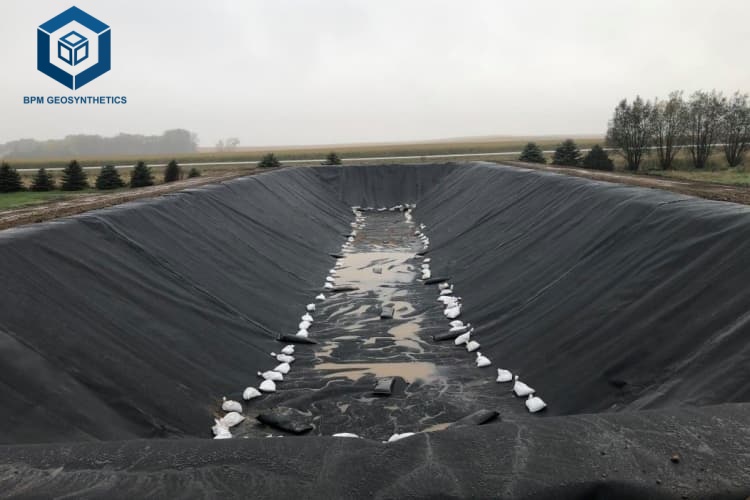
Geomembrane rolls are unrolled and positioned with overlapping edges.Hot Wedge Welding
Automatic welding machines fuse seams using controlled temperature and pressure.Seam Testing
Air pressure tests verify seam integrity.Detail Welding
Extrusion welders seal pipe penetrations, corners, and repair patches.
Geomembrane Welding Cost per Meter Installation Breakdown
For project budgeting, contractors typically calculate welding costs based on seam length. The geomembrane welding cost per meter installation breakdown includes several key components.
Typical Welding Cost Components
| Cost Component | Typical Range (USD/m) | Description |
|---|---|---|
| Labor Cost | $0.80 – $2.50 | Skilled welding technicians |
| Equipment Operation | $0.30 – $1.20 | Hot wedge welding machines |
| Energy Consumption | $0.05 – $0.20 | Electric generator or site power |
| Seam Testing | $0.20 – $0.60 | Air pressure or vacuum testing |
| Quality Inspection | $0.10 – $0.40 | Third-party or internal QC |
Based on these factors, the typical geomembrane welding cost per meter installation breakdown ranges between $1.45 and $4.90 per meter, depending on project conditions and geomembrane thickness.
Industry Comparison
| Liner Material | Welding Method | Typical Welding Cost | Durability |
|---|---|---|---|
| HDPE Geomembrane | Hot wedge welding | Medium | Excellent |
| LLDPE Geomembrane | Hot wedge welding | Medium | Very good |
| PVC Liner | Solvent or hot air welding | Low | Moderate |
| EPDM Rubber | Adhesive seam | High | Good |
Application Scenarios
Geomembrane welding is used across multiple infrastructure sectors:
Mining tailings ponds
Gold and copper heap leach pads
Municipal landfill liners
Agricultural irrigation reservoirs
Industrial wastewater lagoons
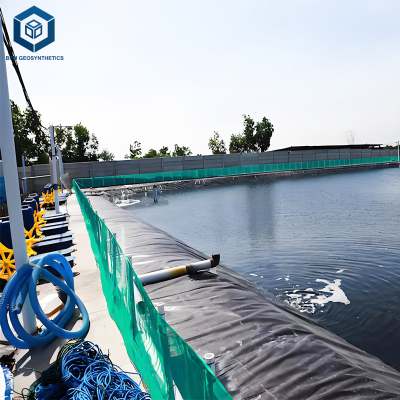
Aquaculture ponds
Primary users include EPC contractors, environmental engineering firms, liner distributors, and project developers responsible for large containment systems.
Core Pain Points and Solutions
High seam leakage risk
Solution: Use double-track welding with air channel pressure testing.Low welding productivity
Solution: Optimize panel layout to reduce seam length.Inconsistent welding quality
Solution: Employ certified geomembrane welding technicians.Environmental weather impacts
Solution: Adjust welding temperature and speed according to site conditions.
Risk Warnings and Avoidance Recommendations
Do not weld geomembranes during rain or extreme wind.
Ensure proper overlap width before welding.
Always conduct non-destructive seam testing.
Use calibrated welding equipment.
Maintain consistent welding speed and pressure.
Procurement Selection Guide
Confirm geomembrane thickness and material type.
Estimate total seam length during design phase.
Calculate installation cost using the geomembrane welding cost per meter installation breakdown.
Select experienced installation contractors.
Request welding procedure specifications (WPS).
Ensure availability of seam testing equipment.
Review past project references.
Engineering Case Example
A landfill containment project required installation of 1.5 mm HDPE geomembrane across a 60,000 m² landfill cell.
Panel layout optimization resulted in approximately 18,000 meters of welded seams.
Labor cost: $1.6/m
Equipment cost: $0.8/m
Testing and inspection: $0.6/m
Using the geomembrane welding cost per meter installation breakdown, the project welding cost averaged $3.0 per meter, representing roughly $54,000 of the total liner installation budget.
FAQ
1. What is the typical geomembrane welding speed?
Hot wedge welders typically operate at 2–4 meters per minute.
2. How long does welding last in field installations?
With proper installation, welded seams can last as long as the geomembrane itself.
3. What is the standard seam overlap?
Most installations require 100–150 mm sheet overlap.
4. How are seams tested?
Air pressure testing and vacuum box testing are common methods.
5. What equipment is used?
Automatic hot wedge welding machines and extrusion welders.
6. Does liner thickness affect welding cost?
Yes, thicker liners reduce welding speed and increase labor cost.
7. Can welding be performed in cold weather?
Yes, but welding parameters must be adjusted.
8. What causes seam failure?
Poor surface preparation, incorrect temperature, or insufficient pressure.
9. Can seams be repaired?
Yes, damaged areas can be patched using extrusion welding.
10. Who should perform welding?
Certified geomembrane welding technicians with field experience.
Request Quotation or Technical Documentation
Engineering teams planning containment systems can request detailed installation guidelines, welding procedure documentation, and project quotations.
Contact our technical department to obtain geomembrane samples, welding specifications, or project-specific installation cost estimates.
Author Expertise (E-E-A-T)
This article was prepared by an environmental containment engineering specialist with more than 10 years of experience in geomembrane manufacturing, liner installation, and mining containment projects across Asia, Africa, and South America.
Technical information is based on ASTM geomembrane standards, field installation practices, and engineering guidelines used in large-scale environmental protection infrastructure.