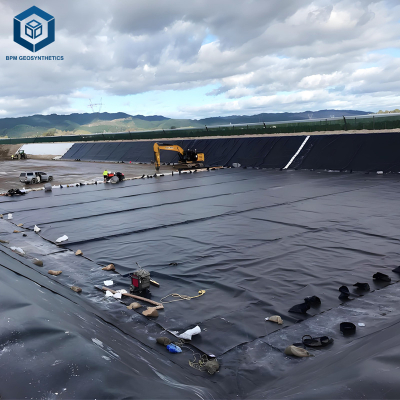
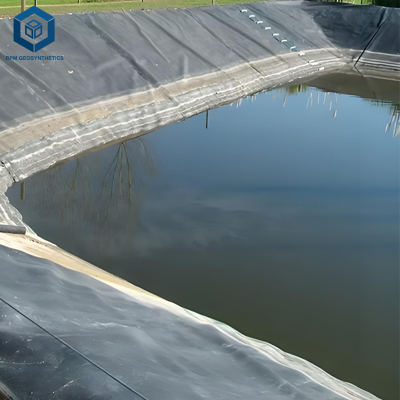
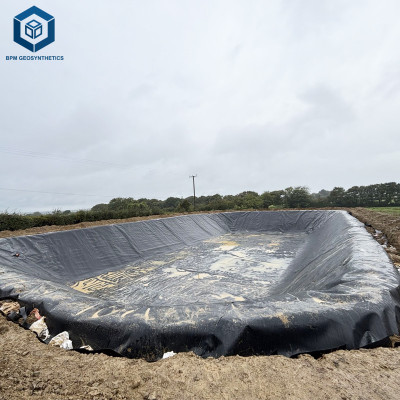
HDPE geomembrane manufacturer with export certificate
For international infrastructure projects such as landfills, mining ponds, aquaculture systems, and water reservoirs, selecting an HDPE geomembrane manufacturer with export certificate is critical for ensuring regulatory compliance, material reliability, and smooth cross-border procurement.
This engineering-focused guide explains how certified manufacturers produce HDPE geomembranes, the technical specifications buyers should verify, and how EPC contractors, distributors, and importers can evaluate suppliers capable of providing full export documentation.
Product Definition
An HDPE geomembrane manufacturer with export certificate produces high-density polyethylene impermeable liners used for environmental containment and provides internationally recognized documentation—such as ISO certification, COA, and export compliance certificates—to support global engineering procurement and customs clearance.
Technical Parameters and Specifications
Professional buyers evaluating an HDPE geomembrane manufacturer with export certificate should confirm that materials meet recognized engineering standards such as GRI-GM13 and ISO quality requirements.
| Parameter | Typical Range | Test Standard |
|---|---|---|
| Thickness | 0.5 mm – 3.0 mm | ASTM D5199 |
| Density | ≥ 0.940 g/cm³ | ASTM D1505 |
| Tensile Strength (Yield) | ≥ 15 kN/m | ASTM D6693 |
| Elongation at Break | ≥ 700% | ASTM D6693 |
| Puncture Resistance | ≥ 480 N | ASTM D4833 |
| Carbon Black Content | 2–3% | ASTM D4218 |
| Roll Width | 5 m – 8 m | Factory standard |
| Roll Length | 50 m – 200 m | Factory standard |
Structure and Material Composition
Products from an HDPE geomembrane manufacturer with export certificate typically consist of engineered polymer materials designed to deliver chemical resistance, UV durability, and long-term impermeability.
Primary Polymer Layer – High-density polyethylene resin providing impermeability.
Carbon Black Additive – UV stabilizer preventing degradation under sunlight exposure.
Antioxidant Package – Protects material during thermal processing and long-term service.
Optional Textured Surface – Improves friction and slope stability for landfill or mining applications.
Protective Packaging Layer – Export-grade wrapping for long-distance transportation.
Manufacturing Process
A reliable HDPE geomembrane manufacturer with export certificate follows a controlled production process to ensure consistent material quality and compliance with international standards.
Raw Material Selection
High-density polyethylene resin and additives are tested for melt flow index and purity.Material Blending
Resin, carbon black, and stabilizers are mixed using precision dosing systems.Extrusion Processing
Flat-die or blown-film extrusion equipment forms the geomembrane sheet.Thickness Calibration
Automatic gauge control systems maintain uniform thickness.Cooling and Surface Texturing
Cooling rollers stabilize polymer structure while embossing rollers create texture when required.Quality Inspection
Online testing verifies thickness, tensile strength, and surface defects.Roll Winding and Packaging
Finished material is rolled, labeled, and prepared with export documentation.
Industry Comparison
| Material | Typical Lifespan | Chemical Resistance | Cost Level | Main Applications |
|---|---|---|---|---|
| HDPE Geomembrane | 30–50 years | Excellent | Medium | Landfills, mining ponds |
| LDPE Geomembrane | 20–30 years | Good | Medium | Agricultural ponds |
| PVC Liner | 10–20 years | Moderate | Low | Decorative ponds |
| EPDM Rubber | 25–40 years | Excellent | High | Water reservoirs |
Application Scenarios
Products from an HDPE geomembrane manufacturer with export certificate are widely used in global environmental and civil engineering projects.
Municipal landfill containment systems
Mining heap leach pads and tailings ponds
Industrial wastewater storage
Agricultural irrigation reservoirs
Aquaculture ponds
Oil and gas drilling pits
Core Pain Points and Engineering Solutions
Unverified supplier credentials
Solution: Work with an HDPE geomembrane manufacturer with export certificate providing ISO certification and export documentation.Inconsistent material thickness
Solution: Request third-party testing reports and online thickness inspection data.Customs clearance delays
Solution: Confirm that the manufacturer provides full export paperwork such as CO, packing list, and commercial invoice.Installation failures due to low-quality materials
Solution: Select geomembranes compliant with recognized engineering standards.
Risk Warnings and Avoidance Recommendations
Do not select suppliers unable to provide product test reports.
Verify that export certificates are valid and issued by recognized authorities.
Check carbon black dispersion reports to ensure UV durability.
Confirm packaging protection for long-distance sea transport.
Procurement Selection Guide
Define project specifications and geomembrane thickness.
Verify that the supplier is an HDPE geomembrane manufacturer with export certificate.
Review ISO 9001 quality certification.
Request third-party testing reports.
Evaluate production capacity and delivery lead time.
Inspect sample materials before placing bulk orders.
Engineering Application Case
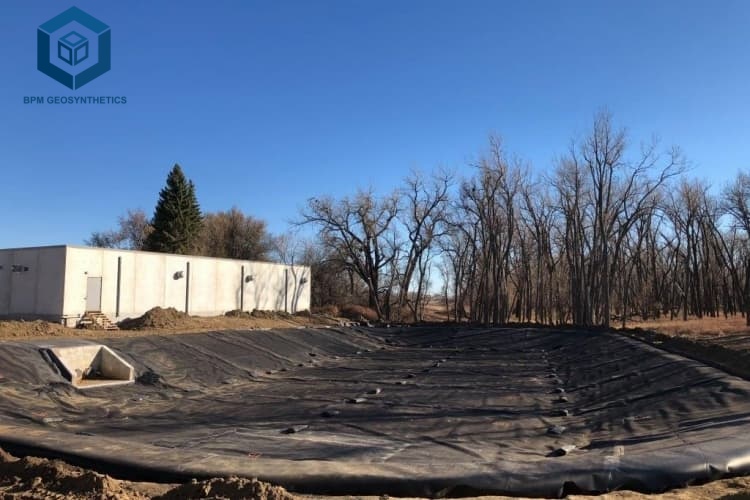
A mining company in Southeast Asia required containment for a 45,000 m² tailings storage facility.
The EPC contractor selected an HDPE geomembrane manufacturer with export certificate supplying 1.5 mm textured geomembrane rolls. The material was delivered with ISO certification, COA reports, and full export documentation.
Installation included dual-track wedge welding and air pressure testing of seams. The completed liner system achieved full environmental compliance and reduced seepage risks in the mining operation.
FAQ
1. What export certificates should a geomembrane manufacturer provide?
Common documents include ISO certification, certificate of origin, COA, and export inspection reports.
2. What thickness is typically used for landfill liners?
1.5 mm to 2.0 mm HDPE geomembrane is commonly used.
3. How long does HDPE geomembrane last?
Properly installed geomembranes can last 30–50 years depending on exposure conditions.
4. What standards govern HDPE geomembrane production?
GRI-GM13 and ASTM testing standards are widely used.
5. What roll width is typically available?
Most manufacturers supply rolls between 5 m and 8 m wide.
6. Can geomembranes be customized?
Yes. Thickness, roll size, and surface texture can be customized.
7. Is textured geomembrane required for slopes?
Yes. Textured surfaces improve friction and slope stability.
8. What welding method is commonly used?
Dual-track hot wedge welding is standard for large installations.
9. How are seams tested?
Air pressure testing and vacuum box testing are common methods.
10. What factors affect geomembrane price?
Thickness, resin cost, order volume, and transportation distance.
Request Quotation or Technical Documentation
For engineering projects requiring a reliable HDPE geomembrane manufacturer with export certificate, procurement teams may request:
Technical data sheets
Export certification documents
Material samples
Project engineering consultation
Contact our technical team to receive pricing, samples, and engineering documentation for upcoming projects.
E-E-A-T: Authoritative Industry Expertise
This article was prepared by engineering specialists with more than 10 years of experience in geomembrane manufacturing, international project supply, and environmental containment system design. The team has supported EPC contractors, mining operators, and environmental infrastructure developers across Asia, the Middle East, and Africa.