Ultimate Guide To Plastic Dam Liner for Sale
A plastic dam liner is a pliable, non-permeable geomembrane sheet that is made from high-density polyethylene (HDPE) resin using advanced extrusion, calendaring, or blow molding methods. It is intended to serve as a reliable stable barrier that is capable of lasting a long time, against the seepage of water, chemicals, wastewater, or other liquids into the soil or the groundwater. Dam liners are also referred to as:HDPE geomembrane.
Placements of the pond Reservoir liner Dam geomembrane Waterproof membrane for water containment.They can be made to comply with the most recent international standards, such as ASTM GRI GM13, which is by far the most extensively recognized specification for dam liner used in dams, ponds, landfills, and mining.
1. What are Plastic Dam Liner?
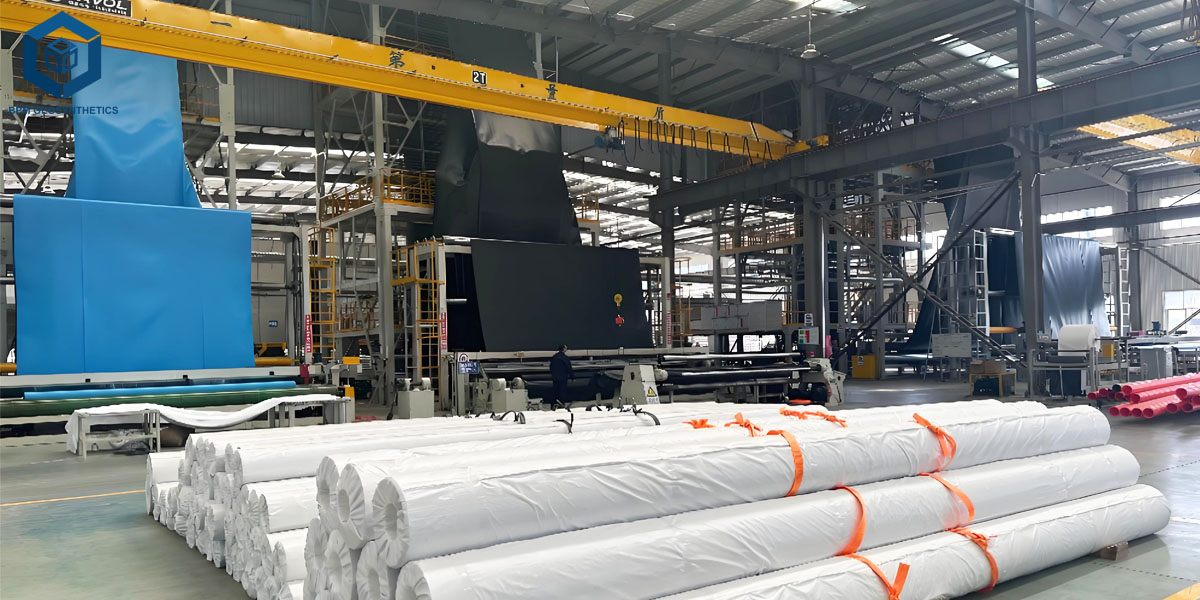
Plastic dam liners are strong geomembranes manufactured from high-density polyethylene. They are impermeable and extremely durable, which is why they are used to prevent water leakage and to maintain the stability of dams and reservoirs. These HDPE dam liners are environmental resistant and capable of withstanding the most extreme conditions. They consist of extruded sheets of various thicknesses, which can be tailored to suit the particular requirements of the project.
1.1 Composition
High-grade plastic dam liner include:
- Virgin HDPE resin, 100% (at the top quality level, no recycled material)
- Carbon black from 2.5% to 3% is used to achieve the best UV resistance and anti-aging properties.
- Exertion of antioxidants and heat stabilizers to increase durability.
Inclusion of an anti-puncture and a high-tensile without any doubt.
1.2 Physical Features
Diversified specifications line up of dam plastic lining to be compatible with different projects:
- Thickness: 0.5mm, 0.75mm, 1.0mm, 1.5mm, 2.0mm, 2.5mm, 3.0mm
Width: Normally 2m–8m (reduces the number of on-site welding joints)
- Length: Special roll lengths
- Color: Mainly black (optimal UV protection); sometimes white or blue
- Surface: Smooth or textured (textured assists slope stability)
1.3 The Principle of Operation
Permeability of HDPE is so low that it can be regarded as negligible, and it practically does not absorb water. Properly wrapped, dam lining material provide an uninterrupted, hermetically sealed barrier, which will prevent liquids from entering. Besides protecting the groundwater and storing water, it will make the dam stable and prevent the soil from being eroded.
In a nutshell, high-density polyethylene dam liner is a technologically advanced, geosynthetic, waterproofing, seepage control and liquid containment material. It is an integral part of modern water projects and environmental engineering.
2. What are The Benefits of Plastic Dam Liner?
Over time, plastic dam liners have displaced traditional materials such as clay, concrete, asphalt, and PVC as a result of their superior performance. Here are their main advantages:
2.1 Excellent Impermeability
Hydraulic conductivity of pond dam liner can be as low as 1×10⁻¹⁷ cm/s, thus practically being impenetrable by water. This is a great deal better than compacted clay or soil liners and effectively hinders water loss in dams and reservoirs. Reliable impermeability of HDPE dams will help store water successfully, avoiding the occurrence of the seepage and structural failures which form problems for even the very smallest ponds and largest hydroelectric or irrigation dams, respectively.
- Hydraulic conductivity as low as 1×10⁻¹⁷ cm/s
- Almost completely waterproof
- Far superior to compacted clay or soil liners
- Prevents massive water loss in dams and reservoirs
2.2 High Durability & Long Service Life
HDPE liners can last up to 20–50 years if left exposed to the environment and up to 70–100 years if they are buried or covered with soil. They are resistant to cracking, breaking, and rotting, which helps in keeping them working well for a long time. This minimizes the risk of leakages and ensures that there will be no major work or replacement cases in the foreseeable future. It guarantees outstanding containment cases for water, mining, or wastewater applications in even the most challenging environmental conditions.
- Service life: 20–50 years in exposed applications
- 70–100 years when buried or covered with soil
- Resists cracking, breaking, or rotting
- Stable performance in long-term use
2.3 Strong UV & Weather Resistance
The carbon black component of geomembrane pond liner is very effective at blocking UV rays, which is why these liners can be exposed to the sun for a long time without getting brittle or soft. Dam on liner continue to function well even under the most extreme weather conditions that range from −70°C to 110°C. Besides, they can resist the effects of sunlight, rain, frost, and dry heat. Due to this feature, the earth dam liners can preserve both its structural and functional characteristics in various places, from hot deserts to cold mountain areas.
- Carbon black formula provides excellent UV protection
- Works in extreme climates: −70°C to 110°C
- Resists sunlight, rain, frost, and dry heat
- Does not become brittle or soften easily
2.4 Superior Chemical Corrosion Resistance
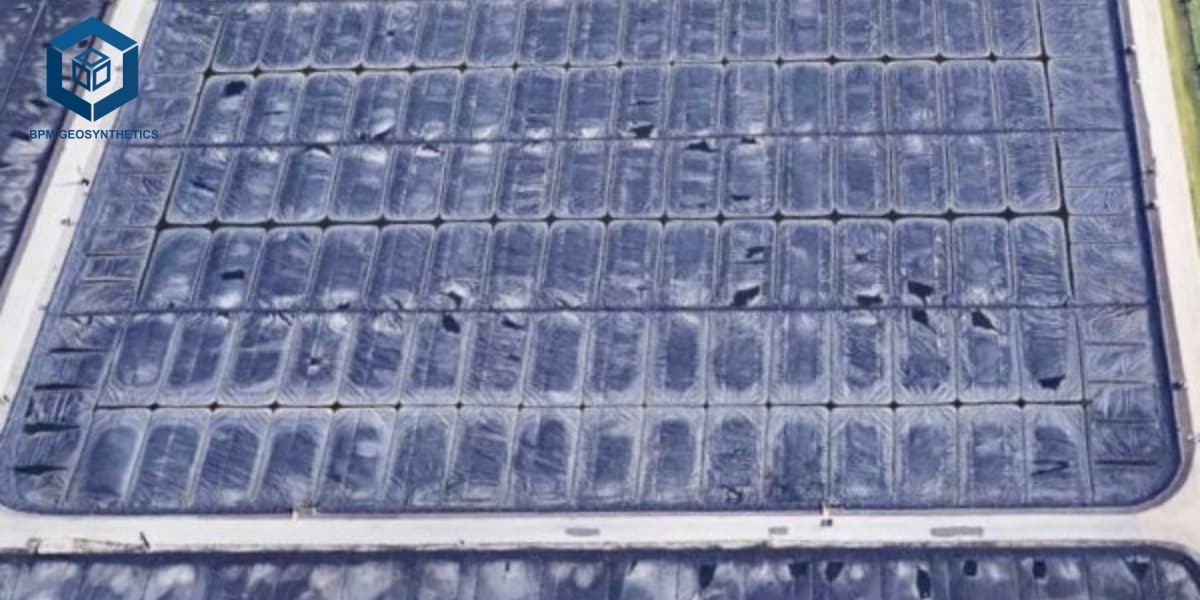
HDPE hdpe geomembrane is good at resisting many chemicals such as acids, alkalis, salts, oils, and organic solvents. Therefore, it is safe to use these geomembrane sheet for industrial wastewater, mining tailings, and landfills, and they do not even change when exposed to soil chemicals or fertilizers. Being chemically resistant, they can cope with very difficult environmental projects, without any worry of degradation or contamination, thus providing long-lasting containment.
- Resists acids, alkalis, salts, oils, and organic solvents
- Safe for industrial wastewater, mining tailings, landfills
- Not affected by soil chemicals or fertilizers
- Ideal for harsh environmental projects
2.5 Good Tensile Strength & Puncture Resistance
Thanks to an elongation at break of even up to 700%, hdpe geomembrane liner manage to change their shape in case the ground settles or moves without their being ripped. They also prove to be tough against stones, roots, and animal claws, which means rulings and repair work get less involved. This mixture of being strong and flexible is a big plus when it comes to placing them on terrains that are not level, embankments, and so forth.
- High elongation at break (up to 700%)
- Adapts to ground settlement or deformation
- Resists damage from stones, roots, or animal claws
- Reduces maintenance and repair costs
2.6 Lightweight & Easy to Transport & Install
Compared to concrete or asphalt, hdpe geomembrane sheet is much lighter meaning that the rolls can be easily carried to very remote sites. These high density polyethylene pond liner can be welded on the spot thereby forming one seamless sheet. This can mean less labor, faster project completion as well as the possibility of working efficiently even in places that are not easily accessible or whose terrain is difficult.
- Much lighter than concrete or asphalt
- Rolls are easy to carry to remote sites
- Can be welded on-site into one seamless sheet
- Shortens construction time and labor costs
2.7 Environmentally Friendly & Non-Toxic
HDPE dam liners are in fact very environmentally safe since, for instance, they can be used for drinking water without causing any harm and they don't release any toxins not only in water but also in the air and soil. They are in line with food-grade and environmental regulations thereby keeping the ecosystem and groundwater safe. Given their non-toxic property, they are a superb choice from the point of view of ecological safety of reservoirs, fish farms, and irrigation systems.
- Safe for drinking water, aquaculture, and crops
- Does not release toxic substances
- Meets food-grade and environmental standards
- Protects ecosystems and groundwater
2.8 Cost-Effective in the Long Term
Even though the initial cost of HDPE liners might be higher than that of simple soil liners, their maintenance-related cost over time will be practically zero. So, their installation can be viewed as a long-term investment. Other benefits include water conservation, reduced losses, as well as enhanced operational efficiency. Final cost of hdpe liner sheet results very economical considering that they can be used for dams, reservoirs, and industrial containment systems.
- Low initial investment compared to concrete
- Almost no maintenance for decades
- Saves water, reduces losses, improves efficiency
- High return on investment (ROI)
2.9 Wide Adaptability
HDPE impermeable liner have extensive applications due to their high compatibility with all kinds of surfaces such as flat ground, slopes, and rough terrain. In fact, they are not only suitable for a small pond but also a large dam. Moreover, the primary sectors of application are agriculture, aquaculture, industrial, mining, and environmental.
- Suitable for flat ground, slopes, complex terrain
- Works for small ponds and large dams alike
- Used in agriculture, aquaculture, industry, mining, and environmental protection
These advantages explain why plastic dam liner is the first choice for waterproofing and containment projects across the globe.
3. What Are Applications Of HDPE Dam Liner?
3.1 Irrigation and Reservoirs
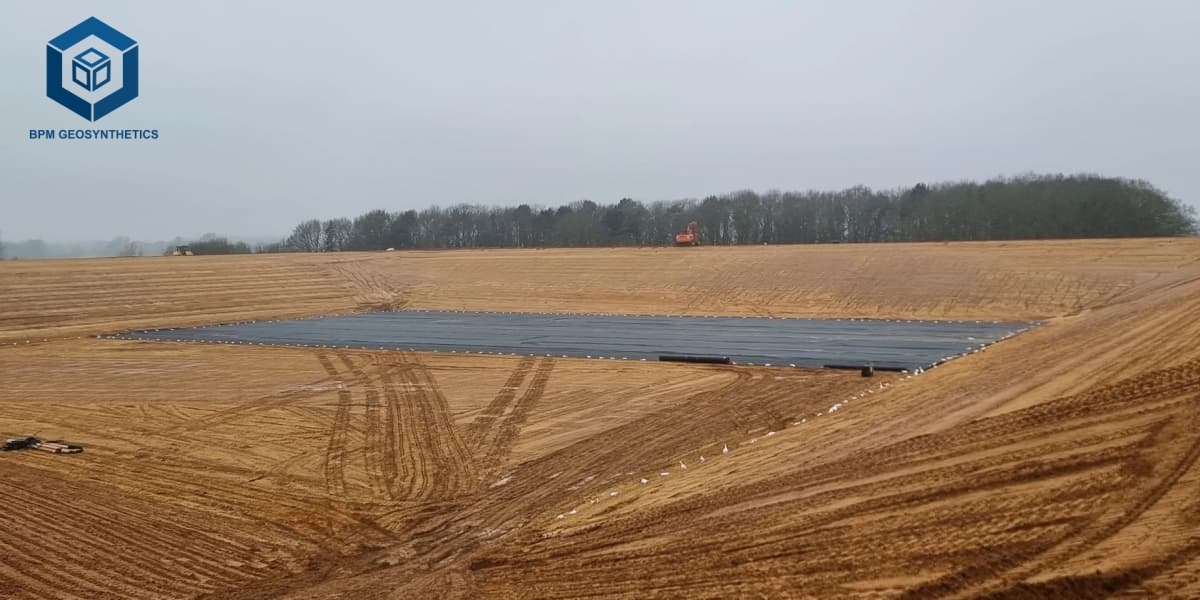
Water loss in irrigation canals and reservoirs is minimized by hdpe membrane sheet. The water saving through a reduction of evaporation can reach up to 35%. This is a very critical matter in water-scarce territories.
3.2 Hydropower and Flood Control
With the help of polyethylene pond liners, slope stabilization and scour control in hydropower reservoirs have been achieved. Similarly, flood control projects with the main intentions of water-level management and prevention of overflow have also utilized these liners.
3.3 Mining Tailings and Wastewater Dams
Mining tailings and wastewater dams, which have hazardous substances, are stopped from leaking by hdpe geomembrane pond liner. These hdpe liner pond not only safeguard the environment but also ensure adherence to legal requirements.
3.4 Agricultural and Aquaculture Ponds
Using high density polyethylene liner in agricultural ponds and aquaculture tanks helps keep water clean and increases production. Also, being NSF-61 certified, these liners guarantee the safety of fish and plants.
3.5 Environmental Remediation Dams
Environmental remediation dams use high density polyethylene geomembrane as a barrier for polluted water. Besides complying with EPA regulations, these hdpe landfill liner is also conducive to a richer ecosystem.
4. What is the Price of Plastic Dam Liner for Sale?
What Determines HDPE Dam Liner Price?
4.1 Material Quality
The basic ingredient for polyethylene geomembrane is high-quality resin. While primary materials have a longer life and are more expensive, recycled ones are affordable but have a shorter tradeoff.
4.2 Thickness
Price increases along with liner thickness as thicker ones promise better efficiency. A 1.5 mm HDPE liner might be priced at $1.20–$1.50 per square foot, whereas a 0.5 mm could be $0.40–$0.80 per square foot.
4.3 Project Scale
Bulk orders are provided discounts by suppliers. An order of a 100,000 square meter dam costs $0.80 per square foot price, while a smaller 10,000 square meter job costs $1.20 per square foot price.
4.4 Installation Method
You may spend from $0.20 to $2.00 per square foot on professional installation. Of all the options, thermal wedge welding is the most popular one, because it produces a strong and watertight joint.
4.5 Transportation and Logistics
Transportation usually adds $0.05 to $0.20 onto the price per square foot. International transport involves adding tariffs and customs duties.
4.6 Cost Breakdown
- Resin: 50–60% of total cost
- Extrusion: 20% of total cost
- Logistics: 15% of total cost
- Installation: 30–50% of total cost
4.7 Price Range
Prices for HDPE dam liners are $0.40–$3.00 per square foot ($4.31–$32.29 per square meter). Apart from the prices for the material, installation and transportation costs are considered too.
4.8 Value Proposition
In fact, BPM geomembrane represent an excellent value proposition. Firstly, they assist you in saving 25–35% of your project budget against using concrete; secondly, there is a substantial reduction for you in maintenance and replacement costs.
Summary
Plastic dam liner play a critical role in the containment of water and environmental protection. Besides being robust and having extremely low permeability, they are also a very economical solution. Price wise, it depends on your choice of thickness, quality of material quality and the scale of your project. It is recommended to go for dam liners for a perfect water containment, an environmentally friendly site, and a product whose performance will last you a long time. If you want to discuss a product quality or seek expert advice, please do not hesitate to call The Best Project Material Co., Ltd.(BPM Geosynthetics)!