Why HDPE geomembrane leaking after installation
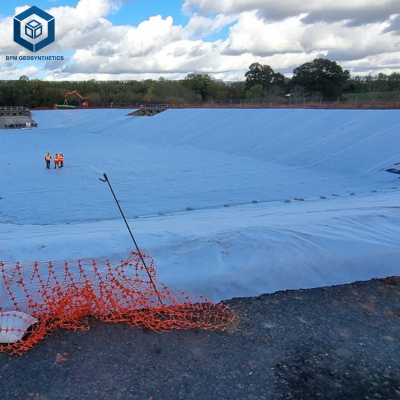
The question why HDPE geomembrane leaking after installation usually relates to defects in liner material, welding seams, subgrade preparation, or installation procedures. HDPE geomembranes are impermeable polyethylene liners used for environmental containment, and leakage typically results from engineering or quality control failures rather than the material itself.
Technical Parameters and Specifications
Understanding the correct specifications is essential when diagnosing why HDPE geomembrane leaking after installation. Proper material performance ensures long-term containment reliability.
| Parameter | Typical Value | Standard Reference |
|---|---|---|
| Material | High Density Polyethylene (HDPE) | GRI-GM13 |
| Thickness | 0.5 mm – 3.0 mm | ASTM D5199 |
| Tensile Strength | ≥ 27 kN/m | ASTM D6693 |
| Puncture Resistance | ≥ 480 N (1.5 mm) | ASTM D4833 |
| Carbon Black Content | 2% – 3% | ASTM D1603 |
| Oxidative Induction Time | ≥ 100 min | ASTM D3895 |
Projects experiencing why HDPE geomembrane leaking after installation often involve materials that fail to meet these engineering standards.
Structure and Material Composition
A typical HDPE geomembrane liner includes several engineered components designed to prevent leakage.
HDPE polymer base layer – provides impermeability and chemical resistance
Carbon black stabilizer – protects against UV degradation
Antioxidant additives – extend long-term durability
Smooth or textured surface – improves friction on slopes
Protective geotextile layer (optional) – prevents puncture damage
If any component is compromised, it may explain why HDPE geomembrane leaking after installation occurs during operation.
Manufacturing Process
The production process of HDPE geomembranes plays a critical role in preventing post-installation leakage.
Raw Material Selection
Virgin HDPE resin and additives are blended according to ASTM and GRI specifications.Extrusion Process
Flat-die extrusion equipment forms the geomembrane sheet under controlled temperature and pressure.Thickness Calibration
Automatic gauge control systems maintain consistent sheet thickness.Surface Texturing (Optional)
Textured rollers create friction surfaces for slope stability.Quality Testing
Each production batch undergoes tensile, density, and puncture resistance testing.Roll Winding and Packaging
Geomembrane sheets are rolled and labeled with batch traceability information.
Manufacturing defects such as uneven thickness can be a hidden cause of why HDPE geomembrane leaking after installation.
Industry Comparison
| Liner Material | Permeability | Durability | Leak Risk | Typical Application |
|---|---|---|---|---|
| HDPE Geomembrane | Extremely low | Very high | Low (if installed correctly) | Landfills, mining, reservoirs |
| PVC Liner | Low | Moderate | Moderate | Ponds, canals |
| Clay Liner | Medium | Low | High | Traditional containment |
| EPDM Rubber | Low | High flexibility | Moderate | Decorative ponds |
Application Scenarios
Understanding why HDPE geomembrane leaking after installation is particularly important in large infrastructure projects.
Municipal landfill liner systems
Mining tailings storage facilities
Agricultural irrigation reservoirs
Industrial wastewater lagoons
Aquaculture ponds
Canal and water containment projects
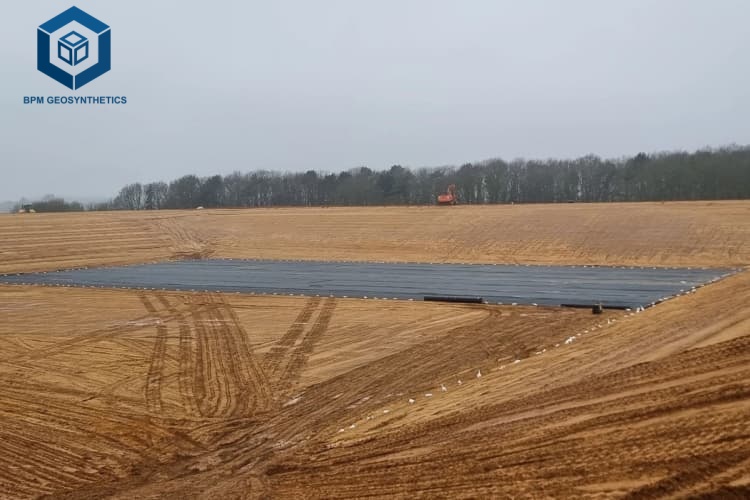
In these applications, leakage can result in environmental risk and significant financial loss.
Core Problems and Engineering Solutions
Several engineering failures explain why HDPE geomembrane leaking after installation.
1. Poor Welding Quality
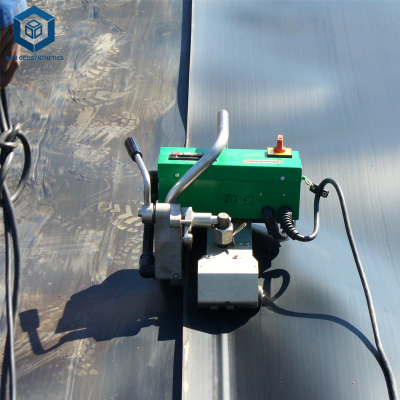
Incomplete fusion during hot wedge welding creates weak seams.
Solution: Perform air pressure testing and vacuum box inspection on all welds.
2. Subgrade Preparation Failure
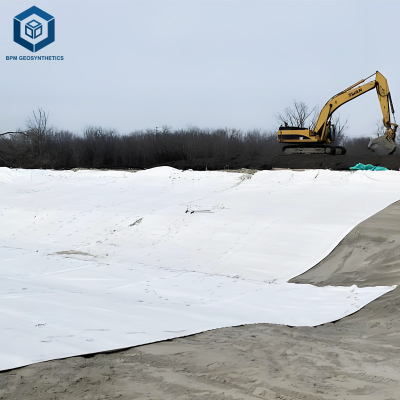
Sharp stones or debris under the liner cause punctures.
Solution: Install a protective geotextile layer and properly compact the subgrade.
3. Thermal Expansion Stress
Improper installation timing can cause tension in the liner.
Solution: Install geomembranes during moderate temperature periods.
4. Material Quality Issues
Low-quality resin or recycled material reduces durability.
Solution: Source liners meeting GRI-GM13 or equivalent standards.
Risk Warnings and Prevention Measures
Do not install liners on uneven subgrades.
Avoid welding during rain or high wind conditions.
Always conduct non-destructive seam testing.
Use certified installation contractors.
Implement construction supervision and inspection records.
Ignoring these factors often explains why HDPE geomembrane leaking after installation appears shortly after commissioning.
Procurement Selection Guide
For procurement managers and EPC contractors, selecting the right supplier reduces the risk of leakage.
Verify compliance with GRI-GM13 geomembrane standards.
Confirm material thickness suitable for the project.
Check manufacturer quality certification (ISO 9001).
Review welding procedure documentation.
Request third-party laboratory test reports.
Ensure full batch traceability for delivered rolls.
Evaluate supplier experience in similar projects.
A structured procurement process minimizes situations related to why HDPE geomembrane leaking after installation.
Engineering Case Study
A mining tailings storage facility in South America experienced seepage after commissioning. Investigation revealed that several field seams were welded during high wind conditions, causing inconsistent fusion.
Corrective actions included:
Replacing defective liner sections
Re-welding seams under controlled conditions
Installing geotextile protection layers
Implementing strict seam testing procedures
After repairs, the containment system passed leak detection tests and resumed safe operation.
FAQ
1. What is the most common cause of geomembrane leakage?
Poor seam welding during installation.
2. Can HDPE geomembrane tear easily?
No. Properly manufactured HDPE liners have high puncture resistance.
3. How are seams tested in the field?
Air pressure testing, vacuum box testing, and ultrasonic inspection.
4. What thickness is recommended for landfill liners?
Typically 1.5 mm to 2.0 mm.
5. How long does HDPE geomembrane last?
Service life can exceed 30–50 years depending on conditions.
6. Can recycled material cause leakage?
Yes. Recycled resin reduces mechanical strength.
7. What protection prevents punctures?
Non-woven geotextile cushion layers.
8. Are textured geomembranes necessary?
They improve slope stability in steep installations.
9. How are leaks detected?
Electrical leak location surveys or drainage monitoring.
10. Who should install geomembranes?
Certified geomembrane installation contractors.
Request Technical Information or Quotation
If your project is experiencing issues related to why HDPE geomembrane leaking after installation, professional technical support may be required. Engineering teams can assist with liner specification selection, welding procedures, and material verification.
For project inquiries, request the following:
HDPE geomembrane technical datasheets
Engineering design recommendations
Project samples and welding test reports
Budget quotations for large-scale procurement
Author Expertise (E-E-A-T)
This article is prepared by geomembrane engineering specialists with more than 10 years of experience in environmental containment systems, landfill engineering, and mining infrastructure projects. The technical information follows internationally recognized geomembrane standards and reflects field installation experience across multiple large-scale containment projects worldwide.