OEM HDPE geomembrane manufacturer USA standard
Global infrastructure projects such as mining containment systems, landfill liners, wastewater lagoons, and agricultural reservoirs rely heavily on high-performance geomembranes. For EPC contractors and material importers, selecting an OEM HDPE geomembrane manufacturer USA standard ensures that liners comply with strict technical requirements such as GRI-GM13, ASTM testing methods, and international environmental containment specifications.
Working with an OEM HDPE geomembrane manufacturer USA standard provides engineering reliability, consistent product performance, and the ability to customize thickness, surface type, roll width, and project documentation for large-scale infrastructure developments.
Product Definition
An OEM HDPE geomembrane manufacturer USA standard produces high-density polyethylene impermeable liners that comply with U.S. geosynthetic performance standards such as GRI-GM13. These geomembranes are designed to prevent liquid migration in containment systems including landfills, mining ponds, reservoirs, and environmental protection projects.
Technical Parameters and Specifications
| Parameter | Typical Value | Standard | Engineering Notes |
|---|---|---|---|
| Material | High Density Polyethylene (HDPE) | - | Virgin resin recommended for durability |
| Thickness Range | 0.5 mm – 3.0 mm | GRI-GM13 | 1.5 mm widely used for landfill liners |
| Density | ≥ 0.940 g/cm³ | ASTM D1505 | Ensures polymer stability |
| Tensile Strength | ≥ 25 kN/m | ASTM D6693 | Important for installation durability |
| Elongation at Break | ≥ 700% | ASTM D6693 | Allows flexibility during settlement |
| Puncture Resistance | ≥ 480 N | ASTM D4833 | Protects liner from subgrade damage |
| Carbon Black Content | 2.0 – 3.0% | ASTM D4218 | Provides UV protection |
| Roll Width | 5 m – 8 m | - | Wide rolls reduce welding seams |
| Roll Length | 50 – 200 m | - | Project dependent |
Structure and Material Composition
The typical multilayer structure produced by an OEM HDPE geomembrane manufacturer USA standard includes:
HDPE Polymer Matrix – High molecular weight polyethylene providing chemical resistance
Carbon Black Additives – UV stabilization and long-term durability
Antioxidant Package – Prevents polymer degradation during service life
Surface Options
Smooth geomembrane surface
Single textured surface
Double textured surface
Optional Conductive Layer – Used in leak detection systems
Manufacturing Process
An experienced OEM HDPE geomembrane manufacturer USA standard typically follows a blown film extrusion manufacturing process with strict quality control.
Raw Material Preparation
Virgin HDPE resin pellets are mixed with carbon black and antioxidants.Extrusion Compounding
Materials are melted and homogenized in a high-temperature extruder.Blown Film Extrusion
Molten polymer is extruded into a tubular bubble to form a uniform sheet.Thickness Calibration
Automatic gauges ensure consistent geomembrane thickness.Surface Texturing (Optional)
Special rollers create textured surfaces for slope stability.Cooling and Stabilization
Film is cooled to maintain dimensional stability.Quality Testing
Laboratory tests verify tensile strength, density, and puncture resistance.Roll Winding and Packaging
Geomembrane sheets are rolled and packaged for shipment.
Industry Material Comparison
| Material | Durability | Chemical Resistance | Typical Cost | Applications |
|---|---|---|---|---|
| HDPE Geomembrane | Very High | Excellent | Medium | Landfills, mining ponds |
| LDPE Geomembrane | Medium | Good | Medium | Reservoirs, agriculture |
| PVC Liner | Medium | Moderate | Low | Decorative ponds |
| EPDM Rubber | High flexibility | Good | High | Landscape ponds |
For most environmental containment systems, engineers prefer HDPE liners produced by an OEM HDPE geomembrane manufacturer USA standard due to their long service life and chemical resistance.
Application Scenarios
Landfill containment systems
Mining heap leach pads
Tailings storage facilities
Wastewater treatment lagoons
Agricultural irrigation reservoirs
Industrial evaporation ponds
These large-scale projects often require geomembranes supplied by an OEM HDPE geomembrane manufacturer USA standard to meet strict environmental regulations.
Core Pain Points and Solutions
1. Inconsistent Thickness
Problem: Uneven thickness can cause weak areas.
Solution: Use automatic thickness monitoring during extrusion.
2. Poor Welding Performance
Problem: Low resin quality affects seam strength.
Solution: Verify raw material certification and welding tests.
3. UV Degradation
Problem: Long-term exposure damages polymer structure.
Solution: Ensure correct carbon black percentage.
4. Installation Damage
Problem: Sharp subgrade objects puncture liners.
Solution: Install geotextile protection layers.
Risk Warnings and Avoidance Strategies
Avoid geomembranes produced from recycled polymers.
Confirm compliance with GRI-GM13 testing standards.
Inspect geomembrane rolls before installation.
Ensure professional welding equipment is used.
Verify supplier manufacturing certifications.
Procurement Selection Guide
Define project containment requirements.
Select required geomembrane thickness.
Verify compliance with U.S. geosynthetic standards.
Compare manufacturers with OEM production capability.
Request technical data sheets and laboratory reports.
Review installation guidelines and welding specifications.
Evaluate supplier export experience and logistics capability.
Engineering Project Example
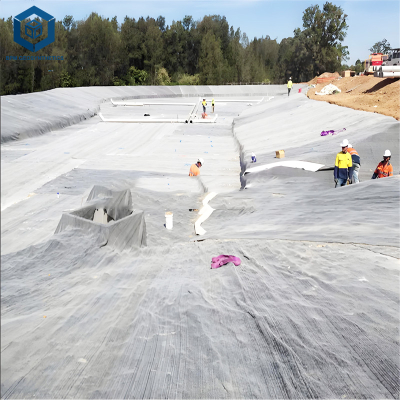
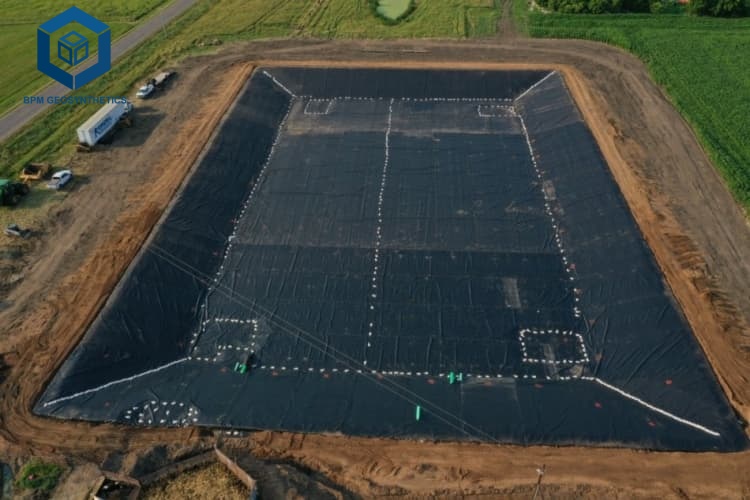
A copper mining operation required an impermeable liner system for a heap leach pad.
Project Area: 120,000 m²
Liner Thickness: 1.5 mm HDPE
Supplier Type: OEM HDPE geomembrane manufacturer USA standard
Roll Width: 7 meters
Installation Method: Dual-track hot wedge welding
Service Life Requirement: 30+ years
Using geomembranes manufactured under U.S. geosynthetic standards improved liner reliability and reduced long-term environmental risk.
FAQ
1. What standard defines HDPE geomembrane quality?
GRI-GM13 is the most widely used U.S. specification.
2. What thickness is commonly used in landfills?
1.5 mm or 2.0 mm HDPE geomembrane.
3. Can geomembranes be textured?
Yes, textured surfaces improve slope stability.
4. What is the typical service life?
30–100 years depending on conditions.
5. How are geomembranes welded?
Typically using hot wedge or extrusion welding equipment.
6. Are HDPE liners chemically resistant?
Yes, they resist most acids, salts, and industrial chemicals.
7. Can geomembranes be recycled?
Post-industrial scrap may be recycled, but virgin resin is preferred.
8. What roll width is optimal?
6–8 meters reduces field seam welding.
9. Do suppliers provide installation support?
Many manufacturers provide engineering guidance.
10. What certifications should suppliers provide?
ISO quality certification and ASTM test reports.
Request Technical Quotation
Project developers seeking an experienced OEM HDPE geomembrane manufacturer USA standard may request the following technical documentation:
Detailed technical data sheets
Third-party laboratory testing reports
Engineering installation guidelines
Bulk project quotations
Material samples for verification
Contact our technical team to obtain engineering specifications and pricing information for large-scale environmental containment projects.
Author Expertise (E-E-A-T)
This article was prepared by engineers and geosynthetic specialists with more than 10 years of experience in geomembrane manufacturing, geotechnical engineering materials, and environmental containment systems. The team has participated in landfill, mining, and water infrastructure projects across Asia, Africa, and the Middle East.
All technical information is based on internationally recognized geosynthetic engineering standards and practical project experience.