Geomembrane seam failure causes
Geomembrane seam failure causes refer to the technical and installation-related factors that lead to the loss of integrity at welded joints of geomembrane liners. Since seams are the most critical part of a containment system, failures typically occur due to welding defects, contamination, material incompatibility, or improper installation conditions.
Technical Parameters and Specifications
Understanding technical specifications is essential when analyzing geomembrane seam failure causes. Proper welding performance depends on both material quality and installation parameters.
| Parameter | Typical Value | Test Standard |
|---|---|---|
| Geomembrane Thickness | 0.75 mm – 3.0 mm | ASTM D5199 |
| Peel Strength (Seam) | ≥ 70% of parent material | ASTM D6392 |
| Shear Strength (Seam) | ≥ 90% of parent material | ASTM D6392 |
| Welding Temperature | 250°C – 450°C | Hot wedge welding |
| Welding Speed | 1.5 – 3.5 m/min | Field installation |
| Overlap Width | 100 – 150 mm | Installation guideline |
When these parameters are not properly controlled, they often become primary geomembrane seam failure causes in containment systems.
Structure and Material Composition
A geomembrane liner system consists of several structural components that influence seam durability.
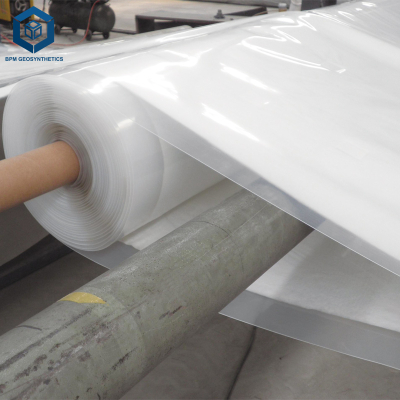
Primary HDPE liner sheet – impermeable polymer barrier
Welded seam interface – fusion bonding area between two sheets
Carbon black stabilizers – UV resistance
Antioxidant additives – long-term polymer stability
Protective geotextile layer – prevents puncture from subgrade
If the welding interface is contaminated or improperly fused, it directly contributes to geomembrane seam failure causes.
Manufacturing Process
Although seams are created during field installation, manufacturing quality significantly affects seam performance.
Raw Material Blending
Virgin polyethylene resin and additives are blended to meet engineering standards.Flat Die Extrusion
Geomembrane sheets are extruded using precision temperature control.Thickness Calibration
Automated systems maintain uniform thickness across the sheet.Surface Treatment
Smooth or textured surfaces are created depending on slope requirements.Quality Testing
Tensile strength, density, and elongation tests verify product compliance.Roll Packaging
Sheets are rolled and labeled for batch traceability.
Non-uniform thickness or polymer contamination during manufacturing may indirectly contribute to geomembrane seam failure causes.
Industry Comparison
| Liner Type | Seam Method | Failure Risk | Durability | Typical Applications |
|---|---|---|---|---|
| HDPE Geomembrane | Hot wedge welding | Low (if installed correctly) | Very high | Landfills, mining |
| PVC Geomembrane | Solvent welding | Moderate | Moderate | Water ponds |
| EPDM Rubber | Adhesive bonding | Moderate | High flexibility | Decorative ponds |
| Clay Liner | No seam | High permeability risk | Low | Traditional containment |
Application Scenarios
Understanding geomembrane seam failure causes is critical in projects where containment reliability is essential.
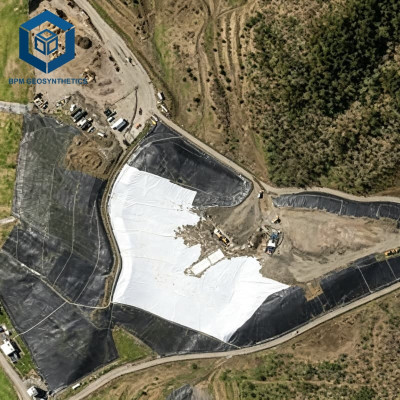
Municipal landfill liner systems
Mining tailings storage facilities
Industrial wastewater lagoons
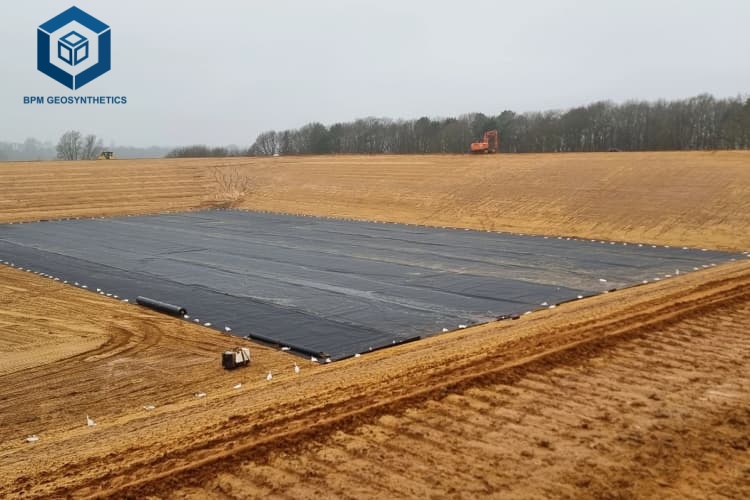
Agricultural irrigation reservoirs
Aquaculture ponds
Canal and water containment infrastructure
In these applications, seam failure can lead to environmental contamination and regulatory penalties.
Core Problems and Engineering Solutions
1. Inadequate Welding Temperature
Incorrect heat settings result in incomplete fusion.
Solution: Calibrate welding machines and perform trial welds before installation.
2. Contaminated Seam Surfaces
Dust, moisture, or soil between sheets prevents proper bonding.
Solution: Clean seam surfaces and maintain dry working conditions.
3. Poor Welding Speed Control
Excessive welding speed reduces seam bonding strength.
Solution: Maintain manufacturer-recommended welding speeds.
4. Inadequate Overlap Width
Insufficient overlap reduces seam integrity.
Solution: Maintain overlap width between 100–150 mm.
5. Thermal Stress After Installation
Temperature fluctuations may create tension along seams.
Solution: Install geomembranes during moderate weather conditions.
Risk Warnings and Prevention Measures
Avoid welding during rain, fog, or strong winds.
Ensure subgrade is smooth and free from sharp objects.
Conduct destructive seam tests regularly.
Use certified geomembrane installation technicians.
Document welding parameters for quality traceability.
Strict construction quality control significantly reduces geomembrane seam failure causes in containment systems.
Procurement Selection Guide
Procurement managers can minimize seam failure risks by following a structured supplier evaluation process.
Verify compliance with GRI-GM13 geomembrane standards.
Confirm material thickness suitable for project requirements.
Request seam strength test reports.
Evaluate supplier manufacturing quality control.
Confirm installation training support from manufacturer.
Request third-party laboratory certifications.
Ensure full batch traceability for delivered rolls.
Selecting reliable suppliers reduces long-term risks associated with geomembrane seam failure causes.
Engineering Case Study
A municipal landfill project in Southeast Asia experienced leakage along several geomembrane seams shortly after commissioning. Inspection revealed contamination of seam surfaces caused by dust during installation.
Corrective engineering actions included:
Removing defective seam sections
Rewelding seams after surface cleaning
Implementing seam inspection checkpoints
Training installation technicians
After corrective measures, the liner system passed vacuum box testing and air pressure seam testing, restoring containment integrity.
FAQ
1. What is the most common geomembrane seam failure cause?
Improper welding temperature or speed during installation.
2. How are geomembrane seams tested?
Air pressure testing, vacuum box testing, and destructive shear tests.
3. What overlap width is recommended?
Typically between 100 mm and 150 mm.
4. Can dust affect seam welding?
Yes. Surface contamination reduces bonding quality.
5. What welding method is used for HDPE liners?
Hot wedge welding or extrusion welding.
6. Can cold weather cause seam failure?
Yes. Low temperatures may prevent proper polymer fusion.
7. How long should seam tests be performed?
Throughout the installation process and after completion.
8. Is seam failure common?
No. With proper installation procedures, seam failure rates are very low.
9. What equipment is used for seam welding?
Automatic hot wedge welding machines.
10. Who should supervise geomembrane installation?
Qualified engineers or certified geomembrane installation supervisors.
Request Technical Information or Quotation
For engineers or procurement teams investigating geomembrane seam failure causes, technical consultation may help identify root issues and improve project specifications.
Project teams can request:
HDPE geomembrane technical datasheets
Welding procedure specifications
Engineering design consultation
Project samples and test reports
Bulk procurement quotations
Author Expertise (E-E-A-T)
This technical guide is prepared by geomembrane engineering professionals with over a decade of experience in environmental containment systems, landfill construction, mining tailings management, and large-scale infrastructure projects. The information reflects international installation standards and field engineering best practices used in modern geomembrane containment projects.