Hdpe liner vs epdm pond liner which is better
HDPE liner and EPDM pond liner are impermeable geomembranes used for water containment and environmental protection. HDPE (high-density polyethylene) offers high strength and chemical resistance, while EPDM (synthetic rubber) provides superior flexibility and elasticity for irregular surfaces.
Technical Parameters and Specifications
| Parameter | HDPE Liner | EPDM Pond Liner | Test Standard |
|---|---|---|---|
| Thickness | 0.5–3.0 mm | 0.75–2.0 mm | ASTM D5199 |
| Tensile Strength | 20–35 MPa | 7–12 MPa | ASTM D6693 / D412 |
| Elongation at Break | 500–800% | 300–500% | ASTM D6693 / D412 |
| Puncture Resistance | 150–450 N | 80–250 N | ASTM D4833 |
| UV Resistance | Excellent | Excellent | ASTM G154 |
| Temperature Range | -60°C to 60°C | -40°C to 120°C | — |
| Chemical Resistance | Excellent | Moderate | ASTM D543 |
| Flexibility | Moderate | Very High | ASTM D882 |
Structure and Material Composition
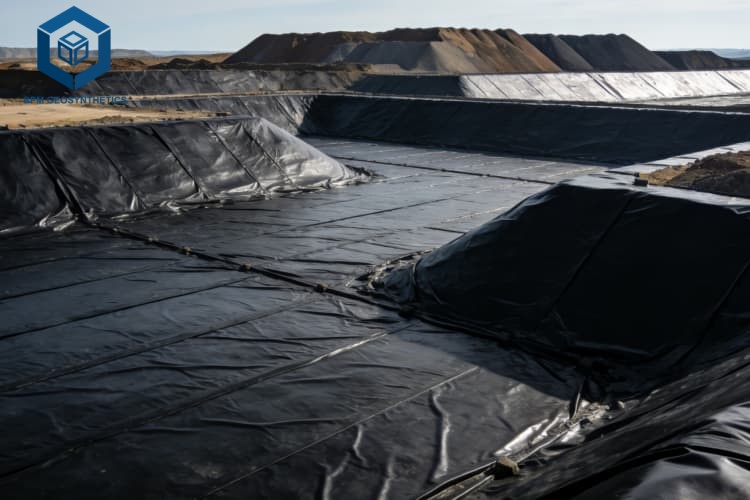
HDPE Liner: High-density polyethylene resin with carbon black (2–3%) for UV stability and antioxidants for aging resistance.
EPDM Liner: Ethylene Propylene Diene Monomer rubber with plasticizers, fillers, and curing agents.
Optional additives: Anti-oxidants, stabilizers, and processing aids.
Surface types: Smooth (HDPE) and flexible sheet (EPDM, typically non-textured).
Manufacturing Process
Raw material preparation: Polymer resin (HDPE) or rubber compound (EPDM).
Mixing and compounding with stabilizers and additives.
HDPE: Flat die extrusion and calendering for sheet formation.
EPDM: Calendering and vulcanization (curing) process.
Cooling and thickness calibration.
Surface inspection and defect detection.
Rolling and packaging according to export standards.
Quality control: tensile, elongation, puncture, and aging resistance testing.
Industry Comparison
| Property | HDPE Liner | EPDM Pond Liner | Preferred Application |
|---|---|---|---|
| Strength | High | Moderate | Industrial, landfill |
| Flexibility | Moderate | Very High | Decorative ponds, irregular shapes |
| Chemical Resistance | Excellent | Moderate | Mining, wastewater |
| Installation | Requires welding | Easy, adhesive or loose lay | Small/medium ponds |
| Service Life | 15–25 years | 10–20 years | Long-term containment |
| Cost | Lower per m² | Higher per m² | Budget-sensitive projects |
Application Scenarios
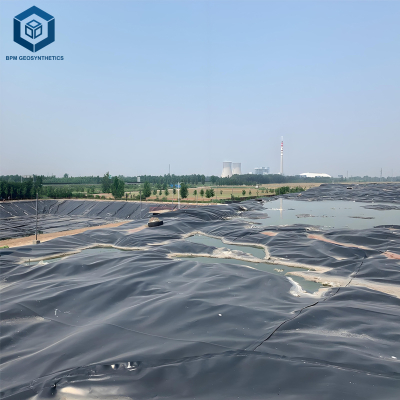
HDPE liner: Landfills, mining ponds, industrial wastewater containment, large reservoirs.
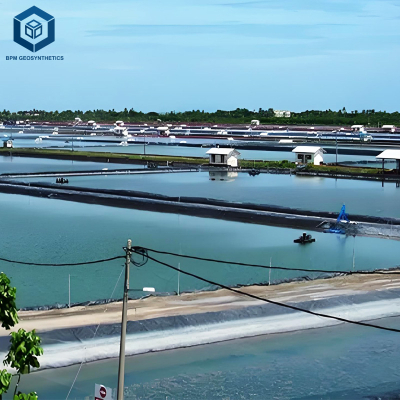
EPDM pond liner: Landscape ponds, aquaculture ponds, decorative water features.
Used by EPC contractors, civil engineers, distributors, and environmental project developers.
Core Pain Points and Solutions
1. Installation Complexity
Solution: Use HDPE with professional welding teams; choose EPDM for easier installation in small projects.
2. Terrain Adaptability
Solution: EPDM is preferred for irregular subgrades; HDPE requires proper subgrade preparation.
3. Chemical Exposure Risk
Solution: Select HDPE for aggressive chemical environments to prevent degradation.
4. Cost vs Performance Balance
Solution: Evaluate lifecycle cost—HDPE offers longer service life in industrial use, while EPDM suits flexible applications.
Risk Warnings and Mitigation
Improper welding of HDPE may cause leakage—require certified technicians.
EPDM may degrade under certain chemicals—verify compatibility before use.
Subgrade preparation is critical to avoid puncture damage.
Incorrect thickness selection can reduce service life.
Procurement and Selection Guide
Define project type: industrial containment or decorative pond.
Assess chemical exposure and environmental conditions.
Choose HDPE for strength and durability, EPDM for flexibility.
Verify technical datasheets and compliance with ASTM/ISO standards.
Confirm installation method (welding vs adhesive).
Request samples for physical testing before bulk purchase.
Evaluate supplier production capacity and export packaging standards.
Engineering Case Example
In a mining wastewater project, 15,000 m² of 1.5 mm HDPE liner was installed with double-wedge welding, achieving high chemical resistance and leak prevention. In contrast, a landscape contractor used 1.0 mm EPDM liner for a 2,000 m² decorative pond with irregular geometry, enabling rapid installation without specialized welding equipment.
FAQ – Frequently Asked Questions
1. Which is better, HDPE liner or EPDM pond liner?
Depends on application: HDPE for industrial durability, EPDM for flexibility.
2. Which liner lasts longer?
HDPE generally has a longer service life in harsh environments.
3. Is EPDM easier to install?
Yes, EPDM requires less specialized equipment compared to HDPE welding.
4. Can HDPE liner be used for ponds?
Yes, especially for large or engineered ponds requiring durability.
5. Is EPDM suitable for chemical containment?
Not recommended for aggressive chemicals.
6. What thickness should I choose?
Typically 1.0–2.0 mm depending on application and load conditions.
7. Are both liners UV resistant?
Yes, both have strong UV resistance.
8. Which liner is more cost-effective?
HDPE is generally more cost-effective for large-scale projects.
9. Can EPDM handle extreme temperatures?
Yes, it performs well in high and low temperature ranges.
10. What is the main limitation of HDPE?
Lower flexibility compared to EPDM, requiring careful installation.
Request Technical Documentation or Samples
For detailed technical specifications, project-based recommendations, or sample materials, procurement teams and contractors are encouraged to submit project requirements. Quotations and engineering support are available upon request.
Author Expertise (E-E-A-T)
This article is prepared by geosynthetics engineers with over 10 years of experience in geomembrane production, export, and large-scale engineering applications. All technical data is based on industry standards and practical project validation.