Hdpe geomembrane production capacity per day
HDPE geomembrane is a high-density polyethylene liner produced via extrusion, widely used for impermeable containment. Daily production capacity refers to the total output (tons or square meters) a manufacturing line can produce within 24 hours under standard operating conditions.
Technical Parameters and Specifications
| Parameter | Typical Range | Unit | Notes |
|---|---|---|---|
| Production Capacity | 20–80 | tons/day | Depends on line width & thickness |
| Line Width | 4–8 | meters | Wide-width extrusion lines |
| Thickness Range | 0.5–3.0 | mm | Affects output speed |
| Extrusion Speed | 3–8 | m/min | Lower speed for thicker sheets |
| Density | 0.94–0.96 | g/cm³ | Standard HDPE resin |
| Roll Length | 50–200 | m/roll | Export packaging standard |
Structure and Material Composition
Base Polymer: High-density polyethylene (HDPE) resin.
Carbon Black: 2–3% for UV resistance.
Antioxidants: Enhance thermal and oxidative stability.
Additives: Processing aids, stabilizers.
Layer Structure: Typically single-layer or co-extruded multi-layer (optional).
Manufacturing Process
Raw material feeding: HDPE resin and additives loaded into gravimetric feeders.
Compounding: Uniform mixing via twin-screw or single-screw extruder.
Flat die extrusion: Melt is formed into sheet at controlled thickness.
Calendering: Surface smoothing and thickness calibration.
Cooling: Air or water cooling system stabilizes sheet dimensions.
Edge trimming and slitting to required width.
Rolling: Automatic winding into export-ready rolls.
Quality control: Online thickness gauge, tensile and puncture testing.
Industry Comparison (Production Capacity Perspective)
| Material | Typical Capacity (tons/day) | Line Speed | Production Complexity |
|---|---|---|---|
| HDPE Geomembrane | 20–80 | Moderate | Medium |
| LLDPE Geomembrane | 15–60 | Moderate | Medium |
| PVC Geomembrane | 10–40 | Lower | High (plasticization) |
| EPDM Sheet | 5–20 | Low | High (vulcanization) |
Application Scenarios
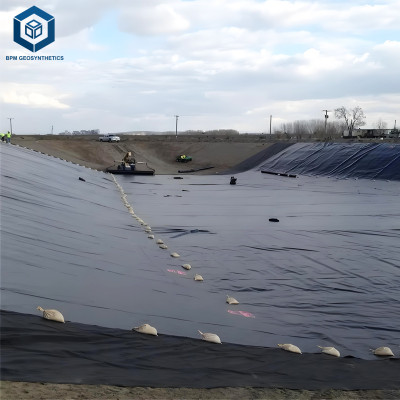
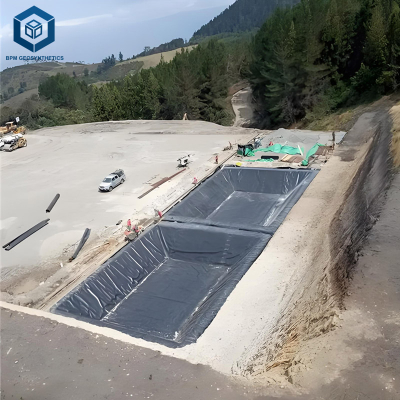
Large-scale landfill projects requiring high-volume supply
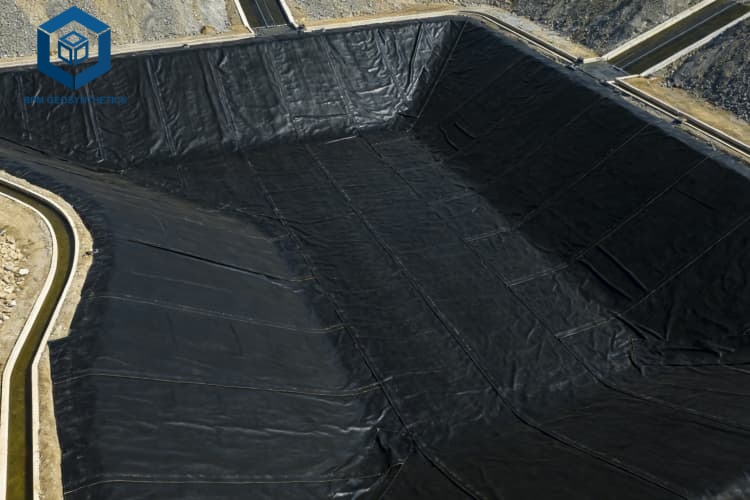
Mining and tailings pond lining projects
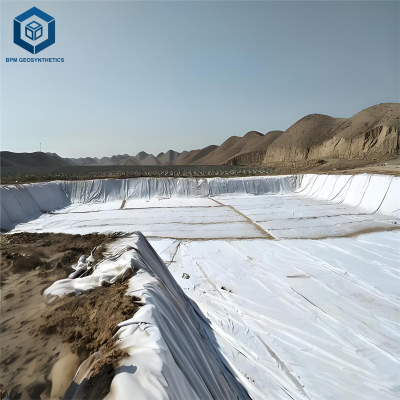
Water reservoirs and irrigation systems
Industrial wastewater containment
Bulk procurement by EPC contractors, distributors, and importers
Core Pain Points and Solutions
1. Inconsistent Supply Capacity
Solution: Select manufacturers with multiple extrusion lines and verified daily output capacity.
2. Delivery Delays in Large Projects
Solution: Confirm production scheduling and buffer stock availability before contract signing.
3. Quality Fluctuation at High Output
Solution: Ensure real-time quality monitoring systems (online thickness control, lab testing).
4. Thickness vs Output Trade-off
Solution: Optimize production planning—thicker geomembranes reduce daily output, requiring longer lead times.
Risk Warnings and Mitigation
Overstated production capacity may lead to supply shortages.
High-speed production without QC may result in uneven thickness.
Improper storage after production can deform rolls.
Unverified suppliers may not meet export standards.
Procurement and Selection Guide
Determine total project quantity (tons or m²).
Calculate required delivery timeline and daily supply needs.
Evaluate supplier production capacity per day and number of lines.
Request factory audit reports and production videos.
Verify technical specifications and compliance certificates.
Confirm packaging, loading, and export logistics capability.
Request trial order or sample rolls before bulk procurement.
Engineering Case Example
A landfill project required 50,000 m² of 1.5 mm HDPE geomembrane within 20 days. The supplier operated two 7-meter extrusion lines with a combined capacity of 60 tons/day. Production planning ensured continuous output, while QC checks maintained thickness tolerance within ±5%. The project was delivered on schedule without quality issues.
FAQ – Frequently Asked Questions
1. What is typical HDPE geomembrane production capacity per day?
Typically ranges from 20 to 80 tons/day depending on equipment and thickness.
2. What factors affect production capacity?
Line width, thickness, extrusion speed, and equipment efficiency.
3. Does thicker geomembrane reduce output?
Yes, thicker sheets require slower extrusion speeds.
4. How many extrusion lines does a factory need?
Large manufacturers typically operate 2–5 lines for stable supply.
5. Can capacity be verified?
Yes, through factory audits, videos, and production records.
6. What is the output in square meters?
Depends on thickness; for 1.0 mm, ~20,000–60,000 m²/day.
7. Is capacity consistent year-round?
Generally yes, but maintenance and raw material supply may affect output.
8. How to avoid supply delays?
Plan procurement early and confirm production schedules.
9. Are export orders prioritized?
Depends on supplier; contract terms should define priority.
10. What certifications should be checked?
ISO 9001, ASTM compliance reports, and third-party testing.
Request Technical Documentation or Samples
For accurate production capacity verification, technical datasheets, and project-based supply planning, buyers are encouraged to submit detailed requirements. Engineering consultation, samples, and formal quotations are available upon request.
Author Expertise (E-E-A-T)
This content is developed by geosynthetics manufacturing and engineering specialists with over 10 years of experience in HDPE geomembrane production, export logistics, and large-scale project supply chain management.