hdpe geomembrane for pond lining
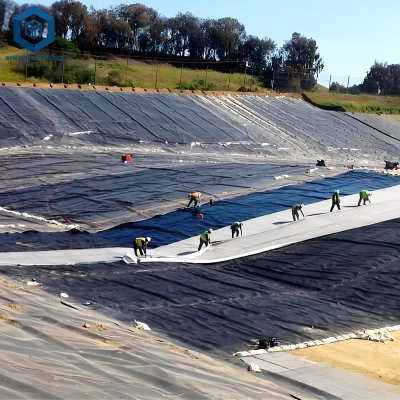
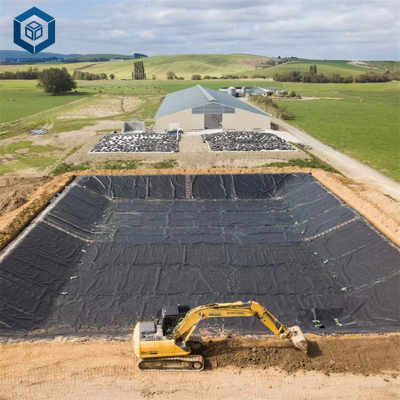
HDPE geomembrane for pond lining is a high-density polyethylene impermeable liner designed to prevent water seepage, control leakage, and ensure long-term containment in ponds, reservoirs, and water storage systems. It offers high chemical resistance, UV stability, and mechanical strength for engineered water retention projects.
Technical Parameters and Specifications
HDPE geomembrane used for pond lining must meet engineering and environmental performance standards to ensure long service life and hydraulic integrity.
Thickness Range: 0.5 mm, 0.75 mm, 1.0 mm, 1.5 mm, 2.0 mm
Density: ≥ 0.940 g/cm³
Tensile Strength at Yield: ≥ 15 MPa (ASTM D6693)
Elongation at Break: ≥ 700%
Carbon Black Content: 2.0–3.0%
Oxidative Induction Time: ≥ 100 min (Std OIT)
Hydraulic Permeability: Practically zero
Operating Temperature: −40°C to +60°C
Structure and Material Composition
The structural design of HDPE geomembrane for pond lining is optimized for durability, impermeability, and environmental exposure.
Primary Polymer Layer: Virgin HDPE resin providing structural strength
Stabilization Additives: Carbon black and antioxidants for UV and thermal resistance
Surface Finish:
Smooth surface for flat pond bases
Textured surface for enhanced friction on slopes
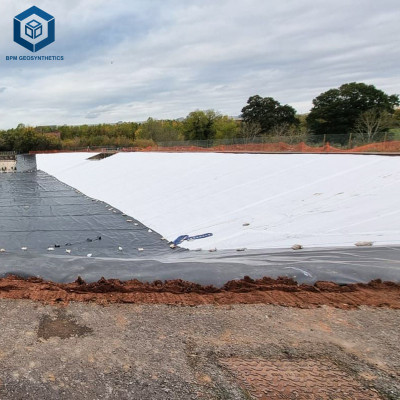
Optional Composite Layer: Combined with geotextile for puncture protection
Manufacturing Process
HDPE geomembrane for pond lining is produced through a controlled industrial extrusion process:
Raw Material Selection: Virgin HDPE resin with certified additives
Compounding: Uniform blending of resin, carbon black, and stabilizers
Extrusion: Flat-die or blown-film extrusion with automated thickness control
Surface Texturing: Inline embossing where slope stability is required
Cooling & Calibration: Precision cooling to maintain dimensional tolerance
Quality Control: Tensile, thickness, OIT, and visual inspection
Roll Packaging: Custom roll widths and lengths for project efficiency
Industry Comparison
| Liner Material | Impermeability | UV Resistance | Flexibility | Typical Pond Use |
|---|---|---|---|---|
| HDPE Geomembrane | Excellent | Excellent | Moderate | Large reservoirs, industrial ponds |
| LLDPE Geomembrane | Excellent | Good | High | Irrigation and aquaculture ponds |
| PVC Liner | Good | Moderate | High | Small decorative ponds |
| Clay Liner | Variable | Poor | Low | Low-risk water retention |
Application Scenarios
HDPE geomembrane for pond lining is widely specified in:
Water Storage Ponds: Municipal and industrial water reserves
Aquaculture Ponds: Fish and shrimp farming containment
Wastewater Treatment Ponds: Effluent and oxidation lagoons
Mining and Process Water Ponds: Chemical-resistant containment
Agricultural Irrigation Reservoirs: Seepage control and water conservation
Core Pain Points and Solutions
Water Leakage: Use certified HDPE geomembrane with controlled welding
UV Degradation: Specify minimum 2% carbon black content
Slope Slippage: Apply textured geomembrane on embankments
Puncture Damage: Install protective geotextile underlay
Risk Warnings and Mitigation
Use of Recycled Material: Avoid for long-term pond lining projects
Improper Welding: Require dual-track hot wedge welding with testing
Thermal Expansion: Allow slack during installation
Subgrade Irregularities: Ensure proper ground preparation
Procurement and Selection Guide
Define pond type and stored fluid characteristics
Select appropriate liner thickness based on depth and load
Determine need for smooth or textured surface
Verify compliance with ASTM or GRI standards
Review manufacturer quality control documentation
Assess installation method and welding requirements
Consider lifecycle cost rather than material price only
Engineering Case Example
In a 50,000 m² industrial water reservoir project, a 1.5 mm HDPE geomembrane for pond lining was installed with a nonwoven geotextile cushion. Field seam testing confirmed full integrity, and post-commissioning monitoring recorded zero seepage over 24 months of operation.
Frequently Asked Questions
What thickness is common for pond lining? – 1.0 to 1.5 mm
Is HDPE safe for aquaculture? – Yes, when certified and properly installed
Can HDPE geomembrane be exposed to sunlight? – Yes, with UV stabilization
What is the expected service life? – 20–40 years
Is textured liner always required? – Only for sloped areas
Can it handle chemicals? – Excellent resistance to most chemicals
How are seams tested? – Air pressure or vacuum box testing
Does liner color matter? – Black provides best UV protection
Can damaged areas be repaired? – Yes, by extrusion welding
What standards apply? – ASTM D6693, GRI-GM13
Call to Action
For pond lining projects requiring reliable containment performance, request detailed technical datasheets, project-specific quotations, or engineering samples to support your design, procurement, and installation planning.
E-E-A-T Author Credentials
This content is prepared by geosynthetics engineers and technical consultants with over a decade of experience in pond lining, water containment systems, and EPC project support, ensuring alignment with international engineering standards and field-proven practices.