The 7 Best Geotextile Stabilization Fabric List
1. Introduction
A driveway is more than just a functional access point—it is an investment in your property’s value, safety, and long-term usability. Yet even the most carefully constructed gravel, asphalt, or paver driveways often succumb to common issues: soil erosion, aggregate migration, rutting, and premature cracking. These problems can lead to costly repairs, with the average homeowner spending $1,200–$3,500 on driveway resurfacing every 5–7 years.
The solution lies beneath the surface. Geotextile stabilization fabric—permeable synthetic materials designed to reinforce soil, distribute loads evenly, and prevent material mixing—can extend driveway lifespan by 2–3 times while reducing maintenance costs by 30–50%. These geotextiles act as a barrier between the subgrade soil and the aggregate base, addressing the root causes of deterioration.
This review evaluates the 7 best geotextile stabilization fabric available in 2026 based on quantifiable performance metrics: tensile strength (ASTM D4632), puncture resistance (ASTM D6241), permeability (ASTM D4491), UV stability, and compliance with AASHTO M288 standards.
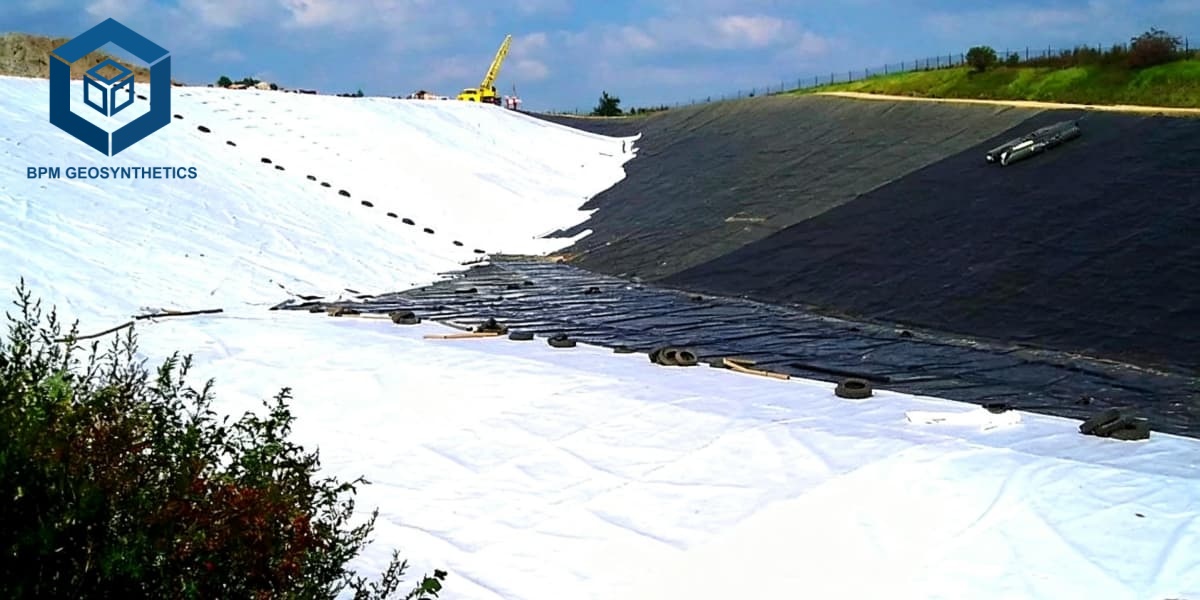
2. Understanding Geotextile Stabilization Fabric
Before diving into the rankings, it is essential to understand the two main geotextile fabric types and how they function.
2.1 Woven vs. Non Woven Geotextile Stabilization Fabric
Feature | Non-Woven Geotextile | |
Manufacturing | Interlaced strands (like burlap) | Needle-punched bonded fibers (felt-like) |
Tensile Strength | High (200–800+ lbs) | Moderate (250–600 lbs) |
Permeability | Low–Medium | High (1.0–1.8 s⁻¹) |
Best For | Load-bearing, heavy traffic | Drainage, filtration, wet soils |
Elongation | <20% (stiff) | 50–70% (flexible) |
Woven geotextiles dominate heavy-duty driveway applications due to their high modulus and load distribution capacity. They excel at preventing rutting under vehicle traffic. Nonwoven geotextiles offer superior filtration and drainage, making them ideal for wet or clay-rich subgrades where water management is critical.
2.2 Geotextile Stabilization Fabric Key Performance Metrics
When selecting a driveway stabilization fabric, prioritize these technical specifications:
- Grab Tensile Strength (lbs): ≥200 lbs for residential driveways; ≥315 lbs for heavy traffic
- CBR Puncture Resistance (lbs): ≥400 lbs to survive aggregate compaction
- Permittivity (s⁻¹): Higher values indicate better drainage—critical in wet climates
- AOS (Apparent Opening Size): 0.15–0.43 mm to retain fines while allowing water passage
- UV Resistance: ≥70% strength retention after 500 hours if exposed before covering
- Weight: 4–8 oz/yd² (135–270 g/m²) typical for residential applications
3. The 7 Best Geotextile Stabilization Fabric List
3.1 BPM Geosynthetics Needled Punched Non Woven Geotextile (Best Overall)
3.1.1 Manufacturer: BPM Geosynthetics (The Best Project Material Co., Ltd.)
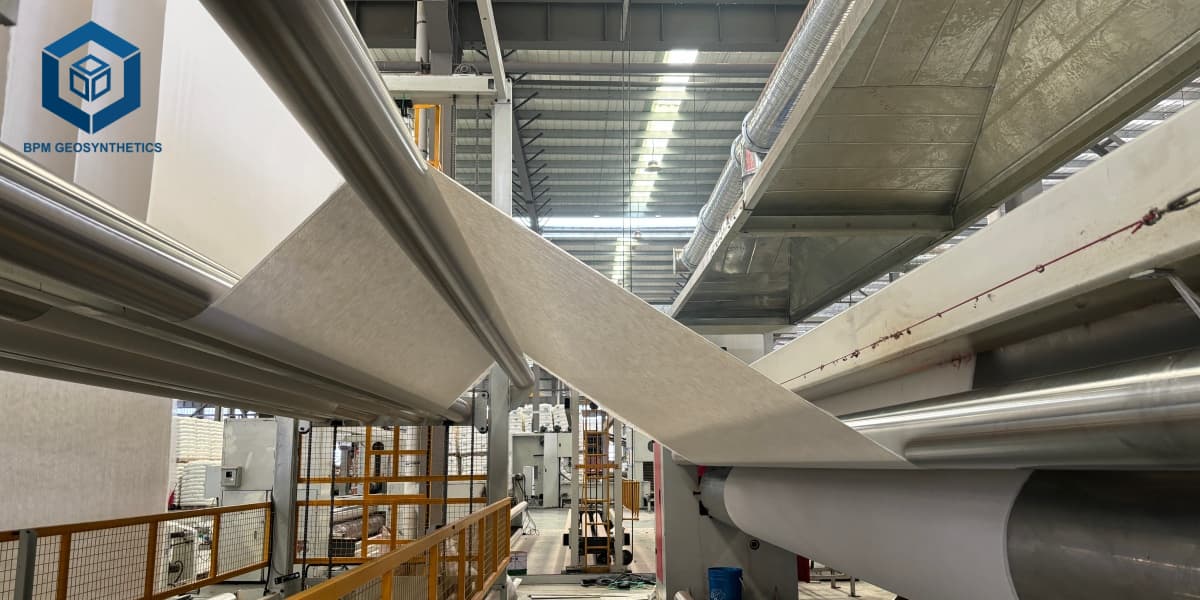
BPM Geosynthetics’s short fiber needle punched non woven geotextile consistently ranks as the strongest cost-performance choice for residential and light-commercial driveways. Established in 2007, BPM Geosynthetics operates a 26,000 m² facility exporting to 81 countries with an annual output exceeding $26.4M.
3.1.2 Key Specifications (250–400 g/m² grade):
Weight: 4–8 oz/yd²
Grab Tensile: 250–600 lbs
CBR Puncture: 400–850 lbs
Permittivity: 1.0–1.8 s⁻¹ (excellent drainage)
Flow Rate: 80–140 gpm/ft²
UV Retention: ≥70% (500 hours)
Lifespan: 25–40 years
Price: $0.75–$2.20/m²
3.1.3 Why It Ranks #1:
BPM Geosynthetics delivers 20–40% lower pricing than equivalent US/European products while maintaining ISO 9001, ISO 14001, CE, and SGS certifications. Its high permeability makes it ideal for wet or clay subgrades, reducing aggregate loss by 30–40%.
3.1.4 Ideal Use Case:
Gravel driveways on soft or poorly draining soils; residential and light-commercial applications.
3.2 Solmax ProGrid ST (Best for Heavy-Duty)
3.2.1 Manufacturer: Solmax International (Canada)
Solmax is the world’s largest geosynthetics manufacturer, producing 30,000 tons annually with $850M revenue and 11.3% global market share.
3.2.2 Key Specifications:
Type: Woven HDPE
Weight: 150–400 g/m²
Grab Tensile: 315+ lbs
CBR Puncture: 2.5–6.0 kN
UV Retention: 80–90%
Lifespan: 30–50 years
Price: $1.80–$3.50/m²
3.2.3 Why It Ranks #2:
Exceptional tensile strength and durability for high-traffic commercial driveways. NTPEP-verified and DOT-approved across North America. However, lower permeability than non-wovens and higher price limit residential appeal.
3.2.4 Ideal Use Case:
Commercial driveways, heavy truck access roads, and soft subgrades requiring maximum reinforcement.
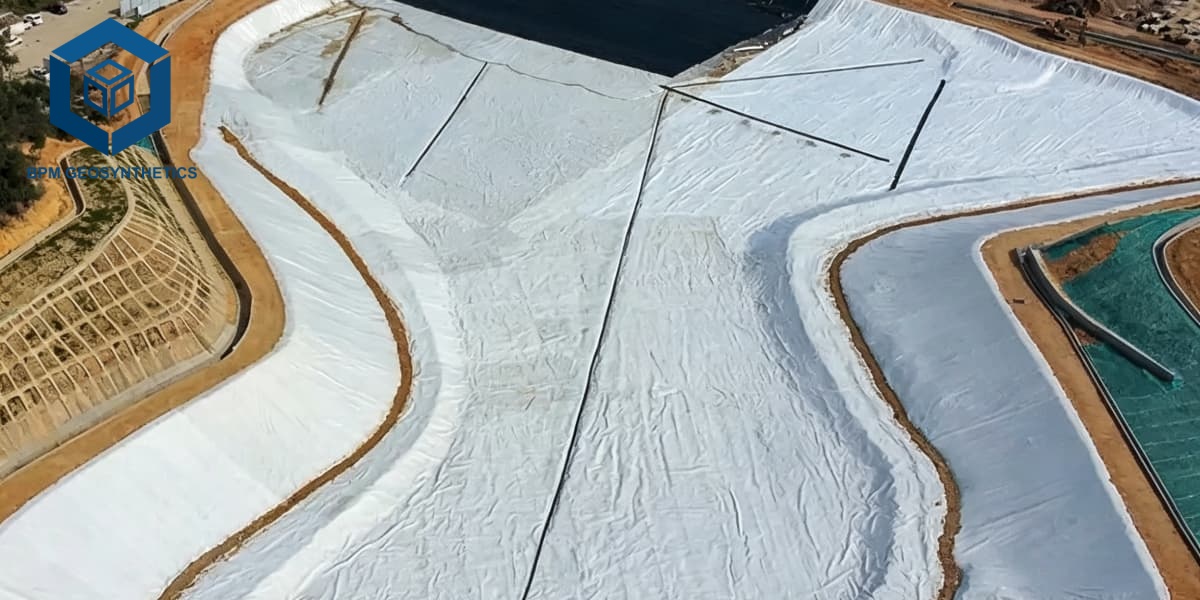
3.3 TenCate Mirafi 500X / 600X (Best for Soft Subgrades)
3.3.1 Manufacturer: TenCate Geosynthetics
TenCate is a globally recognized brand with $620M revenue and 8.3% market share, trusted by DOTs and engineering firms worldwide.
3.3.2 Key Specifications:
Type: Woven Polypropylene
Weight: 6–10 oz/yd²
Grab Tensile: 300–500 lbs
CBR Puncture: 500–700 lbs
Permittivity: 0.02–0.08 s⁻¹
UV Retention: ≥75%
Price: $1.20–$2.80/m²
3.3.3 Why It Ranks #3:
The 600X grade offers exceptional load distribution on low-CBR subgrades (clay, silt). Verified by NTPEP and AASHTO M288 Class 1 compliance. Premium pricing and moderate permeability are drawbacks.
3.3.4 Ideal Use Case:
Driveways on soft, saturated, or highly plastic clay soils; municipal and commercial projects.
3.4 US Fabrics US 200 / US 315 (Best Budget-Friendly)
3.4.1 Manufacturer: US Fabrics
US Fabrics provides reliable, cost-competitive woven geotextiles widely used in U.S. residential and municipal projects.
3.4.2 Key Specifications:
Type: Woven Polypropylene
Weight: 3.5–6 oz/yd²
Grab Tensile: 200–315 lbs
CBR Puncture: 350–550 lbs
Permittivity: 0.02–0.10 s⁻¹
Compliance: AASHTO M288 Class 2–3, NTPEP
3.4.3 Why It Ranks #4:
Solid separation and stabilization performance at competitive pricing. The US 315 grade offers enhanced strength for heavier loads. Lower flow rate than non-wovens limits wet-soil applications.
3.4.4 Ideal Use Case:
Budget-conscious residential gravel driveways; light commercial applications on well-draining soils.
3.5 Sandbaggy 4–8 oz Woven Geotextile (Best DIY-Friendly)
3.5.1 Manufacturer: Sandbaggy
Sandbaggy’s woven geotextiles are designed for straightforward installation and long-term durability, with NTPEP compliance and UV stabilization.
3.5.2 Key Specifications:
Type: Woven Polypropylene
Weight: 4–8 oz/yd²
Grab Tensile: 200+ lbs
UV Stabilized: Yes
Lifespan (buried): 50+ years
3.5.3 Why It Ranks #5:
Extremely user-friendly for DIY projects—tough enough for vehicles to drive over during installation. The 8 oz grade handles heavy gravel loads. Lower puncture resistance than premium brands.
3.5.4 Ideal Use Case:
Homeowner gravel driveways, garden paths, and stabilization projects on stable subgrades.
3.6 VEVOR 5–8 oz Woven Geotextile (Best Retail Availability)
3.6.1 Manufacturer: VEVOR
VEVOR offers accessible, value-oriented woven geotextiles with strong user reviews and wide retail distribution.
3.6.2 Key Specifications (5 oz grade):
Type: Woven Polypropylene
Weight: 3.5–8 oz/yd²
Grab Tensile: 600 lbs (3.5 oz grade)
Coverage: Up to 1415 sq ft (13' × 108' roll)
3.6.3 Applications:
Driveway stabilization, french drains, retaining walls
3.6.4 Why It Ranks #6:
Excellent value with 4.8-star average ratings from verified purchasers. Users report successful installations under heavy stone (up to 18 inches) on soft subgrades. Not UV stabilized—must cover promptly.
3.6.5 Ideal Use Case:
Budget residential driveways and large coverage areas where UV exposure is minimized.
3.7 Drivetex by Growtivation (Best UK/EU Market)
3.7.1 Manufacturer: Growtivation
Drivetex is a UK-specific non-woven geotextile designed for driveway sub-base stabilization, backed by over 20 years of industry experience.
3.7.2 Key Specifications:
Type: Non-Woven Needle-Punched
Available Widths: 1 m (mini), 2.25 m (midi), 4.5 m (contractor)
Compatible Aggregate: MOT Type 1, Type 3, hardcore
Installation: Roll out, overlap ≥300 mm, secure with fixing pins
3.7.3 Why It Ranks #7:
Specifically engineered for UK driveway standards; user-friendly installation and proven performance in residential projects. Field review notes "exceptional drainage" and "no worry about potential sinkage or rutting." Limited global availability.
3.7.4 Ideal Use Case:
UK residential driveways; projects requiring quick installation and reliable drainage.
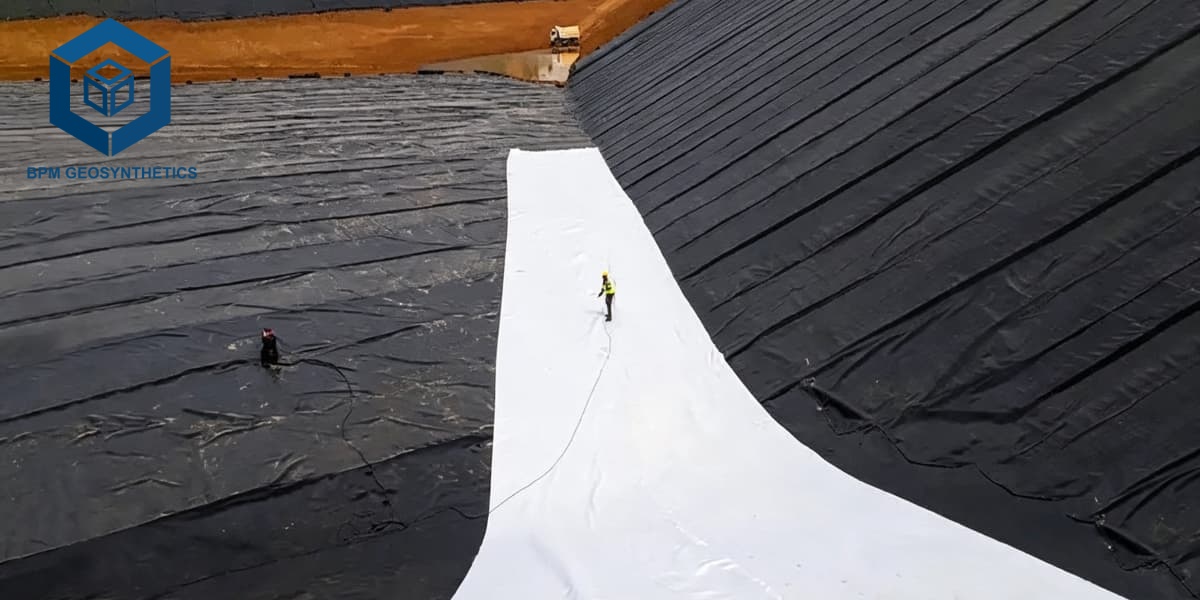
4. The 7 Best Geotextile Stabilization Fabric List Summary Comparison Table
Product | Type | Weight (oz/yd²) | Tensile (lbs) | Puncture (lbs) | Permittivity (s⁻¹) | Price/m² | Best For |
BPM Needled-Punched | Non-Woven | 4–8 | 250–600 | 400–850 | 1.0–1.8 | $0.75–$2.20 | Overall Value |
Solmax ProGrid ST | Woven | 4–12 | 315+ | 2.5–6.0 kN | 0.1–0.4 | $1.80–$3.50 | Heavy-Duty |
TenCate Mirafi 600X | Woven | 6–10 | 300–500 | 500–700 | 0.02–0.08 | $1.20–$2.80 | Soft Subgrades |
US Fabrics US 315 | Woven | 5–6 | 315 | 500–550 | 0.02–0.10 | $1.00–$2.00 | Budget |
Sandbaggy 8 oz | Woven | 8 | 200+ | High | Balanced | Moderate | DIY |
VEVOR 5 oz | Woven | 5 | 600 | Moderate | High | Low | Retail Value |
Drivetex | Non-Woven | N/A | Moderate | Good | High | N/A | UK Market |
5. How to Choose the Right Geotextile Stabilization Fabric?
5.1 By Subgrade Condition
Soft clay/silt (CBR < 3%): Choose high-strength woven (Solmax ProGrid ST, TenCate Mirafi 600X) for load distribution, or high-permittivity non-woven (BPM Geosynthetics) for drainage.
Sandy/well-draining: Standard woven (US 200, Sandbaggy) works well.
Wet/saturated: Non-woven (BPM, Drivetex) provides superior filtration and water flow.
5.2 By Traffic Load
Residential (cars, SUVs): 4–6 oz woven or 200–300 g/m² non-woven
Light commercial (delivery vans): 6–8 oz woven or 300–400 g/m² non-woven
Heavy truck traffic: 8+ oz woven or Solmax/TenCate premium grades
5.3 Installation Tips
Prepare subgrade: Remove sharp objects and compact the soil
Overlap edges: Minimum 12–18 inches (300–450 mm)
Secure fabric: Use staples or pins every 2–3 feet to prevent shifting during aggregate placement
Cover promptly: Protect from UV exposure; cover with 4–6 inches of aggregate within days
Use correct aggregate: MOT Type 1 or crushed stone with angular edges interlocks better with fabric
Conclusion
The best driveway stabilization fabric depends on your soil conditions, traffic load, climate, and budget. For most residential applications, The Best Project Material Co., Ltd. (BPM Geosynthetics)’s needled punched non woven geotextile offers the optimal balance of performance and cost, delivering excellent drainage, puncture resistance, and aggregate savings at 20–40% below premium Western brands. For heavy-duty commercial applications, Solmax ProGrid ST provides unmatched tensile strength and durability.
Whichever product you choose, proper installation—including adequate overlaps, secure anchoring, and prompt aggregate covering—is essential to achieving the promised 25–50-year lifespan. Investing in quality geotextile fabric upfront saves thousands in future repairs and extends driveway service life by 2–3 times.