hdpe geomembrane for fish pond
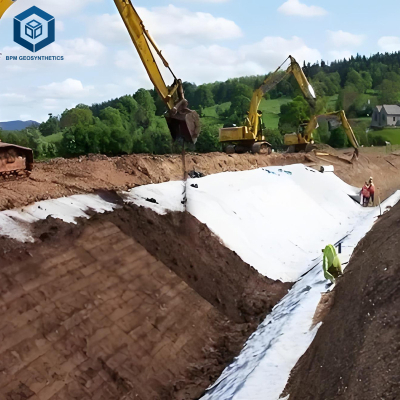
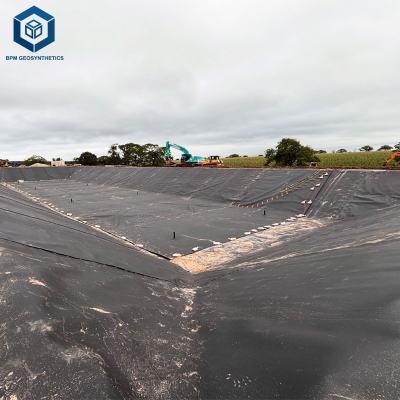
HDPE geomembrane for fish pond is a high-density polyethylene impermeable liner engineered to provide long-term water containment, seepage control, and environmental safety in aquaculture systems. It offers chemical stability, UV resistance, and mechanical durability suitable for intensive and semi-intensive fish farming operations.
Technical Parameters and Specifications
For aquaculture applications, HDPE geomembrane must meet both structural and environmental performance requirements to ensure fish health and pond integrity.
Standard Thickness: 0.5 mm, 0.75 mm, 1.0 mm, 1.5 mm
Density: ≥ 0.940 g/cm³
Tensile Strength at Yield: ≥ 15 MPa
Elongation at Break: ≥ 700%
Carbon Black Content: 2.0–3.0%
Oxidative Induction Time (Std OIT): ≥ 100 minutes
Water Permeability: Practically zero
Service Temperature: −40°C to +60°C
Compliance Standards: ASTM D6693, GRI-GM13
Structure and Material Composition
The structural design of HDPE geomembrane for fish pond applications focuses on biological safety and mechanical reliability.
Primary Polymer Layer: Virgin HDPE resin ensuring non-toxicity and strength
UV Stabilization Layer: Carbon black and antioxidants for outdoor exposure
Surface Configuration:
Smooth surface for pond bottom and easy cleaning
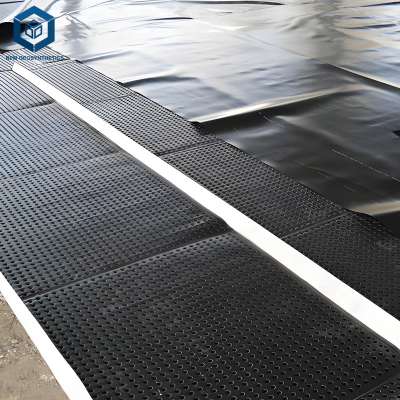
Textured surface optional for sloped embankments
Optional Cushion Layer: Nonwoven geotextile for puncture protection
Manufacturing Process
HDPE geomembrane for fish pond use is produced through a controlled industrial process to ensure material purity and uniform performance.
Raw Material Selection: Virgin HDPE resin with certified additives
Precision Compounding: Uniform blending of resin, stabilizers, and carbon black
Sheet Extrusion: Flat-die or blown-film extrusion with real-time thickness monitoring
Surface Treatment: Optional inline texturing for slope stability
Cooling & Calibration: Controlled cooling to prevent internal stress
Quality Testing: Tensile, elongation, OIT, and thickness verification
Roll Packaging: Customized roll dimensions for aquaculture projects
Industry Comparison
| Material | Water Tightness | Fish Safety | UV Resistance | Typical Use |
|---|---|---|---|---|
| HDPE Geomembrane | Excellent | Excellent | Excellent | Commercial fish ponds, aquaculture farms |
| LLDPE Geomembrane | Excellent | Excellent | Good | Small to medium fish ponds |
| PVC Liner | Good | Moderate | Moderate | Decorative ponds |
| Compacted Clay | Variable | Good | Poor | Low-cost rural ponds |
Application Scenarios
HDPE geomembrane for fish pond systems is widely adopted by:
Aquaculture Farm Operators: Intensive and semi-intensive fish cultivation
EPC Contractors: Turnkey aquaculture pond construction
Agricultural Developers: Integrated fish-farming projects
Distributors & Importers: Aquaculture infrastructure supply
Core Pain Points and Solutions
Water Seepage Loss: HDPE geomembrane ensures near-zero permeability
Pond Cleaning Difficulty: Smooth HDPE surface simplifies maintenance
UV Degradation: Carbon black stabilized liner extends service life
Puncture Risk: Geotextile underlay protects liner from subgrade damage
Risk Warnings and Mitigation
Use of Recycled Resin: Avoid for fish pond applications due to contamination risk
Poor Welding Quality: Enforce hot wedge welding with seam testing
Improper Subgrade: Remove sharp objects and compact soil adequately
Thermal Stress: Allow installation slack during high-temperature conditions
Procurement and Selection Guide
Define fish species and water depth requirements
Select liner thickness based on pond size and operational load
Confirm compliance with aquaculture safety standards
Decide between smooth or textured surfaces
Verify manufacturer quality control and testing reports
Evaluate installation method and seam welding plan
Assess lifecycle cost instead of material price only
Engineering Case Example
A commercial tilapia farm project constructed 120 fish ponds using 1.0 mm HDPE geomembrane for fish pond lining. Each pond averaged 1,800 m². After three years of operation, water retention efficiency exceeded 99%, and pond maintenance time was reduced by over 40%.
Frequently Asked Questions
Is HDPE geomembrane safe for fish? – Yes, when made from virgin resin
What thickness is recommended for fish ponds? – Typically 0.75–1.0 mm
Can it be exposed to sunlight? – Yes, with UV stabilization
How long does it last? – 20–30 years in aquaculture use
Does liner affect water quality? – No, it is chemically inert
Can fish damage the liner? – Unlikely under normal conditions
Is textured liner required? – Only for steep slopes
How are seams tested? – Air pressure or vacuum box testing
Can damaged areas be repaired? – Yes, using extrusion welding
Which standards apply? – ASTM D6693, GRI-GM13
Call to Action
For aquaculture and fish pond projects requiring reliable containment solutions, request detailed technical documentation, project-specific quotations, or engineering samples to support procurement and construction decisions.
E-E-A-T Author Credentials
This article is prepared by geosynthetics engineers and aquaculture infrastructure consultants with extensive experience in fish pond lining systems, EPC project delivery, and international material standards, ensuring accurate and field-proven technical guidance.