hdpe geomembrane for tailings pond
HDPE geomembrane for tailings pond is a high-density polyethylene impermeable liner engineered for long-term containment of mining tailings, process water, and chemically aggressive residues, providing hydraulic isolation, structural stability, and environmental protection.
Technical Parameters and Specifications
Typical engineering-grade parameters used in tailings pond applications are listed below:
Material: High-Density Polyethylene (HDPE)
Density: ≥ 0.940 g/cm³
Thickness Range: 0.75 mm – 3.0 mm (1.5 mm / 2.0 mm most common)
Tensile Strength at Yield: ≥ 15 MPa
Elongation at Break: ≥ 700%
Puncture Resistance: ≥ 480 N
Carbon Black Content: 2.0–3.0%
Oxidative Induction Time (Std OIT): ≥ 100 min
Service Temperature Range: -40°C to +60°C
Expected Service Life: ≥ 30 years (buried condition)
Structure and Material Composition
The structure of HDPE geomembrane for tailings pond is designed for chemical resistance and mechanical durability:
Base Resin: Virgin HDPE resin with controlled molecular weight distribution
Carbon Black: UV stabilization and thermal aging resistance
Antioxidants: Long-term oxidative protection
Surface Types: Smooth / Single-sided textured / Double-sided textured
Manufacturing Process
The production process follows strict industrial controls:
Raw material dosing and gravimetric blending
High-temperature extrusion using flat-die or blown-film extrusion lines
Online thickness and surface uniformity control
Controlled cooling and stress relaxation
Automated winding and labeling
Factory quality inspection (ASTM / ISO tests)
Key equipment includes high-capacity extruders, precision T-dies, surface texturing rollers, and automated QC systems.
Industry Comparison
| Material | Chemical Resistance | Service Life | Cost Level | Suitability for Tailings Pond |
|---|---|---|---|---|
| HDPE Geomembrane | Excellent | 30+ years | Medium | Highly Suitable |
| LDPE Liner | Moderate | 15–20 years | Low | Limited |
| Clay Liner | Low | Unstable | Low | Not Recommended |
| PVC Geomembrane | Moderate | 10–15 years | Medium | Conditional |
Application Scenarios
HDPE geomembrane for tailings pond is widely used by mining EPC contractors, engineering consultants, and operators in:
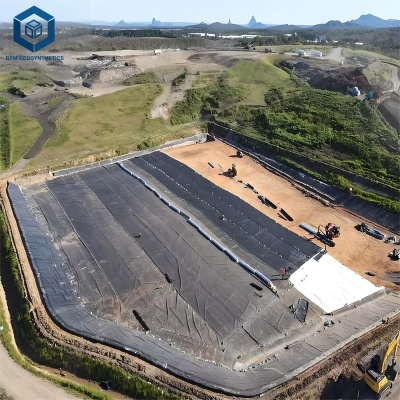
Metal and non-metal mining tailings storage facilities
Heap leach pads and solution ponds
Process water retention ponds
Emergency spill containment basins
Core Pain Points and Engineering Solutions
Leakage Risk: High welding integrity and multi-layer liner systems reduce seepage.
Chemical Corrosion: HDPE provides resistance to acids, alkalis, and heavy metals.
UV Degradation: Carbon black stabilization extends exposed service life.
Foundation Settlement: High elongation accommodates differential settlement.
Risk Warnings and Mitigation Measures
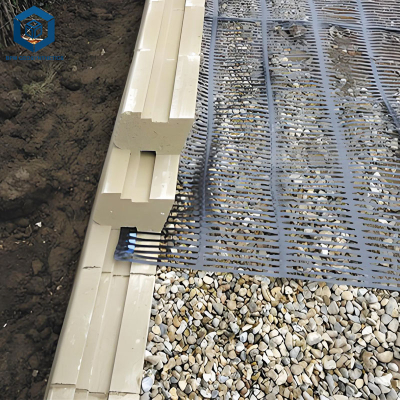
Improper subgrade preparation may cause puncture → Use protective geotextile.
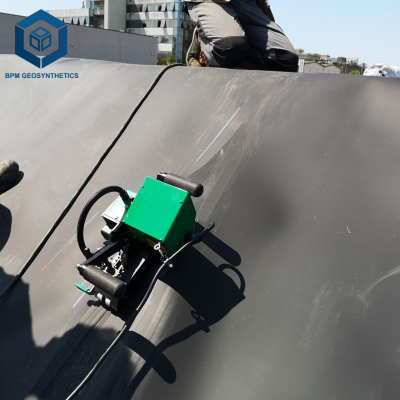
Unqualified welding can lead to seam failure → Require certified welders.
Thermal expansion stress → Design adequate anchor trenches.
Inadequate QA/QC → Implement CQA plans and third-party testing.
Procurement and Selection Guide
Define chemical composition of tailings
Determine liner thickness based on hydraulic head
Select surface type according to slope stability
Verify compliance with ASTM GRI-GM13
Confirm manufacturer production capacity and QC system
Request welding compatibility and testing reports
Engineering Case Scenario
In a copper mining project, a 2.0 mm double-textured HDPE geomembrane for tailings pond was installed over a compacted clay layer with geotextile cushioning. The system covered over 180,000 m² and passed vacuum box and spark testing, achieving zero leakage during commissioning and stable operation after five years.
FAQ
Q1: What thickness is recommended for tailings ponds?
A: Typically 1.5–2.5 mm depending on head pressure.Q2: Is HDPE suitable for acidic tailings?
A: Yes, HDPE offers excellent acid resistance.Q3: Can it be exposed long-term?
A: Limited exposure is acceptable with UV stabilization.Q4: What welding method is used?
A: Hot wedge or extrusion welding.Q5: Required standards?
A: ASTM GRI-GM13 or equivalent.Q6: Roll width availability?
A: Typically 5.8–8.0 meters.Q7: Transportation considerations?
A: Roll diameter and weight must match logistics constraints.Q8: Can textured liners be welded?
A: Yes, with appropriate welding parameters.Q9: Expected installation temperature?
A: Preferably above 5°C.Q10: Can samples be provided?
A: Yes, for material verification and testing.
Call to Action
For project-specific pricing, technical datasheets, or engineering samples of HDPE geomembrane for tailings pond, please contact our technical sales team with your design parameters and site conditions.
E-E-A-T Author Credentials
This article is prepared by a geomembrane application engineer with over 15 years of experience in mining containment systems, participating in international tailings pond design reviews and material qualification for EPC mining projects across Asia, Africa, and South America.