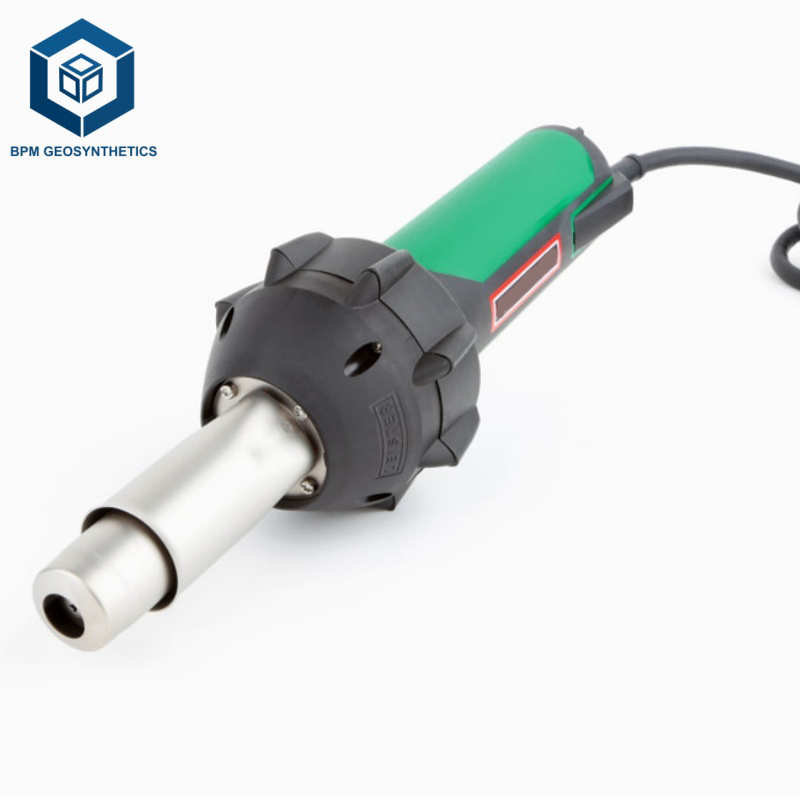
Geomembrane Welder
BPM Geosynthetics’ geomembrane welders are engineered to deliver strong, consistent, and airtight seams. Designed for efficiency and precision, our welding equipment ensures superior seam quality, helping contractors reduce installation time while achieving long-term anti-seepage performance in demanding environments.
- High Welding Strength: Produces uniform, durable seams that meet international standards for leak prevention
- User-Friendly Operation: Intelligent temperature and speed control for easy handling, even for beginners
- Wide Material Compatibility: Suitable for HDPE, LLDPE, PVC geomembranes in various thicknesses
- Stable Performance: Advanced heating system ensures consistent welding quality in different climates
- Efficiency Boosting: Fast welding speed reduces labor costs and project timelines
Geomembrane Welder Provides Reliable and High-Quality Welding for HDPE Liner
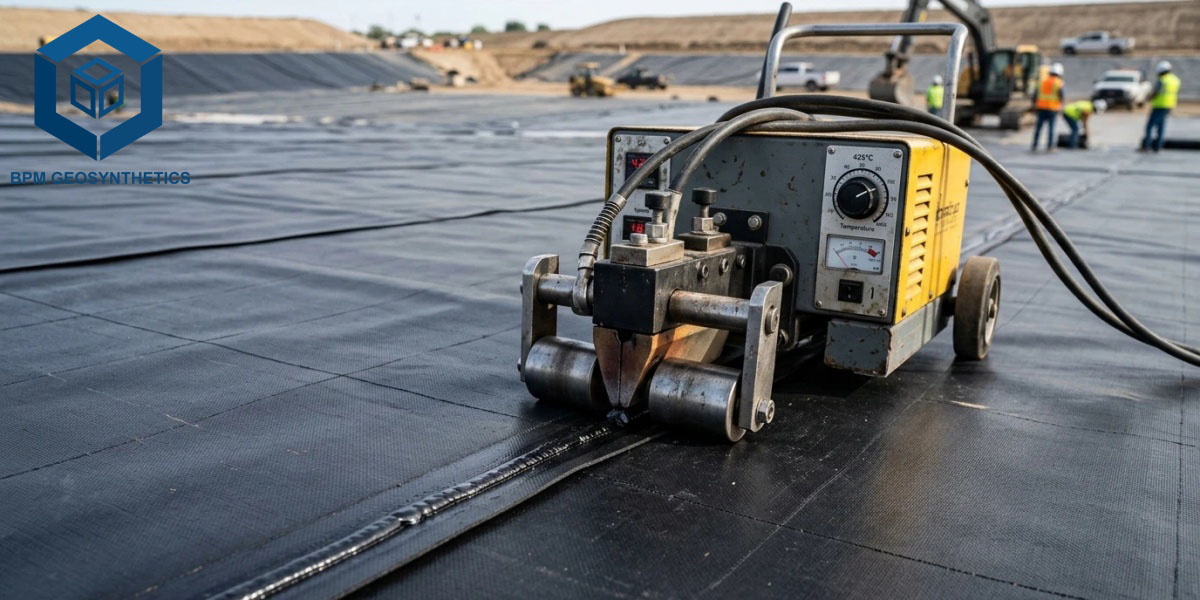
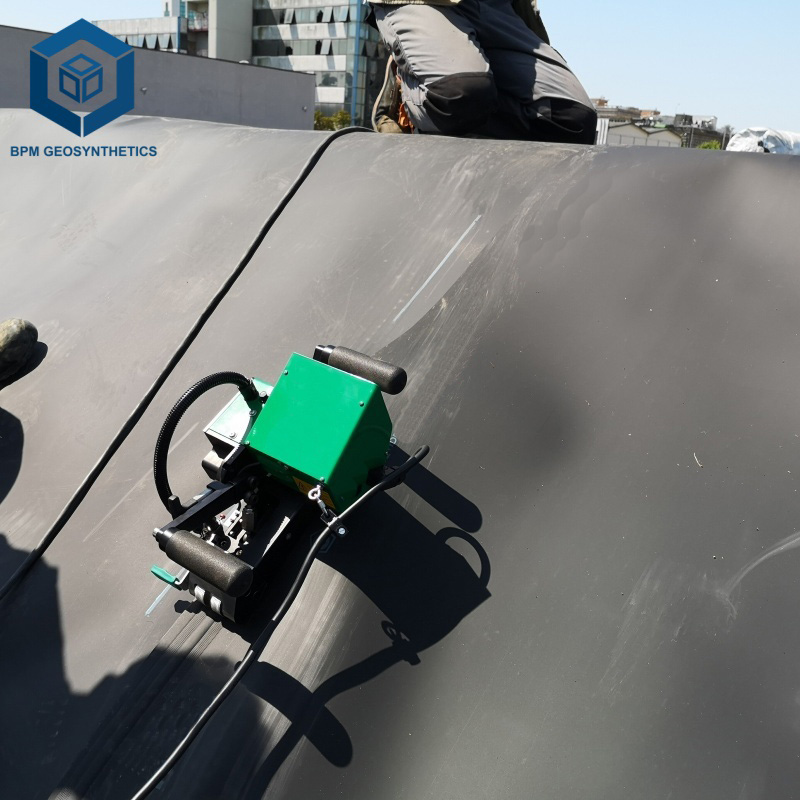
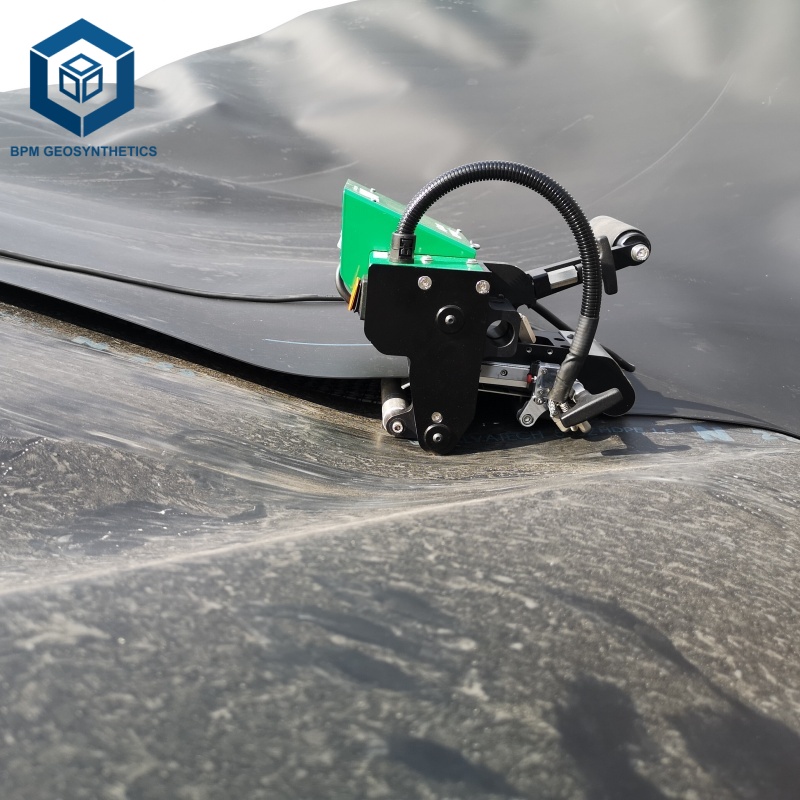
A geomembrane welder is a device particularly designed to weld thermoplastic liners such as HDPE, LLDPE, and PVC geomembranes. In essence, it functions by heating and pressing the two overlapping sheets under controlled conditions resulting in a durable, continuous, and waterproof seam.
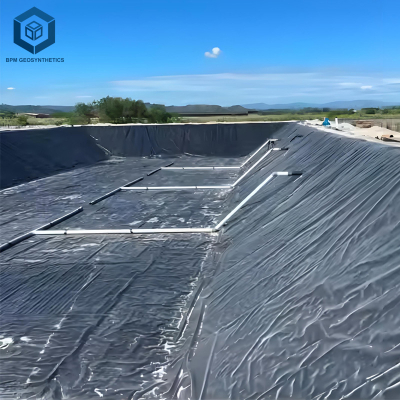
Basically, the machine guarantees that no leakage happens through the geomembrane liners. Thus, it becomes an indispensable tool in waterproofing and anti-seepage projects. Such machinery finds its application greatly in landfills, fish ponds, reservoirs, mining areas, and wastewater treatment systems where dependable containment is required.
BPM Geomembrane Welder is made for reliable performance, simple operation, and high productivity. It equips the contractors to keep the welding quality at a constant level, cut down the installation work time, and enhance the overall safety of the project. Durable build and accurate handling make it suitable not only for large engineering projects but also for field installation work.
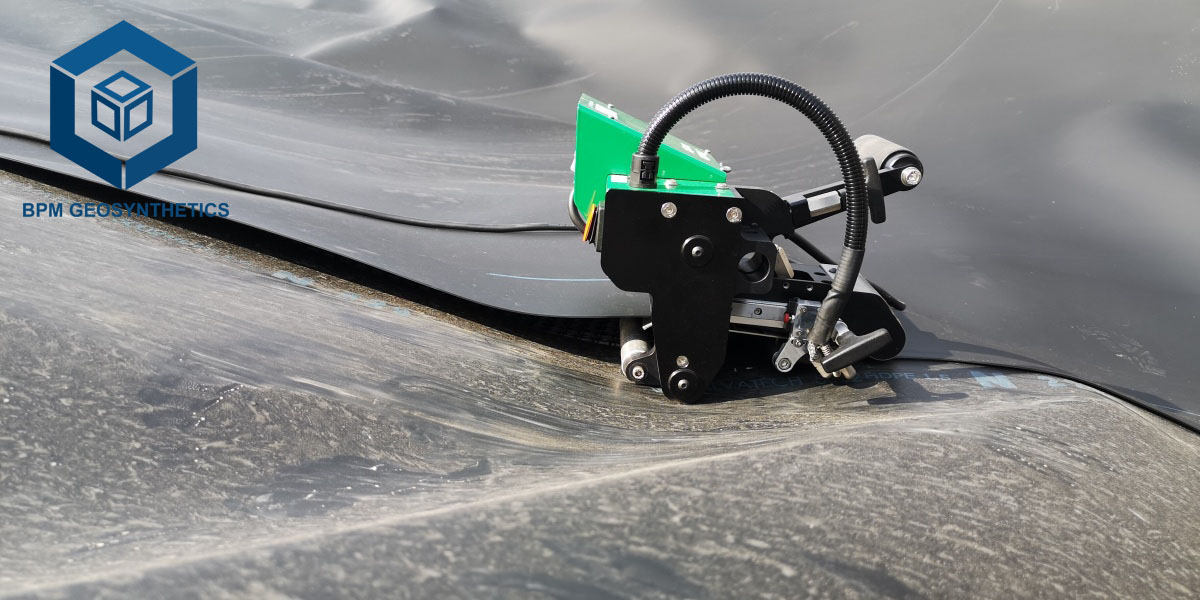
1. Working Principle of Geomembrane Welder
The geomembrane welding machine works through the exact blend of heat, pressure, and regulated speed to melt and weld the two overlapped sheets of geomembrane going through rotational, mechanical, and electrical means until they result in a solid, continuous, leak-proof seam.
1.1 Heating element melts the liner surfaces
To facilitate welding of the sheets, heat is applied to soften the sheets so that the molecules in the sheets can intermix and bond.
1.2 Pressure rollers bond the materials together
Heating is just one step. After that, rollers exert pressure to the heated sheets joining them into one continuous and solid bond.
1.3 A strong molecular fusion seam is formed
Basically, the seam that results from the processes of heating and pressing is of very high strength level; almost the same as the parent material itself which is a great assurance of the seam's reliability.
- In fact, this accurate method of welding guarantees:
Seam strength – the joint is resistant even to the mechanical stress applied to the material.
Waterproof performance – effectively prevents seepage of liquid, which is really important for containment systems.
Resistance to environmental stresses such as UV rays, temperature changes, etc., which keeps the performance of the installation at the same level for a very extended period.
2. Types of Geomembrane Welder
BPM provides an entire variety of geomembrane welding equipment that is styled to suit different types of construction projects and geomembrane materials. Each product features not only a reliable seal and high-quality welding but also enhanced efficiency at the worksite.
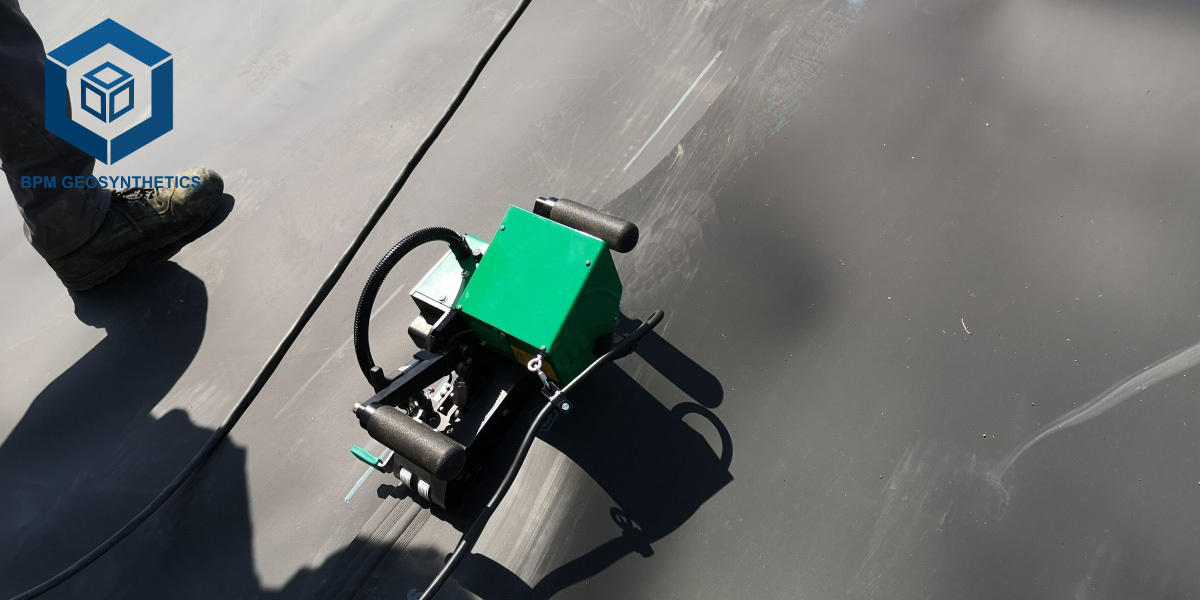
2.1 Hot Wedge Welder
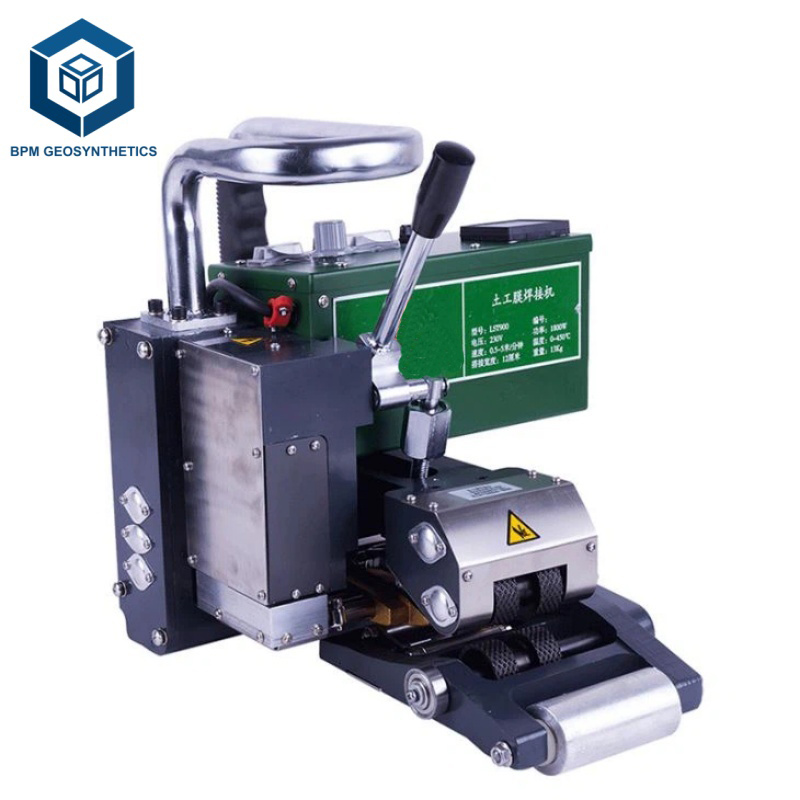
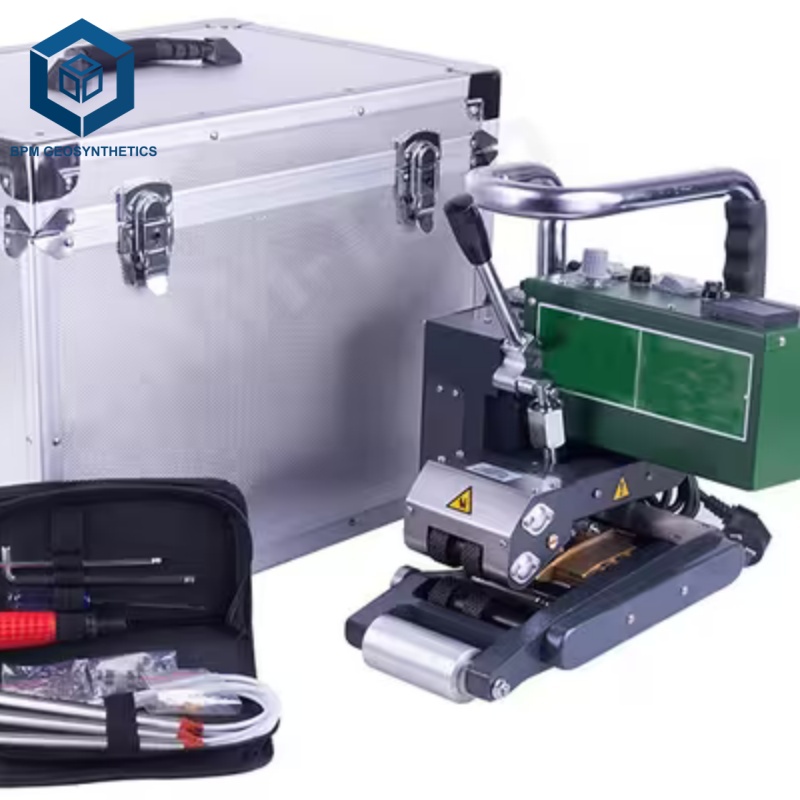
It is the best option especially for single large area welding like landfills, reservoirs, and big industrial ponds. The fully automated system helps in reducing manual efforts while at the same time designing a seam with good quality. The double track welding integrated with air channel enables air pressure testing of seams for achieving high leak-proof performance.
2.2 Extrusion Welder
This is the best choice for repairing, edge welding, and other precision works. Ideal for corners, pipe penetrations, and small or irregular areas. Even in complicated and inaccessible locations, extrusion welding can produce a durable and uniform seam.
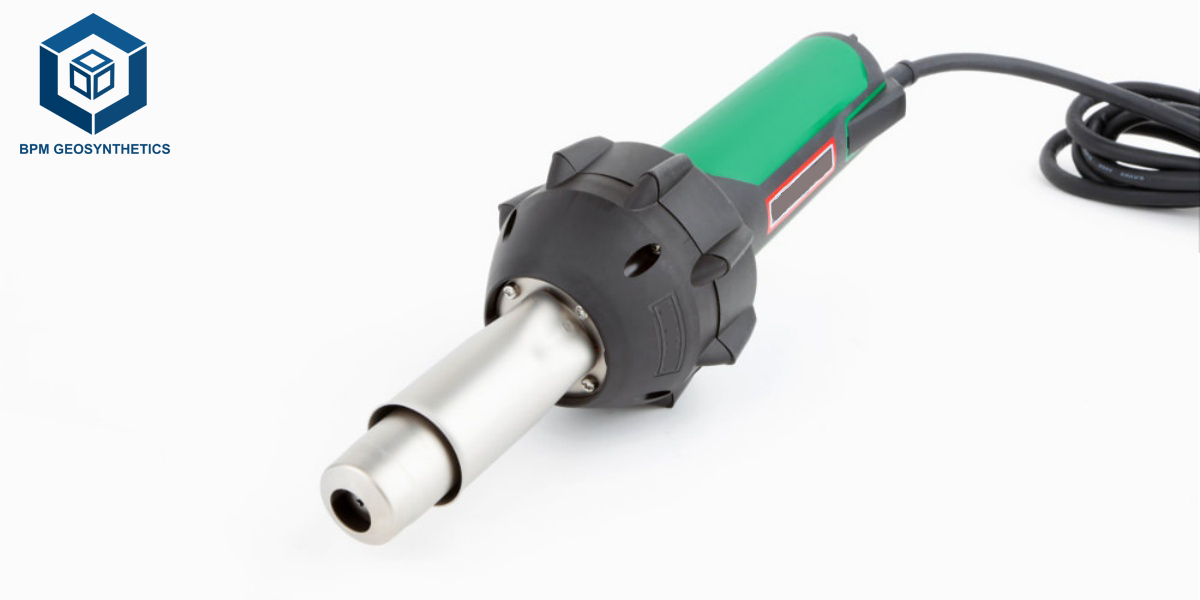
2.3 Hot Air Welder
It is a straightforward and light tool suitable for thin geomembranes or flexible materials. It has simple operation and great portability, thus can be used for small projects and also onsite changes. HDPE liner welding machine produces a steady and regulated source of heat for thoroughly fused seams while at the same time not damaging the material itself.
3. Key Features of BPM Geomembrane Welder
BPM geomembrane welders come with features like flexibility, ergonomic operating systems, welding of the highest quality seams, and performance you can rely on. They can be used on a variety of project types.
3.1 Precise Temperature Control
Thanks to sophisticated temperature adjustment, the device can keep the heat stable all the time, which is an important factor resulting in even welding quality no matter the change of the environment or the conditions of the site. Greatly reduces the risk of heating too less or too much that leads to weakening of the strength of the seam.
3.2 Adjustable Welding Speed
The operator can vary the speed easily thanks to very different speed control settings to match changes in material thickness as well as project requirements. Raising efficiency while safeguarding seam adhesion and durability.
3.3 High Welding Strength
Makes seams that are around 95% as strong as the base material, which means that there is only a very small chance of leaks or failure of the seam. Provides a guarantee of reliability over time for important containment projects.
3.4 Double Seam Welding with Air Channel
Fuses double-track seams that also feature an air channel suitable for pressure testing on the spot ensuring that a leak-proof performance is really at its highest level. This is the perfect solution in situations where there are big projects and seam safety has to be guaranteed.
3.5 Durable Industrial Design
It is constructed with premium components of a sturdy nature so that it can endure being used even in harsh conditions of the construction environment. Gives assurance of a long lifespan and very few occurrences of downtime even under intensive use.
3.6 Easy Operation
Interface that is very easy and intuitive to the user makes the machine ready and running very fast which saves a lot of time that has to be spent training the operator and thus overall productivity gets a boost as both the experienced welders and the new staff can use it.
4. Technical Specifications of Geomembrane Welder
Parameter | Specification |
Voltage | 220V / 380V |
Power | 800W – 3000W |
Welding Speed | 0.5 – 6 m/min |
Temperature Range | Up to 450°C |
Material Thickness | 0.2 – 3.0 mm |
Welding Type | Double Seam / Single Seam |
Weight | 5 – 15 kg |
Custom specifications are available based on project requirements.
5. Applications of Geomembrane Welder
BPM geomembrane welding machine has become a very popular one in almost all industries where it is very important and critical to have high performance waterproofing and anti-seepage characteristics. It is capable of making a strong and durable weld that is very effective in protecting infrastructure and the environment as well.
5.1 Geomembrane Welder for Landfill Liner Installation
One of the geomembrane welders biggest application area is landfill liner installation where the seams have to be sealed tightly in order to make sure that the harmful leachate does not get to soil and groundwater. By guaranteeing a high and consistent welding quality throughout, it stands as an indispensable piece of equipment in the protection of the environment and the safety of waste containment in the long term.
5.2 HDPE Liner Welder for Mining Projects
At mining sites the welder is used for tailings ponds as well as heap leach pads places where resistance to chemicals and strength are very important. It can make seams whose strength is as high as 95% of that of the base material which means that the seams can stand up to the most aggressive chemical impacts, heavy loads, and the site conditions that are typically very harsh thereby ensuring safety and reliability of containment.
5.3 Geomembrane Welding Machine for Aquaculture Ponds
The pond liner welding machine is used for aquaculture projects such as fish and shrimp ponds. It helps to create water-tight liner systems which eliminate leakage and keep the water level stable all these changes greatly improves water management efficiency and at the same time aquatic environments get enhanced.
5.4 Geomembrane Welder for Reservoir Construction
If you are thinking about reservoir and irrigation projects, the kind of welding machine that you need would be one for geomembrane liners joining which can help in reducing water losses through seepage. Helping water conservation is one of the main advantages of this reliable sealing performance and also it ensures the stability of the storage system for a long time.
5.5 Waterproof Liner Welding for Wastewater Treatment Plants
In wastewater treatment plants, the geomembrane welding machine plays a very important role as it installs liners that are leak-proof and securely sealed preventing the spillage of contaminated liquids. Through this, the surrounding ecosystems get protected while the entire treatment system also remains efficient and safe at the same time.
6. Advantages of BPM Geomembrane Welder
BPM geomembrane welders are not only geared for dependable performance but also for delivering complete value through quality, service, and project support.
6.1 Factory Direct Supply
BPM sells direct from the factory, so there's no middleman to jack up prices, while at the same time they conduct rigorous quality checks throughout production and delivery. In this way customers get their hands on high-quality, dependable, cost-effective equipment.
6.2 One-Stop Geosynthetics Solution
Besides geomembrane liners and geotextiles, BPM also sells welding machines and installation accessories. By providing customers with all they need under one roof, the company not only simplifies procurement, product compatibility is also ensured and, in addition to that, customers save both time and total project costs.
6.3 Proven Global Project Experience
The application of BPM geomembrane welders in landfills, mining, water conservancy, and environmental protection projects around the world show that the products have been tested and proven. This history will give you confidence in their reliable operation under a variety of demanding conditions.
6.4 International Certifications
BPM products meet international standards such as ISO and CE, which guarantee customers high-quality, safe, and reliable equipment. These certificates are an assurance that BPM is a trustworthy supplier even for high-stake engineering applications.
6.5 Professional Technical Support
Offering pre-sale installation guidance, post-sale welding training, and responsive after-sales service, BPM is committed to serving customers as no one else. This will ensure that customers will get the maximum return on their geomembrane welding equipment investment.
7. FAQ – Geomembrane Welder
Q1: What materials can a geomembrane welding machine weld?
A: A geomembrane welding machine can handle welding various kinds of materials, mainly thermoplastics like HDPE, LLDPE, PVC, EVA, and other geomembranes. However, the compatibility of the fabrics depends on the machine specifications in terms of type and temperature control capability.
Q2: What is the difference between hot wedge welder and extrusion welder?
A: The hot wedge welder is a large-scale welding equipment that works automatically and produces double seams, whereas the extrusion welder is intended for manual welding, used for patching, edges, corners, and pipe connections. In fact, both types of machines are part of the equipment set for most projects.
Q3: How strong are geomembrane welded seams?
A: When the welding is done correctly, the joints are capable of bearing 85%-95% strength of the parent material, which means excellent durability and resistance to leakage. Among other things, the strength mainly varies with proper temperature, pressure, and speed of welding.
Q4: How do you test the quality of welded seams?
A: The most common quality inspection methods of welding seams include air pressure testing for double seams and vacuum testing. These tests are used to locate the leaks and ensure that the welding meets the project standards.
Q5: Is a geomembrane welder easy to operate?
A: Absolutely, as the very latest geomembrane welding machines come with easy-to-handle controls and settings that can also be changed. Operators need only a little training to consistently produce quality welds.
Q6: What factors affect welding quality?
A: The main ones are temperature, welding speed, pressure, material thickness, and weather conditions such as wind and temperature. Proper adjustment of parameters is the key to high-quality seams.
Q7: Why is double seam welding important?
A: Double seam welding creates two parallel welds with an air channel in between, allowing air pressure testing. This significantly improves leak detection and ensures higher safety and reliability.
Q8: Why choose BPM geomembrane welder?
A: BPM geomembrane welders offer stable performance, high welding strength, and durable construction. Combined with factory-direct pricing, one-stop geosynthetics solutions, and professional technical support, BPM provides a reliable and cost-effective choice for global projects.
Contact BPM Geosynthetics for Best Geomembrane Welder Price
Looking for a reliable geomembrane welding machine for your project?
Contact BPM Geosynthetics today to get:
- Competitive factory price
- Professional product recommendations
- Customized solutions
Start your project with The Best Project Material Co., Ltd.(BPM Geosynthetics) Geomembrane Welder and ensure maximum safety and performance.