The 8 Best Geotextile Fabric for Gravel Driveway
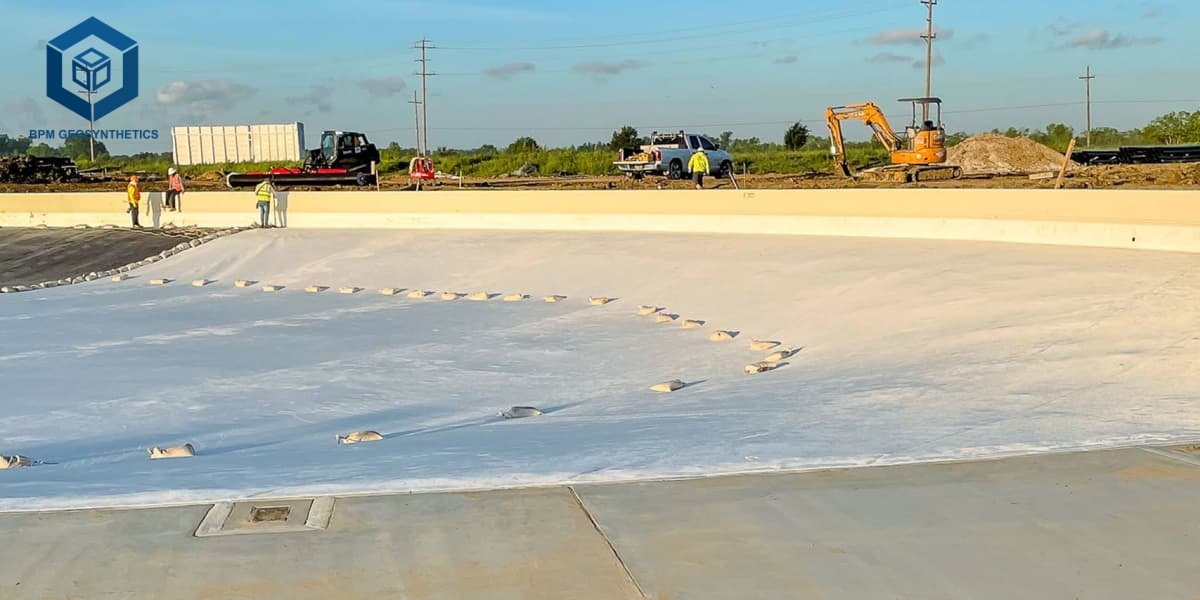
Simply tossing crushed stone on the ground won't build you a gravel driveway that keeps in good repair with bare minimum upkeep. Geotextile fabric, the most essential yet usually ignored layer of your driveway is under the surface. This special textile acts almost invisibly as the stabilizing layer that keeps the loose subsoil separated from the gravel base.
Disregarding this layer, the heavy constant traffic will press the costly gravel down into the soft mud thereby forming potholes and turning your neat driveway into a muddy mess after every rainfall. A proper geotextile will help you exclude the intermixing of soils, increase the distribution of loads, restrain the growth of aggressive weeds, and allow for good drainage.
Here, we analyze the 8 best geotextile fabric for gravel driveway that are ruling the market right now for residential, agricultural, and heavy commercial gravel driveways.
1. The 8 Best Geotextile Fabric for Gravel Driveway
1.1 BPM Geosynthetics Driveway Fabric – The Heavy-Duty Workhorse
If you are worried about heavy, repeated traffic, then BPM heavy-duty driveway fabric is your impeccable heavy-duty solution. Made of high-density polyethylene, it remains remarkably strong in terms of tear resistance and elasticity to conform to uneven grounds. With dimensions of 13 ft × 115 ft, it easily manages to cover large areas reducing the number of overlaps that are necessary.
- Key Feature: Its very good permeability means that water does not collect on the surface making it a superb fabric for the driveways that are combined with French drains. Best geotextile fabric for driveway offers a perfect mix of being highly durable while still supporting the breathability of the soil underneath.
1.2 VEVOR Woven Geotextile Fabric (5 oz) – Precision Meets Strength
VEVOR is a leader in the industrial tools sector, and their 5 oz woven geotextile is certainly worthy of all the praise. Made from a very dense polypropylene, it features not only superior strength to tears but also resistance to corrosion.
- Key Feature: By employing modern ultrasonic cutting equipment, VEVOR manages to cut down rough, fraying edges thus making installer be able to get a clean job with no hassle. It has great permeability and hence it really helps in maintaining the soil dead by allowing the passing of both air and water but on the other hand, it also stops soil particles from escaping through the drainage system.
1.3 Forimo Landscape Fabric (3.5 oz) – The Flexible Stabilizer
Often you might not need a heavy 5 oz fabric for your driveway. Forimo 3.5 oz landscape fabric is just the right amount of both toughness and easiness in terms of work properties for DIYers and locations with slopes.
- Key Feature: Being a woven fabric of polypropylene, it can be bent without the loss of strength and other properties and thus it is perfectly suitable for curvy and winding routes. The dimensions are very handy, 13 ft × 115 ft, and this is one of the best materials for soil stabilization on the slope that, on the one hand, prevents the erosion of the soil down the slope, and, on the other, still allows nutrients and water to penetrate the ground.
1.4 REKVEN Driveway Landscaping Fabric – The Turnkey Solution
Installing geotextiles is made even more difficult because of the trouble that wind causes when one is trying to keep one’s work from blowing away. REKVEN has thought it over and has packed 50 lockable professional-grade anchor nails with the rolls of 12.5 ft × 50 ft heavy-duty woven fabric to help you get the job done fast and easy.
- Key Feature: Give a thought to the fact that a lot of people use this fabric simply because it is meant for rock-hard landscaping. It does a very good job of keeping soil apart and at the same time, it also acts as a filtration barrier. This proactive restriction of surface rut formation is only one of the many functions of the fabric that also acts as a solid weed blocker hence your driveway will remain free from those pesky invasive grass and weeds without you having to resort to chemically treating the area.
1.5 VEVOR Non-Woven Geotextile Fabric (8 oz) – The Ultimate Erosion Barrier
Going for a heavier material, VEVOR’s 8 oz non-woven polypropylene fabric is made for the most demanding situations. Woven fabrics are mainly about tensile strength, while non-woven ones are better at filtration and separation.
- Key Feature: This fabric has an approximate tensile strength of 350N, is highly resistant to tearing and moisture, and allows the free passage of water while trapping even the finest particles of soil. It is the preferred option for elongated driveways which have a tendency to develop stagnant water or mud spots after heavy rains.
1.6 Super Geotextile Woven Fabric (4 oz) – The Half-Century Performer
Durability is the major advantage of this item. Sold as a genuine 4 oz woven polypropylene fabric, it can last even up to 50 years if it is buried under the aggregate, as the manufacturer claims.
- Key Feature: Being made of woven threads, it offers very good dimensional stability meaning that it hardly stretches or shifts even under very heavy loads from vehicles. This fabric also helps you reduce the number of seams in your project which means that, even if it is used for the construction of a long rural lane or permanent paver base, the number of weak points potentially leading to weed sprouting is kept to a minimum.
1.7 Sandbaggy Woven Geotextile Fabric (4 oz) – Industrial-Grade Toughness
Sandbaggy is a brand that has been identified with tough outdoor gear, so their 4 oz geotextile fabric is resistant enough even for private driveways. Having a tensile strength of 200 lbs and are resistant to puncture of up to 700 lbs, it is ready to take a beating.
- Key Feature: Field Tests suggest that the fabric can even handle a 7,000 lb forklift standing directly on it without tearing. Being a strict adhere to AASHTO standards and also meeting NTPEP requirements, it is a favorite among contractors who are unwilling to sacrifice structural road stability.
1.8 Mychoiii Driveway Fabric (5 oz) – Maximum Load Distribution
mychoiii is a company that caters to residential apartments with heavy trucks or regular deliveries with their 5 oz woven polypropylene fabric specifically designed for ground stabilization of rough terrain.
- Key Feature: This fabric, with a tensile strength rating of 800 lbs, can increase the shear strength of the soil when it is underneath. Also, by spreading the vertical heaviness of vehicles over a larger horizontal plane, it can almost completely prevent the formation of localized sinking holes and deep ruts.
2. Critical Buying Considerations: What the Specs Mean for Your Driveway?
In order to choose the best product for your project, you must consider these engineering concepts:
2.1 Fabric Weight (Ounces per Square Yard):
This indicates strength. At 3.5 oz 5 oz, a fabric is sufficient for standard residential cars and pickups. To handle heavier machinery, farm equipment, or high-traffic commercial zones, you should go for an 8 oz or higher-level non-woven industrial fabric.
2.2 Woven vs. Non-Woven:
Woven fabrics are made by interlocking threads and they concentrate on separation and reinforcement which is excellent for preventing soil from getting mixed with gravel. On the other hand, non-woven fabrics are made from needle-punched fibers and they focus on filtration and drainage which makes them outstanding in the case of poorly drained areas or heavy clay soils.
2.3 UV Resistance:
Geo fabric degrade rapidly under direct sunlight. Always choose a UV-stabilized fabric and ensure you bury it completely under at least 3 inches of gravel immediately after unrolling it. Exposure can drop a fabric's lifespan from 50 years to less than one.
3. What Happens If You Don't Use the Best Geotextile Fabric for Your Gravel Driveway?
3.1 Gravel Sinks into the Soil
It's the gravel that compacts into the soft soil of the subgrade under the pressure of vehicles if there is no good quality geotextile separator. As time passes, the driveway becomes thinner and less stable, which results in uneven surfaces and more gravel being used. In fact, soft clay and wet soil conditions can quicken this process which may lead to the property owners having to add gravel quite often for maintenance purposes.
3.2 Potholes and Surface Rutting Develop Quickly
When a layer of stabilization is lacking under the gravel, continuous traffic will cause wheel ruts and potholes. The presence of rainwater speeds up the breaking down of the surface by softening the soil and washing away the particles that hold the soil together. As the surface becomes weaker, driving becomes less comfortable and a driveway that has a smooth surface will require frequent repairs.
3.3 Poor Drainage Causes Muddy Conditions
When a driveway is not provided with a suitable geotextile drainage fabric, water may remain trapped within the soil structure. On heavy rains, water can gather under the gravel layer and cause the surface to be muddy and unstable. An overabundance of moisture can also result in the weakening of the subgrade and the reduction of the overall load-bearing capacity of the driveway.
3.4 Gravel Mixing with Subsoil Reduces Driveway Strength
The base of gravel without separation fabric gets mixed up directly with clay, sand, or soft soil from beneath. Such contamination leads to reduction in the load-bearing capacity of the driveway and makes the driveway less durable. Besides, the gravel gradually loses its structural integrity and its ability to effectively support vehicular traffic becomes compromised.
3.5 Increased Maintenance and Repair Costs
Typical gravel driveways lacking geotextile filter fabric reinforcement need regrading more frequently, and they also require more gravel replacement and pothole repairs. So, in the long run, the costs of maintenance may outweigh the limited savings one would have made initially by foregoing the geotextile fabric under gravel layer. Additionally, property owners might find themselves investing more of their time controlling weeds and solving drainage issues.
3.6 Weed and Grass Growth Becomes Difficult to Control
Weeds and grasses can easily grow through a gravel driveway that has not been treated. Top-of-the-line non woven filter fabric, on the other hand, is a great weed-blocking agent but it also allows for water permeability. In the absence of such a barrier, vegetation may rapidly spread across a driveway and bring about deterioration to both its look and functionality.
3.7 Heavy Vehicles Cause Structural Failure
Heavy-duty vehicles such as trucks, tractors, trailers, and other machinery, exert very high pressures at the point of contact on gravel driveways. When one is not supported by a strong, woven geotextile, the surface will tend to develop cracks, get deformed, and depressed areas may form due to the carrying of heavy loads time after time. In extreme cases, very deep ruts and the unevenness of settlements can arise which might lead to the driveway becoming unsafe for use on a regular basis.
3.8 Erosion Problems Appear on Sloped Driveways
The gravel can be washed away along with soil particles as a result of rain on sloped land. Non woven geotextile drainage fabric is key in helping the stabilization of the aggregate layer and prevention of erosion caused by stormwater runoff. Failure to stabilize properly will result in displacements of gravel and washouts which will in turn contribute to a gradual damage of the driveway structure.
3.9 Frost Heave Damage in Cold Regions
Moisture that is trapped under the driveway in freezing environments freezes and expands during the winter. The lack of geotextile drainage and separation results in frost heave producing cracks and lifting the gravel surface. Moreover, the alternating cycles of freezing and thawing lead to the formation of uneven areas which, over time, necessitate costly repairs.
3.10 Shortened Driveway Lifespan
A gravel driveway built without proper geotextile underlayment reinforcement may deteriorate within only a few years. Problems such as gravel loss, potholes, poor drainage, and erosion continuously weaken the structure. Using the best geotextile fabric for gravel driveway applications significantly improves durability, stability, and long term performance while reducing maintenance requirements.
Conclusion
Investing in the right geotextile cuts gravel costs, reduces maintenance, and ensures your gravel driveway stays smooth and stable for decades. Match the fabric to your traffic, soil, and climate, and you’ll avoid the most common gravel driveway pitfalls.
As Geotextile fabric of The Best Project Material Co., Ltd.(BPM Geosynthetics) already developing more than 20years , BPM Geosynthetics always been committed to the productions , research and development , sales and service of geotechnical materials . with high quality products and professional sales and after sales teams .BPM geotextile has passed the ISO9001 quality management system , ISO14001 environmental management system , ISO45001 occupational health system certification , and passed Soncap , SAAO and BV certification and SGS and intertek tests , BPM Geosynthetics geotextile have reached the world leading level . can widely used in aquaculture soil erosion resistance .drainage systems , mining etc . BPM are willing to become your partners with high cost performance , innovative geomembrane and geosythetic products , excellent quality and perfect after sale service, join BPM Geosynthetics , win our future.