Hdpe liner cracking after one year
In environmental containment systems such as landfills, mining ponds, wastewater lagoons, and agricultural reservoirs, HDPE geomembrane liners are widely used due to their chemical resistance and long service life. However, some projects report hdpe liner cracking after one year, which raises serious concerns for project owners, EPC contractors, and procurement teams.
Early cracking is typically not caused by the base polymer alone but by a combination of environmental stress cracking, installation defects, poor subgrade preparation, or improper material selection. Understanding the engineering mechanisms behind hdpe liner cracking after one year allows project stakeholders to identify failure risks early and implement corrective actions.
Product Definition
HDPE liners are high-density polyethylene geomembranes designed to provide long-term impermeable barriers in containment systems. When hdpe liner cracking after one year occurs, it typically indicates environmental stress cracking, UV degradation, excessive mechanical stress, or substandard material properties affecting liner durability.
Technical Parameters and Specifications
To prevent premature failures such as hdpe liner cracking after one year, geomembrane materials must meet strict engineering specifications defined by international standards.
| Parameter | Typical Value | Test Standard |
|---|---|---|
| Density | ≥0.94 g/cm³ | ASTM D1505 |
| Thickness Range | 0.75 mm – 2.5 mm | ASTM D5199 |
| Tensile Strength | ≥27 MPa | ASTM D6693 |
| Elongation at Break | ≥700% | ASTM D6693 |
| Environmental Stress Crack Resistance (ESCR) | ≥500 hours | ASTM D5397 |
| Carbon Black Content | 2–3% | ASTM D4218 |
| Oxidative Induction Time | ≥100 minutes | ASTM D3895 |
When materials fail to meet ESCR or antioxidant requirements, the likelihood of hdpe liner cracking after one year increases significantly.
Structure and Material Composition
HDPE geomembrane liners are composed of carefully engineered polymer formulations designed to resist environmental degradation.
High-density polyethylene polymer – primary structural material
Carbon black stabilizer – protects against UV radiation
Antioxidant additives – prevent thermal oxidation
Processing stabilizers – improve manufacturing consistency
Optional textured surface – increases slope friction stability
Improper formulation or poor additive dispersion can accelerate aging and lead to hdpe liner cracking after one year in harsh environments.
Manufacturing Process
High-quality HDPE geomembranes are produced through a controlled extrusion manufacturing process designed to maintain polymer integrity.
Raw material batching
Virgin HDPE resin and additives are precisely proportioned.Extrusion compounding
Twin-screw extruders melt and homogenize the polymer mixture.Flat-die sheet extrusion
Molten polymer is extruded into continuous sheets.Calender cooling
Cooling rollers stabilize thickness and surface quality.Online thickness monitoring
Sensors ensure consistent sheet thickness.Quality inspection
Mechanical testing verifies compliance with ASTM standards.
Strict manufacturing control is essential to minimize the risk of hdpe liner cracking after one year due to material defects.
Industry Comparison
| Liner Material | Crack Resistance | Chemical Resistance | Service Life | Typical Applications |
|---|---|---|---|---|
| HDPE Geomembrane | High | Excellent | 20–50 years | Landfills, mining |
| LLDPE Geomembrane | Very High | Good | 20–40 years | Reservoirs, canals |
| PVC Liner | Moderate | Moderate | 10–20 years | Decorative ponds |
| Concrete Lining | Low | High | 30+ years | Structural containment |
Application Scenarios
Understanding the risk of hdpe liner cracking after one year is particularly important in large-scale containment projects:
Municipal landfill liner systems
Mining heap leach pads
Industrial wastewater lagoons
Agricultural irrigation reservoirs
Aquaculture ponds
Chemical storage containment basins
These projects require high liner reliability due to strict environmental regulations.
Core Problems and Engineering Solutions
1. Environmental Stress Cracking
Long-term mechanical stress combined with chemical exposure may cause micro-cracks.
Solution: Select geomembranes with high ESCR values and proper thickness.
2. UV Degradation
Insufficient carbon black content accelerates polymer degradation.
Solution: Use UV-stabilized geomembranes meeting ASTM carbon black standards.
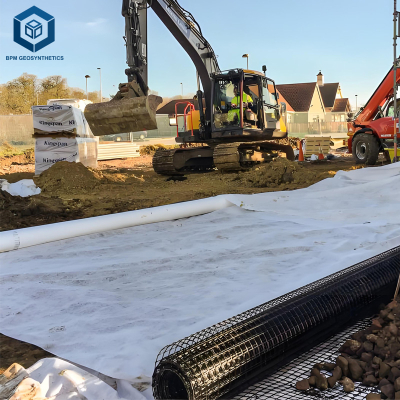
3. Subgrade Puncture Stress
Sharp stones or poor base preparation create localized stress points.
Solution: Install protective geotextile cushioning layers.
4. Thermal Expansion and Contraction
Large temperature fluctuations may induce stress cracking.
Solution: Allow expansion slack and avoid installation during extreme temperatures.
Risk Warnings and Avoidance Strategies
Avoid installing liners on poorly prepared subgrades.
Verify ESCR values in manufacturer test reports.
Store geomembrane rolls away from direct sunlight before installation.
Ensure proper welding and installation procedures.
Conduct periodic inspections during the first year of operation.
Following these measures reduces the probability of hdpe liner cracking after one year in containment systems.
Procurement and Selection Guide
Define project environmental conditions and chemical exposure.
Select geomembrane thickness appropriate for mechanical loads.
Verify ESCR and oxidative stability test results.
Confirm manufacturer compliance with ASTM and GRI standards.
Evaluate installation contractor qualifications.
Request sample materials for laboratory testing.
Ensure availability of technical installation support.
Engineering Case Study
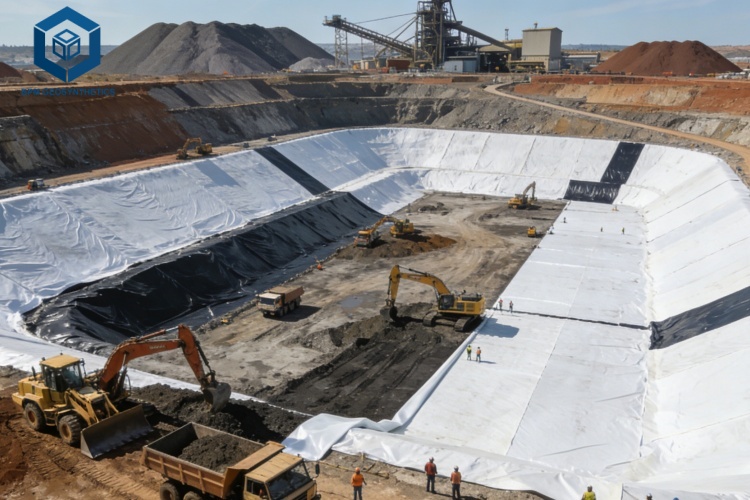
A mining wastewater containment pond used a 1.0 mm HDPE geomembrane liner over a 25,000 m² area. Within the first operational year, inspection revealed localized hdpe liner cracking after one year along high-stress zones near the pond slopes.
Engineering investigation identified two primary causes:
Insufficient ESCR rating of the liner material
Sharp subgrade aggregates without protective geotextile
Corrective measures included:
Installing a 300 g/m² nonwoven geotextile protection layer
Replacing affected liner panels with 1.5 mm HDPE geomembrane
Improving subgrade compaction and surface smoothing
After remediation, the liner system successfully passed leak detection testing.
FAQ
1. Why does hdpe liner cracking after one year occur?
Common causes include environmental stress cracking, UV degradation, and mechanical stress.
2. Is early cracking common in HDPE liners?
No. Properly manufactured and installed liners typically last decades.
3. How can stress cracking be prevented?
By selecting liners with high ESCR ratings and proper thickness.
4. Does liner thickness affect cracking risk?
Yes. Thicker liners generally provide higher resistance to stress cracking.
5. What role does carbon black play?
Carbon black protects HDPE from UV degradation.
6. Can cracked liners be repaired?
Yes, localized cracks can be patched using extrusion welding.
7. Should geotextiles be installed under liners?
Yes, they protect liners from puncture and stress concentration.
8. How long should HDPE liners last?
Typically 20–50 years depending on environmental conditions.
9. How are cracks detected?
Visual inspections and electrical leak detection surveys are commonly used.
10. What standards govern HDPE geomembrane quality?
ASTM and GRI standards are widely used for testing and certification.
Request Technical Documentation or Engineering Samples
For containment projects requiring HDPE geomembrane liners, engineering teams and procurement managers may request:
Material technical data sheets
ASTM laboratory test reports
Installation and welding guidelines
Engineering evaluation samples
Contact our technical team to obtain detailed specifications, project consultation, and pricing proposals.
E-E-A-T Author Expertise
This technical guide was prepared by engineers specializing in geomembrane materials and environmental containment systems. The author team has participated in landfill, mining, and wastewater infrastructure projects across international markets, providing engineering consulting and material selection support for large-scale containment installations.