Geomembrane seam failure causes
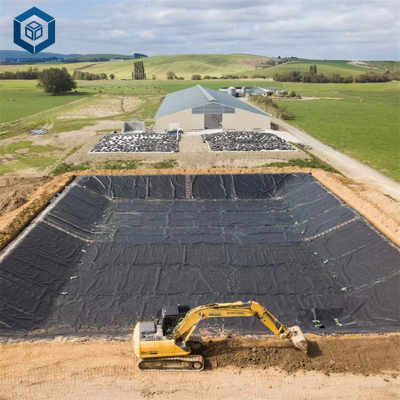
In environmental containment systems such as landfills, mining leach pads, wastewater lagoons, and industrial reservoirs, the geomembrane liner functions as the primary impermeable barrier. However, many containment failures originate not from the liner sheet itself but from seam defects. Understanding geomembrane seam failure causes is therefore critical for EPC contractors, procurement managers, and engineering consultants responsible for long-term environmental safety.
Seam failures can lead to fluid leakage, regulatory violations, and costly remediation work. Proper material selection, welding procedures, inspection protocols, and installation management are essential to mitigate the primary geomembrane seam failure causes observed in large-scale containment projects.
Product Definition
Geomembrane seams are welded joints connecting adjacent geomembrane sheets to form a continuous impermeable barrier. When seam integrity is compromised due to poor welding conditions, material incompatibility, or mechanical stress, it results in leakage or structural failure. Identifying geomembrane seam failure causes is essential for maintaining liner system performance.
Technical Parameters and Specifications
Engineering performance of geomembrane seams is evaluated through standardized mechanical and welding tests to prevent geomembrane seam failure causes during project operation.
| Parameter | Typical Value | Test Standard |
|---|---|---|
| Geomembrane Thickness | 0.75 mm – 2.5 mm | ASTM D5199 |
| Seam Shear Strength | ≥90% of sheet strength | ASTM D6392 |
| Seam Peel Strength | ≥70% of sheet strength | ASTM D6392 |
| Welding Temperature | 220°C – 450°C | Equipment dependent |
| Seam Width | 10 mm – 15 mm | Industry practice |
| Air Channel Pressure Test | 200–300 kPa | ASTM D5820 |
Projects experiencing leakage frequently trace the issue back to one or more of these critical seam performance parameters.
Structure and Material Composition
Typical geomembrane liner systems consist of the following engineered components:
Polymer membrane layer – HDPE, LLDPE, PVC, or EPDM materials
Dual-track welded seam – two parallel welds forming an air channel
Air testing channel – enables pressure testing of seam integrity
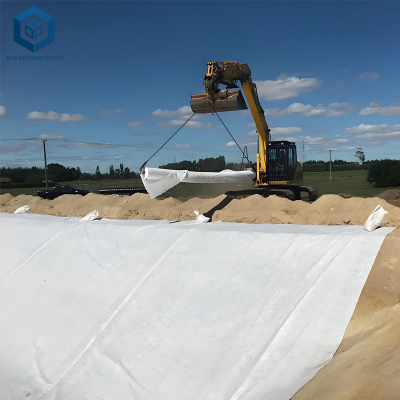
Protective geotextile layer – prevents puncture from subgrade materials
Subgrade foundation – compacted soil or engineered base
Weak seam formation within this system is one of the most frequent geomembrane seam failure causes encountered during field inspections.
Manufacturing and Welding Process
Although geomembrane sheets are factory manufactured, seams are typically formed on-site during installation. The following engineering process ensures proper seam formation.
Subgrade preparation
Surface is graded, compacted, and cleared of debris that could affect seam alignment.Panel deployment
Geomembrane rolls are unrolled and aligned with overlapping edges.Hot wedge welding
Automated hot wedge welders create dual-track seams with controlled temperature and pressure.Extrusion welding (detail areas)
Used for repairs, pipe penetrations, and corners.Non-destructive testing
Air pressure testing, vacuum box testing, or spark testing verify seam integrity.Quality documentation
Seam samples are collected for destructive laboratory testing.
Improper welding parameters or inadequate testing remain the most common geomembrane seam failure causes in field installations.
Industry Comparison
| Liner Type | Seam Reliability | Welding Method | Risk of Seam Failure | Typical Applications |
|---|---|---|---|---|
| HDPE Geomembrane | Very High | Hot wedge welding | Low (if installed correctly) | Landfills, mining |
| LLDPE Geomembrane | High | Hot wedge welding | Medium | Reservoirs, canals |
| PVC Geomembrane | Moderate | Solvent welding | Medium | Water features |
| EPDM Rubber | Moderate | Adhesive seam | Higher | Ponds, landscaping |
Application Scenarios
Understanding geomembrane seam failure causes is especially important in projects involving critical containment systems.
Municipal landfill liners
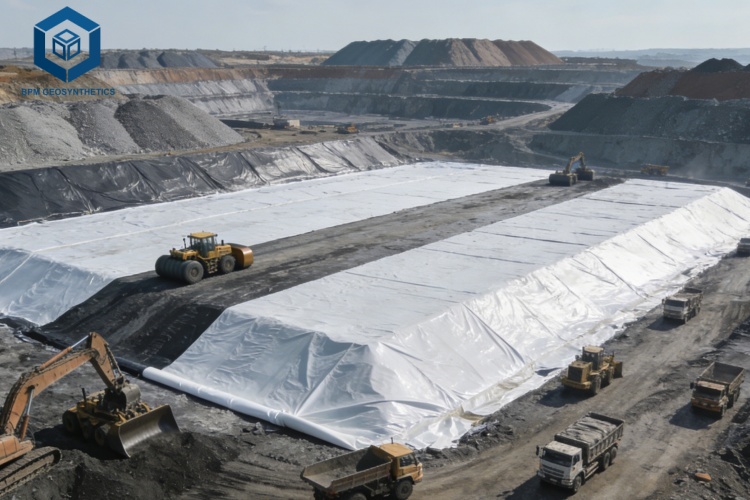
Mining heap leach pads
Industrial wastewater lagoons
Oil and gas containment basins
Agricultural irrigation reservoirs
Chemical storage facilities
These applications require strict seam inspection protocols due to potential environmental consequences of liner leakage.
Core Problems and Engineering Solutions
1. Improper Welding Temperature
If welding temperature is too low or too high, seam bonding becomes weak or brittle.
Solution: Calibrate welding equipment daily and conduct trial welds before installation.
2. Contaminated Seam Surfaces
Dust, moisture, or soil between overlapping panels prevents proper fusion.
Solution: Clean seam areas before welding and avoid installation during rain or high winds.
3. Inadequate Welding Pressure
Insufficient pressure reduces fusion strength.
Solution: Maintain consistent roller pressure in automated welding machines.
4. Thermal Stress After Installation
Temperature changes cause expansion and contraction stresses along seams.
Solution: Install liners during moderate temperatures and allow for expansion.
Risk Warnings and Avoidance Strategies
Avoid installing geomembranes during extreme weather conditions.
Use certified geomembrane welding technicians.
Perform non-destructive testing on every seam section.
Conduct destructive seam testing at regular intervals.
Ensure proper liner storage before installation.
Ignoring these precautions significantly increases the probability of geomembrane seam failure causes affecting project performance.
Procurement and Selection Guide
Identify regulatory standards applicable to the containment project.
Select geomembrane thickness appropriate for mechanical loading conditions.
Verify manufacturer certifications such as ASTM or GRI compliance.
Evaluate welding equipment compatibility.
Review seam testing requirements specified by the project engineer.
Request technical documentation and installation guidelines.
Ensure contractor experience with similar liner systems.
Engineering Case Study
A mining heap leach project required installation of a 1.5 mm HDPE geomembrane liner across a 30,000 m² containment pad. During commissioning, leak detection surveys identified several weak seam sections caused by inconsistent welding speed.
Investigation confirmed that the primary geomembrane seam failure causes were welding temperature fluctuations and operator error.
Corrective actions included:
Re-welding defective seams using calibrated automated welders
Conducting vacuum box testing across all repaired seams
Implementing continuous welding temperature monitoring
Providing additional training for installation personnel
After remediation, the liner system passed integrity testing and entered full operational use.
FAQ
1. What are the main geomembrane seam failure causes?
Welding defects, contamination, inadequate pressure, and thermal stress.
2. How are seam defects detected?
Common methods include air pressure testing, vacuum box testing, and electrical leak location surveys.
3. Can seam failures be repaired?
Yes, defective seams can be repaired using extrusion welding or patching.
4. Does liner thickness affect seam strength?
Yes, thicker liners generally provide stronger seams when welded correctly.
5. What is dual-track welding?
A welding method that creates two parallel seams with an air channel for testing.
6. Why is seam testing important?
It verifies seam integrity before the containment system becomes operational.
7. How often should destructive seam testing occur?
Typically every 150–300 meters of seam or as specified by the engineer.
8. What environmental factors affect seam quality?
Temperature, wind, dust, and moisture can influence welding performance.
9. Who should perform geomembrane welding?
Only certified geomembrane installation technicians.
10. What standards regulate seam testing?
ASTM D6392 and ASTM D5820 are widely used testing standards.
Request Technical Documentation or Project Samples
Engineering teams, contractors, and procurement managers can request the following support materials:
Geomembrane product specifications
Seam welding guidelines
Material test certificates
Engineering samples for evaluation
Contact our technical department to obtain project-specific recommendations and pricing proposals.
E-E-A-T Author Expertise
This article was prepared by civil engineering specialists and polymer materials engineers with extensive experience in geomembrane manufacturing and containment system installation. The team has participated in landfill, mining, and wastewater infrastructure projects across multiple international engineering markets.