Hdpe geomembrane leaking after installation
In containment engineering projects such as landfills, mining ponds, wastewater lagoons, and aquaculture reservoirs, HDPE geomembrane leaking after installation is a critical risk that can compromise environmental protection, structural safety, and long-term operational performance. Understanding the engineering causes, material properties, welding quality requirements, and inspection procedures is essential for contractors, EPC firms, and procurement teams.
Product Definition
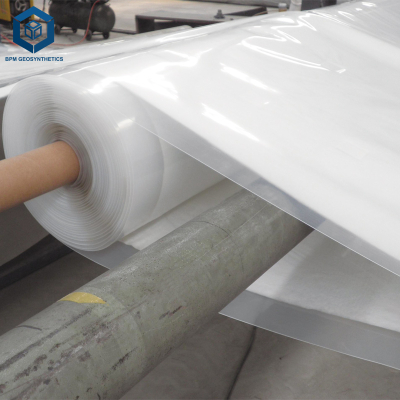
HDPE geomembrane is a high-density polyethylene impermeable liner widely used in environmental and civil engineering containment systems. When HDPE geomembrane leaking after installation occurs, it typically indicates defects related to welding, subgrade preparation, material quality, or mechanical damage during installation or operation.
Technical Parameters and Specifications
| Parameter | Typical Value | Test Standard |
|---|---|---|
| Thickness | 0.5 mm – 3.0 mm | ASTM D5199 |
| Density | ≥0.94 g/cm³ | ASTM D1505 |
| Tensile Strength | ≥27 MPa | ASTM D6693 |
| Elongation at Break | ≥700% | ASTM D6693 |
| Puncture Resistance | ≥480 N | ASTM D4833 |
| Carbon Black Content | 2.0–3.0% | ASTM D4218 |
| Oxidative Induction Time | ≥100 minutes | ASTM D3895 |
Projects experiencing HDPE geomembrane leaking after installation often reveal deviations in welding strength or subgrade conditions rather than failure of the base material itself.
Structure and Material Composition
Typical HDPE geomembrane liner structure includes the following engineered components:
HDPE polymer matrix – high-density polyethylene providing chemical resistance
Carbon black stabilizer – UV protection and durability
Antioxidants – thermal aging resistance
Processing stabilizers – improve extrusion performance
Surface textures (optional) – improve friction on slopes
Material formulation stability plays a role in preventing long-term cracking that could lead to HDPE geomembrane leaking after installation in aggressive environments.
Manufacturing Process
Industrial production of HDPE geomembranes typically follows these engineering steps:
Raw material preparation
Virgin HDPE resin, carbon black masterbatch, and stabilizers are proportioned using automated dosing systems.Extrusion compounding
Twin-screw extruders melt and homogenize the polymer mixture.Flat die extrusion
The molten material is extruded through a flat die to form continuous sheets.Calender cooling
Cooling rollers control thickness and surface uniformity.Thickness measurement
Online sensors ensure tolerance within ±5%.Quality inspection
Tensile, density, and OIT tests verify product compliance.
Consistent manufacturing quality helps reduce the probability of HDPE geomembrane leaking after installation due to material defects.
Industry Comparison
| Material | Waterproof Performance | Durability | Installation Complexity | Typical Applications |
|---|---|---|---|---|
| HDPE Geomembrane | Excellent | High (20–50 years) | Moderate | Landfills, mining ponds |
| PVC Geomembrane | Good | Medium | Easy | Decorative water features |
| EPDM Rubber | Excellent | High | Easy | Ponds and reservoirs |
| Concrete Lining | Moderate | High | Complex | Structural containment |
Despite superior impermeability, improper welding or subgrade preparation can still result in HDPE geomembrane leaking after installation.
Application Scenarios
HDPE geomembranes are commonly specified in the following projects:
Municipal landfill liners
Mining heap leach pads
Wastewater treatment lagoons
Agricultural irrigation reservoirs
Aquaculture ponds
Industrial chemical containment systems
EPC contractors must implement strict quality control to prevent HDPE geomembrane leaking after installation in these environments.
Core Problems and Engineering Solutions
1. Poor Welding Quality
Insufficient welding temperature or pressure can create weak seams. Solution: Use dual-track hot wedge welders and perform vacuum box testing.
2. Subgrade Preparation Defects
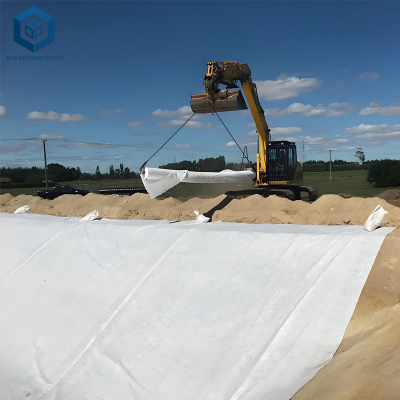
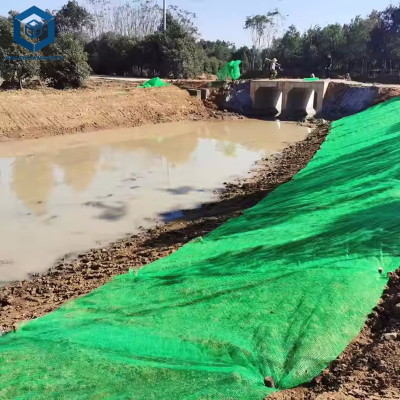
Sharp stones or debris can puncture the liner. Solution: Install a geotextile cushioning layer and ensure subgrade compaction.
3. Mechanical Damage During Installation
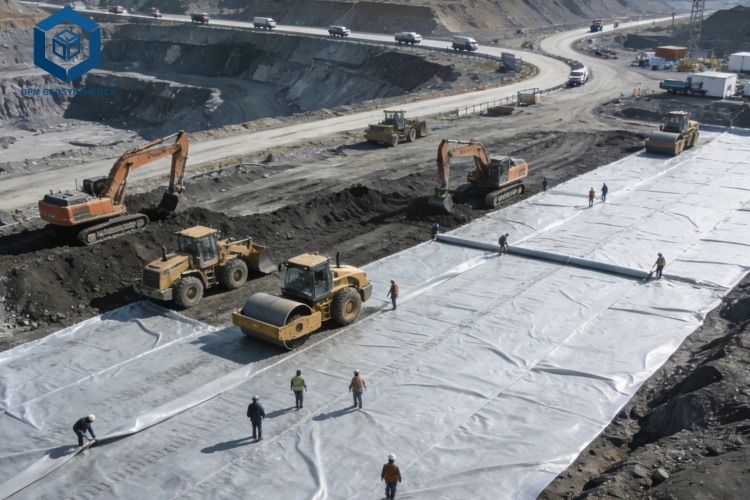
Heavy machinery or improper handling may damage the liner. Solution: Implement traffic control and protective covering.
4. Thermal Expansion Stress
Temperature variations cause membrane expansion and contraction. Solution: Schedule installation during moderate temperatures and allow proper slack.
Risk Warnings and Avoidance Strategies
Avoid installing liners during extreme heat or strong winds.
Ensure welding operators are certified and experienced.
Conduct non-destructive seam testing for every welded section.
Store rolls properly to prevent contamination or deformation.
Inspect the subgrade before liner deployment.
Failure to follow these precautions significantly increases the risk of HDPE geomembrane leaking after installation.
Procurement and Selection Guide
Define project containment requirements and regulatory standards.
Select appropriate geomembrane thickness based on load conditions.
Verify manufacturer compliance with ASTM and GRI standards.
Request quality test reports for each production batch.
Evaluate welding compatibility and installation support.
Inspect packaging and logistics procedures to avoid transport damage.
Confirm availability of technical installation guidance.
Engineering Case Study
A municipal landfill expansion project required installation of a 2.0 mm HDPE geomembrane liner over a 50,000 m² area. Initial leak detection tests identified multiple points where HDPE geomembrane leaking after installation occurred due to inconsistent welding temperatures.
Corrective actions included:
Re-welding defective seams using calibrated hot wedge welders
Conducting spark testing across all seams
Installing additional geotextile protection layers
Implementing stricter welding inspection protocols
After remediation, the liner system passed full integrity testing and resumed operation.
FAQ
1. What causes HDPE geomembrane leaking after installation?
Most leaks result from welding defects, subgrade punctures, or mechanical damage.
2. How are leaks detected?
Common methods include vacuum box testing, spark testing, and electrical leak location surveys.
3. Can damaged seams be repaired?
Yes. Defective seams can be re-welded or patched using extrusion welding.
4. Does liner thickness affect leakage risk?
Thicker liners provide higher puncture resistance but require proper welding.
5. What is the typical service life?
High-quality HDPE geomembranes can last 20–50 years depending on environmental conditions.
6. Are textured liners less prone to leakage?
No. Texture improves friction but does not eliminate seam quality risks.
7. Should a geotextile layer be installed?
Yes, geotextiles protect liners from subgrade puncture.
8. Can leaks occur years after installation?
Yes, particularly if chemical exposure or stress cracking occurs.
9. What testing is required during installation?
Non-destructive seam testing is mandatory for quality assurance.
10. Who should perform installation?
Qualified geomembrane installation contractors with certified welders.
Request Technical Documentation or Project Samples
For engineering projects requiring HDPE geomembrane liners, procurement teams and contractors may request:
Detailed technical specifications
Material test reports
Installation guidelines
Engineering samples for evaluation
Contact our technical team to obtain project-specific recommendations and quotations.
E-E-A-T Author Expertise
This technical guide was prepared by engineers and materials specialists with extensive experience in geomembrane manufacturing, environmental containment systems, and civil infrastructure projects. Our team has supported landfill, mining, and wastewater containment installations across multiple international engineering markets.