Geotextile under geomembrane function and selection guide
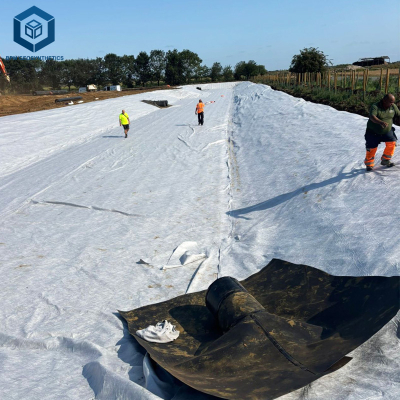
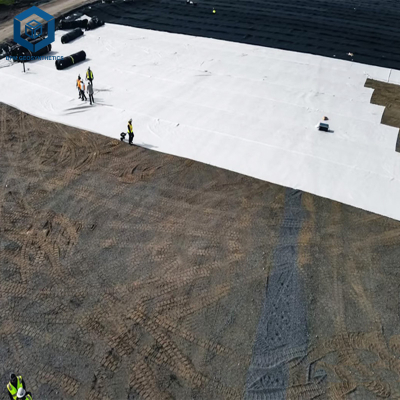
The geotextile under geomembrane function and selection guide explains how nonwoven geotextile is used beneath HDPE geomembranes to provide protection, filtration, drainage, and stress distribution in civil engineering waterproofing systems.
Technical Parameters and Specifications
| Parameter | Typical Range | Engineering Purpose |
|---|---|---|
| Mass per Unit Area | 150 – 1000 g/m² | Protection & cushioning |
| Tensile Strength | 8 – 30 kN/m | Load distribution |
| Elongation | 40% – 120% | Adaptability to deformation |
| Permeability | 10⁻² – 10⁻¹ cm/s | Drainage function |
| Puncture Resistance | 200 – 2000 N | Geomembrane protection |
| Material | Polypropylene (PP) / Polyester (PET) | Durability & chemical resistance |
Structure and Material Composition
Polymer Fibers: PP or PET fibers formed into nonwoven structure
Needle-Punched Layer: Provides mechanical interlocking strength
Optional Thermal Bonding: Enhances dimensional stability
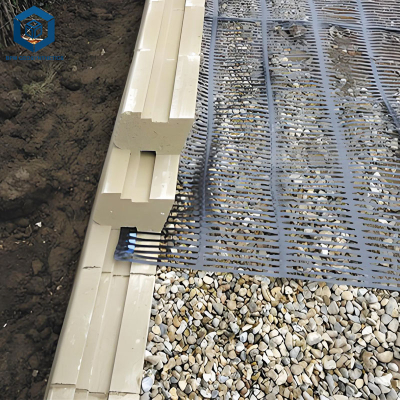
Geotextile Mat: Cushion layer between soil and geomembrane
Manufacturing Process
Raw Material Selection: Virgin PP or PET chips
Fiber Extrusion: Melt spinning into staple fibers
Carding Process: Fiber web formation
Needle Punching: Mechanical bonding into fabric
Heat Setting: Dimensional stabilization
Rolling & Packaging: Controlled tension winding
Industry Comparison Table
| Material | Protection Performance | Drainage | Durability | Engineering Use |
|---|---|---|---|---|
| Nonwoven Geotextile | High | Good | High | Best for geomembrane protection |
| Woven Geotextile | Moderate | Low | High | Reinforcement focus |
| Sand Cushion Layer | Low | Moderate | Low | Traditional but unstable |
| Geonet Composite | Moderate | Excellent | High | Drainage-focused systems |
Application Scenarios
Landfill Engineering: Protecting HDPE liners from puncture damage
Aquaculture Ponds: Cushion layer under geomembrane
Mining Projects: Heap leach pad liner protection
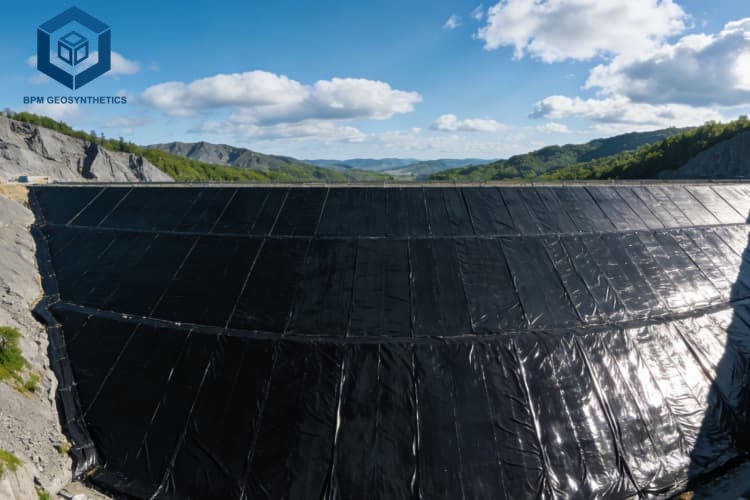
Civil Engineering: Reservoir and canal lining systems
Core Functions and Engineering Value
Puncture Protection: Prevents subgrade stones from damaging geomembrane
Stress Distribution: Reduces localized load concentration
Filtration: Prevents soil particle migration
Drainage Assistance: Allows trapped water to dissipate
Risk Warnings and Avoidance
Insufficient GSM leads to geomembrane puncture failure
Improper overlap causes weak protection zones
Low-quality fiber reduces long-term durability
Incorrect selection increases system failure risk
Procurement and Selection Guide
Identify geomembrane thickness and project type
Evaluate subgrade conditions (rocky, sandy, soft soil)
Select GSM: 200–400 g/m² for ponds, 400–800 g/m² for landfills
Check tensile and puncture resistance values
Verify UV and chemical resistance requirements
Confirm compatibility with HDPE welding system
Request sample testing before bulk procurement
Engineering Case Study
In a 30-hectare landfill project in Southeast Asia, a 600 g/m² nonwoven geotextile was installed beneath a 1.5 mm HDPE geomembrane. The system significantly reduced puncture incidents caused by sharp subgrade materials, improving liner lifespan by over 40% compared to projects without protective geotextile layers.
FAQ
Q1: Why use geotextile under geomembrane?
A: To protect liner from puncture damage.Q2: What GSM is commonly used?
A: 200–800 g/m² depending on project.Q3: Is it mandatory?
A: Not always, but highly recommended.Q4: Can woven geotextile be used?
A: Yes, but nonwoven is preferred for protection.Q5: Does it improve drainage?
A: Yes, it helps water dissipation.Q6: What material is best?
A: Polypropylene or polyester.Q7: Can it replace sand cushion?
A: Yes, more stable and uniform.Q8: How is it installed?
A: Laid directly under geomembrane.Q9: Does thickness matter?
A: Yes, higher GSM = better protection.Q10: Is it UV resistant?
A: Limited, usually covered by liner.
Call to Action
Contact our engineering team for technical datasheets, geotextile selection support, and bulk pricing for geotextile under geomembrane function and selection guide projects. Request samples and installation guidance today.
E-E-A-T Authoritative Statement
This article is prepared by geosynthetics engineering specialists with over 10 years of experience in landfill, mining, aquaculture, and civil engineering waterproofing system design.