Geocell for Slope Protection
Geocell for slope protection is a high-performance cellular confinement system designed to stabilize soil, prevent erosion, and reinforce steep slopes. Made from durable HDPE material, geocells create a strong three-dimensional structure that holds soil, gravel, or vegetation in place, improving long-term slope stability and drainage performance. It is widely used in highway embankments, railway slopes, retaining walls, mining areas, and landscaping projects.
- Excellent Slope Stabilization Performance
- Strong Erosion Control Capability
- High Tensile Strength and Durability
- UV Resistant and Weather Resistant
- Easy Installation and Low Maintenance
- Suitable for Soil, Gravel, and Vegetation Infill
- Ideal for Road, Railway, Riverbank, and Mining Applications
- Cost-Effective Alternative to Traditional Concrete Protection Systems
Geocell for Slope Protection | High-Strength Erosion Control & Soil Stabilization System
1. Geocell for Slope Protection Product Overview
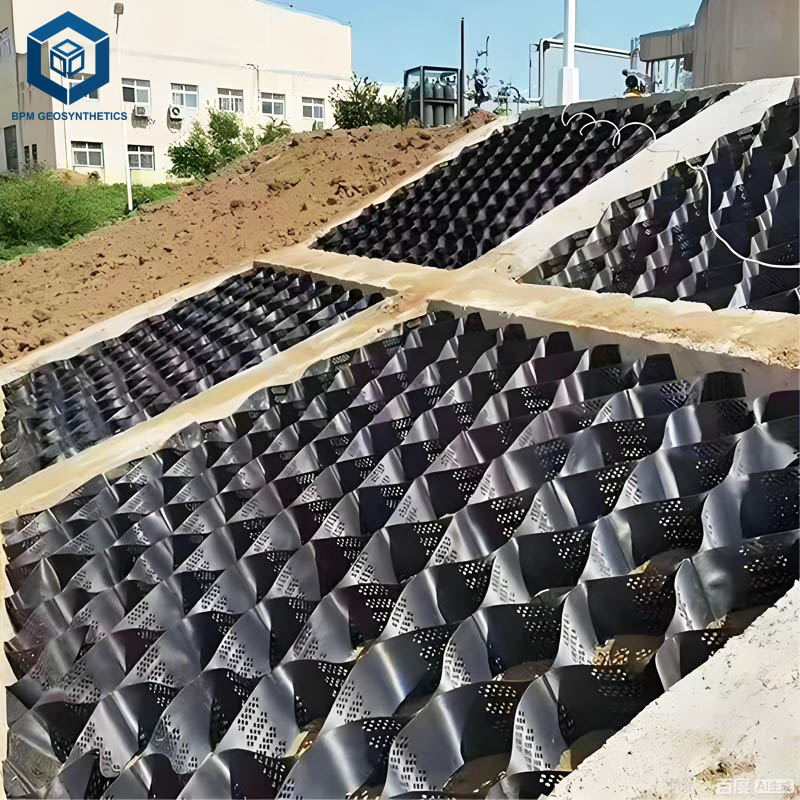
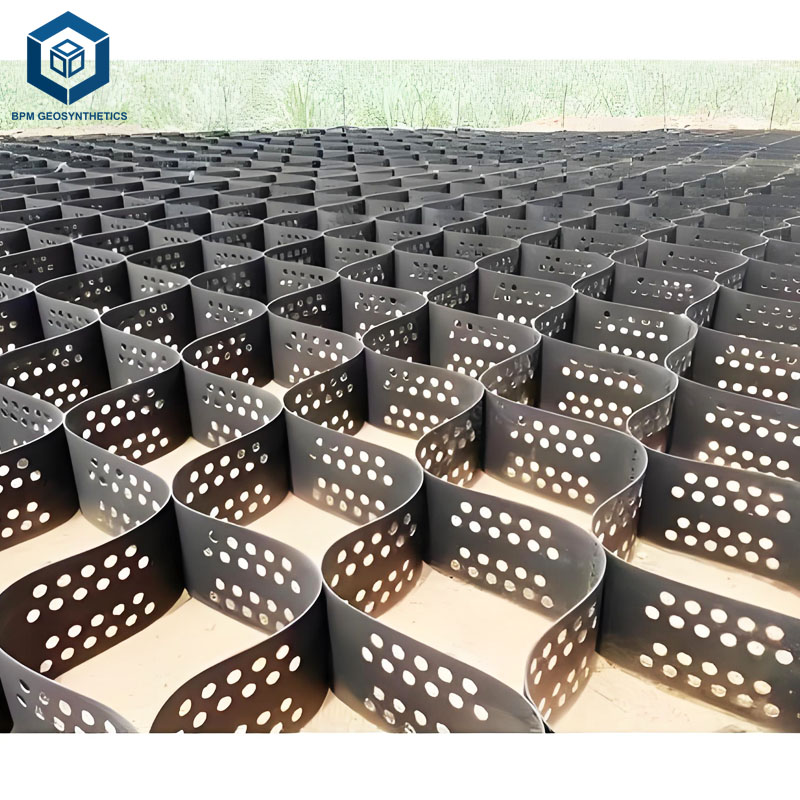
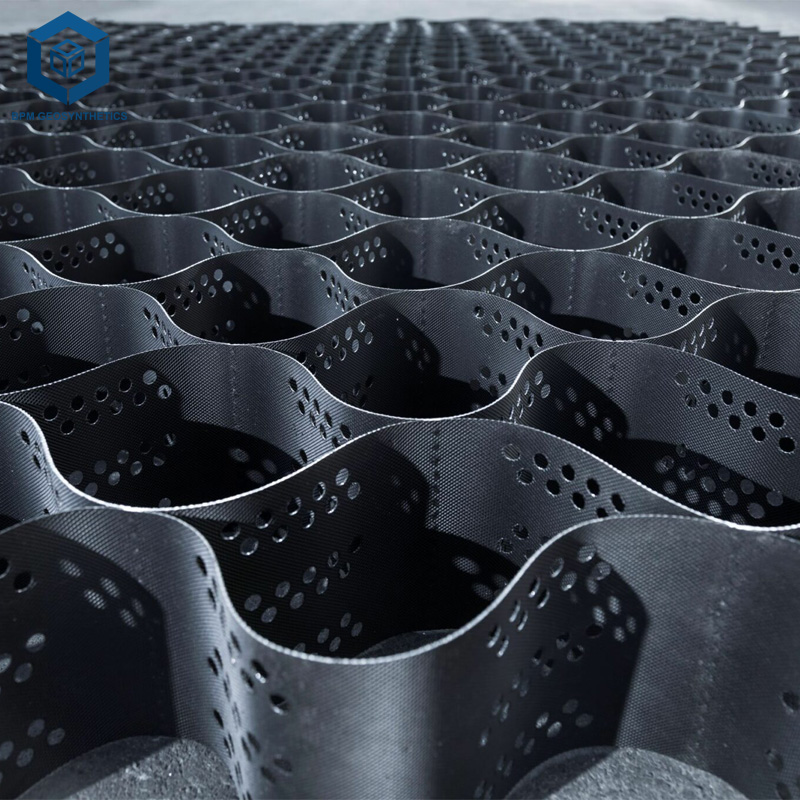
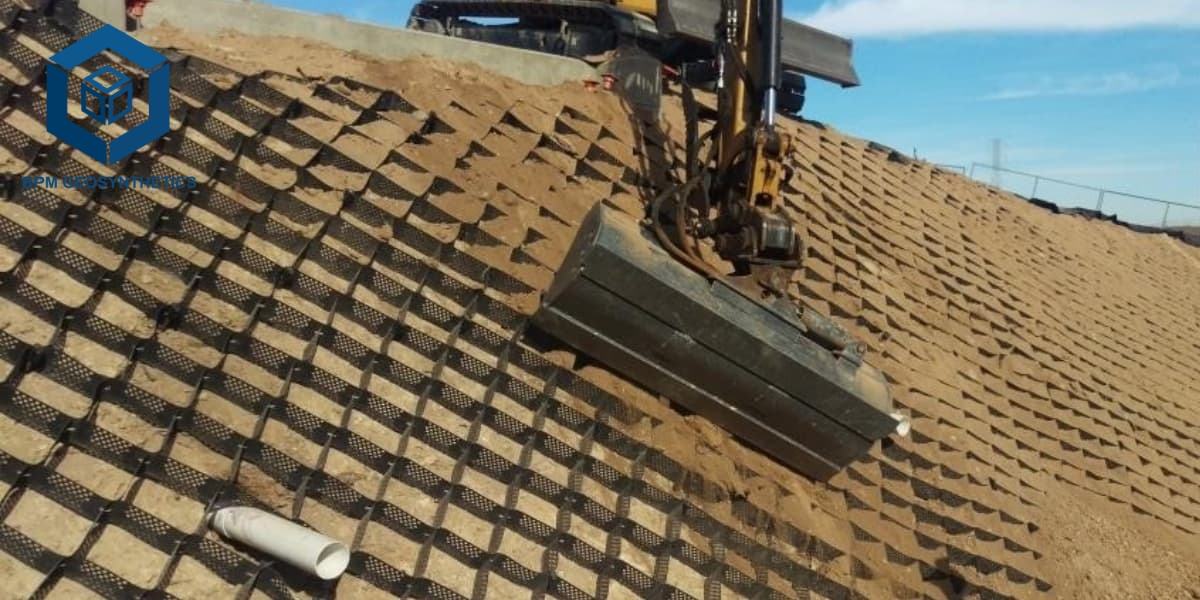
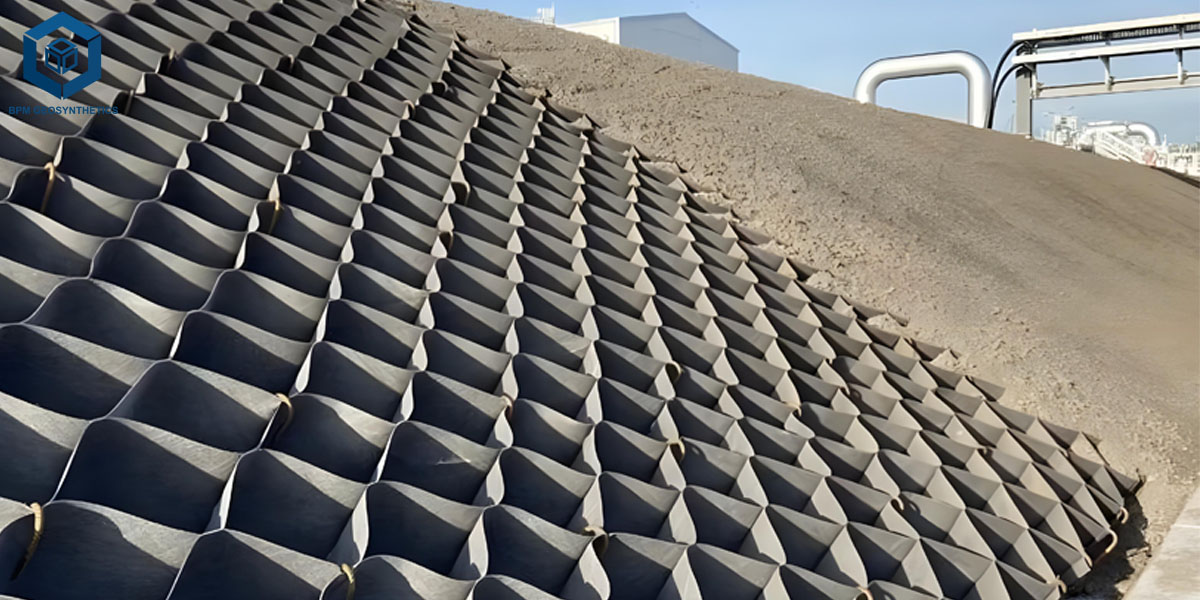
A geocell for slope protection is a three-dimensional honeycomb confinement system that is designed to enhance soil stability, reinforce steep slopes, and prevent erosion caused by water runoff and weather conditions. The material used to make geocells is high-density polyethylene (HDPE).
The structure of a geocell opens up at the location to form a flexible yet very stable cellular grid that locks the filling materials in place. After the system is filled with soil, gravel, or vegetation, the result is a robust composite layer that drastically enhances slope stability along with permitting natural drainage and plant growth.
If we put it simply, a geocell is like a “3D soil lock system” that holds everything together—even on very steep or weak slopes.
2. How Geocell for Slope Protection Works?
The principle behind the geocell system comes down to a simple but very effective cellular confinement mechanism, which changes loose soil or granular materials into a strong and stable structure.
2.1 Step-by-step working principle:
- Transforming HDPE strips into a 3D honeycomb structure
Geo cell panels get delivered in a folded condition. At the job site, they are pulled and stretched to create a flexible honeycomb network, making cells that are interconnected and cover the slope's surface.
- Fixing the system to the slope
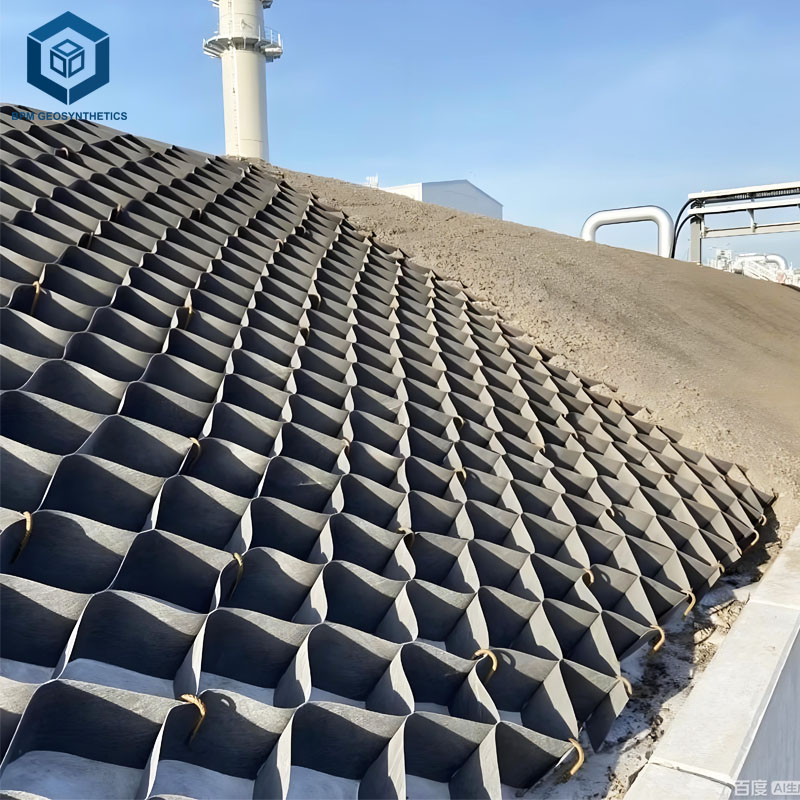
The opened-up geocell gets tightly attached to the ground using steel U-pins, anchors, or tendons. This makes sure that the system stays stable even when the slope is steep or uneven and subjected to gravity and water flow.
- Loading with chosen infill materials
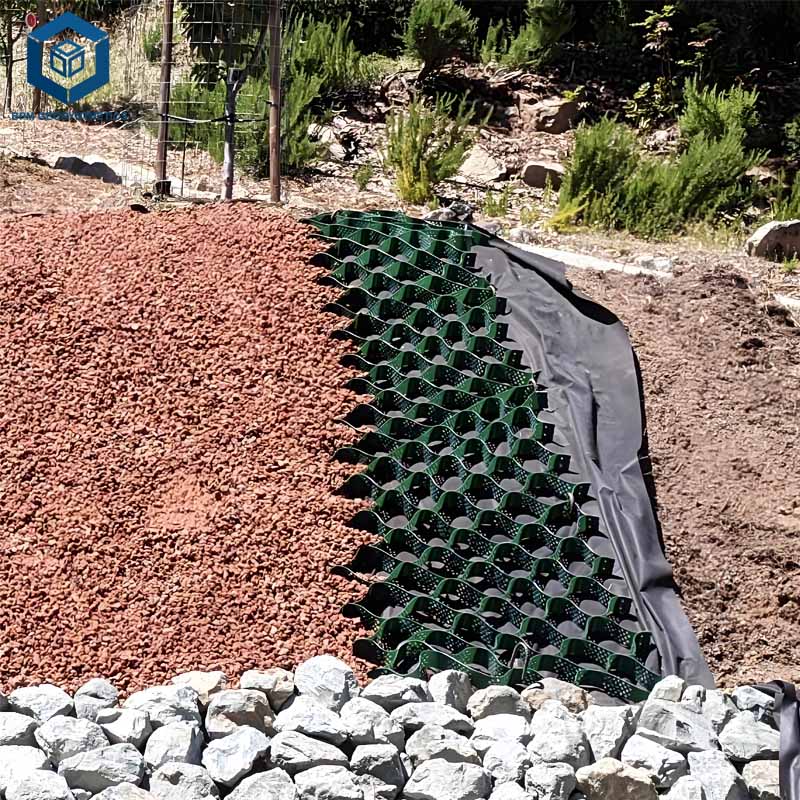
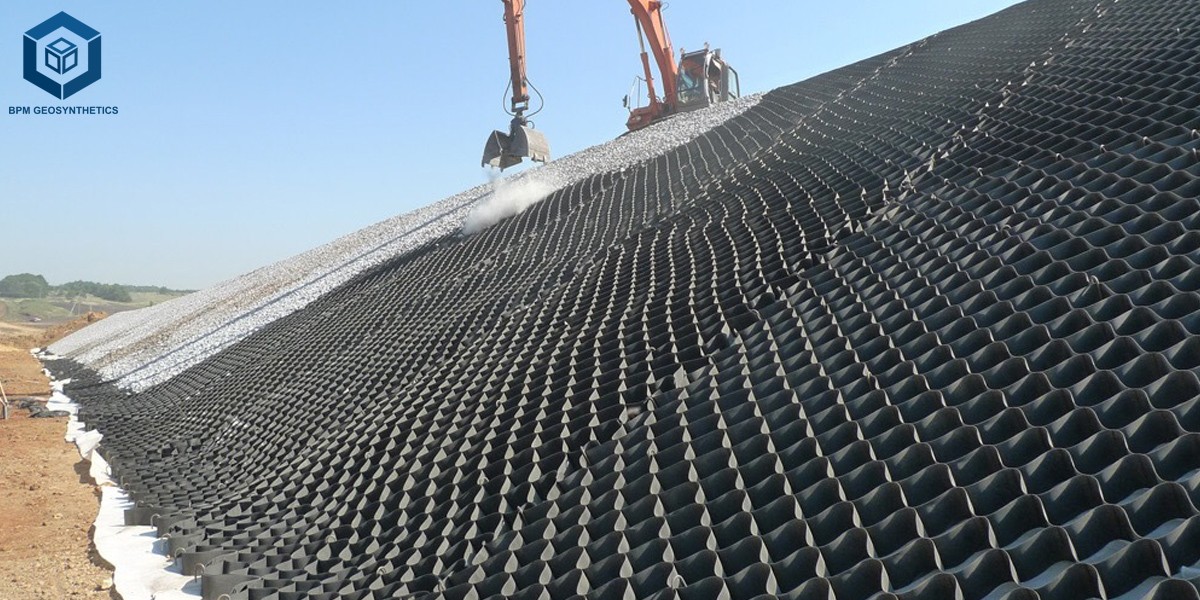
Each cell gets stuffed with locally available materials such as soil, sand, gravel, crushed stone, or even concrete (depending on what the project needs). This versatility allows it to be used both for environmental and heavy engineering purposes.
- Confining the cells stops the material from moving
When filled, cells become little containment units and block the movement of the infill material sideways. This way, soil does not slide, get washed away, or change its form even when there is rainfall or runoff.
- Creating a reinforced composite layer
The geocell, infill material, and subgrade together make up a single integrated system. Hence, a continuous and interlocked surface layer is formed that is much stronger than just loose soil.
2.2 Engineering principle behind the system:
The confinement effect is what causes friction and interlocking to be increased between the particles. This enhancement in friction leads to a significant rise in shear strength and also helps in spreading the load evenly over the entire slope surface. Because of this, stress does not get concentrated at weak points but instead, is more evenly dispersed. Therefore, the slope that has been treated in this manner is a lot more stable and less vulnerable to erosion, surface failure, and the impact of rainwater as compared to slopes that are untreated or made solely of traditional soil.
3. Geocell for Slope Protection – Key Features & Advantages
3.1 High Slope Stability
By creating a robust three-dimensional confinement system, geocell slope protection effectively locks the soil in place. This greatly lowers the chances of soil sliding, surface collapse, and deformation, even when the slopes are very steep or the ground conditions are weak.
In fact, the entire slope structure becomes more stable and less prone to long-term movements.
3.2 Superior Erosion Control
Due to the honeycomb structure, water runoff on the surface is slowed down and the risk of direct impact from rainfall and wind is minimised. Since soil is held within individual cells, HDPE geocell is very effective in preventing erosion, loss of soil, and even the development of surface rills.
Therefore, the slopes are protected from the adverse effects of harsh weather conditions over a long period of time.
3.3 High-quality HDPE Material
Geoweb slope protection is made up of durable high-density polyethylene (HDPE) material which is known for the strength and long-lasting feature of the mechanical part of the material. It is capable of resisting UV rays, chemicals, freeze-thaw cycles and environmental aging, making it an ideal choice for outdoor engineering projects in harsh climates.
3.4 Design Features for Flexibility & Adaptability
Geocell for slope protection products are compact and flexible which makes them easily adjustable to the uneven or irregular landscape of the slopes, so one can say that geocells have the property of conformability. That is why they can be used even for the most difficult of the terrains like hillsides, embankments, and natural landscapes where the use of rigid structures is really a challenge.
3.5 A Green Solution
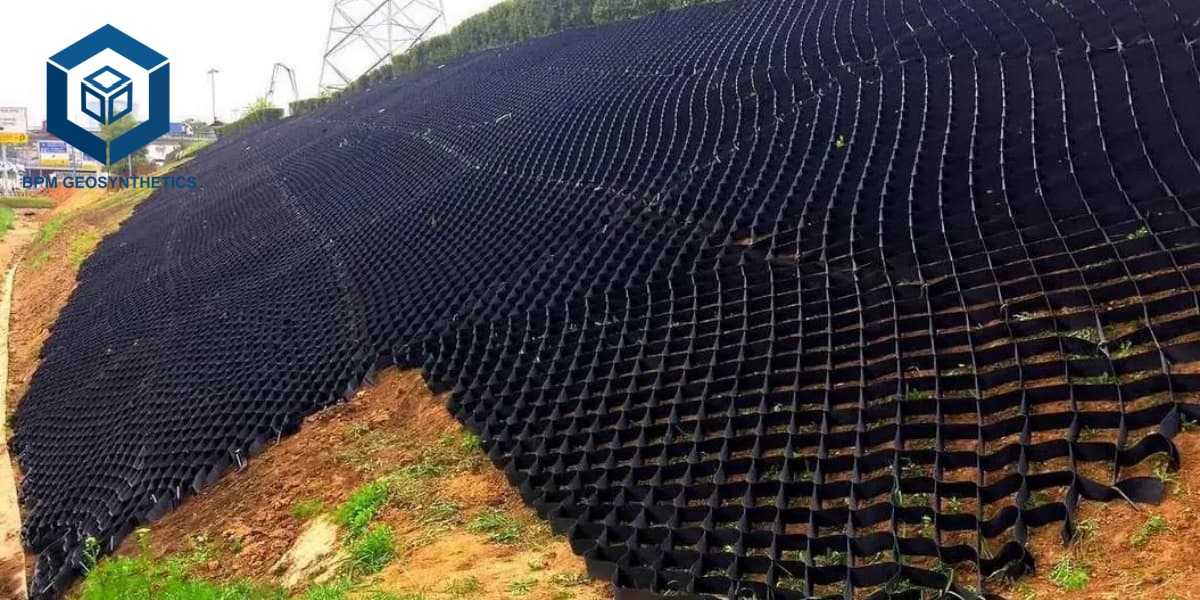
Once geocell material is filled with soil and seeded with plants, it can facilitate natural vegetation growth. In doing so, this green, living slope protection system not only looks good in the environment but it also discourages the use of hard concrete structures, which in turn leads to sustainable and ecological engineering.
3.6 A Less Expensive Method of Construction
Compared to the conventional ways of protecting slopes like concrete or stone retaining structures, geocell installation requires minimal usage of heavy equipment as well as less time for installation. Therefore, it cuts down on labor costs, transportation charges, as well as long-term maintenance and that is why it is an extremely economical method.
3.7 A Product that Lasts Long
Geocell is made to perform for a long time and keep its structural strength even after being exposed constantly to the sun, moisture, and mechanical wear and tear. If geocell is installed in the right manner it can offer effective protection of the slope over many years with only very little reduction and maintenance.
4. Geocell for Slope Protection Technical Specifications & Extended Features
| Item | Description |
Product Type | 3D Cellular Confinement System (Geocell) |
Material | High-Density Polyethylene (HDPE) |
Surface Texture | Smooth or textured (optional for enhanced friction) |
Cell Height | 50mm – 200mm (customizable) |
Welding Distance | 330mm – 1000mm (customizable cell size) |
Sheet Thickness | Typically 1.0mm – 1.5mm (project dependent) |
Color Options | Black, green, sand color, or customized |
Structure | Honeycomb / three-dimensional interconnected cells |
UV Resistance | Yes, UV-stabilized for outdoor exposure |
Chemical Resistance | Resistant to acids, alkalis, and soil chemicals |
Temperature Range | -40°C to +60°C suitable for extreme environments |
Installation Method | Expansion + anchoring + infill compaction |
Service Life | 20–50 years depending on conditions |
Load Distribution | High load dispersion across confined cells |
Drainage Performance | Excellent permeability when filled with granular materials |
Vegetation Compatibility | Supports grass growth and root stabilization |
5. Geocell for Slope Protection Performance Enhancement Factors
| Factor | Engineering Benefit |
Cell Height Selection | Higher cells provide stronger slope reinforcement |
Infill Type | Gravel increases drainage; soil supports vegetation; concrete increases load capacity |
Anchoring Density | More anchors improve resistance on steep slopes |
Subgrade Preparation | Proper leveling increases system stability and lifespan |
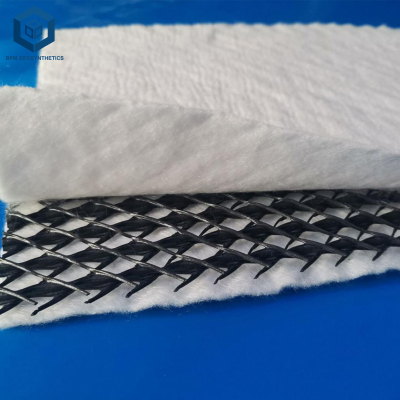
Geotextile Combination | Enhances filtration and prevents soil loss beneath geocell |
6. Structural Advantages Compared to Traditional Methods
Protection Method | Key Limitation | Geocell Advantage |
Concrete Slope | High cost, rigid structure | Flexible, lower cost, eco-friendly |
Riprap Stone | Uneven surface, displacement risk | Cellular locking prevents movement |
Bare Soil Slope | High erosion risk | Fully stabilized confinement system |
7. Geocell for Slope Protection – Real Project Case Study
Project Overview: This case study examines a highway embankment slope protection project in Southeast Asia, where heavy seasonal rainfall and loose soil conditions caused frequent erosion and minor slope failures. The project required a long-term, cost-effective solution to stabilize the slope and prevent further soil loss.
The client opted for an HDPE geocell slope protection system instead of traditional concrete retaining structures because of factors such as cost, construction speed, and environmental requirements.
7.1 Project Challenges (Before Installation)
- Steep embankment slope and light, sandy soil
- Heavy erosion of surface soil during periods of heavy precipitation
- Formation of small gullies by runoff water followed by soil displacement
- High maintenance costs associated with repairing damaged slopes
Heavy equipment access very limited
- Preference for an environmentally friendly, green and growing solution
7.2 Engineering Solution
After evaluating the site, the engineers decided to go for a strong HDPE geocell system accompanied by growth of vegetation.
The most important design elements were:
- Geocell height of 100mm which was considered adequate in terms of both stability and cost
- Anchoring method: steel U-pins used at regular intervals for slope fixation
- Infill material comprising grass seeds and local topsoil
- Surface strategy involving the production of a completely vegetated green slope which is highly resistant to erosion
7.3 Construction Process (Step-by-Step)
Step 1 – Site Preparation
The slope surface was cleaned, leveled, and compacted. Loose debris, rocks, and unstable soil layers were removed to create a stable base.
Step 2 – Geotextile Base Layer (Optional)
The geotextile layer was laid to enhance filtration and prevent the loss of soil underneath the geocell structure.
Step 3 – Geocell Expansion
Initially, HDPE geocell panels were in folded form for easy transportation and after that, the panels were unfolded on-site into a honeycomb shape to cover the whole slope area.
Step 4 – Anchoring Installation
Steel U-shaped pins were driven into the ground to secure the geocell system and prevent movement under gravity and water flow.
Step 5 – Filling Process
Each cell was filled with a mixture of topsoil and sand to ensure stability and support vegetation growth.
Step 6 – Surface Compaction
The filled cells were lightly compacted to eliminate air gaps and improve structural bonding between materials.
Step 7 – Vegetation Seeding
Grass seeds were planted on the surface layer, followed by irrigation to accelerate vegetation establishment.
7.4 Results After Installation
After completion and a monitoring period of several rainy seasons, the project showed significant improvements:
- Erosion rate reduced by over 90%
- No visible slope failures or soil sliding
- Strong vegetation coverage established within weeks
- Improved drainage performance during heavy rainfall
- Reduced maintenance cost compared to previous methods
- Stable slope structure with long-term integrity
7.5 Key Project Benefits
Replaced expensive concrete slope protection system
Achieved both structural stability and ecological restoration
Faster installation compared to traditional retaining walls
Adapted well to local soil and climate conditions
Long-term sustainable solution with minimal maintenance
7.6 Conclusion
This project demonstrates that geocell for slope protection is not only an engineering solution for stability, but also an effective method for ecological restoration. By combining soil confinement, drainage control, and vegetation support, it provides a durable and environmentally friendly alternative to conventional slope protection systems.
8. Why Choose Our BPM Geosynthetics Geocell Solutions
Factory-direct supply with strict quality control
Customizable cell height, thickness, and panel dimensions
High tensile strength HDPE raw materials
Proven performance in global engineering projects
Suitable for both small-scale landscaping and large infrastructure works
Technical support for design and installation guidance
We focus on delivering reliable geocell systems that meet international engineering standards and long-term durability requirements.
9. FAQ – Geocell for Slope Protection
Q1: What is geocell used for in slope protection?
Geocell is used to stabilize soil on slopes by creating a 3D honeycomb confinement system. It locks soil, sand, or gravel in place, preventing erosion, sliding, and surface collapse while improving overall slope strength.
Q2: Can geocell be used on very steep slopes?
Yes. Geocell is specifically designed for steep and unstable slopes. With proper anchoring and correct cell height selection, it can significantly improve slope stability even in high-gradient conditions.
Q3: How long does geocell last in outdoor conditions?
High-quality HDPE geocell can last 20 to 50 years, depending on UV exposure, soil conditions, load intensity, and installation quality. UV-stabilized materials significantly extend service life.
Q4: What slope angle is suitable for geocell installation?
Geocell can typically be used on slopes ranging from mild to very steep (up to around 60° or more), depending on design, anchoring system, and infill type.
Q5: Does geocell require maintenance after installation?
Maintenance is minimal. Once vegetation is established or infill is compacted, geocell systems generally require only occasional inspection, especially after heavy rainfall events.
Q6: What is the main failure reason of geocell systems?
Most failures are not due to the product itself but due to:
Poor slope preparation
Insufficient anchoring
Incorrect infill selection
Improper installation methods
Correct engineering design ensures long-term performance.
Conclusion
The Best Project Material Co., Ltd.(BPM Geosynthetics) Geocell for slope protection is one of the most efficient and sustainable solutions for modern soil stabilization and erosion control. It combines structural strength, environmental benefits, and cost efficiency in one system—making it an ideal alternative to traditional concrete slope protection methods.
If you are looking for a reliable geocell supplier for your project, we provide professional solutions tailored to your engineering needs.