Hdpe geomembrane smooth vs textured which one to choose
The HDPE geomembrane smooth vs textured comparison evaluates two surface types of high-density polyethylene liners used in civil engineering, focusing on friction performance, slope stability, installation conditions, and project suitability.
Technical Parameters and Specifications
| Parameter | Smooth HDPE Geomembrane | Textured HDPE Geomembrane |
|---|---|---|
| Surface Friction Angle | Low (10°–18°) | High (25°–35°) |
| Thickness Range | 0.2 – 3.0 mm | 0.75 – 3.0 mm |
| Tensile Strength | 20 – 40 MPa | 22 – 45 MPa |
| Puncture Resistance | Moderate | High |
| Slope Stability | Low | High |
| Cost Level | Lower | Higher (10–25%) |
Structure and Material Composition
Common Base Material: High-density polyethylene (HDPE resin)
Smooth Surface: Flat extrusion, uniform polymer layer
Textured Surface: Co-extruded or spray-textured rough surface
Additives: Carbon black (2–3%), antioxidants, UV stabilizers
Manufacturing Process
Raw Material Blending: HDPE resin + additives mixing
Extrusion: Flat die extrusion for smooth liner
Texturing Process: Co-extrusion or hot spray embossing
Cooling & Calibration: Thickness stabilization
Quality Testing: Tensile, friction, puncture tests
Winding: Controlled tension roll packaging
Industry Comparison Table
| Factor | Smooth HDPE | Textured HDPE | Engineering Interpretation |
|---|---|---|---|
| Slope Stability | Low | High | Textured preferred for steep slopes |
| Installation Ease | Easier sliding | More stable placement | Smooth easier on flat areas |
| Cost Efficiency | Higher value | Higher cost | Smooth more economical |
| Friction Performance | Low | High | Textured used for anti-slip engineering |
| Durability | Standard | Enhanced in slope conditions | Textured improves system reliability |
Application Scenarios
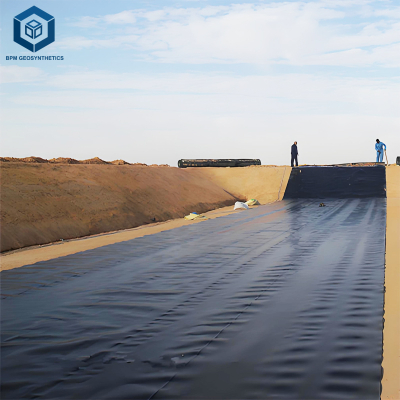
Smooth HDPE: Landfill base liners, aquaculture ponds, reservoirs, flat containment systems
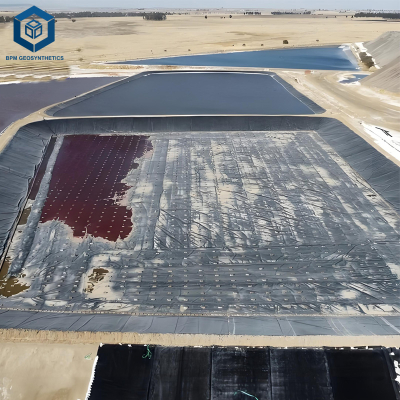
Textured HDPE: Mining heap leach pads, landfill slopes, steep embankments, civil slope protection
EPC Contractors: Selecting liner based on slope geometry
Distributors: Differentiating product portfolios by application type
Core Pain Points and Solutions
Liner Slippage: Use textured HDPE on slopes >10°
Cost Pressure: Apply smooth HDPE in flat areas
Installation Difficulty: Use anchoring trenches and welding control
Long-term Stability: Combine geotextile cushioning layers
Risk Warnings and Avoidance
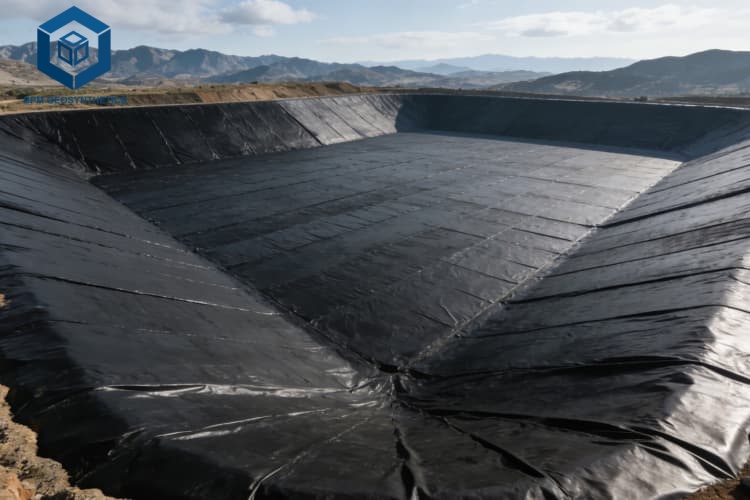
Smooth HDPE may fail on steep slopes due to low friction
Textured liner increases installation complexity
Poor welding reduces system integrity regardless of surface type
Incorrect selection leads to slope failure or material sliding
Procurement and Selection Guide
Evaluate project terrain slope angle
Identify hydraulic or containment requirements
Determine subgrade roughness conditions
Select smooth HDPE for flat or low-slope systems
Select textured HDPE for slopes >10–15°
Check friction coefficient specifications from supplier
Request installation case references before purchase
Engineering Case Study
In a mining heap leach project in South America, smooth HDPE geomembrane was initially used on mild slopes but caused localized sliding. After redesign, textured HDPE geomembrane was installed on slopes exceeding 12°, significantly improving stability and reducing maintenance risk over a 5-year operation period.
FAQ
Q1: What is smooth HDPE used for?
A: Flat surfaces like ponds and landfill bases.Q2: What is textured HDPE used for?
A: Slopes and unstable surfaces.Q3: Which has higher cost?
A: Textured HDPE is more expensive.Q4: Can smooth HDPE be used on slopes?
A: Only for very low angles.Q5: What improves friction in textured HDPE?
A: Surface embossing or spray texture.Q6: Is welding different?
A: No, welding process is similar.Q7: Which lasts longer?
A: Both have similar lifespan.Q8: Can they be combined?
A: Yes, in hybrid engineering designs.Q9: What is friction angle important for?
A: Slope stability design.Q10: Which is easier to install?
A: Smooth HDPE.
Call to Action
Contact our engineering team for technical datasheets, friction analysis reports, and bulk pricing on HDPE geomembrane smooth vs textured systems. Request samples and project design consultation today.
E-E-A-T Authoritative Statement
This article is prepared by geomembrane engineering specialists with over 10 years of experience in HDPE liner manufacturing, mining, landfill, and civil engineering waterproofing systems.