Best geomembrane thickness for fish pond liner installation
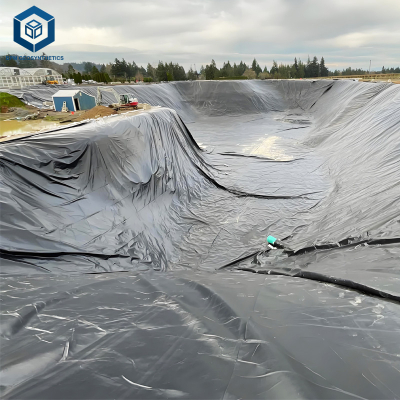
The best geomembrane thickness for fish pond liner installation refers to the optimized HDPE liner thickness selection based on pond depth, soil conditions, water pressure, and service life requirements in aquaculture engineering projects.
Technical Parameters and Specifications
| Parameter | Typical Range | Engineering Notes |
|---|---|---|
| Thickness | 0.3 mm – 2.0 mm | Depends on pond depth and load |
| Density | ≥0.94 g/cm³ | High-density polyethylene standard |
| Tensile Strength | 20 – 40 MPa | Ensures structural integrity |
| Puncture Resistance | 150 – 500 N | Critical for rocky subgrade |
| Service Life | 10 – 25 years | Depends on UV exposure |
| UV Resistance | Carbon black 2–3% | Outdoor exposure protection |
Structure and Material Composition
HDPE Geomembrane Layer: Main waterproof barrier
Carbon Black Additive: UV stabilization and aging resistance
Antioxidants: Improve long-term durability
Stabilizers: Enhance chemical resistance
Manufacturing Process
Raw Material Blending: HDPE resin + carbon black + additives
Extrusion Process: Flat die extrusion or blown film process
Calendering & Cooling: Thickness control and surface finishing
Quality Inspection: Tensile, elongation, puncture testing
Rolling & Packaging: Controlled tension winding for transport
Industry Comparison Table
| Material | Waterproofing | Durability | Cost | Engineering Suitability |
|---|---|---|---|---|
| HDPE Geomembrane | Excellent | High (20+ years) | Medium | Best for fish ponds |
| Clay Liner | Moderate | Low–Medium | Low | High maintenance |
| Concrete Lining | High | High | High | Expensive installation |
| EPDM Rubber | High | Medium | High | Flexible but costly |
Application Scenarios
Aquaculture Farms: Shrimp, fish, and crab farming ponds
Engineering Contractors: Large-scale pond construction projects
Distributors: Bulk geomembrane supply chain management
Importers: Agricultural infrastructure material sourcing
Core Pain Points and Solutions
Leakage Risk: Use ≥1.0 mm HDPE for deep ponds
Puncture Damage: Add protective geotextile layer
UV Degradation: Ensure ≥2% carbon black content
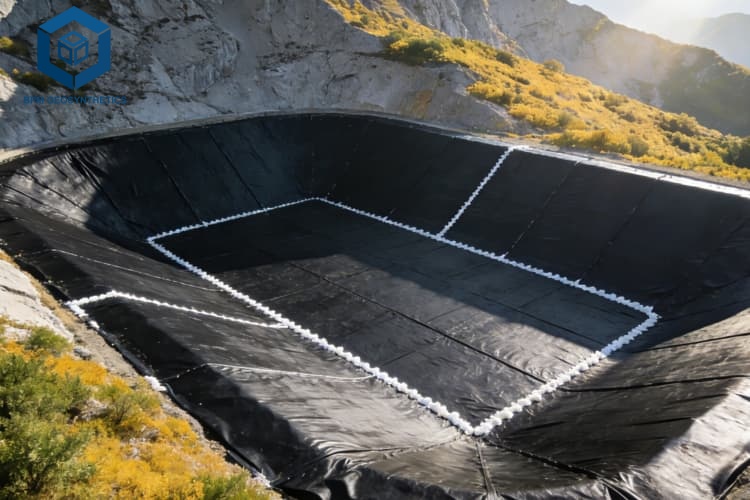
Seam Failure: Use double-track hot wedge welding
Risk Warnings and Avoidance
Too thin liner (<0.5 mm) increases puncture failure risk
Improper subgrade preparation leads to stress concentration
Low-quality welding causes leakage and fish loss
UV exposure accelerates aging without stabilizers
Procurement and Thickness Selection Guide
Evaluate pond depth (shallow, medium, deep)
Assess soil condition (rocky or soft subgrade)
Define fish species and farming intensity
Select thickness: 0.5 mm (small ponds), 0.75–1.0 mm (standard), 1.5–2.0 mm (industrial)
Check HDPE raw material certification
Request welding test samples before bulk purchase
Verify supplier production consistency
Engineering Case Study
In a 50-hectare aquaculture project in Southeast Asia, 1.0 mm HDPE geomembrane was selected as the best geomembrane thickness for fish pond liner installation. Combined with 200 g/m² geotextile underlay, the system achieved zero leakage over 18 months of operation, reducing water loss by 35% compared to clay-lined ponds.
FAQ
Q1: What is the best thickness for fish ponds?
A: 0.75–1.5 mm depending on depth.Q2: Is 0.5 mm geomembrane enough?
A: Only for small, shallow ponds.Q3: What is the most common thickness?
A: 1.0 mm HDPE liner.Q4: Does thickness affect lifespan?
A: Yes, thicker liners last longer.Q5: Can HDPE resist fish waste chemicals?
A: Yes, HDPE has strong chemical resistance.Q6: Is geotextile necessary?
A: Recommended for rocky soil.Q7: How long does HDPE last?
A: 10–25 years depending on conditions.Q8: What affects liner failure most?
A: Poor installation and subgrade.Q9: Can it be repaired?
A: Yes, using hot wedge welding.Q10: Is UV protection important?
A: Yes, especially for outdoor ponds.
Call to Action
Contact our engineering team to receive technical datasheets, thickness selection guidance, and bulk pricing for best geomembrane thickness for fish pond liner installation projects. Request samples and welding test reports today.
E-E-A-T Authoritative Statement
This article is prepared by geomembrane engineering specialists with over 10 years of experience in HDPE liner manufacturing, aquaculture pond design, and international EPC project supply.