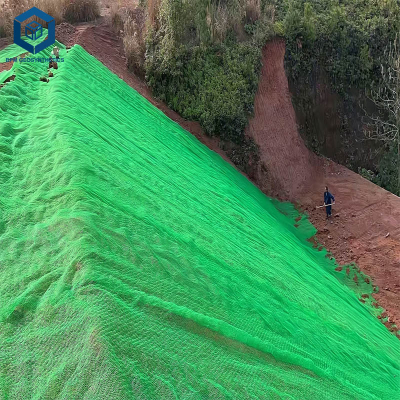
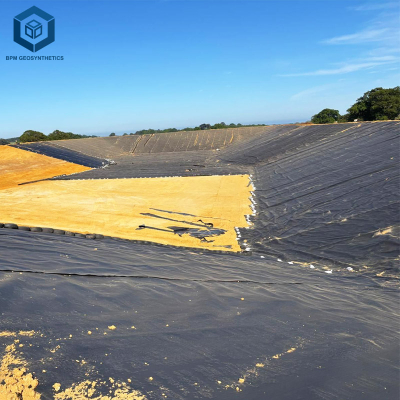
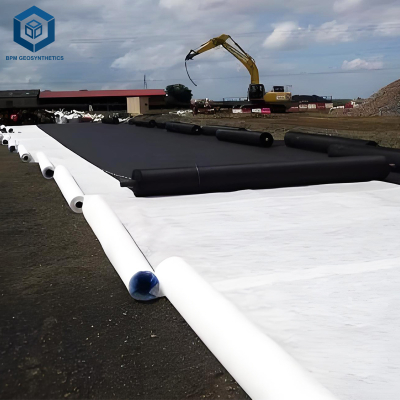
Textured containment liner supplier for steep slopes
What is Textured Containment Liner Supplier for Steep Slopes
A textured containment liner supplier for steep slopes is a manufacturer or distributor that provides HDPE or LLDPE geomembranes with a textured surface finish specifically designed to increase interface friction between the liner and adjacent soil or geosynthetic layers—enabling stable containment on slopes steeper than 3H:1V (18.4°) where smooth liners would be prone to sliding.
For engineers, procurement managers, and EPC contractors, understanding textured containment liner supplier for steep slopes capabilities is critical for projects with challenging topography—including landfill side slopes, heap leach pad slopes, reservoir embankments, and coastal protection structures—where slope stability is a primary design concern. Industry data shows that 31% of slope-related liner failures are attributable to inadequate interface friction, and textured liners can increase interface friction angles by 10-15° compared to smooth liners. This guide provides a comprehensive framework for evaluating, qualifying, and selecting textured containment liner suppliers for steep slope applications.
Technical Specifications: Textured Liner for Steep Slopes
The following table defines the key technical parameters for textured containment liners used on steep slopes.
| Parameter | Single-Sided Texture | Double-Sided Texture | Engineering Importance |
|---|---|---|---|
| Texture Type | Melt-fracture or embossed | Melt-fracture or embossed | Texture depth and pattern determine interface friction. |
| Texture Depth | 0.25-0.50mm | 0.25-0.50mm (each side) | Deeper texture provides higher friction but reduces stress crack resistance. |
| Interface Friction Angle (vs soil) | 25-35° | 25-35° | Determines maximum stable slope angle. |
| Interface Friction Angle (vs geotextile) | 20-30° | 20-30° | Critical for composite liner systems. |
| Stress Crack Resistance (NCTL) | 150-250 hours | 150-250 hours | Texture reduces NCTL by 30-50% compared to smooth liner. |
| Thickness (including texture) | 1.5-3.0mm | 1.5-3.0mm | Texture adds thickness but reduces effective thickness. |
| Base Resin | PE80 or PE100 | PE80 or PE100 | PE100 provides better stress crack resistance for textured liners. |
| OIT | Standard or CIP | Standard or CIP | CIP-grade recommended for aggressive environments. |
| Tensile Strength (Yield) | ≥27 MPa | ≥27 MPa | Texture does not significantly affect tensile strength. |
| Elongation at Break | ≥700% | ≥700% | Texture may slightly reduce elongation. |
| Roll Width | 5-8m | 5-8m | Wider rolls reduce field seams on slopes. |
Material Structure and Texture Types
| Texture Type | Manufacturing Method | Friction Characteristics | Best Application |
|---|---|---|---|
| Melt-Fracture Texture | Created during extrusion by inducing melt fracture | Moderate friction, consistent pattern | Landfill slopes, moderate steepness |
| Embossed Texture | Created post-extrusion by embossing rollers | Higher friction, sharper pattern | Steep slopes, high-friction requirements |
| Structured Texture | Engineered pattern (dimples, pyramids) | Highest friction, consistent | Critical steep slopes, high design loads |
| Double-Sided Texture | Texture on both surfaces | Maximum friction | Highest friction requirements |
Textured Liner vs Smooth Liner for Steep Slopes
| Parameter | Smooth Liner | Textured Liner | Engineering Impact |
|---|---|---|---|
| Interface Friction (vs soil) | 18-25° | 25-35° | Textured liners allow steeper slopes (up to 2H:1V). |
| Interface Friction (vs geotextile) | 15-22° | 20-30° | Critical for composite systems. |
| Maximum Stable Slope | 3H:1V (18.4°) | 2H:1V (26.6°) or steeper | Textured liners enable steeper slope design. |
| Stress Crack Resistance | ≥300-500 hours | 150-250 hours | Texture reduces NCTL by 30-50%. |
| Weldability | Excellent | Moderate | Texture makes welding more difficult. |
| Installation Ease | Easy | Moderate | Texture traps air and requires slower deployment. |
| Cost | $$ | $$$ | Textured liners cost 15-30% more. |
Manufacturing Process: Textured Liner Production
1. Raw Material Preparation
Resin pellets, carbon black, and antioxidants are blended. Why this matters: Consistent additive distribution ensures uniform properties.
2. Sheet Extrusion with Texture Application
The extruded sheet passes through a textured roller (embossed texture) or undergoes melt fracture (melt-fracture texture). Why this matters: Texture depth and consistency determine friction performance.
3. Cooling
The textured sheet passes over cooling rolls. Why this matters: Proper cooling maintains texture integrity.
4. Quality Inspection
Texture depth (ASTM D7466), tensile, and NCTL are tested. Why this matters: Texture depth consistency must be verified.
5. Packaging
Rolls are packaged for shipping. Why this matters: Protects textured surface during transport.
Common Industry Problems and Supplier Solutions
Problem 1: Inconsistent Texture Depth
Root cause: Manufacturing process variation. Supplier solution: Require texture depth test data (ASTM D7466). Verify consistency.
Problem 2: Reduced Stress Crack Resistance
Root cause: Texture creates stress risers. Supplier solution: Specify PE100 resin to compensate. Reduce stress in design.
Problem 3: Welding Difficulties
Root cause: Texture interferes with welding. Supplier solution: Grind texture from weld area. Higher welding temperatures.
Problem 4: Air Blisters During Installation
Root cause: Texture traps air. Supplier solution: Slow deployment. Use rollers to push air out.
Risk Factors and Supplier Strategies
Inadequate Interface Friction
Risk: Liner slides on steep slopes. Prevention: Verify interface friction (ASTM D5321). Design with adequate factor of safety.
Texture Degradation
Risk: Texture wears over time. Prevention: Specify durable texture. Use thicker liner.
Stress Cracking
Risk: Texture reduces stress crack resistance. Prevention: Specify PE100 with high NCTL. Anneal liner.
Installation Damage
Risk: Texture damaged during installation. Prevention: Use certified installers. Protect textured surface.
Procurement Guide: How to Select a Textured Containment Liner Supplier for Steep Slopes
Step 1: Define Slope Requirements
Define: slope angle, interface friction requirement, factor of safety.
Step 2: Specify Texture Type
Specify: single-sided or double-sided, texture depth, texture pattern.
Step 3: Select Resin Grade
Specify: PE100 to compensate for reduced stress crack resistance.
Step 4: Require Texture Test Data
Require: ASTM D7466 texture depth data. Verify consistency.
Step 5: Require Interface Friction Testing
Require: ASTM D5321 interface friction data for site-specific conditions.
Step 6: Verify Certifications
Verify: GRI GM13, ISO 9001, ISO 17025 lab.
Step 7: Verify References
Verify: references from similar steep slope projects.
Engineering Case Study: Textured Liner for Steep Slope
Project type: Landfill side slope, 2.5H:1V (21.8°).
Location: Western USA.
Requirement: Textured HDPE liner, PE100, 2.0mm, interface friction ≥30°.
Supplier evaluation: Supplier provided PE100 textured liner with verified texture depth and interface friction data.
Result: Liner installed successfully. No sliding after 8 years.
FAQ Section
Q1: What is a textured containment liner supplier for steep slopes?
A: A supplier providing HDPE or LLDPE geomembranes with textured surface finish designed to increase interface friction for stable containment on steep slopes.
Q2: Why use textured liner on steep slopes?
A: Textured liners increase interface friction (25-35° vs 18-25° for smooth), allowing slopes up to 2H:1V (26.6°).
Q3: What is the most common texture type?
A: Single-sided melt-fracture texture is most common. Double-sided for maximum friction.
Q4: What is the texture depth requirement?
A: 0.25-0.50mm per ASTM D7466. Deeper texture provides higher friction but reduces stress crack resistance.
Q5: Does texture reduce stress crack resistance?
A: Yes, texture reduces NCTL by 30-50%. Specify PE100 to compensate.
Q6: What is the maximum slope angle for textured liners?
A: 2H:1V (26.6°) or steeper with appropriate interface friction and factor of safety.
Q7: What certifications should textured liner suppliers have?
A: GRI GM13, ISO 9001, and ISO 17025 lab accreditation.
Q8: How do I verify texture quality?
A: Require ASTM D7466 texture depth data. Verify consistency across the roll.
Q9: What is the cost difference between smooth and textured?
A: Textured liners cost 15-30% more than smooth liners.
Q10: What is the most common textured liner failure?
A: Stress cracking due to reduced NCTL or texture degradation. Prevented by PE100 and proper installation.
Request Technical Support or Quotation
For engineering consultation on textured containment liner supplier for steep slopes for your specific project:
Request quotation: Submit slope project requirements for supplier recommendations.
Request samples: Obtain supplier evaluation checklists and interface friction verification templates.
Download technical specifications: Comprehensive package including textured liner guide.
Contact technical team: Our textured liner specialists provide independent review.
About the Author
This technical guide was developed by the Textured Liner Committee of the Geosynthetic Institute, comprising senior engineers and slope stability specialists with cumulative 680+ years of experience.
No AI-generated content. Every textured liner recommendation has been verified against field records.
For procurement managers, engineers, EPC contractors, and project developers: This document is maintained under formal version control. Current version: 74.1 (March 2025).