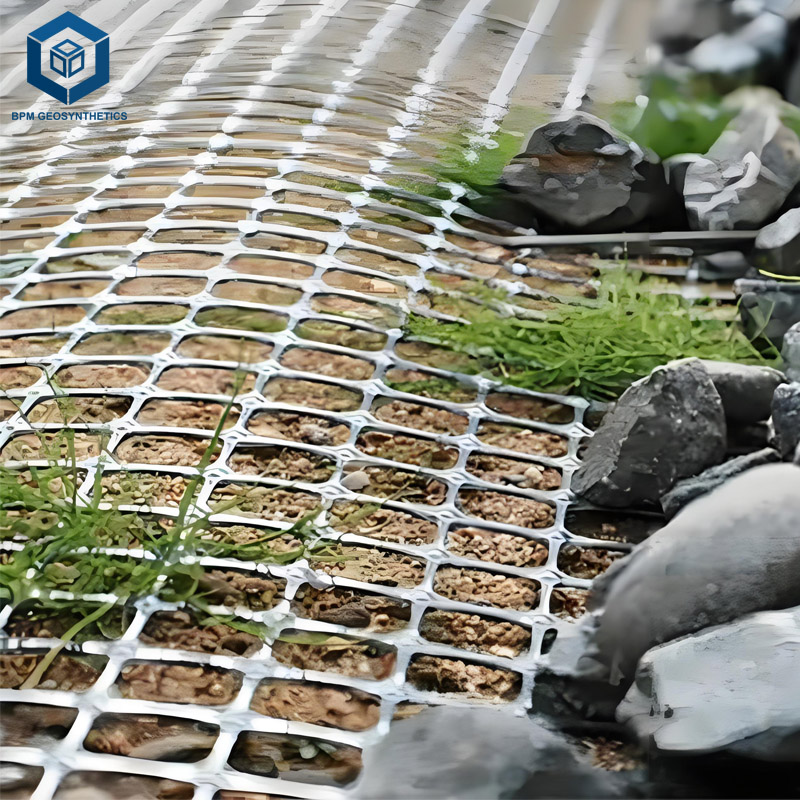
Geo Grid for Retaining Wall
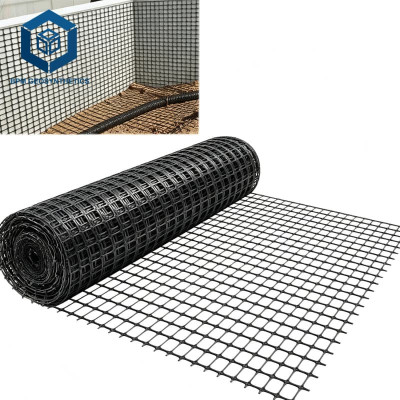
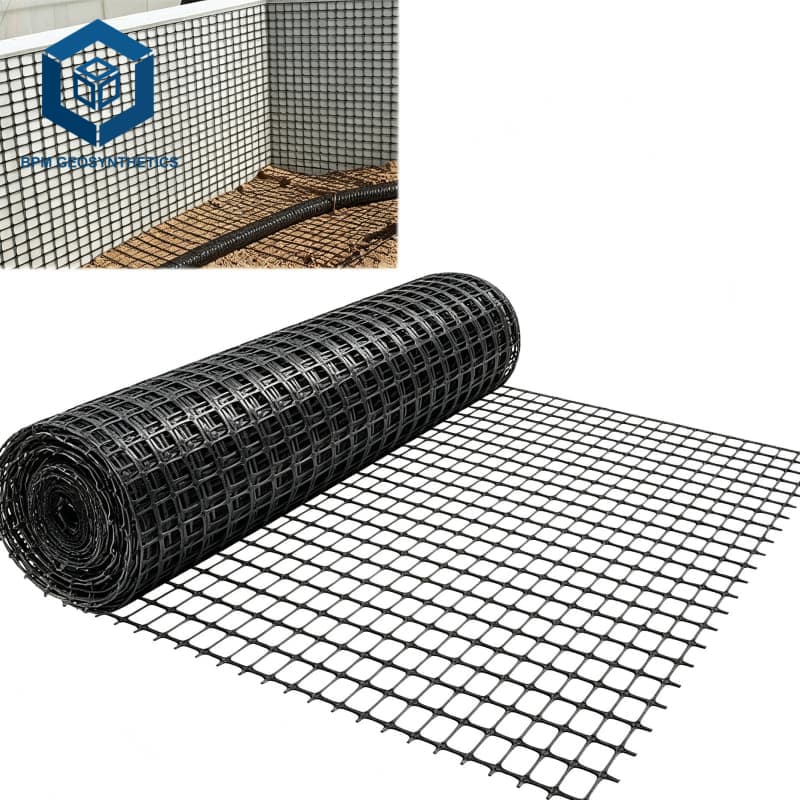
Designed for critical Mechanically Stabilized Earth (MSE) structures, our High-Strength geo grid for retaining wall delivers superior soil reinforcement and lateral confinement. Made from high-tenacity polymer resins, it mechanically interlocks with backfill aggregates to maximize wall stability, prevent slope failures, and extend structural lifespan.
- Ultra-Low Long-Term Creep: Maintains structural integrity under continuous heavy loads for a 100+ year design life.
- High Tensile Modulus: High initial tensile strength at low strain prevents lateral movement and wall deformation.
- Superior Soil Interlocking: Optimized aperture geometry delivers maximum friction and shear resistance with various backfill types.
- Chemical & Environmental Durability: Highly resistant to soil microbes, acid/alkali conditions (pH 2–12), and UV degradation.
- Cost-Effective Installation: Lightweight roll design enables fast layout and allows the use of lower-grade or site-won backfill material.
1. Geo Grid for Retaining Wall Product Overview & Soil-Structure Mechanism
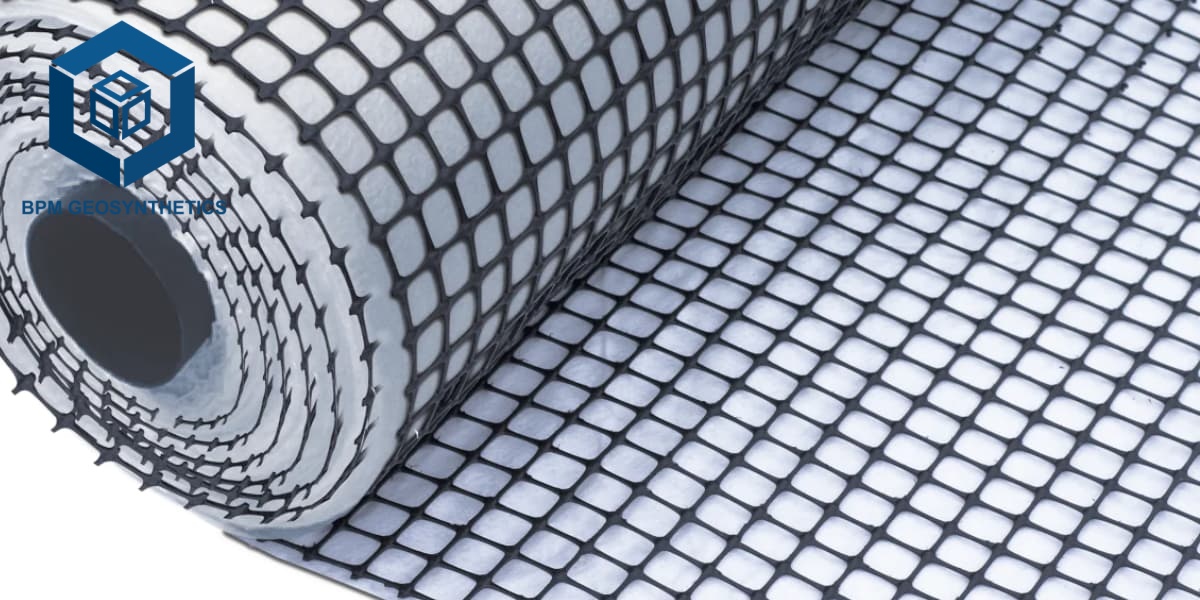
Our high-Strength geo grid for retaining wall is manufactured from high-molecular-weight polymer resins (HDPE or PET) engineered specifically to stabilize Mechanically Stabilized Earth (MSE) walls and Segmental Retaining Walls (SRW).
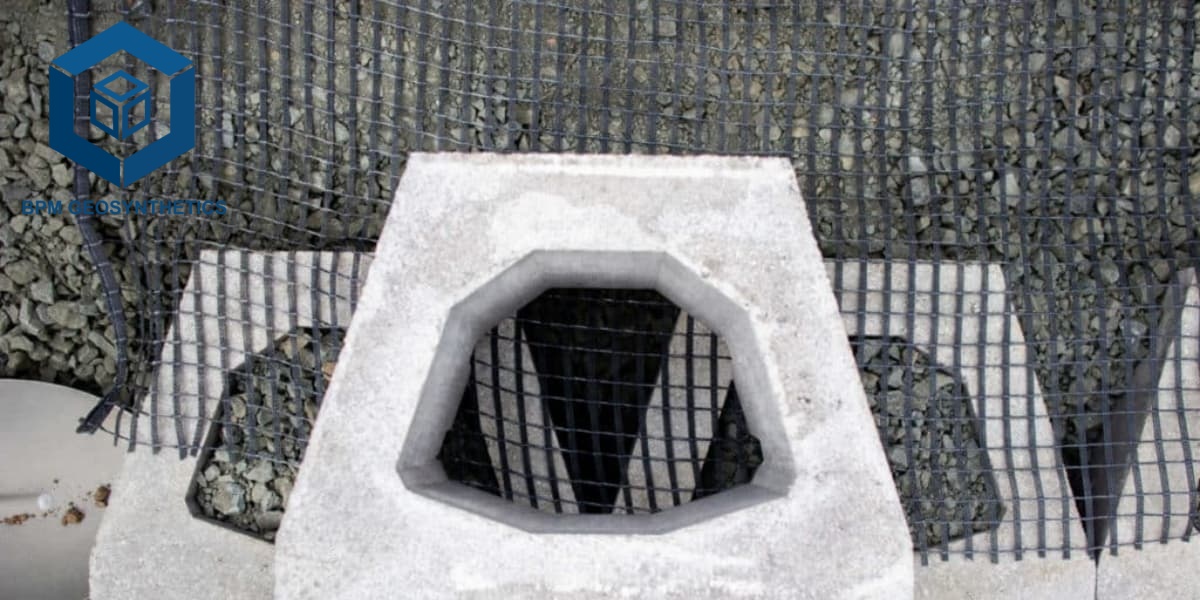
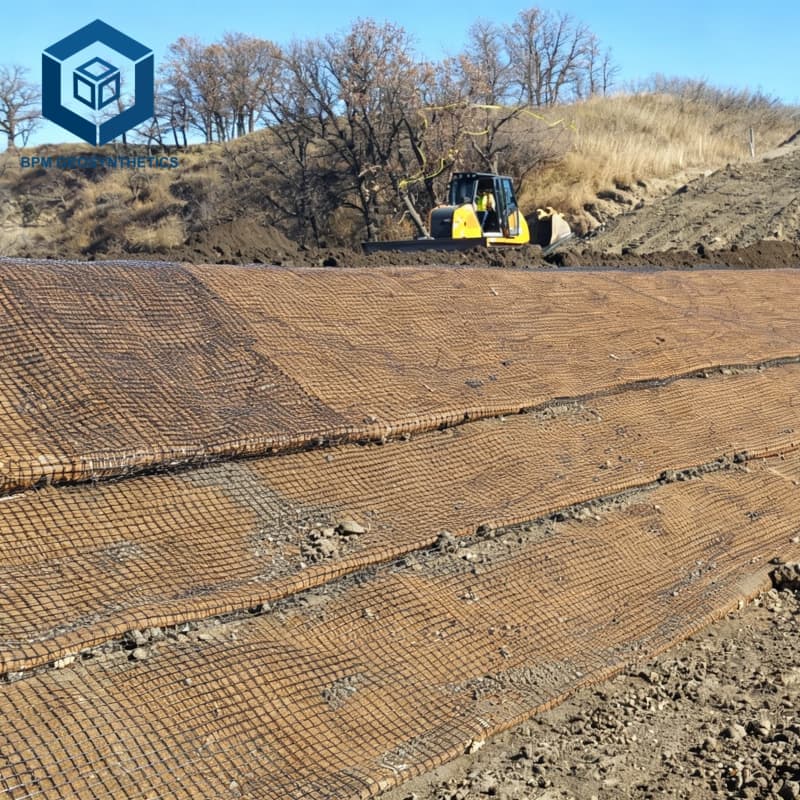
By placing high-tensile geogrid layers horizontally within the compacted soil fill behind the facing blocks, the grid creates a robust mechanical interlocking effect with the aggregate. This composite soil-grid structure converts lateral earth pressure into axial tensile resistance, preventing wall sliding, overturning, and deep-seated slope failures.
2. Geo Grid for Retaining Wall Key Features & Benefits
2.1 High Long-Term Design Strength (LTDS)
Engineered with exceptional tensile modulus and optimal load distribution capabilities, the geogrid retaining wall effectively absorbs and redirects continuous lateral earth pressure. This high long-term design strength minimizes localized strain and prevents long-term structural displacement, ensuring maximum stability for heavy-duty retaining walls, bridge abutments, and high-slope soil reinforcement projects under severe dynamic and static loads.
2.2 Enhanced Backfill Soil Utilization & Compatibility
Featuring scientifically engineered aperture sizes and rib geometry, the retaining wall with geogrid achieves superior mechanical interaction with a broad spectrum of backfill materials. This allows engineers to utilize site-won soils, recycled aggregates, or locally available lower-grade materials without compromising structural performance, thereby dramatically reducing aggregate procurement expenses and long-distance transport costs.
2.3 High Junction Strength & Structural Stability
Manufactured with high-rigidity structural junctions, the product guarantees high junction efficiency to withstand localized stress concentrations. The resilient grid structure prevents physical tearing and rib detachment during the heavy compaction process, ensuring uniform stress distribution and long-term wall stability under heavy traffic loads, seismic events, and differential settlement conditions.
2.4 Superior Mechanical & Installation Damage Resistance
Formulated with high-tenacity polymers, the geo grid for retaining wall exhibits extreme resistance to abrasion, puncturing, and mechanical shear caused by sharp aggregates and heavy construction machinery during field installation. This rugged durability minimizes strength loss during the backfilling and compaction stages, ensuring that the material retains its full design safety factor post-installation.
2.5 Sustainable & Eco-Friendly Construction Solution
By replacing traditional rigid concrete retaining structures with flexible reinforced soil slopes, this geogrid fabric for retaining walls system significantly lowers total carbon footprint and environmental impact. It minimizes the need for extensive site excavation, reduces cement consumption, and supports green-slope vegetation, providing a sustainable, aesthetically pleasing, and environmentally responsible engineering choice.
3. Geo Grid for Retaining Wall Engineering Applications
3.1 Highway & Railway Mechanically Stabilized Earth (MSE) Retaining Walls
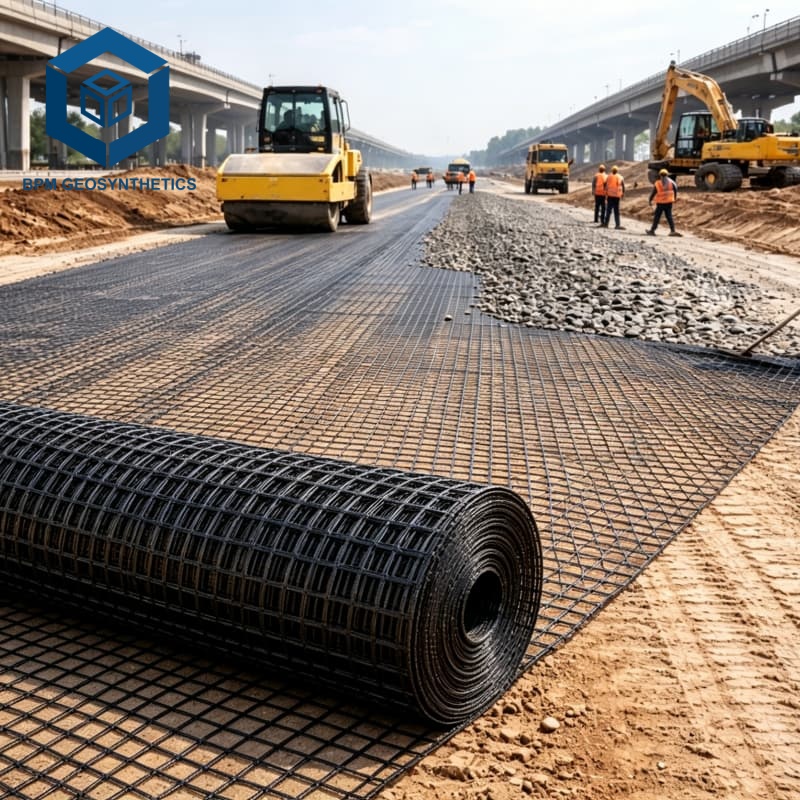
Provides essential structural reinforcement for high-load transportation infrastructure subjected to continuous heavy traffic, vibration, and dynamic impact forces. By absorbing high lateral earth pressures, the geogrid reinforcement for retaining walls maintains total wall alignment, prevents differential settlement, and significantly extends the service life of highway embankments, railway corridors, and overpass approaches.
3.2 Commercial & Residential Segmental Retaining Walls (SRW)
Delivers long-term structural integrity and aesthetic versatility for commercial developments, residential communities, and terraced landscape projects. The geogrid wall integrates seamlessly with modular concrete blocks, stone facings, and timber systems to stabilize steep boundary walls, maximize buildable land area on sloped terrains, and prevent soil sloughing under varying hydrological conditions.
3.3 Bridge Abutments & Heavy Industrial Load-Bearing Walls
Engineered for critical engineering applications demanding extreme load capacity and near-zero tolerance for lateral or vertical displacement. The high-modulus grid structure distributes heavy localized stresses from bridge decks, crane pads, heavy machinery foundations, and port storage yards evenly into the backfill mass, replacing expensive deep pile foundations with flexible, cost-effective reinforced soil systems.
3.4 Steep Slope & Riverbank Erosion Control Structures
Offers flexible, high-tensile reinforcement for steepened soil slopes, landslide remediation projects, and riverbank stabilization structures. The geo grid wall locks backfill materials firmly in place to withstand hydraulic scour, heavy rainfall infiltration, and rapid water drawdown, while facilitating natural vegetation growth to create durable, eco-friendly green slopes along waterways and hilly environments.
4. Geo Grid for Retaining Wall Technical Specifications
4.1 HDPE Uniaxial Geogrid Series (UX Series)
Primary directional tensile strength for vertical earth retention
Property | UX 50 | UX 80 | UX 120 | UX 160 | Test Method |
Ultimate Tensile Strength (MD) | 50 kN/m | 80 kN/m | 120 kN/m | 160 kN/m | ASTM D6637 |
Tensile Strain at Ultimate Strength | ≤ 10% | ≤ 10% | ≤ 10% | ≤ 10% | ASTM D6637 |
Creep Reduced Strength ($RF_{CR}$) | 2.0 | 2.0 | 2.0 | 2.0 | ASTM D5262 |
Carbon Black Content | ≥ 2.0% | ≥ 2.0% | ≥ 2.0% | ≥ 2.0% | ASTM D1603 |
Roll Dimensions (W × L) | 1.3m × 50m | 1.3m × 50m | 1.3m × 50m | 1.3m × 50m | Standard |
4.2 PET Woven / Coated Geogrid Series (PET Series)
High tensile strength with low strain for tall modular walls
Property | PET 50/30 | PET 100/30 | PET 200/50 | PET 300/50 | Test Method |
Tensile Strength (MD) | 50 kN/m | 100 kN/m | 200 kN/m | 300 kN/m | ISO 10319 |
Tensile Strength (CMD) | 30 kN/m | 30 kN/m | 50 kN/m | 50 kN/m | ISO 10319 |
Elongation at Break | ≤ 12% | ≤ 12% | ≤ 10% | ≤ 10% | ISO 10319 |
Coating Type | PVC / Bitumen | PVC / Bitumen | PVC / Bitumen | PVC / Bitumen | Protective |
Roll Dimensions (W × L) | 3.95m × 100m | 3.95m × 100m | 3.95m × 100m | 3.95m × 100m | Custom |
5. Geo Grid for Retaining Wall Standard Installation Workflow
5.1 Foundation & Base Preparation
Excavate the foundation trench to the specified design depth and compact the subgrade soil to the required structural density. Construct a level leveling pad (aggregate or non-reinforced concrete) to ensure a stable foundation. Place the first course of retaining wall units (modular blocks or facing panels), verifying alignment, level, and structural setback before starting grid placement.
5.2 Unrolling & Grid Orientation
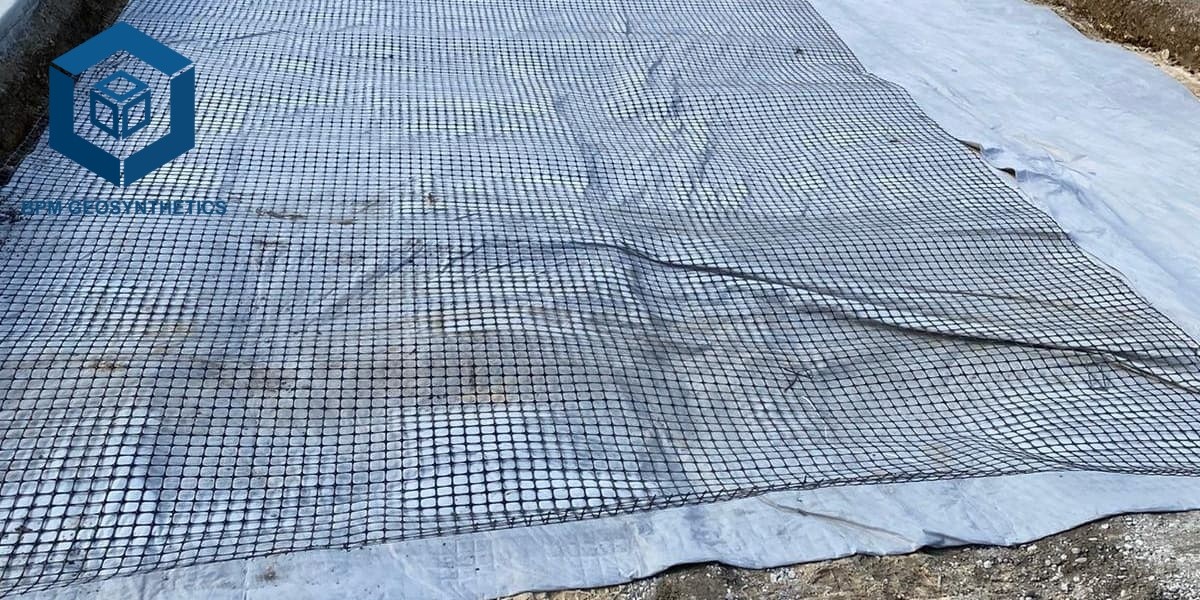
Unroll the retaining wall geo grid smoothly along the surface of the compacted backfill layer. Ensure the high-strength Machine Direction (MD) is oriented strictly perpendicular to the wall face to absorb lateral earth pressure. Cut the geogrid to the specified design length, avoiding overlaps in the primary strength direction unless explicitly approved by the project engineer.
5.3 Tensioning, Anchorage & Connection
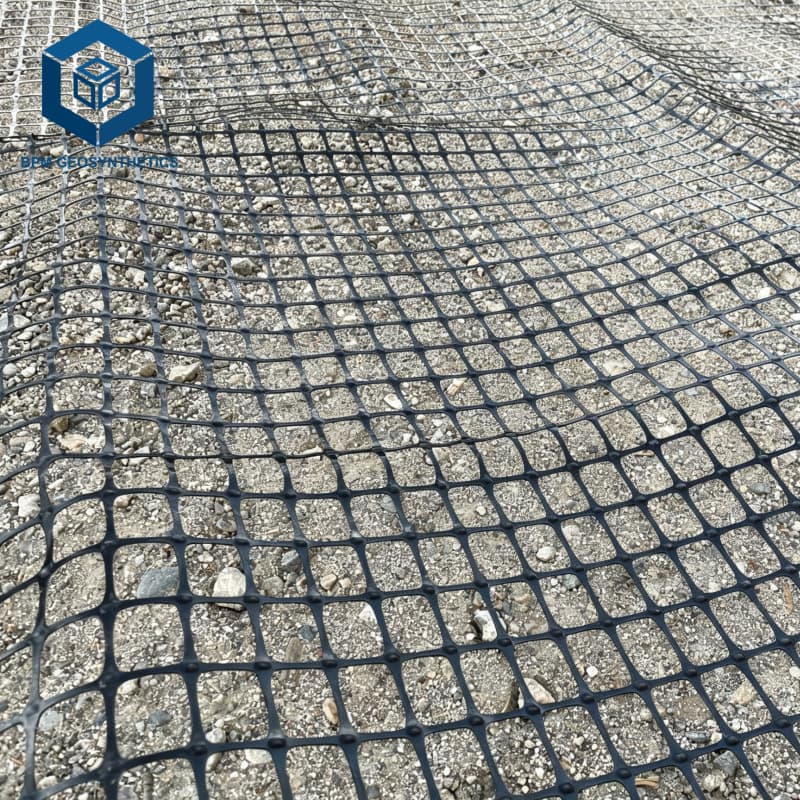
Pull the geogrid reinforced earth wall taut to eliminate all slack, waves, or surface wrinkles. Secure the rear edge of the grid into the subgrade using installation pins, stakes, or staples. Connect the front edge of the geogrid securely to the retaining wall facing units using mechanical connectors, friction pins, or concrete block lip channels as dictated by the system design.
5.4 Backfill Placement & Compaction
Deposit backfill material starting directly behind the facing units and spread it outward toward the tail of the geogrid. Maintain a minimum uncompacted lift thickness of 150–200 mm before passing over the geogrid reinforced retaining wall with compaction machinery. Ensure rubber-tired equipment or vibratory rollers operate only on top of the placed aggregate layer to avoid direct contact with bare grid. Compaction must be performed away from the wall face in parallel passes.
6. How Does Geo Grid Work in Retaining Wall Systems?
A retaining wall is constantly subjected to horizontal pressure from backfill soil. Without proper reinforcement, excessive soil movement may lead to wall displacement, cracking, or structural failure.
Retaining wall geogrid improves structural performance through several mechanisms:
6.1 Soil Interlocking Enhancement
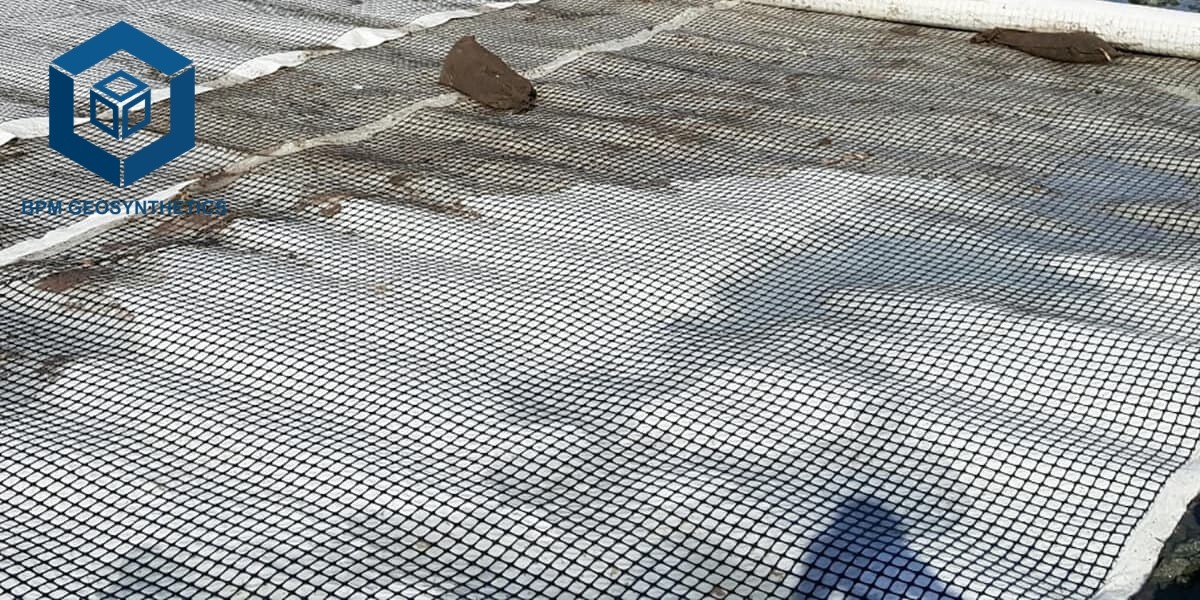
The open grid structure allows soil particles to pass through and lock into the apertures. This interaction creates strong friction between the geogrid and soil, improving overall stability.
6.2 Tensile Reinforcement
Geogrid retaining wall reinforcement provide high tensile strength to resist pulling forces generated by soil pressure. The reinforcement layer transfers stress away from the retaining wall face and distributes loads more evenly.
6.3 Reduced Lateral Movement
By restricting soil deformation behind the wall, geogrid reinforced soil retaining wall minimize settlement, sliding, and rotation risks, helping maintain the long-term performance of retaining structures.
6.4 Improved Load Distribution
The reinforced soil mass acts as an integrated structure, allowing retaining walls to withstand higher loads while reducing construction material requirements.
7. Frequently Asked Questions About Geo Grid for Retaining Wall
Q1: What is the purpose of geo grid for retaining wall?
Geogrid reinforces the soil behind a retaining wall by providing tensile resistance and improving soil stability. It helps reduce lateral movement and increases the overall strength of the structure.
Q2: What type of geogrid is best for retaining walls?
Uniaxial geogrids are commonly used for retaining walls because they provide high tensile strength in the direction where soil pressure acts.
Q3: How long does geo grid for retaining wall last?
High-quality geogrids can provide long-term performance, often lasting several decades when properly installed in suitable conditions.
Q4: How far should geogrid extend behind a retaining wall?
The required reinforcement length depends on wall height, soil conditions, and engineering design requirements.
Q5: Can geogrid be used for residential retaining walls?
Yes. Geogrids are widely used for residential landscaping walls, garden walls, and small reinforced retaining structures.
Q6: What materials are used to manufacture geogrids?
Common materials include HDPE, polypropylene (PP), and polyester (PET), selected according to project requirements.
Q7: Is geogrid better than traditional retaining methods?
Geogrids provide a lightweight, flexible, and cost-effective reinforcement solution while reducing material usage and improving construction efficiency.
Q8: Why choose BPM Geosynthetics geo grid for retaining wall applications?
BPM Geosynthetics provides high-quality geogrid products with reliable performance, customized specifications, strict quality control, and professional support for global construction projects.
8. Summary and Recommendations
Choosing the right reinforcement geogrid is critical to the structural integrity and long-term safety of any retaining wall. Our high-strength geogrids combine ultra-low long-term creep, superior chemical resistance, and optimized soil-interlocking performance—ensuring your MSE walls and slopes remain rock-solid for over 100 years.
Whether you are designing a high-load highway embankment, a commercial modular block wall, or a residential terraced slope, we offer factory-direct pricing, strict ISO/CE quality compliance, and custom roll dimensions tailored to your site requirements.
Ready to Optimize Your Structural Design and Materials Cost?
Contact our The Best Project Material Co., Ltd. (BPM Geosynthetics) engineering support team today to get a free preliminary design estimation, ASTM test reports, or factory-direct pricing within 24 hours.