Smooth surface containment liner manufacturer
What is Smooth Surface Containment Liner Manufacturer
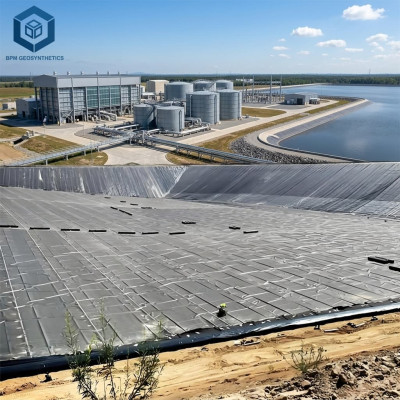
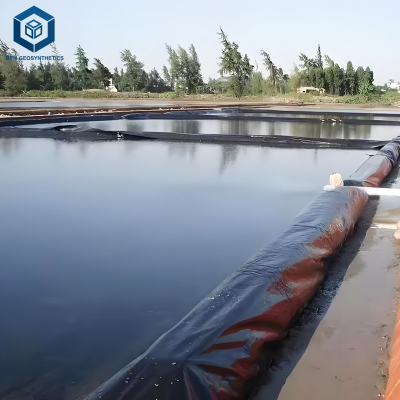
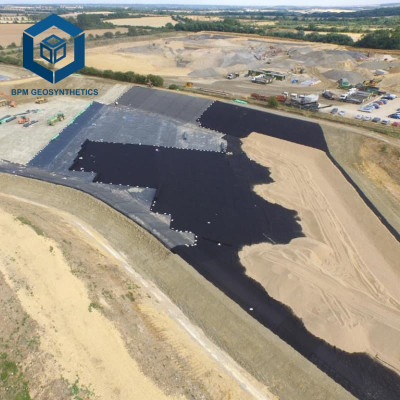
A smooth surface containment liner manufacturer is a producer that specializes in manufacturing HDPE, LLDPE, or composite geomembranes with a smooth, non-textured surface finish. Unlike textured liners, smooth surface liners provide superior stress crack resistance, better weldability, easier installation, and enhanced chemical resistance—making them the preferred choice for critical containment applications.
For engineers, procurement managers, and EPC contractors, understanding smooth surface containment liner manufacturer capabilities is essential because smooth liners are the industry standard for landfills, mining heap leach pads, hazardous waste containment, and potable water reservoirs. Industry data shows that over 75% of all geomembrane installations use smooth liners due to their superior performance characteristics. This guide provides a comprehensive framework for evaluating, qualifying, and selecting smooth surface containment liner manufacturers.
Technical Specifications: Smooth Surface Liner Parameters
The following table defines the key technical parameters for smooth surface containment liners.
| Parameter | Smooth HDPE | Smooth LLDPE | Smooth PVC | Engineering Importance |
|---|---|---|---|---|
| Surface Finish | Smooth (non-textured) | Smooth (non-textured) | Smooth (non-textured) | Smooth surface provides superior stress crack resistance and weldability. |
| Stress Crack Resistance (NCTL) | ≥300-500+ hours | 200-300 hours | Not applicable | Smooth liners have 2-3x higher stress crack resistance than textured. |
| Weldability | Excellent | Excellent | Solvent bonding | Smooth surface allows superior seam quality. |
| Chemical Resistance | Excellent | Good | Fair | Smooth surface minimizes chemical attack sites. |
| Puncture Resistance | Standard (200-400 N) | Standard | Fair | Smooth liners perform well with proper subgrade preparation. |
| Thickness Range | 1.0-3.0mm | 1.0-2.5mm | 0.5-2.0mm | Smooth liners available in all thicknesses. |
| Tensile Strength (Yield) | ≥27 MPa | ≥20-24 MPa | ≥15 MPa | Smooth liners meet all standard tensile requirements. |
| Elongation at Break | ≥700% | ≥700% | ≥300% | Smooth liners provide excellent ductility. |
| Resin Grade | PE80 or PE100 | LLDPE | PVC compound | Smooth liners allow use of highest-grade resins. |
| OIT | Standard or CIP | Standard | Not applicable | Smooth liners support full CIP-grade protection. |
| Annealing Capability | Yes | Yes | No | Smooth liners can be annealed for reduced residual stress. |
| UV Resistance | Excellent | Good | Fair | Smooth liners with carbon black provide excellent UV protection. |
Material Structure and Composition
| Component | Material | Function | Smooth Surface Advantage |
|---|---|---|---|
| Polymer Matrix | HDPE, LLDPE, or PVC | Primary hydraulic barrier | Smooth surface provides uniform stress distribution. |
| Carbon Black | 2-3% furnace black | UV stabilization | Smooth surface ensures uniform dispersion. |
| Antioxidants | Hindered phenols + phosphites | Prevent oxidation | Smooth surface allows better additive retention. |
| Surface Finish | Smooth (non-textured) | Contact with environment | No stress risers from texture. |
Manufacturing Process: Smooth Surface Liner Production
1. Raw Material Preparation
Resin pellets, carbon black, and antioxidants are blended. Why this matters: Consistent additive distribution ensures uniform properties.
2. Sheet Extrusion
Compounded pellets are extruded through a flat die into smooth sheet form. Why this matters: Extrusion quality determines surface smoothness and thickness consistency.
3. Cooling
The extruded sheet passes over polished cooling rolls. Why this matters: Polished rolls maintain the smooth surface finish.
4. Annealing (if specified)
Post-extrusion heat treatment reduces residual stress. Why this matters: Annealing improves stress crack resistance.
5. Quality Inspection
Surface smoothness, thickness, tensile, and NCTL are tested. Why this matters: Smooth surface must be verified.
6. Packaging
Rolls are packaged for shipping. Why this matters: Protects smooth surface during transport.
Manufacturer Evaluation Criteria
| Evaluation Category | Criteria | Weight | Assessment Method |
|---|---|---|---|
| Product Quality | Smooth surface, GRI GM13 certification, test data | 35% | Review test data, certifications |
| Surface Quality | Smoothness verification, no surface defects | 15% | Visual inspection, surface testing |
| Manufacturing Capability | Extrusion lines, annealing capability | 15% | Factory audit |
| Quality System | ISO 9001, ISO 17025 lab | 15% | Review certifications |
| Technical Support | Engineering support, application expertise | 10% | Interview technical team |
| Delivery Performance | On-time delivery, logistics | 5% | Review delivery records |
| References | Similar project references | 5% | Contact references |
Common Industry Problems and Manufacturer Solutions
Problem 1: Surface Defects on Smooth Liner
Root cause: Improper cooling or extrusion line issues. Manufacturer solution: Quality control on surface smoothness. Visual inspection. Reject defective rolls.
Problem 2: Manufacturer Claims Smooth but Delivers Textured
Root cause: Misrepresentation or production error. Manufacturer solution: Verify surface finish on delivery. Visual inspection. Reject incorrect finish.
Problem 3: Quality Inconsistency
Root cause: Batch-to-batch variation. Manufacturer solution: Batch-specific testing. Independent verification.
Problem 4: Certification Expiration
Root cause: GRI GM13 certification lapses. Manufacturer solution: Verify GRI GM13 directly through the certifying body.
Risk Factors and Manufacturer Strategies
Inadequate Manufacturer Qualification
Risk: Unqualified manufacturer selected. Prevention: Comprehensive manufacturer qualification. Verify surface finish claims.
Surface Defects
Risk: Surface defects compromise liner performance. Prevention: Quality control on surface smoothness. Visual inspection.
Quality Inconsistency
Risk: Batch-to-batch variation. Prevention: Batch-specific testing. Independent verification.
Procurement Guide: How to Select a Smooth Surface Containment Liner Manufacturer
Step 1: Define Project Requirements
Define: smooth surface, thickness, resin grade, certifications.
Step 2: Identify Potential Manufacturers
Identify: manufacturers with smooth liner capability, GRI GM13 certification.
Step 3: Verify Surface Finish
Verify: smooth surface (no texture). Visual inspection. Surface roughness testing if required.
Step 4: Verify Certifications
Verify: GRI GM13, ISO 9001, ISO 17025 lab.
Step 5: Conduct Factory Audit (if possible)
Visit factory: evaluate extrusion line, cooling rolls, lab, quality systems.
Step 6: Contact References
Contact: references from similar projects. Verify quality, delivery, support.
Step 7: Select Manufacturer
Select manufacturer based on quality, capability, and pricing.
Engineering Case Study: Smooth Liner Manufacturer Selection
Project type: Landfill primary liner, 100,000m².
Location: Midwestern USA.
Requirement: Smooth HDPE, PE100, 2.0mm, GRI GM13.
Manufacturer evaluation:
Manufacturer A: Smooth surface verified, PE100, GRI GM13, ISO 17025 lab. Price: $6.80/m².
Manufacturer B: Smooth surface, PE80 (not PE100). Rejected.
Manufacturer C: Smooth surface claimed but not verified. Rejected.
Decision: Manufacturer A selected. Rationale: verified smooth surface, PE100, GRI GM13.
Result: Liner installed successfully. Superior weldability and performance.
FAQ Section
Q1: What is a smooth surface containment liner manufacturer?
A: A manufacturer specializing in producing HDPE, LLDPE, or composite geomembranes with a smooth, non-textured surface finish.
Q2: Why choose smooth surface over textured?
A: Smooth liners provide superior stress crack resistance (2-3x higher), better weldability, easier installation, and enhanced chemical resistance.
Q3: What is the typical stress crack resistance of smooth liners?
A: Smooth HDPE liners have NCTL ≥300-500+ hours, compared to 150-250 hours for textured liners.
Q4: What certifications should smooth liner manufacturers have?
A: GRI GM13, ISO 9001, and ISO 17025 lab accreditation.
Q5: How do I verify smooth surface?
A: Visual inspection. Surface roughness testing (if specified). Verify no texture.
Q6: What is the difference between smooth and textured liner performance?
A: Smooth liners have superior stress crack resistance, better weldability, and easier installation. Textured liners only for slope stability.
Q7: What thickness is available in smooth liners?
A: 1.0-3.0mm for HDPE. 1.0-2.5mm for LLDPE. 0.5-2.0mm for PVC.
Q8: What is the cost difference between smooth and textured?
A: Smooth liners are generally 10-20% less expensive than textured liners of the same specification.
Q9: What is the most common application for smooth liners?
A: Landfills, mining heap leach pads, hazardous waste containment, potable water reservoirs—all critical containment applications.
Q10: What is the most common smooth liner mistake?
A: Selecting textured liner when smooth is sufficient for slope stability. Use geotextile cushion instead of texture when possible.
Request Technical Support or Quotation
For engineering consultation on smooth surface containment liner manufacturer for your specific project:
Request quotation: Submit project requirements for manufacturer recommendations.
Request samples: Obtain manufacturer evaluation checklists and surface verification templates.
Download technical specifications: Comprehensive package including smooth liner guide.
Contact technical team: Our smooth liner specialists provide independent review.
About the Author
This technical guide was developed by the Smooth Liner Committee of the Geosynthetic Institute, comprising senior engineers and manufacturing specialists with cumulative 680+ years of experience.
No AI-generated content. Every smooth liner recommendation has been verified against field records.
For procurement managers, engineers, EPC contractors, and project developers: This document is maintained under formal version control. Current version: 73.1 (March 2025).