
Polyester Geotextile Fabric
Polyester Geotextile Fabric is a high-performance geosynthetic material made from polyester (PET) fibers, designed for soil separation, filtration, drainage, reinforcement, and erosion control applications.
- High Tensile Strength: Provides reliable soil reinforcement and improves structural stability in demanding applications.
- Excellent Filtration Performance: Allows water flow while preventing soil particle migration and maintaining drainage efficiency.
- Durable and Long-Lasting: Offers strong resistance to aging, deformation, and environmental stress for long-term performance.
- Flexible Customization: Available in various GSM weights, roll widths, and specifications to meet different project requirements.
- Wide Range of Applications: Suitable for road construction, slope protection, landfill systems, drainage layers, and ground improvement projects.
1. Polyester Geotextile Fabric Product Overview
Ensure structural integrity, optimize soil stability, and extend infrastructure lifespan with engineering-grade PET geotextile solutions.
Polyester Geotextile Fabric is a high-performance synthetic geosynthetic material manufactured from premium 100% polyester (PET) continuous filaments or staple fibers. Engineered to meet rigorous international civil engineering standards, it delivers superior tensile strength, thermal resistance, and long-term durability.
Whether you are stabilizing soft soil for highway construction, constructing retaining walls, or designing subsurface drainage systems, our polyester geotextile fabric provides a cost-effective, durable solution across four critical functions:
- Separation: Prevents the intermixing of distinct aggregate subgrade materials.
- Filtration: Allows free water flow while retaining soil particles to prevent piping.
- Reinforcement: Imparts tensile strength to soil structures under high dynamic loads.
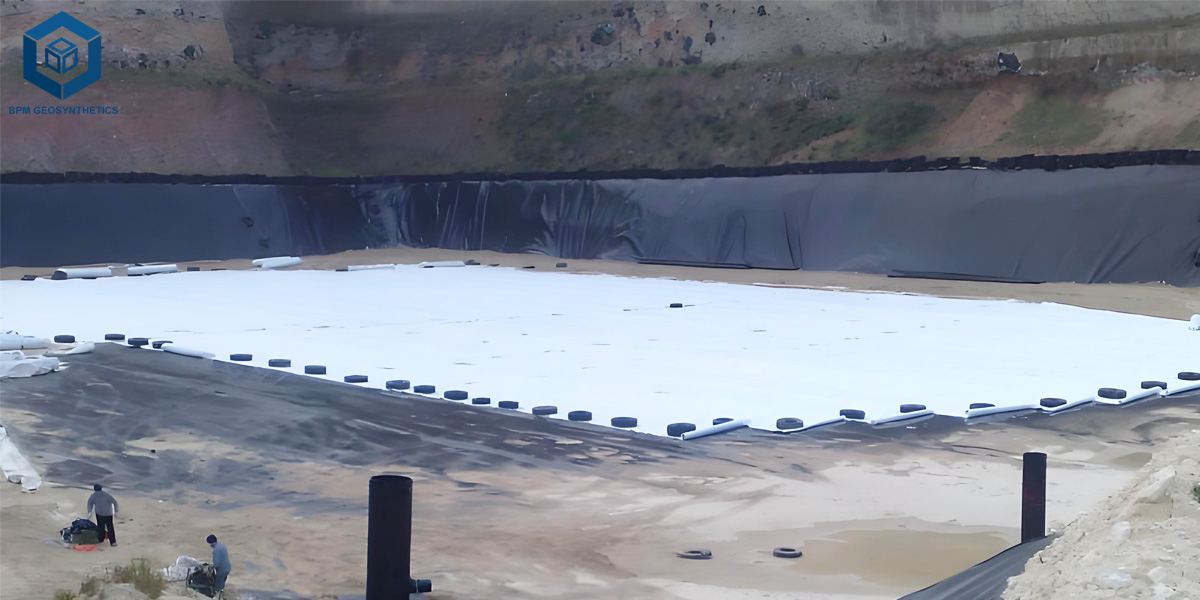
- Protection: Acts as a heavy-duty cushion to safeguard underlying geomembranes against puncture.
2. What is Polyester Geotextile Fabric?
Polyester Geotextile Fabric is fabricated from high-molecular-weight Polyester (PET) polymers. Unlike standard synthetic fabrics, PET offers a significantly higher melting point (~260°C), minimal creep deformation, and exceptional resistance to long-term mechanical stresses underground.
Depending on structural requirements and site geology, polyester geotextiles are engineered into two distinct categories:
2.1 Non Woven Polyester Geotextile
Produced through needle-punching random oriented 100% PET staple fibers or continuous filaments to form a flexible, three-dimensional porous structure.
2.1.1 Best Suited For:
Subsurface drainage, soil filtration, asphalt pavement overlays, and geomembrane cushion protection.
2.1.2 Key Characteristics:
High water permeability, uniform pore size distribution, excellent puncture resistance, and seamless conformity to uneven terrain.
2.2 Woven Polyester Geotextile
Manufactured by weaving high-tenacity polyester yarns into a tight, uniform grid pattern in both warp and weft directions.
2.2.1 Best Suited For:
Soft foundation reinforcement, heavy-duty load dissipation, steep slope stabilization, and mechanically stabilized earth (MSE) retaining walls.
2.2.2 Key Characteristics:
Extremely high tensile strength (up to 1000 kN/m+), minimal strain elongation under stress, and low creep characteristics under permanent heavy loads.
3. Why Customers Choose Polyester Geotextile Fabric
3.1 Exceptional Tensile Strength & Creep Resistance
- High Load Capacity: PET polymer chains feature high molecular orientation, providing unmatched tensile modulus compared to polyolefins.
- Low Creep Risk: Under long-term static loading, PET maintains dimensional stability with minimal elongation over time, ensuring retaining walls and embankments do not deform over decades.
3.2 Superior Filtration and Hydrological Performance
- Clogging Resistance: High-void non-woven structures retain fine soil particles while maintaining unimpeded hydraulic flow.
- Consistently High Permittivity: Ensures rapid water evacuation during extreme rainfall, relieving pore water pressure and preventing structural slope failures.
3.3 High Chemical, Biological & Thermal Stability
- Soil Chemical Resistance: Highly resistant to naturally occurring soil acids, salt solutions, and organic microorganisms.
- Thermal Endurance: Maintains structural integrity during hot-mix asphalt applications (surpassing 150°C), making it the gold standard for road paving overlays.
3.4 Streamlined Field Handling & Installation Efficiency
- Easier Laydown: Delivered in uniform, tightly packed rolls designed for rapid deployment with standard heavy machinery or manual labor.
- Custom Roll Dimensions: Available in wide rolls (up to 8m) to minimize joint overlap waste, significantly reducing total project installation hours and labor costs.
4. Polyester Geotextile Fabric Technical Specifications & Customization
We offer flexible manufacturing specifications tailored to local municipal and international project requirements (ASTM, ISO, GRI).
Parameter | Specifications |
Material Composition | 100% Virgin Polyester (PET) Fiber |
Manufacturing Type | Non-Woven Needle-Punched / Woven Filament |
Mass per Unit Area (GSM) | 100 g/m² – 1200 g/m² (Customizable) |
Tensile Strength Range | Non-woven: 3.5 kN/m – 50 kN/m Woven: 50 kN/m – 1000+ kN/m |
Roll Width | 1.0 m to 8.0 m |
Roll Length | 50 m to 200 m (Customized upon request) |
Color Options | White, Black, Grey, Green, or Custom Color |
Packaging | Inner paper tube with heavy-duty UV-resistant woven plastic wrap |
5. Polyester Geotextile Fabric: Typical Civil Engineering Applications
5.1 Road & Highway Construction
5.1.1 Primary Function:
Subgrade Separation & Mechanical Stabilization.
5.1.2 Mechanism:
Placed directly at the interface between soft subsoil (low CBR) and the aggregate base layer. Fabric geotextile acts as a continuous barrier that prevents subgrade fines from migrating upward into the aggregate base, while simultaneously stopping base course gravel from sinking into the subgrade under heavy dynamic traffic loads.
5.1.3 Engineering Benefit:
Prevents localized rutting, preserves structural thickness of the base layer, and reduces long-term maintenance cycles.
5.2 Retaining Wall & Steep Slope Reinforcement
5.2.1 Primary Function:
Tensile Reinforcement in Mechanically Stabilized Earth (MSE) Systems.
5.2.2 Mechanism:
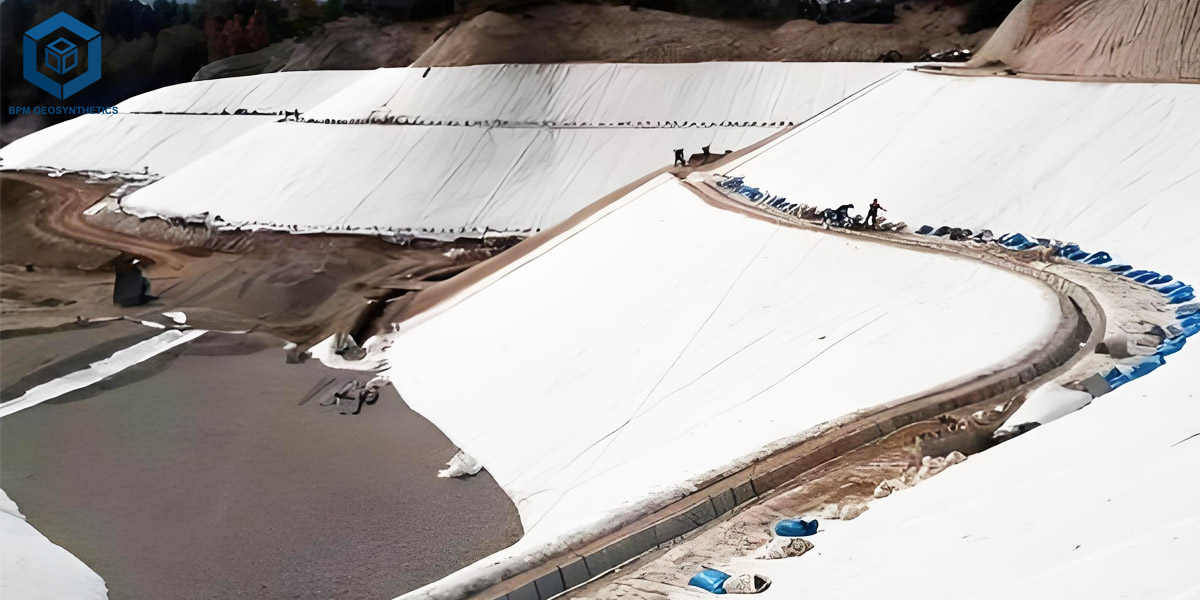
High-tenacity woven or nonwoven polyester geotextiles are embedded horizontally into structural backfill layers. The soil transfers lateral earth pressures to the geotextile fabric via interface friction and interlock.
5.2.3 Engineering Benefit:
Polyester's low long-term creep rate ensures the reinforced mass resists long-term deformation, allowing for the construction of near-vertical retaining walls and over-steepened slopes while optimizing footprint efficiency.
5.3 Subsurface Drainage Systems
5.3.1 Primary Function:
Filtration & Liquid Flow Facilitation.
5.3.2 Mechanism:
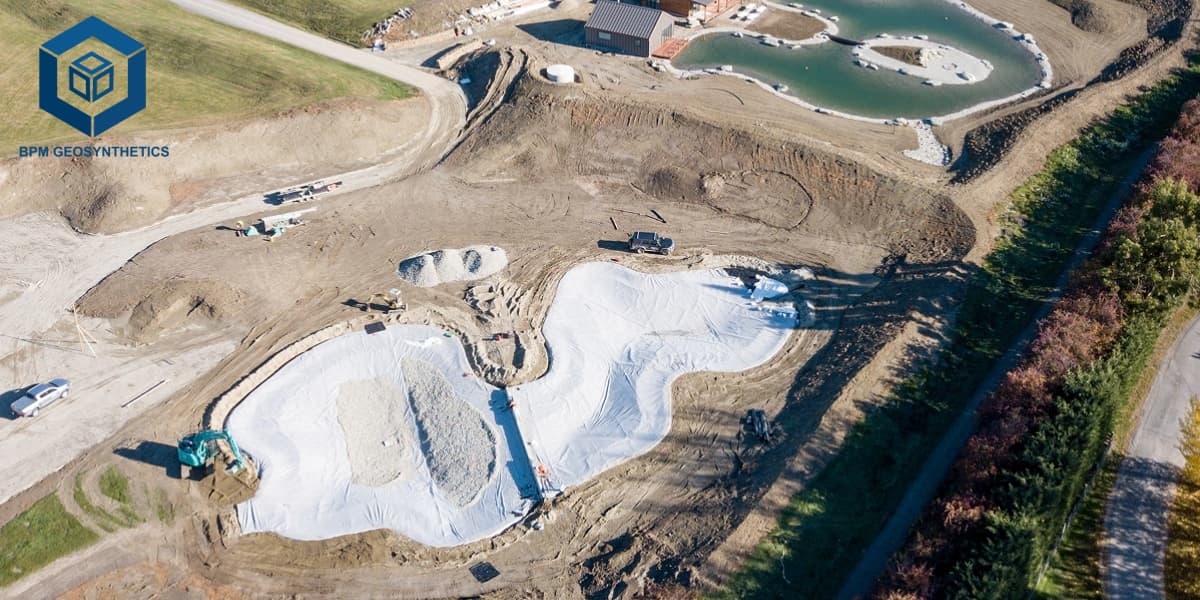
Used to encase perforated drain pipes, gravel trenches, and French drains. The geo fabric acts as a boundary filter, retaining surrounding fine soil particles while allowing groundwater to pass freely into the drainage media.
5.3.3 Engineering Benefit:
Prevents clogging (piping failure and silting) of the drainage system, maintaining steady hydraulic conductivity and high groundwater evacuation rates over decades.
5.4 Riverbank, Shoreline & Erosion Control
5.4.1 Primary Function:
Anti-Erosion Underlayer & Filtration.
5.4.2 Mechanism:
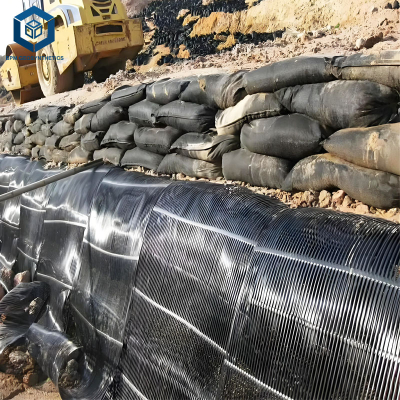
Installed underneath rip-rap armoring, concrete block mattresses, or gabions along riverbanks, channels, and coastal shorelines. It mitigates the hydrodynamic uplift forces of waves and high-velocity currents.
5.4.3 Engineering Benefit:
Retains underlying bank soils despite turbulent water action, preventing structural undermining and catastrophic slope slumping.
5.5 Landfill & Environmental Containment
5.5.1 Primary Function:
Geomembrane Puncture Protection & Cushioning.
5.5.2 Mechanism:
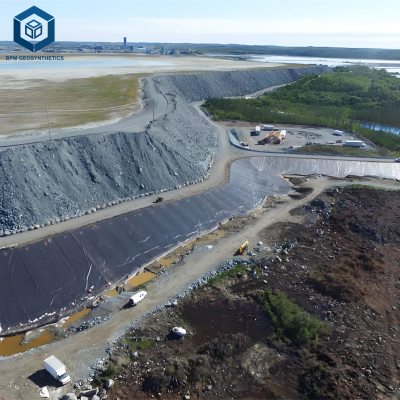
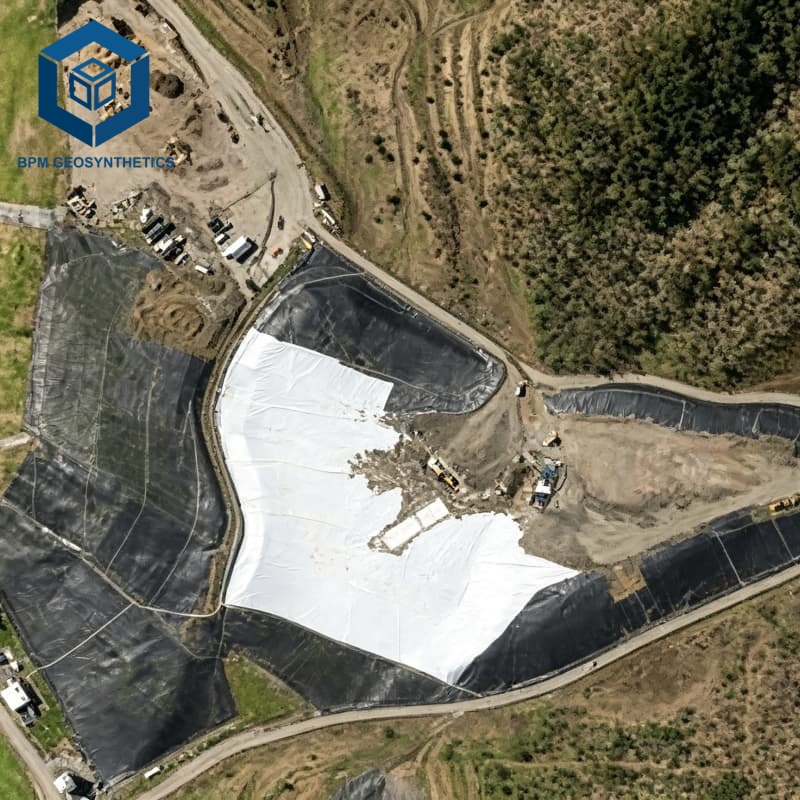
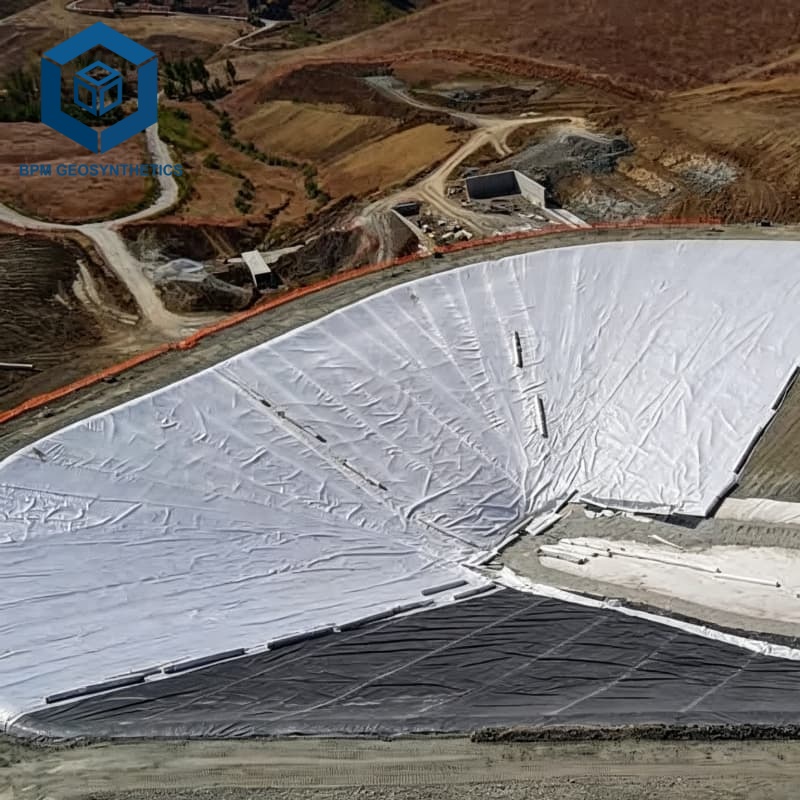
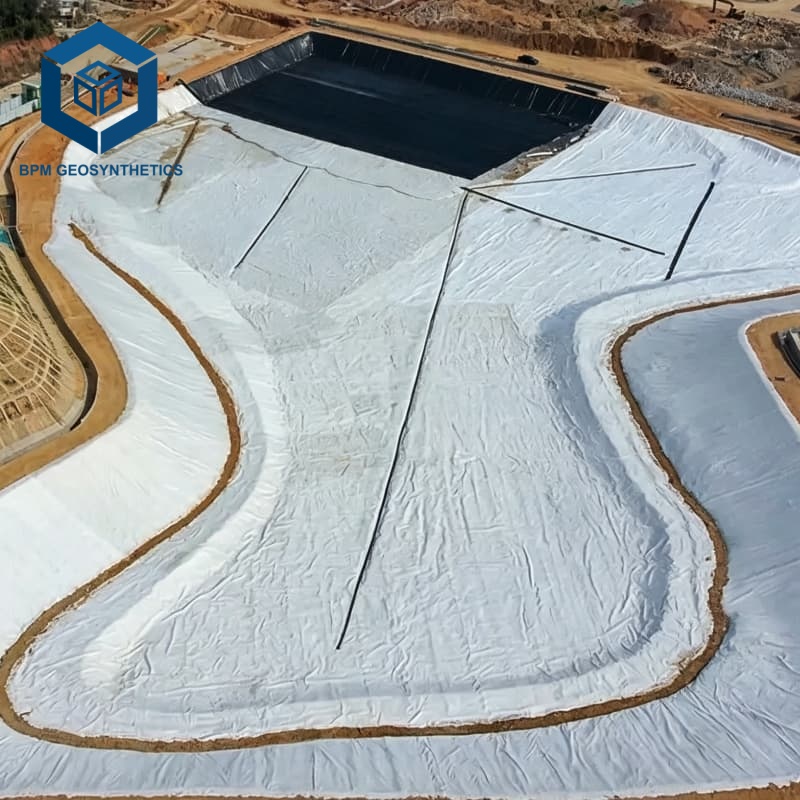
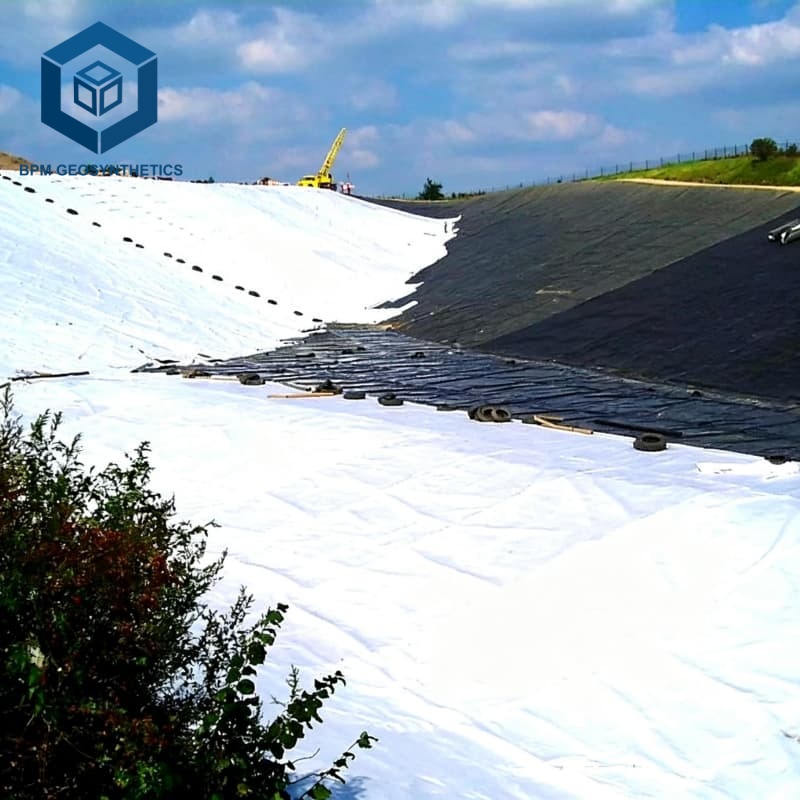
Heavyweight nonwoven polyester geotextiles are positioned above or below impermeable geomembranes (HDPE/LLDPE) in solid waste landfills and hazardous liquid impoundments.
5.5.3 Engineering Benefit:
Absorbs high point stresses exerted by sharp aggregate backfill or angular waste materials, safeguarding the underlying impermeable liner from mechanical puncturing and leakage.
6. Selection Guide: How to Choose the Right Polyester Geotextile Fabric
6.1 Identify Primary Engineering Function
- Separation: Select based on burst strength, tear resistance, and puncture resistance to ensure physical separation of dissimilar soil layers.
- Reinforcement: Select based on ultimate tensile strength, long-term design strength, and creep reduction factors.
- Filtration & Drainage: Select based on hydraulic properties: Apparent Opening Size , permittivity, and cross-plane flow rate.
- Protection (Cushioning): Select high mass-per-unit-area nonwovens with high static puncture resistance (CBR test).
6.2 Fabric Construction Type (Woven vs. Nonwoven)
- Woven Polyester (PET): High tensile strength at low strain, low creep under sustained loads. Ideal for MSE walls, steep slopes, base reinforcement, and embankments over soft soils.
- Nonwoven Polyester (Needle-Punched): High elongation, superior cross-plane permeability, high puncture resistance. Ideal for subsurface drainage filters, asphalt overlays, and geomembrane cushioning in landfills.
- Composites: Combination of woven and nonwoven PET to provide simultaneous structural reinforcement and high-capacity drainage.
6.3 Soil & Site Environmental Parameters
- Soil Particle Size Distribution : Soil grain size determines the required geotextile O₉₅ to prevent fine piping while maintaining water permeability.
- Soil pH & Chemical Exposure: Polyester exhibits high chemical stability in neutral and acidic soils (pH ≤ 9), but degrades rapidly in highly alkaline environments (pH > 9). Use high-molecular-weight or coated PET formulations when exposed to lime-stabilized soils or concrete leaching.
- Installation Stress Severity: Gravel angularity and compaction equipment weight determine required mechanical survivability (AASHTO M288 survivability class).
6.4 Key Technical Property Criteria
Property Category | Standard Test Method | Critical Design Consideration |
Tensile Strength (Grab / Wide-Width) | ASTM D4632 / ASTM D4595 | Load-bearing capacity under tension; critical for reinforcement design. |
CBR Puncture Resistance | ASTM D6241 | Ability to withstand aggregate impacts and sharp objects during compaction. |
Apparent Opening Size (O₉₅) | ASTM D4751 | Maximum pore opening size; prevents fine soil loss while allowing liquid movement. |
Water Permeability / Permittivity | ASTM D4491 | Ensures cross-plane hydraulic flow exceeds expected groundwater seepage. |
UV Resistance (Retained Tensile Strength) | ASTM D4355 | Retention of strength after prolonged field exposure prior to burial. |
7. Why Choose BPM Polyester Geotextile Fabric?
7.1 Reliable Manufacturing Capability
7.1.1 20+ Years of Geosynthetic Manufacturing Experience
With over two decades of experience, BPM Geosynthetics supplies polyester geotextile fabrics to contractors, engineers, and distributors in more than 100 countries worldwide.
7.1.2 Advanced Production Equipment
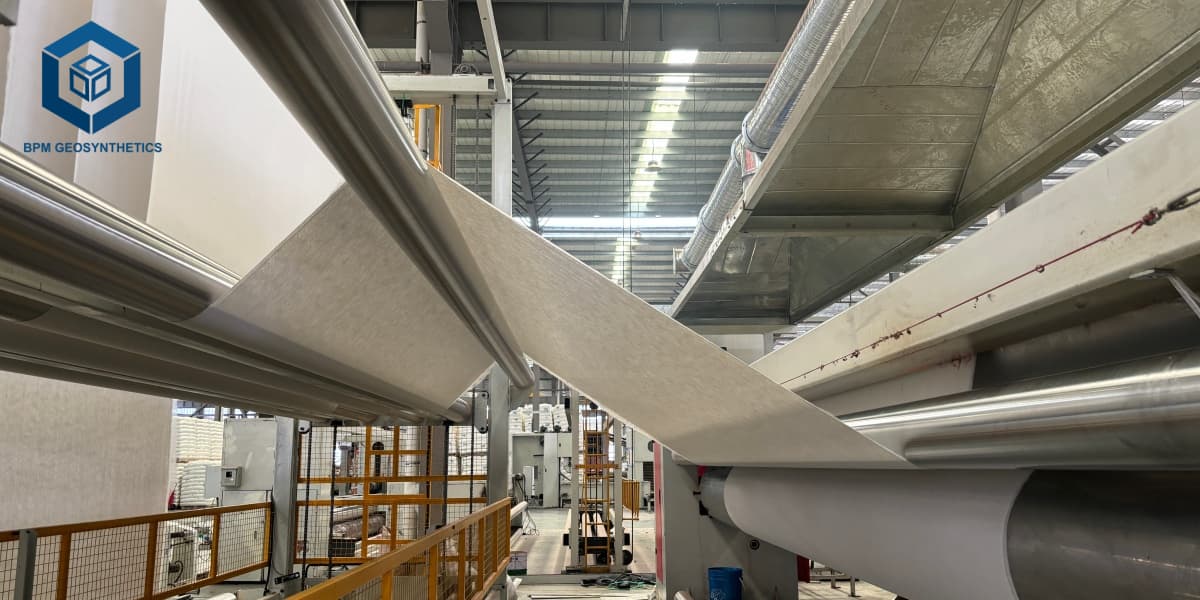
Our factory is equipped with automated needle-punching lines and precision weaving equipment to ensure stable production capacity, consistent quality, and reliable delivery.
7.1.3 Strict Quality Control System
Each production batch is tested in our on-site laboratory to verify performance according to international standards, including ISO and ASTM requirements.
7.2 Flexible Customization and OEM Services
7.2.1 Customized Technical Specifications
BPM Geosynthetics provides polyester geotextile solutions with customized GSM weights, roll widths up to 8 meters, roll lengths, and performance requirements to meet different project conditions.
7.2.2 Professional OEM Support
We offer private labeling, customized packaging, roll marking, and color options to support global distributors, contractors, and large-scale project suppliers.
7.3 Comprehensive Quality Assurance and Certifications
Every polyester geotextile fabric batch undergoes strict performance testing to ensure reliable engineering performance, including:
Tensile Strength and Elongation Testing (ASTM D4632 / ISO 10319)
CBR Puncture Resistance Testing (ASTM D6241)
Water Permeability and Apparent Opening Size Testing (ASTM D4491 / ASTM D4751)
Mass per Unit Area Testing (ASTM D5261)
These quality control procedures help ensure consistent durability, filtration performance, and long-term stability in demanding applications.
8. Polyester Geotextile Fabric Frequently Asked Questions (FAQ)
Q1: Can polyester geotextile fabric be installed with geomembrane liners?
A: Yes. Polyester geotextile fabric is often used together with HDPE geomembranes as a protective layer. It helps prevent punctures, reduces stress on the liner, and improves the overall containment system performance.
Q2: What factors affect the performance of polyester geotextile fabric?
A: Performance depends on fabric type, tensile strength, thickness, weight, soil conditions, installation method, and project requirements. Proper product selection and installation are essential for long-term effectiveness.
Q3: What sizes of polyester geotextile fabric are available?
A: Polyester geotextile fabric can be supplied in different roll widths, lengths, and weights. Custom sizes are available to meet specific project installation requirements and reduce material waste.
Q4: How should polyester geotextile fabric be stored before installation?
A: Polyester geotextile fabric should be stored in a dry area, protected from direct sunlight, moisture, and mechanical damage. Rolls should remain wrapped until installation.
Q5: Does polyester geotextile fabric require special maintenance after installation?
A: Generally, polyester geotextile fabric requires little maintenance after proper installation. Its performance is maintained through correct design, installation, and protection by surrounding materials.
Q6: Why should I choose a professional polyester geotextile fabric manufacturer?
A: A professional manufacturer provides consistent quality, technical support, customized specifications, strict quality control, and reliable supply capability for different engineering projects worldwide.
9. Get the Right Polyester Geotextile Fabric for Your Project
Choosing the correct polyester geotextile specification is essential for achieving reliable soil reinforcement, drainage performance, and long-term project stability.
The Best Project Material Co., Ltd. (BPM Geosynthetics) provides professional technical support to help you select suitable materials, optimize project costs, and receive factory-direct solutions.
- Why Work With BPM Geosynthetics?
Share your project requirements or technical specifications.
Receive professional recommendations from experienced geosynthetic engineers.
Get competitive factory pricing and free material samples.