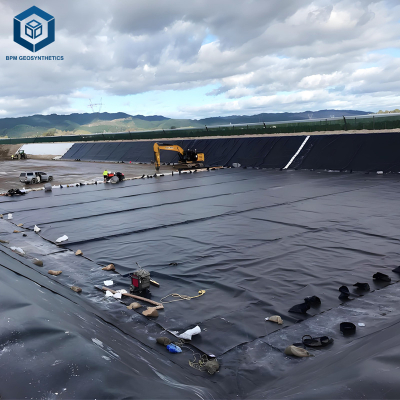
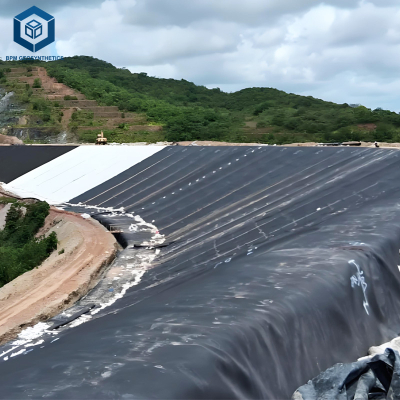
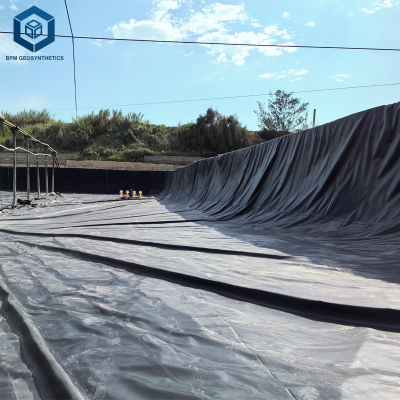
Extrusion welding defect in HDPE liner
In geomembrane containment systems, welding quality determines the long-term integrity of the liner. An extrusion welding defect in HDPE liner can compromise seam strength, leading to leakage risks and expensive remediation. Extrusion welding is widely used for patching, detail work, pipe penetrations, and repairing field seams where hot wedge welding cannot be applied.
This technical article explains the engineering causes of extrusion welding defect in HDPE liner, including material compatibility, welding parameters, equipment conditions, and installation practices. The information is designed for procurement managers, EPC contractors, engineers, and geomembrane distributors responsible for liner system performance.
Definition of Extrusion Welding Defect in HDPE Liner
An extrusion welding defect in HDPE liner occurs when the extruded molten polymer fails to properly fuse with the base geomembrane material. This defect reduces seam bonding strength and may cause peeling, voids, or incomplete fusion within the welded joint.
Technical Parameters and Welding Specifications
Extrusion welding quality depends on strict control of temperature, extrusion rate, and surface preparation. Typical parameters used in HDPE geomembrane installations are listed below.
| Parameter | Typical Range | Engineering Reference |
|---|---|---|
| Geomembrane Thickness | 1.0 – 2.5 mm | GRI GM13 |
| Extrusion Temperature | 200 – 260 °C | HDPE welding practice |
| Preheat Temperature | 220 – 350 °C | Hot air preparation |
| Welding Rod Material | HDPE compatible rod | Same resin family |
| Typical Welding Speed | 0.4 – 1.2 m/min | Field controlled |
| Minimum Seam Strength | ≥ 70% sheet strength | ASTM D6392 |
Structure and Material Composition
Extrusion weld seams typically consist of multiple structural elements that must bond correctly to avoid an extrusion welding defect in HDPE liner.
HDPE geomembrane base sheet – primary containment barrier
Surface preparation zone – ground surface for bonding
Molten extrusion bead – extruded HDPE filler material
Preheated bonding surface – heated by hot air gun
Reinforced weld profile – structural weld bead shape
Proper fusion between these components ensures a continuous waterproof barrier.
Extrusion Welding Manufacturing and Installation Process
Step 1 – Surface Grinding
The geomembrane surface is mechanically ground to remove oxidation and improve bonding characteristics.
Step 2 – Cleaning
Dust and debris are removed from the seam area using clean cloth or compressed air.
Step 3 – Preheating
A hot air gun heats the liner surface to activate the polymer before extrusion welding.
Step 4 – Extrusion Welding
Molten HDPE welding rod is extruded through a handheld extrusion welder to create a continuous weld bead.
Step 5 – Cooling and Solidification
The weld cools naturally to achieve structural strength.
Step 6 – Seam Inspection
Technicians perform visual inspection and destructive seam tests to verify weld quality.
Industry Comparison of Liner Seaming Methods
| Seaming Method | Typical Use | Strength Reliability | Labor Requirement |
|---|---|---|---|
| Hot Wedge Welding | Main field seams | Very High | Moderate |
| Extrusion Welding | Repairs and detailing | High | High |
| Solvent Welding | PVC liners | Moderate | Low |
| Adhesive Bonding | Temporary seams | Low | Low |
Application Scenarios
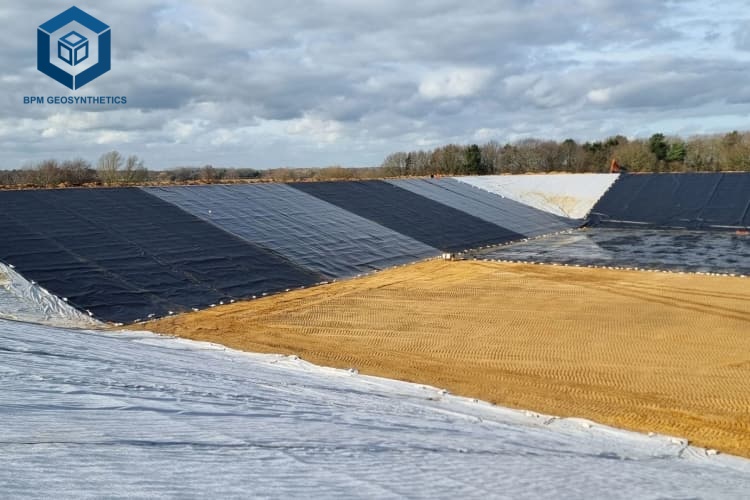
Understanding extrusion welding defect in HDPE liner is particularly important in containment systems requiring complex welding geometry.
Mining tailings storage facilities
Municipal landfill liners
Wastewater treatment lagoons
Agricultural irrigation reservoirs
Chemical containment systems
Aquaculture pond liners
In these projects, EPC contractors and engineering consultants must ensure weld quality through strict quality control procedures.
Core Pain Points and Engineering Solutions
1. Insufficient Surface Preparation
Oxidized HDPE surfaces prevent proper fusion between the weld bead and liner.
Solution:
Grind seam surfaces before welding
Remove oxidation layers thoroughly
2. Incorrect Extrusion Temperature
Low temperature prevents fusion while excessive heat degrades polymer structure.
Solution:
Maintain controlled extrusion temperature
Perform calibration before production welding
3. Contaminated Welding Area
Dust or moisture reduces bonding strength.
Solution:
Clean seam surfaces carefully
Avoid welding during rain or high humidity
4. Operator Skill Variability
Extrusion welding requires manual control and experienced technicians.
Solution:
Use trained geomembrane welding technicians
Conduct daily trial weld testing
Risk Warnings and Prevention Recommendations
Avoid extrusion welding on contaminated surfaces.
Do not use incompatible welding rods.
Ensure proper surface grinding before welding.
Perform destructive seam testing regularly.
Maintain proper welding equipment calibration.
Failure to address these factors significantly increases the likelihood of an extrusion welding defect in HDPE liner.
Procurement and Selection Guide
When selecting geomembrane installation services or materials, procurement teams should follow these steps:
Verify geomembrane material meets GRI GM13 standards.
Confirm compatibility of welding rod and liner material.
Evaluate installer certifications and project experience.
Inspect welding equipment specifications.
Review seam testing procedures.
Request previous engineering project references.
Engineering Case Example
A wastewater treatment lagoon project installed a 1.5 mm HDPE geomembrane liner across a 45,000 m² containment area. During quality inspection, technicians detected an extrusion welding defect in HDPE liner in several pipe penetration welds due to insufficient surface grinding and low preheat temperature.
The installation team re-ground the weld areas, increased preheat temperature to 300 °C, and repeated the extrusion welding process. Subsequent seam tests confirmed full compliance with ASTM peel and shear strength requirements, restoring system integrity.
FAQ – Extrusion Welding Defect in HDPE Liner
1. What is an extrusion welding defect in HDPE liner?
It occurs when the extruded polymer fails to properly fuse with the geomembrane surface.
2. What causes extrusion welding defects?
Common causes include poor surface preparation, incorrect temperature, or contaminated weld areas.
3. Is extrusion welding stronger than wedge welding?
Hot wedge welding typically provides more consistent strength for long seams.
4. Where is extrusion welding mainly used?
For repairs, patches, pipe penetrations, and complex liner details.
5. What temperature is used in extrusion welding?
Typically between 200°C and 260°C depending on liner thickness.
6. Can defective extrusion welds be repaired?
Yes, defective welds can be removed and rewelded after proper surface preparation.
7. What testing method is used for seam verification?
Destructive seam testing such as ASTM D6392 peel and shear tests.
8. Does weather affect extrusion welding?
Yes, cold or windy conditions can reduce welding quality.
9. What equipment is used for extrusion welding?
Handheld extrusion welders with integrated heating and extrusion systems.
10. Who should perform extrusion welding?
Certified geomembrane welding technicians with field installation experience.
Request Technical Documentation or Project Quotation
For technical data, welding guidelines, or pricing information related to HDPE geomembrane liner systems, contact our engineering team.
HDPE geomembrane technical datasheets
Welding parameter guidelines
Engineering design consultation
Material samples for testing
Submit your project specifications to receive a detailed quotation and engineering documentation.
Author & Technical Authority
This article was prepared by a geomembrane containment system specialist with more than 12 years of experience in landfill, mining, and water containment engineering projects. The author has participated in liner installation supervision and quality inspection across Asia, Africa, and South America.
Technical references follow widely recognized geomembrane standards including ASTM, GRI GM13, and international geomembrane installation practices.