The 7 Best HDPE Geomembrane Suppliers Reviewed
In the rapidly expanding global containment market—projected to reach USD 3.8 billion by 2026—selecting the right HDPE geomembrane supplier is as critical as the material specification itself. A superior liner installed poorly or sourced from an unreliable manufacturer can compromise decades of engineering integrity. Whether you are lining a 50-hectare landfill cell, a mining heap leach pad, or an aquaculture reservoir, the supplier behind the product determines everything from resin traceability to seam welding support and long-term warranty enforcement.
This comprehensive review spotlights the top 7 HDPE geomembrane suppliers of 2026, evaluated on production capacity, certification rigor, global project footprint, technical support, and value proposition. Each entry is backed by field data, ASTM/GRI compliance benchmarks, and real-world deployment insights to guide your procurement strategy.
1. Why HDPE Geomembrane Suppliers Matter?
Not all HDPE geomembranes are created equal—and neither are the companies that manufacture them. The supplier ecosystem directly influences four pillars of project success:
1.1 Material Consistency and Traceability
Top-tier suppliers utilize 100% virgin HDPE resin with batch-level traceability, ensuring carbon black dispersion meets Category 1 or 2 per ASTM D5596. Subpar manufacturers may blend recycled content inconsistently, leading to oxidation hotspots and premature failure. Data from the Geosynthetic Institute indicates that 40% of field failures stem from resin quality deviations rather than installation error.
1.2 Certification and Regulatory Compliance
Reputable suppliers maintain GRI-GM13, ISO 9001, and ISO 14001 certifications as baseline standards. Leading players also hold project-specific approvals such as NSF/ANSI 61 for potable water or EU CE marking for infrastructure. Without rigorous third-party auditing, compliance claims remain unverified.
1.3 Technical Support and Field Service
The best suppliers offer more than rolls of liner—they provide welding technician training, on-site QA/QC supervision, and custom fabrication services. Suppliers with global service networks reduce installation defects by up to 25% compared to factory-only operations.
1.4 Supply Chain Resilience
With resin price volatility exceeding $1,200–$1,600 per ton in 2026, suppliers with vertical integration or multi-continent manufacturing networks mitigate lead-time risks. A reliable supplier ensures 10,000 m² of 1.5 mm HDPE arrives on schedule, pre-fabricated to your panel layout, rather than delaying critical path construction.
2. Key Criteria for Evaluating HDPE Geomembrane Suppliers
Before diving into the rankings, here is the evaluation framework used for this review:
Criterion | Weight | Benchmark |
Production Capacity | 20% | ≥20,000 tons/year or equivalent |
Certification Portfolio | 20% | GRI-GM13, ISO 9001, ASTM compliance |
Global Project Experience | 15% | 500+ completed projects across 3+ continents |
Technical & Field Support | 15% | On-site welding support, custom fabrication |
Product Range & Innovation | 15% | Smooth, textured, conductive, custom widths |
Price Competitiveness | 10% | Transparent pricing, bulk discounts |
Sustainability & ESG | 5% | Recycled content options, carbon reporting |
3. The 7 Best HDPE Geomembrane Suppliers of 2026
3.1 Solmax (Canada) — Best Overall Global Leader
- Headquarters: Montreal, Canada
- Annual Capacity: 250,000+ tons
- Key Certifications: GRI-GM13, ISO 9001, ISO 14001, CE Mark
Solmax stands as the world’s largest geosynthetics manufacturer, formed through the merger of Solmax and GSE Environmental. With production facilities across North America, Europe, South America, and Asia, Solmax offers unmatched geographic coverage and supply chain redundancy.
3.1.1 2026 Project Highlight:
A 60,000 m² textured HDPE installation at a Chilean copper mine achieved zero seam failures over 18 months of acidic tailings exposure (pH 2.0–2.5), with Solmax field technicians providing on-site welding certification.
3.1.2 Pros:
Unparalleled global logistics network; 10-day delivery to most regions
Full R&D capabilities with proprietary resin blends
Comprehensive warranty programs (up to 20 years on exposed applications)
3.1.3 Cons:
Premium pricing; 15–20% higher than mid-tier competitors
Minimum order quantities can be restrictive for small-scale projects
3.2 AGRU America (Austria / USA) — Best for Precision Engineering
- Headquarters: Bad Hall, Austria / Georgetown, South Carolina, USA
- Annual Capacity: 80,000+ tons
- Key Certifications: GRI-GM13, ISO 9001, CE Mark, DIBt (Germany)
AGRU is synonymous with European engineering precision. Their flat-die extrusion process produces HDPE geomembranes with <0.5% thickness variation—a critical factor for uniform stress distribution in dam and canal applications.
3.2.1 2026 Project Highlight:
In a Danube River basin reservoir rehabilitation (Austria, 2025–2026), 25,000 m² of 2.0 mm AGRU HDPE reduced seepage by 98% while withstanding seasonal water level fluctuations of ±8 meters.
3.2.2 Pros:
Exceptional thickness uniformity and quality control
Strong technical documentation and engineering support
Excellent performance in cold-climate and high-UV environments
3.2.3 Cons:
Higher logistics costs for projects outside Europe and North America
Textured products command a significant price premium
3.3 Atarfil (Spain) — Best for Custom Fabrication & Wide Rolls
- Headquarters: Alcalá de Henares, Spain
- Annual Capacity: 12 million m²/year
- Key Certifications: GRI-GM13, ISO 9001, ISO 14001
Atarfil has carved a niche as the custom fabrication specialist, producing hdpe liner in widths up to 11.6 meters—among the widest in the industry. This capability reduces field seams by 20–30%, directly lowering installation labor and leak risk.
3.3.1 2026 Project Highlight:
A South African platinum mine deployed 45,000 m² of custom 3.0 mm Atarfil HDPE with pre-fabricated anchor trenches, reducing field welding time by 35% and accelerating project completion by six weeks.
3.3.2 Pros:
Widest roll formats minimize seams and installation costs
Strong ODM/OEM capabilities for branded or specialized liners
Excellent carbon black dispersion and UV stabilization
3.3.3 Cons:
Higher minimum order quantities (typically ≥1,500 m²)
Premium pricing for ultra-wide or custom formulations
3.4 NAUE (Germany) — Best for Integrated Geosynthetic Systems
- Headquarters: Espelkamp, Germany
- Annual Capacity: 50,000+ tons (geosynthetics total)
- Key Certifications: GRI-GM13, ISO 9001, CE Mark, BAM (Germany)
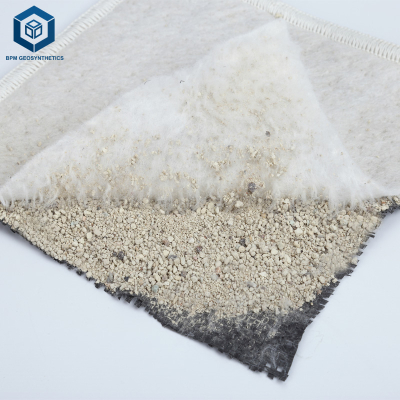
NAUE differentiates itself through system integration. Rather than supplying geomembranes in isolation, NAUE engineers complete containment solutions combining HDPE liners with geosynthetic clay liner (GCL), drainage geocomposites, and geotextiles.
3.4.1 2026 Project Highlight:
A Rhine River flood defense upgrade utilized 40,000 m² of NAUE 2.0 mm HDPE integrated with NaBento® GCL and Secugrid® geogrids, creating a multi-layer containment system with a design life exceeding 80 years.
3.4.2 Pros:
Unmatched expertise in geosynthetic system design
Rigorous German QA/QC standards with full traceability
Strong engineering support for complex civil projects
3.4.3 Cons:
System-focused approach may be over-engineered for simple pond liners
Higher upfront costs due to integrated solution bundling
3.5 Layfield Environmental Systems (Canada) — Best Value for Large-Scale Water Projects
- Headquarters: Richmond Hill, Ontario, Canada
- Annual Capacity: 50,000+ tons
- Key Certifications: GRI-GM13, ISO 9001, NSF/ANSI 61
Layfield has built its reputation on cost-effective, high-volume delivery for water containment applications. Their Enviro Liner series balances mechanical performance with competitive pricing, making them a go-to supplier for irrigation reservoirs, aquaculture, and stormwater management.
3.5.1 2026 Project Highlight:
An Australian irrigation district installed 80,000 m² of Layfield 1.0 mm HDPE across 12 reservoir cells, achieving 85% evaporation reduction and conserving an estimated 500,000 m³ of water annually.
3.5.2 Pros:
Highly competitive pricing, especially for bulk orders (>20,000 m²)
Lightweight formulations ease handling and deployment
Strong track record in aquaculture and potable water (NSF-certified)
3.5.3 Cons:
Moderate stress crack resistance limits suitability for ultra-aggressive chemical environments
Textured product range less extensive than Solmax or AGRU
3.6 Raven Industries (USA) — Best for Sustainability & ESG Compliance
- Headquarters: Sioux Falls, South Dakota, USA
- Annual Capacity: 40,000+ tons
- Key Certifications: GRI-GM13, ISO 9001, Recycled Content Certified
As environmental regulations tighten globally, Raven Industries leads the charge in sustainable geomembrane manufacturing. Their Permalon series incorporates up to 25% post-consumer recycled HDPE while maintaining full GRI-GM13 mechanical and chemical performance benchmarks.
3.6.1 2026 Project Highlight:
A U.S. solar farm floating array project utilized Raven’s white-reflective HDPE to reduce water surface temperatures by 12°C, improving photovoltaic efficiency while providing potable-water-grade containment.
3.6.2 Pros:
Industry-leading recycled content without performance compromise
NSF/ANSI 61 certification for potable and aquaculture use
Strong ESG reporting and carbon footprint transparency
3.6.3 Cons:
Slightly lower tensile strength (22 kN/m) compared to premium mining grades
Primarily focused on North American market; limited global service network
3.7 BPM Geosynthetics (China) — Best for Customizable, Factory-Direct Value
- Headquarters: Taian, Shandong, China
- Annual Capacity: 30,000+ tons
- Key Certifications: GRI-GM13, ISO 9001, ISO 14001, CE Mark
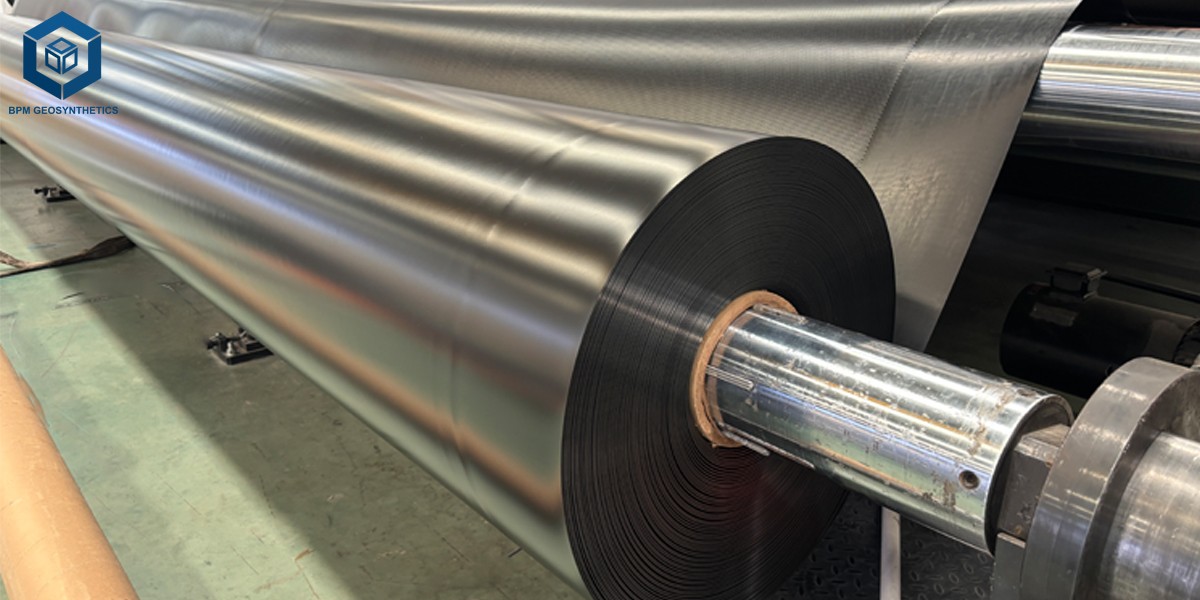
BPM Geosynthetics represents the rising tier of Chinese manufacturers delivering ASTM/GRI-certified HDPE geomembranes at highly competitive factory-direct pricing. With thickness ranges from 0.3 mm to 3.0 mm and roll widths up to 8.0 m, BPM offers exceptional customization flexibility.
3.7.1 2026 Project Highlight:
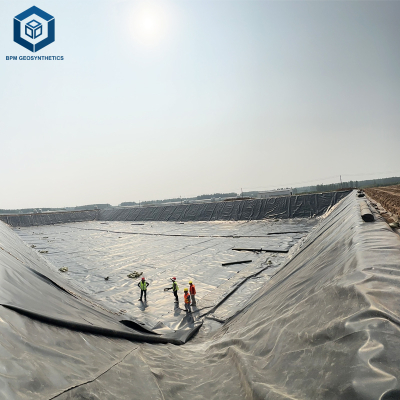
A Malaysian palm oil mill effluent (POME) lagoon project deployed 30,000 m² of BPM 1.5 mm textured HDPE, achieving 99.9% containment of organic effluent with on-site welding support provided by BPM technicians.
3.7.2 Pros:
Highly competitive pricing ($0.80–$3.50/m² depending on spec)
Rapid custom production with flexible MOQs
Full ODM/OEM services for branded liners
3.7.3 Cons:
Longer shipping lead times to Europe and the Americas
Brand recognition still building compared to Solmax or AGRU
4. Comparison Table: The 7 Best HDPE Geomembrane Suppliers
Supplier | Headquarters | Best For | Annual Capacity | Key Certifications |
Solmax | Canada | Global mega-projects, mining | 250,000+ tons | GRI-GM13, ISO 9001/14001, CE |
AGRU | Austria/USA | Precision engineering, dams | 80,000+ tons | GRI-GM13, ISO 9001, DIBt |
Atarfil | Spain | Custom fabrication, wide rolls | 12M m² | GRI-GM13, ISO 9001/14001 |
NAUE | Germany | Integrated geosynthetic systems | 50,000+ tons | GRI-GM13, ISO 9001, BAM |
Layfield | Canada | Water projects, value procurement | 50,000+ tons | GRI-GM13, ISO 9001, NSF/ANSI 61 |
Raven | USA | Sustainability, ESG compliance | 40,000+ tons | GRI-GM13, ISO 9001, Recycled Cert |
BPM | China | Factory-direct customization | 30,000+ tons | GRI-GM13, ISO 9001/14001, CE |
5. How to Choose the Right HDPE Geomembrane Suppliers?
Selecting from these seven elite suppliers requires aligning their strengths with your project profile:
5.1 For Mining and Hazardous Waste
Prioritize: Solmax, BPM, or AGRU
Rationale: Maximum chemical resistance, >3,500-hour stress crack performance, and global field service for remote sites.
5.2 For Dams, Canals, and Steep Slopes
Prioritize: AGRU , BPM or Atarfil
Rationale: Superior thickness uniformity (AGRU) or ultra-wide rolls reducing seams (Atarfil), both critical for hydraulic structures.
5.3 For Reservoirs, Aquaculture, and Irrigation
Prioritize: Layfield or Raven
Rationale: Cost efficiency for large water surface areas, NSF/ANSI 61 potable water certification, and sustainable options.
5.4 For ESG-Mandated or Green Infrastructure
Prioritize: Raven Industries
Rationale: Verified recycled content, carbon transparency, and end-of-life recyclability.
5.5 For Budget-Conscious Projects Requiring Custom Specs
Prioritize: BPM Geosynthetics
Rationale: Factory-direct pricing with full GRI-GM13 compliance and flexible customization.
Conclusion
The HDPE geomembrane supplier you choose is a long-term strategic partner, not merely a vendor. The seven suppliers reviewed here represent the full spectrum of global excellence—from Solmax’s unmatched scale and AGRU’s precision engineering to Raven’s sustainability leadership and The Best Project Material Co., Ltd. (BPM Geosynthetics)’s factory-direct value.
Ultimately, the best supplier is the one whose production capacity, certification portfolio, technical support, and pricing structure align with your project’s specific containment challenges, regulatory environment, and risk tolerance. Invest time in due diligence during procurement, and your geomembrane system will deliver the 50–100 years of service life that properly engineered HDPE promises. Welcome your inquiry to BPM Geosynthetics Team.