The 7 Best Geotextile Drainage Reviewed
1. Introduction
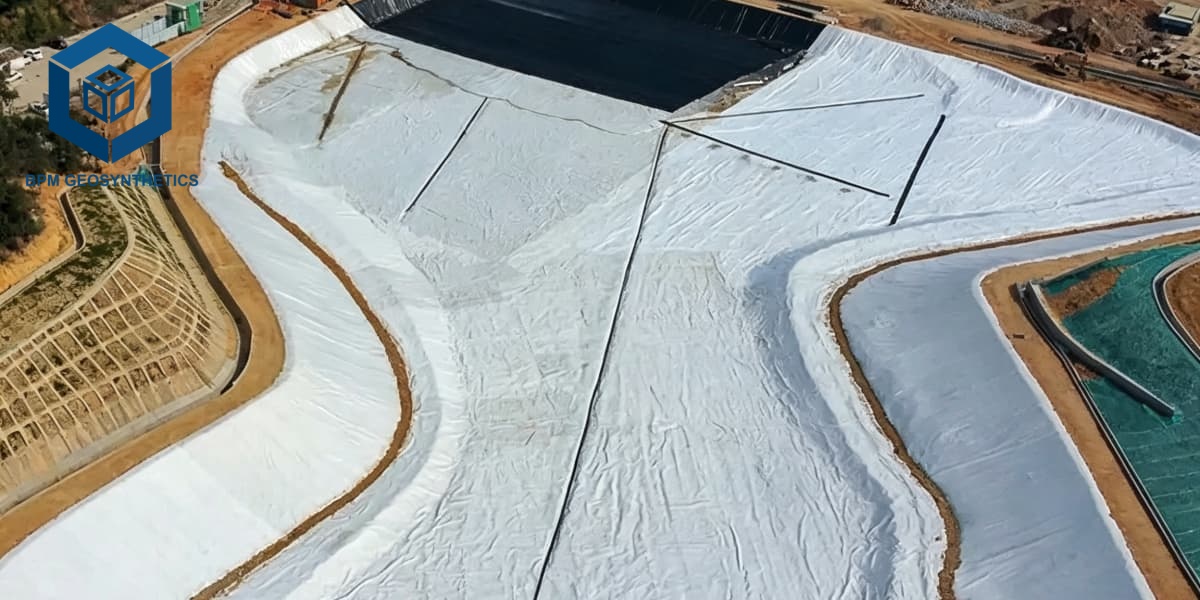
Water management is one of the most critical factors in the longevity and performance of civil engineering projects. Poor drainage leads to soil saturation, reduced bearing capacity, frost heave, slope instability, and premature pavement failure. Geotextiles have emerged as essential components in drainage systems, providing filtration, separation, and in-plane water conveyance that traditional aggregate drains alone cannot achieve.
This review evaluates seven geotextile drainage that have demonstrated superior drainage performance across diverse applications—from French drains and retaining walls to highway subgrades and seasonally frozen slopes. The rankings consider laboratory test data, field performance studies, and real-world user feedback.
2. Understanding Geotextile Drainage
Geotextiles provide drainage through two primary mechanisms:
2.1 Vertical Permeability (Filtration):
Water flows perpendicular to the fabric plane, passing through while retaining soil particles. Nonwoven geotextiles excel in this function due to their random fiber structure and high porosity.
2.2 In-Plane Drainage (Transmissivity):
Water flows laterally within the geotextile drainage fabric plane, conveyed through the fabric's internal voids. This property is measured by transmissivity—the product of in-plane permeability and thickness under normal pressure.
2.3 Wicking Geotextiles: An Emerging Technology
Recent research has highlighted wicking non woven geotextile drainage fabric as a significant advancement in drainage technology. Made from hydrophilic and hygroscopic fibers, these materials can remove moisture from soils under unsaturated conditions—something conventional geotextiles cannot achieve. Laboratory studies demonstrate that wicking geotextiles provide superior drainage and reinforcement capabilities compared to traditional non-woven materials.
Wicking nonwoven drainage fabric operate through capillary suction, admitting liquid water without external head when a negative matric potential exists. In seasonally frozen regions, unfrozen-water films and cryosuction provide additional driving force, making these materials particularly valuable for cold-region infrastructure.
3. The 7 Best Geotextile Drainage Options
3.1 Wicking Geotextiles (Best for Unsaturated & Cold Regions)
- Manufacturers:Various (Mirafi, TenCate, specialized geosynthetic producers)
Wicking geotextiles represent the newest and most technologically advanced drainage solution. Their hydrophilic fibers actively remove moisture from soils under unsaturated conditions, unlike conventional geotextiles that only drain when soils approach saturation.
3.1.1 Key Specifications:
- Material: Hydrophilic nylon filaments woven with high-tenacity yarns
- Dual-function: Mechanical reinforcement + moisture regulation
- Effective under negative pore-water pressures
- Proven in projects: Dalton Highway (Alaska), Texas expansive soils, Yukon Highway, Alberta Railway
3.1.2 Why It Ranks #1:
Wicking geotextiles provide drainage where conventional drain filter fabric cannot—actively reducing soil moisture content, controlling frost heave, and mitigating rainfall infiltration under unsaturated conditions. Field monitoring confirms their effectiveness in reducing subgrade moisture and preventing settlement and cracking.
3.1.3 Best For:
Pavements over expansive soils, seasonally frozen regions, highway subgrades, and slopes requiring both reinforcement and drainage.
3.2 Needle-Punched Non-Woven Geotextiles (Best for French Drains & General Drainage)
- Manufacturers: VEVOR, Mirafi, Terram, Propex
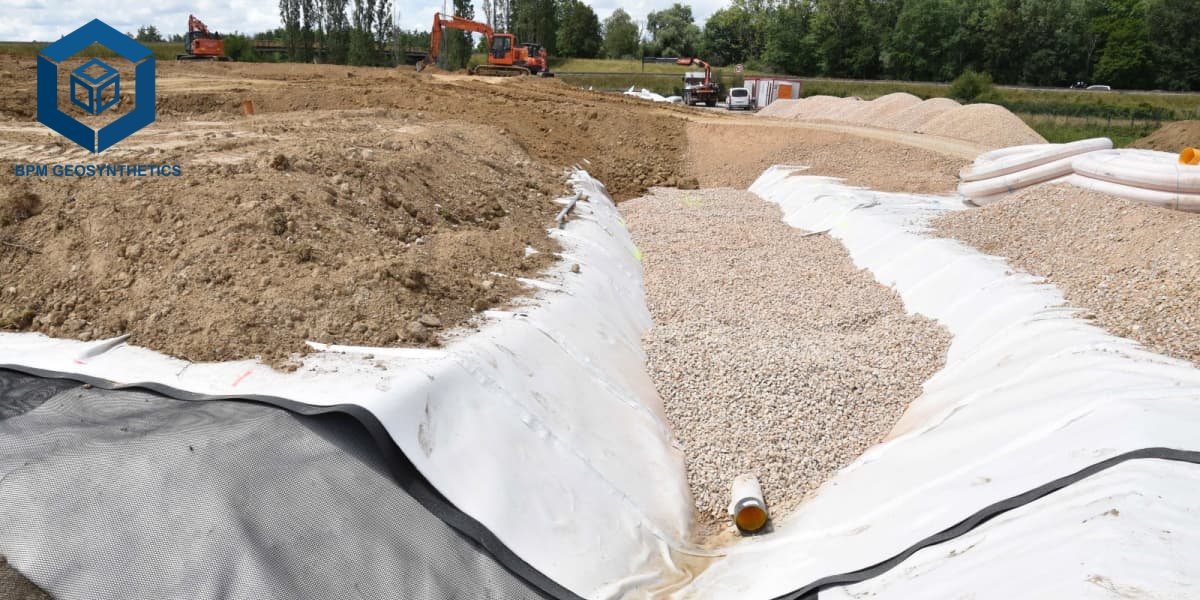
Needle punched non woven geotextiles are the industry standard for drainage applications where vertical permeability and soil retention are the primary requirements. Their felt-like structure provides excellent filtration while allowing high water flow rates.
3.2.1 Key Specifications:
- Typical weight: 4–8 oz/yd²
- High permittivity: 1.0–1.8 s⁻¹
- Excellent soil retention: AOS 0.15–0.43 mm
- Available in widths up to 6 meters
3.2.2 User Feedback:
One reviewer noted, "Vevor's 6x100ft 8 oz geotextile worked great for the foundation drain system I put in. It's far more durable than the drain fabric I saw at Home Depot". Another user reported: "Very good material for french drain systems. Easy to use. Bought it twice. It should hold up underground".
3.2.3 Why It Ranks #2:
Nonwoven geotextiles offer the optimal balance of permeability, soil retention, and cost for most drainage applications. The 8 oz weight provides excellent puncture resistance during installation.
3.2.4 Best For:
French drains, retaining wall drainage, foundation drainage, and general filtration applications.
3.3 Non Woven Geotextiles with Wrapped Subsurface Drains (Best for Salt Drainage & Agricultural Applications)
3.3.1 Application:
Subsurface drainage pipes wrapped with geotextile filters
Research from agricultural and reclamation projects demonstrates that geotextile-wrapped subsurface drains provide superior salt discharge efficiency and clogging prevention.
3.3.2 Key Findings:
- Salt removal rate exceeds 95% with geotextile-wrapped pipes
- Double-layer geotextile configuration achieved highest drainage efficiency (96.7% salt removal)
- Double-layer scenario reduced total soil salt content by 8.3% and 31.3% compared to single and triple-layer configurations
- Single and double-layer configurations retained numerous pores—clogging was partial, not complete
3.3.3 Why It Ranks #3:
This application demonstrates how non woven geotextile for drainage integrated with drainage infrastructure can address specific challenges—salt-affected soils, sediment-laden water, and long-term clogging prevention. The optimal performance of double-layer configurations provides practical design guidance.
3.3.4 Best For:
Agricultural drainage, saline soil reclamation, sediment-laden water, and subsurface drainage systems.
3.4 Thermal-Bonded Non-Woven Geotextiles (Best for Sediment-Laden Drainage)
- Manufacturers: Various specialty producers
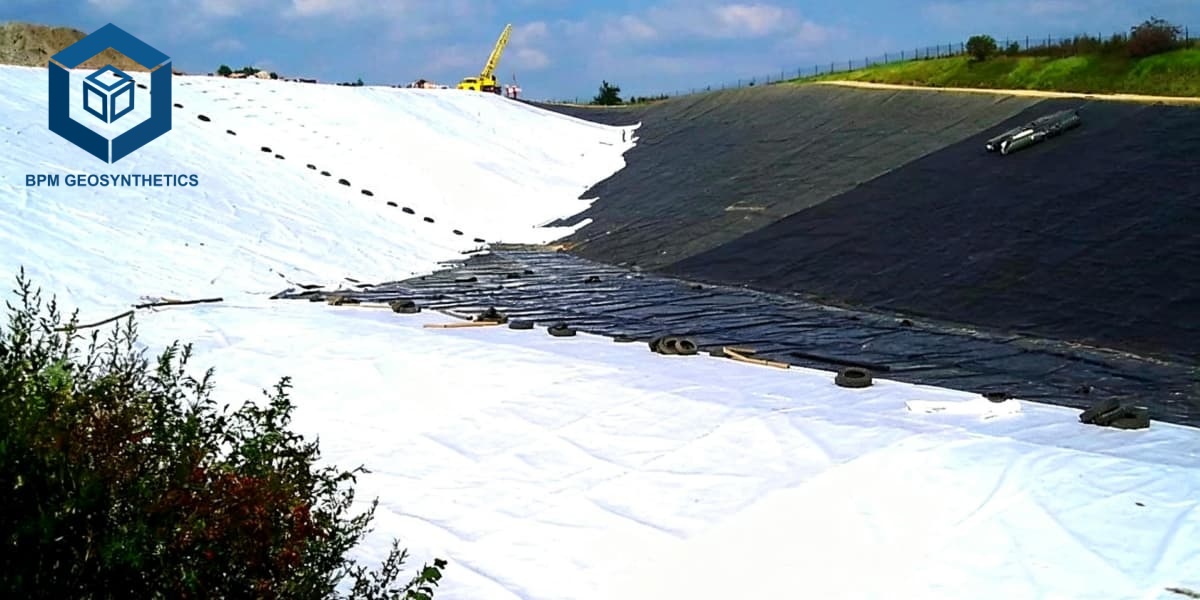
A study on Yellow River sediment filling reclamation identified thermal-bonded non-woven geotextiles of 200 and 250 g/m² as the highest-performing drainage materials for challenging sediment-laden conditions.
3.4.1 Key Specifications:
- Weight: 200–250 g/m² (thermal-bonded)
- Improved drainage efficiency for fine sediment conditions
- Recommended vibration device: 20 vibrations per minute to maintain clear drainage channels
3.4.2 Performance Insight:
Traditional screening methods proved unsuitable for sediment drainage conditions where rapid drainage and sediment interception are both required. Thermal-bonded non-wovens significantly improved drainage efficiency compared to alternative configurations.
3.4.3 Why It Ranks #4:
This research establishes that not all non-wovens perform equally in challenging drainage conditions. Thermal-bonded products with specific weights (200–250 g/m²) demonstrated superior comprehensive performance in sediment-laden applications.
3.4.4 Best For:
Reclamation projects, sediment-filled drainage, hydraulic engineering, and applications with high suspended solids.
3.5 Woven Geotextiles (Best for Drainage with Soil Stabilization)
- Manufacturers: VEVOR, US Fabrics, Sandbaggy
Woven geotextiles provide drainage capability along with high tensile strength for soil stabilization. Their construction from interlaced polypropylene yarns offers excellent load distribution while allowing water to pass through.
3.5.1 Key Specifications:
- Grab tensile strength: 600 lbs (3 oz grade)
- Good water permeability
- UV-stabilized for temporary exposed applications
3.5.2 User Feedback:
One reviewer noted: "The Vevor Geotextile Fabric exceeded my expectations. The installation was easy and the price was fantastic". Another user installed it under "18 inches of 1-1/4" crush stone" for a driveway on soft subgrade, stating, "Product shipped to my address fast and is of good quality and should hold up for years".
3.5.3 Why It Ranks #5:
Woven geotextile provide the best combination of drainage and stabilization for load-bearing applications. They prevent soil-aggregate mixing while allowing water to drain through, making them ideal for unpaved roads and parking areas.
3.5.4 Best For:
Unpaved roads, parking lots, soil stabilization with drainage, and applications requiring both reinforcement and water flow.
3.6 Polypropylene (PP) Non-Woven Geotextiles (Best for High-Rainfall Green Roofs)
- Manufacturers: Various (specialty geotextile producers)
Recent comparative research on green roof drainage applications identified PP-based non-woven geotextile drainage fabric near me as excelling in drainage and tear resistance for high-rainfall regions.
3.6.1 Key Specifications:
- Material: Polypropylene (PP) needle-punched nonwoven
- Superior water permeability
- High tear resistance
- Cost-effective for large-area coverage
3.6.2 Why It Ranks #6:
Urbanization and climate change are driving demand for green roof systems that rely heavily on geotextiles for drainage and functionality. PP-based geotextiles demonstrated performance advantages in wet conditions compared to PET alternatives.
3.6.3 Best For:
Green roof drainage layers, high-rainfall regions, and applications where water permeability is the top priority.
3.7 Two-Directional Wicking Geotextiles (Best for Enhanced Drainage Efficiency)
- Manufacturers:Various (advanced geosynthetic producers)
A year-long comparative study in Shenzhen evaluated one-directional versus two-directional wicking geotextiles in permeable sidewalk bases. The research concluded that two-directional wicking geotextiles are superior to their one-directional counterparts in reducing volumetric water content in granular bases.
3.7.1 Key Specifications:
- Wicking fibers oriented in two directions
- Significantly reduces moisture levels under saturated and unsaturated conditions
- Improves granular material strength
- Reduces water-related pavement damage
3.7.2 Why It Ranks #7:
This research demonstrates that orientation matters—multidirectional wicking fibers enhance drainage efficiency beyond what single-direction products can achieve. While still an emerging technology, two-directional wicking geotextiles represent the future of advanced drainage solutions.
3.7.3 Best For:
Advanced drainage applications, permeable pavements, and projects requiring maximum moisture control.
3.8 Summary Comparison Table
| Product/Type | Key Drainage Mechanism | Primary Application | Key Strength |
Wicking Geotextiles | Capillary suction (unsaturated) | Expansive soils, cold regions | Active moisture removal |
Needle-Punched Non-Woven | Vertical permeability | French drains, retaining walls | High flow rate, soil retention |
Geotextile-Wrapped Drains | Filtration + drainage | Salt drainage, agriculture | 95%+ salt removal |
Thermal-Bonded Non-Woven | Vertical permeability | Sediment-laden drainage | 200–250 g/m² optimal |
Woven Geotextiles | Vertical permeability + stabilization | Unpaved roads, parking | High tensile strength |
PP Non-Woven (Green Roof) | Permeability + tear resistance | Green roofs, high rainfall | Ideal for wet conditions |
Two-Directional Wicking | Capillary + multidirectional | Permeable pavements | Superior moisture reduction |
4. How to Choose the Right Geotextile Drainage?
4.1 By Drainage Condition
- Unsaturated soils / moisture-sensitive subgrades: Choose wicking geotextiles that actively remove moisture under negative pore-water pressures
-Saturated / gravity drainage:Needle-punched non-wovens provide excellent vertical permeability and soil retention
- Sediment-laden water:Thermal-bonded non-wovens (200–250 g/m²) with vibration maintenance
- High-load + drainage:Woven geotextiles offer tensile strength with water passage
- Cold / freeze-thaw regions:Wicking geotextiles provide frost heave control and spring thaw drainage
4.2 By Application
- French drains: 6–8 oz needle-punched non-woven
- Retaining walls: Non-woven geotextile for drainage + soil retention
- Pavement subgrades: Wicking geotextiles for active moisture control
- Agricultural drainage:Geotextile-wrapped perforated pipes
- Green roofs: PP non-woven for high-rainfall conditions
5. Conclusion
Geotextiles have transformed drainage engineering, offering solutions that traditional aggregate drains cannot match. The seven geotextiles reviewed here represent the best available options across the full spectrum of drainage applications.
Wicking geotextiles lead the field as the most advanced technology, providing active moisture removal under unsaturated conditions where conventional geotextiles are ineffective. For standard drainage applications, needle-punched non-wovens remain the reliable workhorse, delivering excellent permeability and soil retention at competitive prices.
The choice of drainage geotextile must consider the specific site conditions: soil type, saturation regime, freeze-thaw exposure, and hydraulic requirements. As recent research demonstrates, the trend is toward increasingly specialized products—wicking geotextiles for cold regions, two-directional wicking for enhanced drainage, and application-specific non-wovens for challenging conditions.
Investing in the right drainage geotextile upfront prevents costly failures and extends infrastructure service life. The laboratory studies and field applications cited in this review provide the evidence base for selecting the optimal product for your next project.
For high-quality geotextile solutions and professional project support, The Best Project Material Co., Ltd. (BPM Geosynthetics) is your trusted partner for drainage, filtration, ground stabilization, and infrastructure applications.